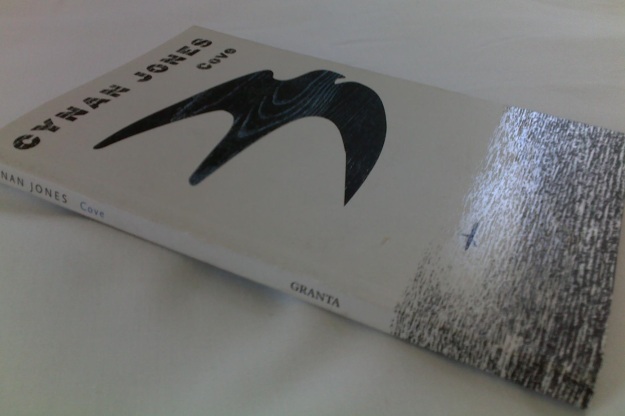
 I was born in Poland, but as a student I used to live in Wales. About two years ago, I read a glowing review of Everything I Found on the Beach by the young Welsh writer Cynan Jones. The reviewer mentioned that the novel featured a Polish character. A Welsh novel with a Polish character was an irresistible combination for a reader with my literary background. I ordered and devoured it, and since then I have read every other novel or novella I could get hold of by the same author: The Long Dry, The Dig, and the latest, Cove.
Cynan Jones has become one of my favourite writers and I await each new book of his with fervent anticipation. I have never been disappointed. His work offers two elements which I find most exciting in literature: the ability to lay bare the intricate landscapes of the human heart and soul, and a prose powerful enough to match what is revealed: the brutality and beauty of our existence. Jones is constantly being compared with the greats of modern literature – rightly so. But his voice is distinct, unforgettable.
Cove opens on a beach. A child is missing. A doll is washed up by the tide. And a dead pigeon is found: “The head was gone, the meat of its chest. The breast-bone oddly, industriously clean.” The man who finds it feels a sense of horror that the bird “knew before being struck. Of it trying to get home. Of something throwing it off course.” He removes the rings from its leg to return them to the owner who will be wondering about its fate.
As the epigraph explains, a cove can be “a small bay or inlet; a sheltered place” or “a fellow; a man”. Cove tells the story of a man who finds himself adrift in a kayak after he is struck by lightning. His recollections of how he got there and who he is are vague. He is injured, covered in ashes: the remains of someone who will definitely not return. The shore seems unreachable, but intuitively he knows that someone is waiting for him to come back: “The idea of her, whoever she might be, seemed to grow into a point on the horizon he could aim for.”
Cove is a quest for survival – man versus the elements: “Stay alive, he thinks.” Jones knows how to tell unique stories with universal appeal. He is fearless in his explorations of places most of us are terrified of. As in life, death is a constant in his stories. He reduces his plots to essentials and by doing so magnifies what is truly important. His work reminds us of the strengths and brilliance of the novella, an underestimated form in our time.
When you face the impossible, and all seems wrecked and lost, not many options remain: “If you disappear you will grow into a myth for them. You will exist only as absence. If you get back, you will exist as a legend.”
Cove
by Cynan Jones
Granta, 2016
Review first published in the Cape Times, 13 January 2017.

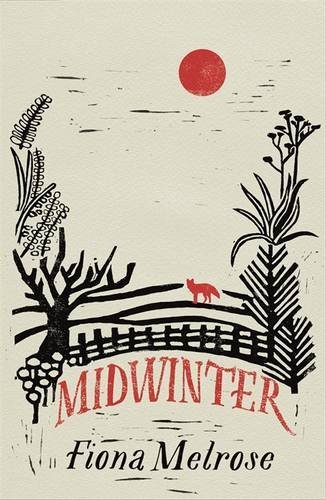 In an act of idiotic drunken bravery, two friends, Tom and Vale, steal a boat in a storm. The consequences for both of them are enormous. The incident lays bare a past supressed for a decade and a future which is just as heavy to carry. The laden, rain-drenched darkness of the night of the theft sets the tone for this atmospheric narrative. Fiona Melrose’s stunning debut novel Midwinter tells the story of loss, the way it breaks you down and the effort it takes to put together the shattered pieces.
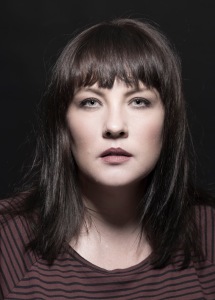 The author should also be commended for doing what much too often writers shy away from: writing entirely from a (gender) perspective which is not their own. At no time in the novel did I ever feel that I was not in the heads and hearts of a young man and his ageing father. Melrose uses first-person narrators for both to great effect: “For ten years I’d shirked the memories. I always felt them scratching at the darker corners of my mind, still feral; but sitting on a tree stump in the gathering dark, all of it – the space, the fear, the sorrow – all seemed to find me again.”


 I have no doubt this will be a brilliant year for books; many more exciting titles await.
 Karina Magdalena