 It has been a while since I’ve read, edited or contributed to an anthology of theoretical essays on South African literature. But, occasionally, I still have academic longings; therefore, I approached South African Writing in Transition, edited by Rita Barnard and Andrew van der Vlies, with great anticipation, and found the collection most engrossing. The individual contributions focus on a fascinating and relevant selection of primary sources, mostly novels and short stories, reaching as far back as Sol Plaatje’s Mhudi (1930) and incorporating contemporary texts into the diverse readings of the South African literary canon. The work of other South African literary greats – Njabulo S Ndebele, Zakes Mda, Mongane Wally Serote, Nadine Gordimer, Marlene van Niekerk and Ivan Vladislavić among them – is discussed along with an array of new, equally exciting voices, exposing striking continuities and departures.
By its very nature, theoretical writing takes time to compose and publish. South African Writing in Transition is the result of several international conferences which took place between 2012 and 2017 in South Africa and overseas. Most contributors are not based locally, which perhaps limits the scope of the inquiry as a whole, but the collection testifies to South African literature’s continuous appeal to international scholars. Also, the anthology’s topics are pertinent to our present in highly productive and sometimes uncanny ways. As Barnard writes in the introduction to the book: “[I]t is now time to consider the many loops and twists, the stasis and acceleration, the paralysis and hope of postapartheid experience.” We find ourselves in an unprecedented global reality in which the interest in world literature, its contributions and theories, will become more significant than ever, and understanding the South African experience, past and present, socio-historical and literary, as part of it could be of notable value.
Continue reading: LitNet
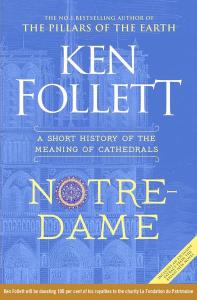 “Something priceless was dying in front of our eyes. The feeling was bewildering, as if the earth was shaking”, writes Ken Follett about watching the Notre-Dame Cathedral burning on 15 April last year. Not an expert on cathedrals, but known across the world for his The Pillars of the Earth, a novel about the construction of a cathedral for which he did an enormous amount of research, he became the media’s go-to person for commentary about the Notre-Dame fire and, together with his French publisher, decided to write Notre-Dame: A Short History of the Meaning of Cathedrals to support the reconstruction efforts of the architectural treasure after the catastrophe. All the royalties generated by the book go to the charity La Fondation du Patrimoine.
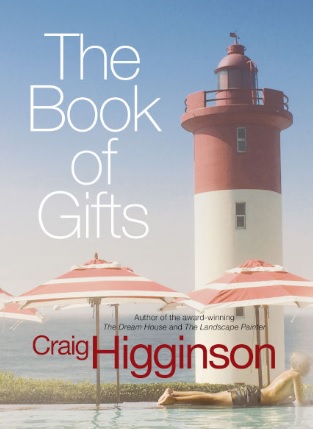 As readers, we turn to specific authors when we don’t want to be disappointed. The internationally acclaimed writer, Craig Higginson, has become one of these for me. His latest novel, The Book of Gifts, is another gem in his impressive oeuvre. It begins with a family trip to uMhlanga Rocks and radiates from this particular moment into the past and the future, gradually piecing together the puzzle of the intricate – often toxic – relationships that play out during the holiday in KwaZulu-Natal. At the centre of the unfolding story and the complex familial constellation are the two half-sisters, Emma and Jennifer. Emma is a successful sculptor and mother to Julian, at the time of the holiday an eleven-year-old boy who falls in love for the first time with an enthralling, slightly older Clare. Jennifer is a teacher at Julian’s school back in Johannesburg where they all live, and wife to Andrew, a psychologist struggling to find his professional and personal bearing.
 The internationally acclaimed, Durban-born writer, Elleke Boehmer, has a second short story collection out: To the Volcano, and Other Stories. Set mostly in the southern hemisphere and illuminated by the legendary southern light artists and tourists travel the world to experience, the twelve stories in this collection explore the tenuous and tenacious relationships people have with the South.
 Adamastor City is a first in all kinds of fascinating ways: for the author, Jaco Adriaanse, it is a debut novel and the first book in The Metronome Trilogy, and it is the first title for the new, independent publisher on the block, Burnt Toast Books, established this year by Robert Volker, who wants to focus on shorter forms and allow authors more freedom to experiment.
 We have entered an era when biographers and literary scholars bemoan the fact that most of us have stopped writing letters, the ones composed with a pen on paper, folded into an envelope and posted to be received and perhaps kept under a pillow or in a jacket’s pocket because of the precious content they contain. For centuries, such letters were frequently lifelines to others and bore testimonies to our lives in ways that our modern world, despite all our inventions and our seeming connectedness, is no longer capable of reproducing.
 Missing Person, the latest thriller from the author of The Three, Day Four and The White Road, Sarah Lotz, was my companion on a recent overseas flight and kept me so entertained that I hardly noticed the long hours flying by.


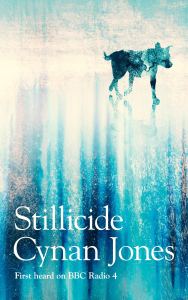 In his writing, Cynan Jones showcases the full potential of the short forms of prose – the novella and the short story. I have been a fan for years. The economy of his prose and the uncanny insight he offers into the human condition are a rare gift. Stillicide, his latest book, is a collection of short fictions which originated as a BBC Radio 4 series. The pieces are interlinked and centre around the theme of water, as the title suggests. “Stillicide” is defined as “a continual dropping of water” or “a right or duty relating to the collection of water from or onto adjacent land.”
 In his novels, Richard Zimler, who is best known for The Last Kabbalist of Lisbon, has been chronicling Jewish history throughout the ages and from all corners of the world for many years. His latest offering is an unusual, deeply touching retelling of the gospel. At its centre, Zimler places Lazarus and allows him to tell the story in a long letter to his grandson: “Picture me endeavouring to tell you matters that will never be able to fit easily or comfortably on a roll of papyrus.”
 Karina Magdalena