 At first glance, it looks like a typical boy meets girl story. However, Sally Partridge’s latest novel, Mine, is so much more. The book’s stunning cover illustration by Astrid Blumer introduces us to Kayla and Finlay (or Fin), the protagonists of the novel: we don’t see their faces, but we know that Kayla’s hair is in part strikingly blue, Fin is wearing a hoodie with a thunderbolt on his back. They are sitting on bench. One of them must have arrived to the meeting on a skateboard. Someone carved their initials into the back of the bench. Next to “K+F” is a broken heart. A squirrel watches on.
Fin’s alter ego is Thor, hence the thunderbolt: “now there’s someone I can respect”, he tells us. “Strong. Angry. Invincible. The guy can control lightening. They say that when it storms, it’s Thor fighting giants.” The moment Fin steps onto a stage and begins to rap he turns into his hero. At night, he is the star of a popular band, playing to adoring audiences in Cape Town’s clubs. During the day, he is mostly stoned so that he can survive the drudgery of school and the threats lurking at home in Lansdowne. An only child, abandoned by his mother when he was a young boy, Fin is growing up with a violent father who couldn’t care less what happens to his son.
Kayla is the skater. She loves comic books, has a rather unusual penchant for classical music and plays the flute. She comes from a more stable home, but like most teenagers feels that her mother and step-father do not understand her. At school, she has the reputation of a “slut”. “There is no such thing as romance anymore – guys just want one thing”, she says. She feels so lonely and insecure that even this kind of abusive attention she receives seems better to her than none. What she does not recognise and others refuse to see is that she is not only beautiful, but smart, kind and super talented.
Mine alternates between Kayla’s and Fin’s perspectives. We fever along with both of them as they are trying to find a way to each other. The first time Fin sees Kayla, she flits by on her skateboard, her blue hair flashing. She immediately leaves an impression. When he accidently sees her again at a school recital, playing her flute, he is clearly smitten. But the girl who is chasing after Fin warns him of Kayla’s reputation. Their first proper encounter is awkward, yet Fin recognises something in Kayla that is all too familiar to him: “She acted just like I do whenever someone compliments me. I whack it back, retreat into my little cave of self-loathing.” And so, from the start, he senses that he can be truly himself with her.
Falling in love is never easy, especially when you never feel worthy. Or “impossible to love”, as Kayla thinks of herself. Fin’s song lyrics flow from the heart: “Does anyone know me? … I’m nobody, a freak. Never be, ever be, good enough to be the One.”
What do you do when you “feel like all my cracks are showing”? Kayla and Fin decide to give it a try, to open their hearts to each other and break the cycles of self-doubt that repeatedly get them into trouble. Cautiously, love is declared and promises are made. Previous patterns of engaging with others are tested and abandoned for something new, better: “We stand like this in silence. Her face is so close to mine. I want to kiss her more than anything in the world. I can see she expects me to. Wants me to, even. And that’s exactly why I can’t.”
Fin needs to show Kayla that he is not like all the other boys: “She makes me want to believe I can be the good guy for once.” And Kayla desperately tries to be the kind of girl he imagines her to be. She has only ever known disappointment before: “But I can’t help that I want the things other girls have. I mean, why shouldn’t I?” she asks. They are both scared out of their wits, but willing to risk it all. Yet, sometimes the best of intentions cannot stand up to the destructive habits of one’s own past. “Love also stings sometimes… We both know that.”
Partridge is never afraid to tackle the big issues young people have to deal with growing up. And in Mine, she also does not shy away from addressing the horrendous consequences of peer pressure, our need to belong, or the minefield of budding – anything but innocent – sexuality. It is about that first big love: “I’m on such a high from being around him, it’s like I’ve slipped and fallen into his universe and it’s just us and no one else.” It all feels incredibly real, including Cape Town – the other main character of the novel.
In André Brink’s An Instant in the Wind, one of the main characters fears that “love is the beginning of violence and betrayal. Something in oneself or in the other is killed or betrayed”. This fundamental recognition echoed in my mind while I was reading Mine and heading towards its explosive, unpredictable ending. What touched me most about Partridge’s novel is that its emotional truths resonated with the teenager I once was and the woman I am today. I believe that, unlike many young adult novels which are specifically aimed at teenagers, Mine will appeal to anyone who has dared to defy his or her one’s own demons for love. “For the unrequited lovers and broken-hearted”, reads the book’s dedication.
Partridge is an acclaimed novelist and short story writer. Three out of her previous novels published locally were awarded the prestigious M.E.R. Prize for Best Youth Novel. The fifth one appeared only in German translation. She has been recognised by IBBY International for her young adult fiction. Mine is her best work to date.
Mine
by Sally Partridge
Human & Rousseau, 2018
An edited version of this review first appeared in the Cape Times on 17 March 2018.

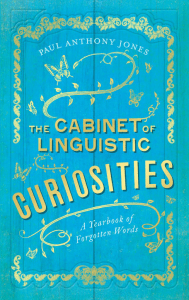 Languages are living, breathing, mutating creatures. The English language of today is not the one of 1602 when, according to Paul Anthony Jones in The Cabinet of Linguistic Curiosities: A Yearbook of Forgotten Words, “the Elizabethan playwright Thomas Dekker coined the word love-libel – literally, ‘a handwritten admission of someone’s love’”. Or the English of the early 1400s when the striking word “recumbentibus” (which, like so many of the words Jones collected in his remarkable book, the spellcheck on my computer does not recognise!) was adopted into the language from Latin: “In its native Latin recumbentibus was used merely of the act of lounging or reclining, but when the word was adopted into English it was given a twist: English writers…began to use it to refer to forceful, knockout or knockdown blows”.
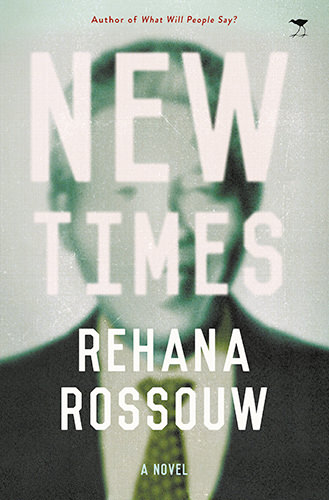 Rehana Rossouw’s debut novel, What Will People Say? (2015), was already on its seventh impression when I was reading it earlier this year. Being reprinted so often within a relatively short period of time is no small feat for a local novel. Even though I came late to the party, I immediately understood why it was so popular. Rossouw, a veteran journalist, succinctly captured an era and a community – the Cape Flats of the late eighties and early nineties – and made them come alive through a handful of characters belonging to the Fourie family. This was the time of volatile politics, raging gang wars and impossible choices. Decency and family values did not protect you from the evil of the system and the cruelties of the streets. Only the toughest survived to thrive.
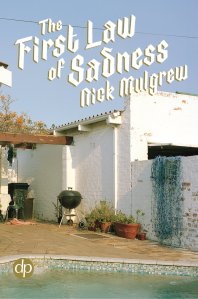 The short story continues to fascinate me for two reasons: the precision of thought and execution it attracts as well as its unpredictability. If well done, it can surprise and satisfy like nothing else in literature. And Nick Mulgrew does the genre justice like few other contemporary South African writers. His work has been recognised with multiple awards and his vision and skill have been highly acclaimed by critics. Mulgrew is also an editor and the director of the flourishing poetry press, uHlanga, which published his debut poetry volume, the myth of this is that we’re all in this together, in 2015. In his many impressive literary incarnations, Mulgrew understands that short art forms require meticulous attention to language. He knows how to make words count.
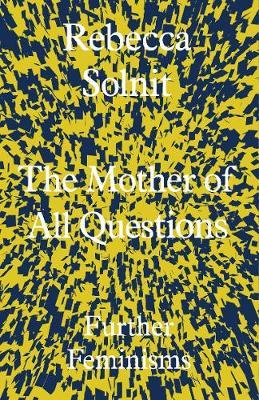 It was by pure chance that I discovered a recent online essay by Rebecca Solnit in which she was writing about women, art, motherhood and selfishness. As a creative woman who chose not to have children, I found it most affirming. After some research about the author, I could not believe that I had never encountered Solnit’s work before. But fortunately, the article led me to her impressive oeuvre and the latest piercing collection of essays, The Mother of All Questions: Further Feminisms. In the introduction, Solnit mentions “the rapid social changes of a revitalized feminist movement” and how it is “changing our understanding of consent, power, rights, gender, voice, and representation.” She speaks of the movement as being “gorgeously transformative”.
 A house robbery “gone bad” is sadly not an uncommon occurrence in South Africa, in reality or in fiction. The one with which NR Brodie’s debut thriller Knucklebone opens seems routine enough: two young men try to break into a home in Johannesburg; one escapes but is eventually caught, the other one is shot dead by the owner. But here, nothing is at it appears.
 I have been away.
 The occasion for trying to fly long distance again was of high importance: Miś, aka our mother, was celebrating her 70th birthday this month and all she wished for was to have both her children in the same room. For most mothers this is no problem whatsoever, but for our mother – with me living in South Africa and my brother’s itchy feet – the two of us in one room is a rare occurrence. She lives in Austria. The last time she was in the same room with both her children was in Cape Town three years ago when she was here to take care of me after André’s death. But she couldn’t stay here forever.
 And now, finally, we sat there all together as a family and ate the traditional Sacher Torte and celebrated Miś’s 70th birthday for an entire week. It snowed. There was water. And my favourite beer, Uttendorfer. To welcome me, Miś prepared the special dish I always ask for when I visit. We spent a few days around her birthday – one of them was the anniversary of André’s death – in Bad Ischl. Thermal springs, a hike on the Katrin, the Zauner restaurant, and the ghosts of the imperial past lingering everywhere. The birthday dinner was a Hauben-delight.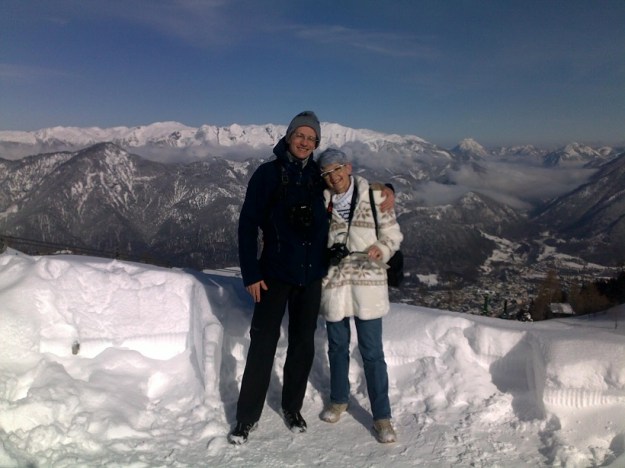
 During my visit, I had lots of coffee with Miś who is solely responsible for my addiction; had long chats with Krystian sitting next to him and not in front of a computer screen; saw old friends and knew exactly why they have always been so dear; in my mother’s attic, found the small green fork I used to eat with as a child; walked along my beloved Mattig; spoke German; sat quietly in my mother’s guest bed in the mornings when everyone else was still asleep and read Rehana Rossouw’s latest novel, New Times, set in Cape Town, in preparation for
  Like most readers across the world, I first became aware of the South Korean writer Han Kang when she won the Man Booker International Prize two years ago for her phenomenal novel, The Vegetarian. It was recommended to me by a friend who bought it because of the award. Since then, I have read Han’s other works translated into English: the harrowing Human Acts and her latest, The White Book.
 Karina Magdalena