Tag Archives: Karina Szczurek

Interviewing authors

I have the huge honour of interviewing the following authors at upcoming literary festivals.

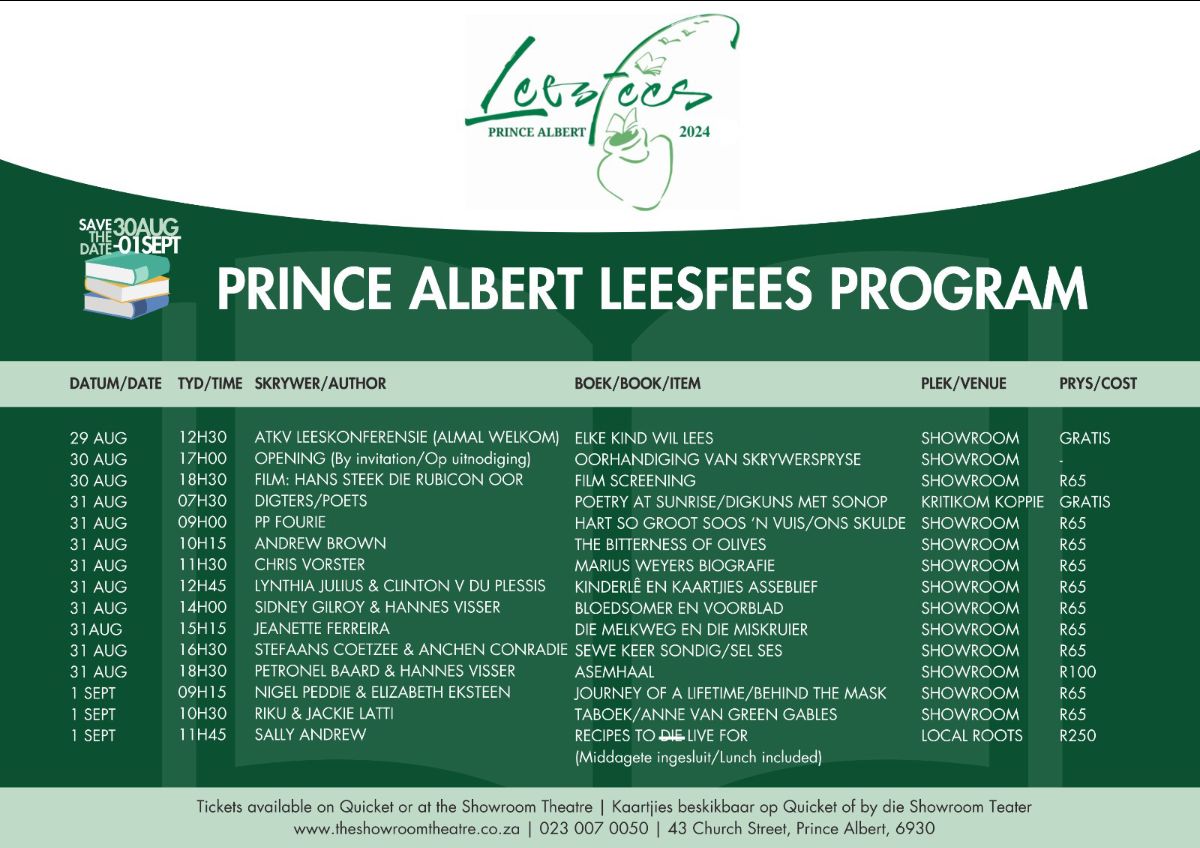
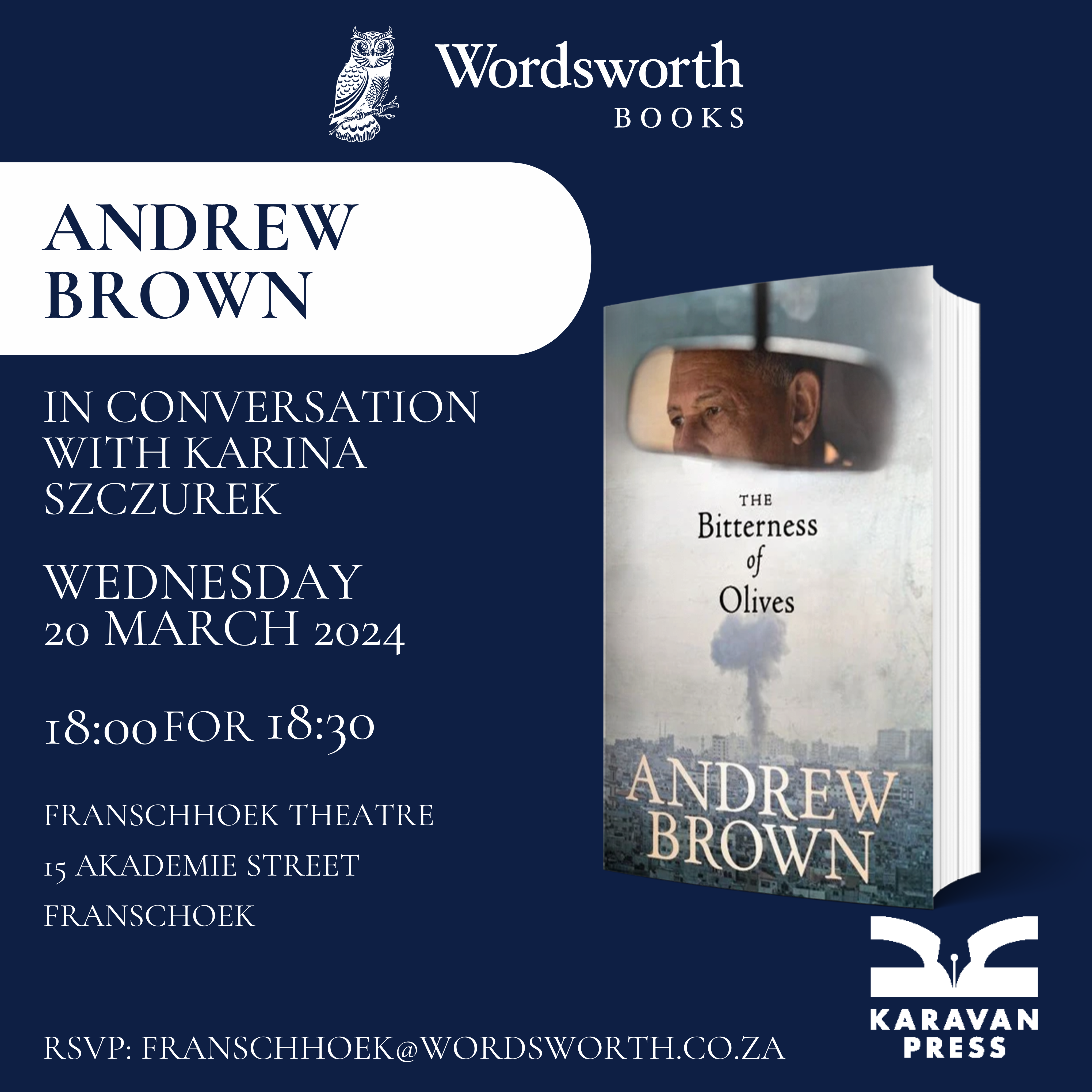
First up: Prince Albert Leesfees is taking place between 30 August and 1 September, and I will be interviewing Andrew Brown about his The Bitterness of Olives on Saturday, 31 August, at 10:15 a.m. I am not only looking forward to this conversation, but to returning to Prince Albert and the local Leesfees. More great memories will be made for sure.

Tickets: Prince Albert Leesfees

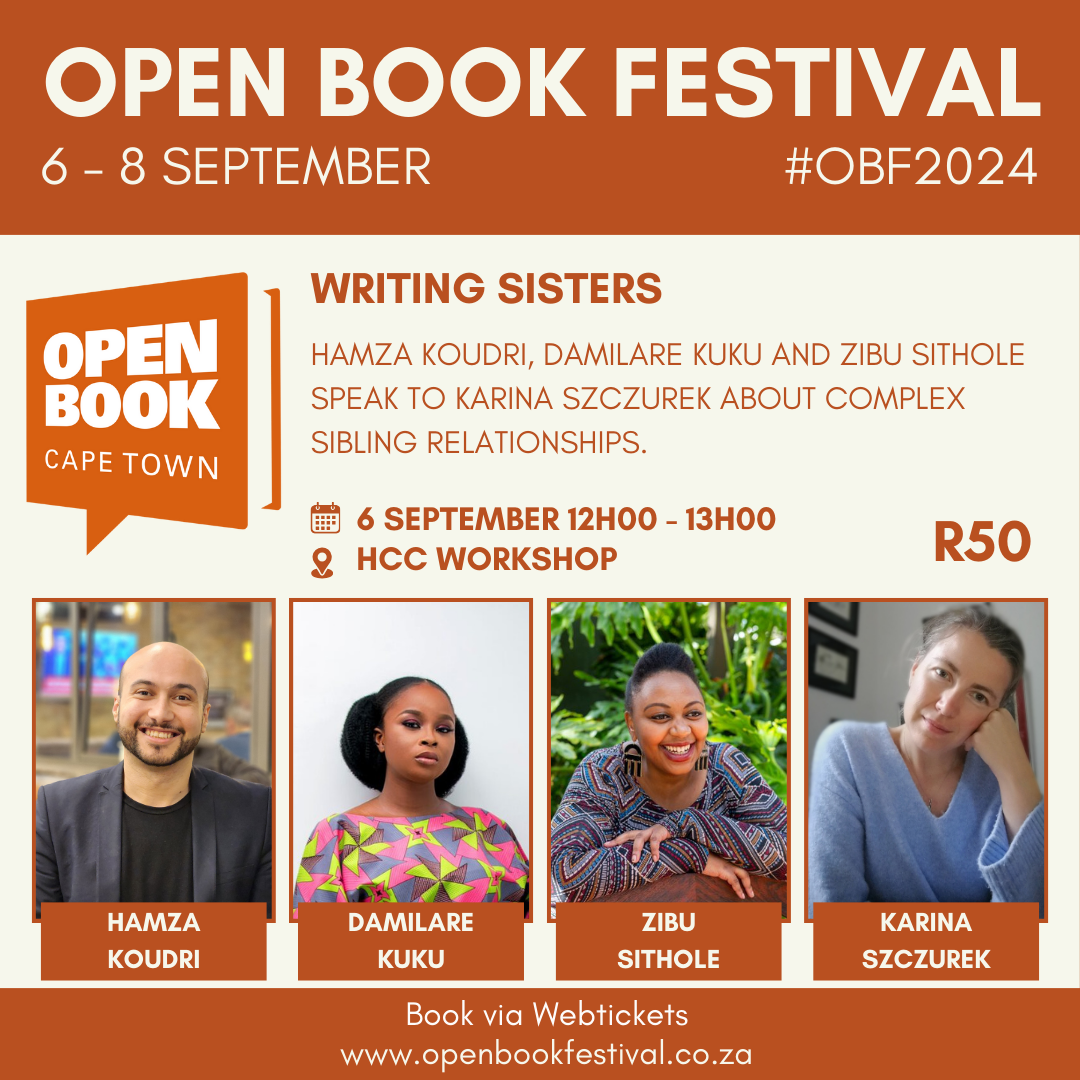
And then it’s Open Book time! Taking place between 6 and 8 September, the Open Book Festival is a highlight of every literary calendar. Karavan Press authors will be busy at the festival this year, and I can’t wait to listen to them all. I will be interviewing an author that I assist in distributing in South Africa, an Island Prize runner-up in the first year of the prize’s existence, Hamza Koudri. He will be on a panel with Damilare Kuku and Zibu Sithole and I have the privilege of chairing the session about WRITING SISTERS on Friday, 6 September, at 12 p.m. I interviewed Zibu at the festival last year and absolutely loved reading I Do … Don’t I?, the sequel to The Thing With Zola. And I can’t wait to meet Hamza and Damilare and to talk to them about their fascinating novels in the context of this topic that is very close to my heart (I only have one sibling, a brother, but he is the best sibling in the world, and I can’t imagine my life without him).

Tickets: Open Book Festival

Hope to see you at one or both of these events!

Festival of Poetry and Cape Flats Book Festival 2023

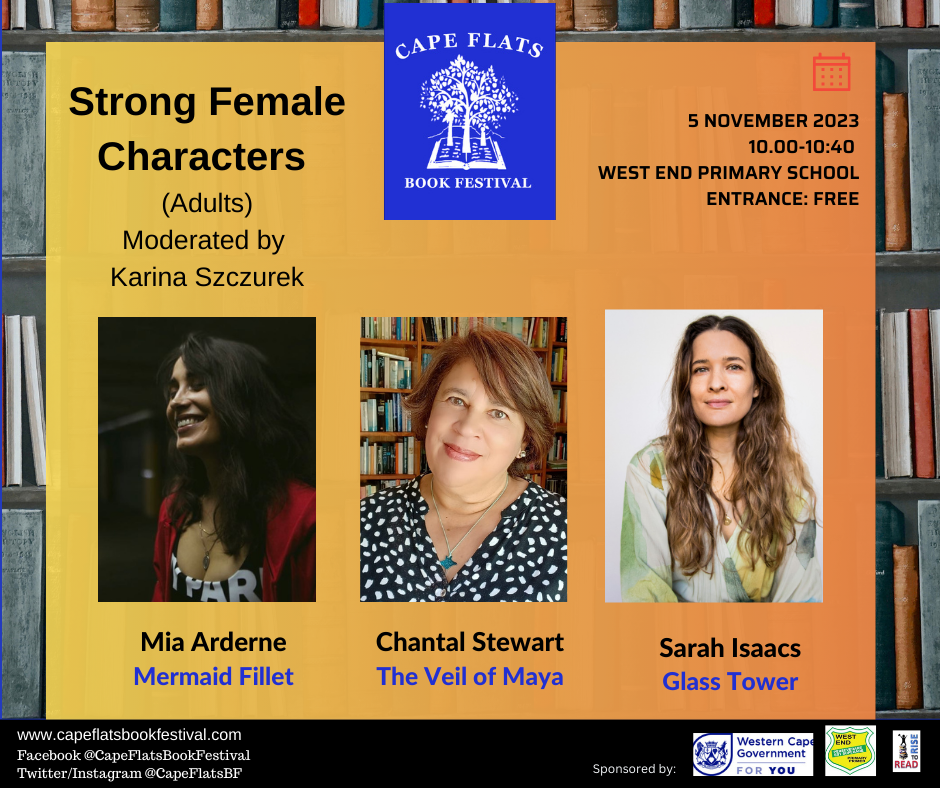
The 4-5 November weekend promises a lot of literary joy. The Cape Flats Book Festival is taking place that weekend and the one-day Festival of Poetry is happening on the 4th. Karavan Press authors are well represented at both, and I am also playing a role in my diverse capacities.

4 November | Bertha House and Youngblood-Africa

5 November | West End Primary School

I had great fun at the Cape Flats Book festival last year; I am so looking forward to returning. And I am thrilled about the Festival of Poetry. A weekend of inspiration and enlightenment awaits!

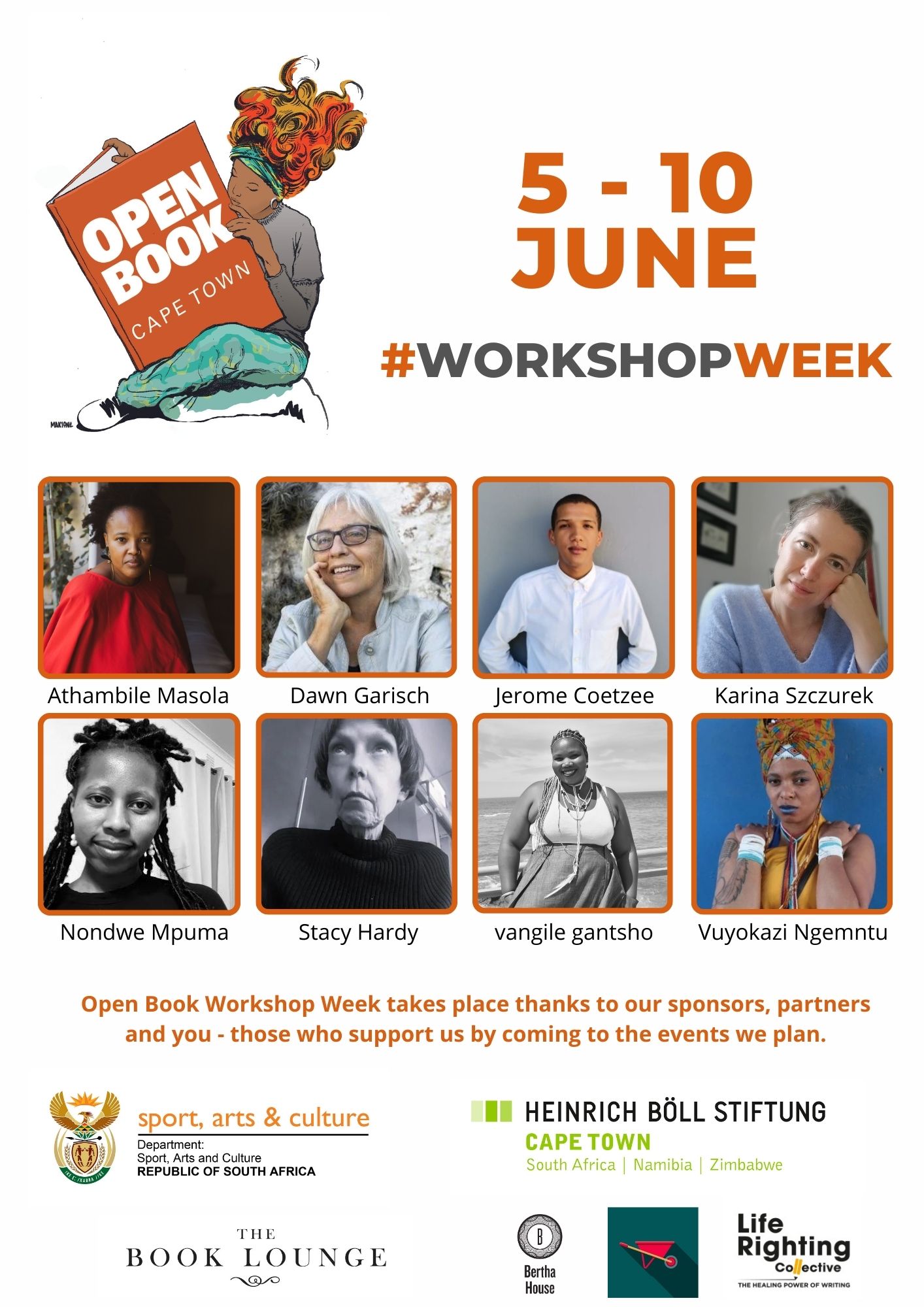
Open Book Workshop Week 5-10 June 2023

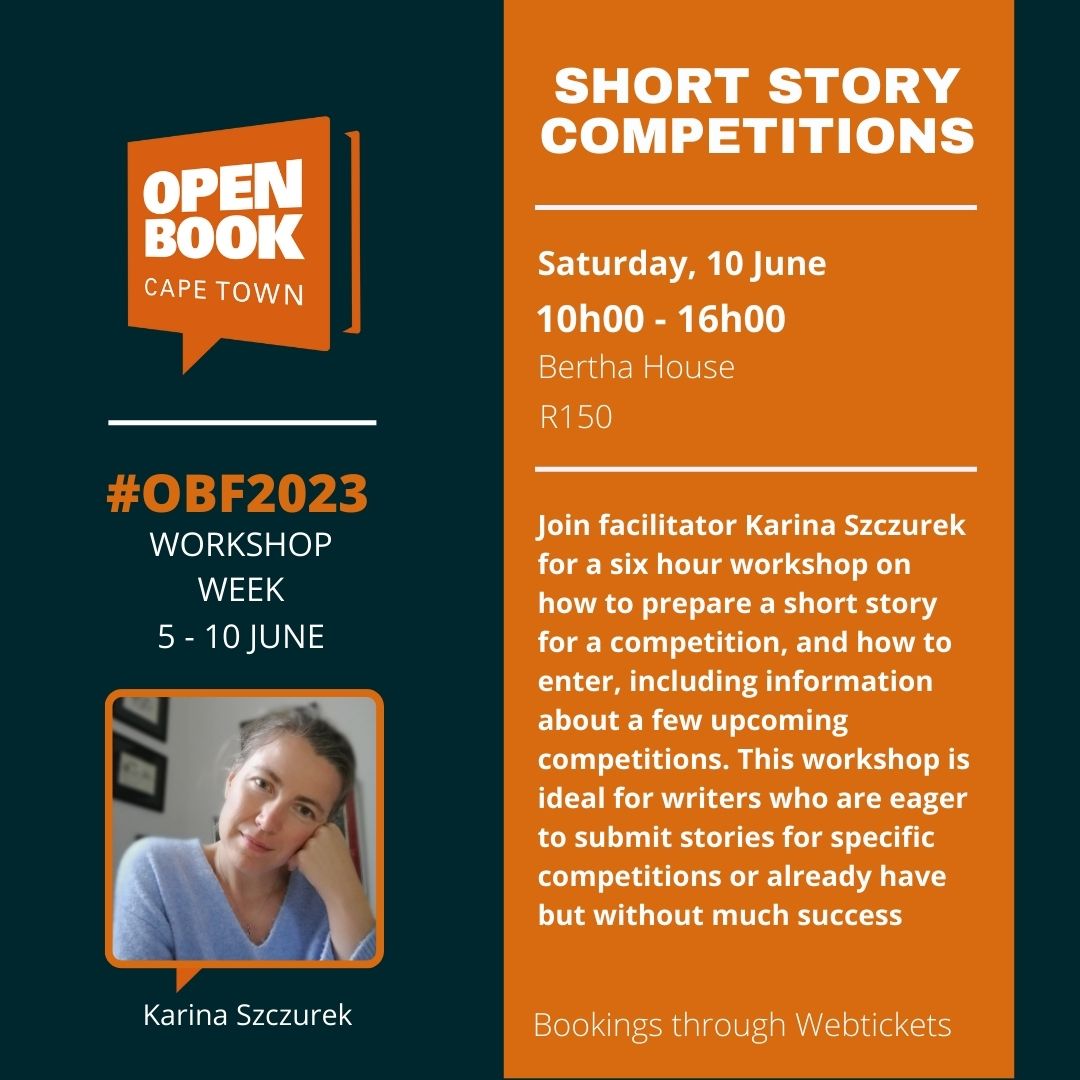
What a pleasure to be part of the Open Book Workshop Week and to share my passion for the short story with others. I hope you will join me for one or both of the workshops I will be running:

SHORT STORY BASICS

SHORT STORY COMPETITIONS

Full programme:

Open Book Workshop Week

Kingsmead Book Fair 2023

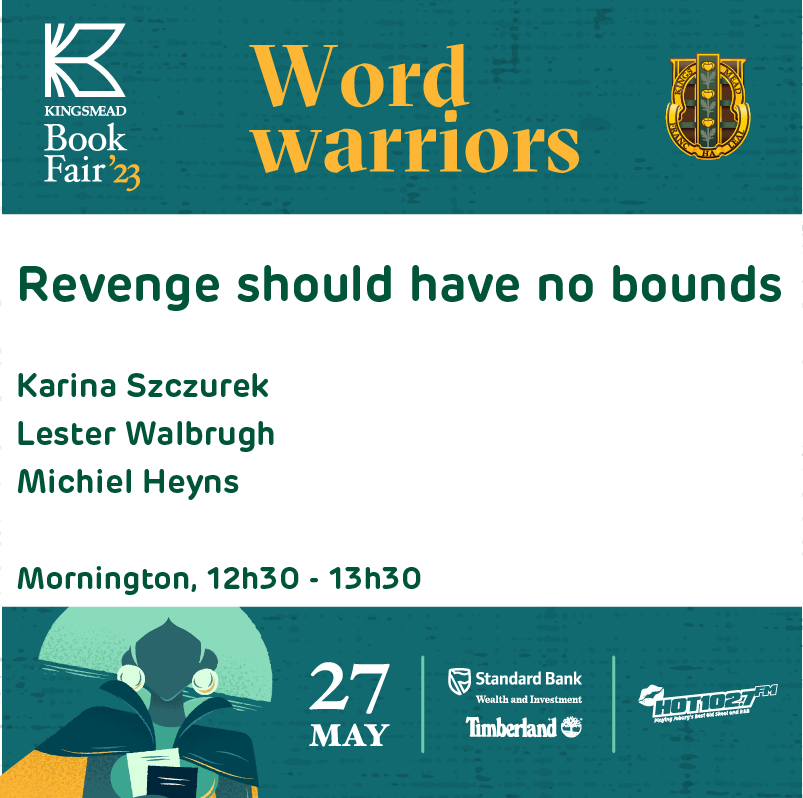
I will be chairing two sessions at the KBF this year. I had so much fun attending the book fair last year that I can’t wait to return and look forward to engaging with all these wonderful authors, talking about fictional revenge and the short story – two of my favourite themes.

12:30 – 13:30
Karina Szczurek (Karavan Press) lets Lester Walbrugh (Elton Baatjies) and Michiel Heyns (Each Mortal Thing) allow their protagonists to settle the score.

16:00 – 17:00
Joanne Hichens (Fluid: Freedom to Be), Zaheera Jina Asvat (The Tears of the Weaver: Short Stories), Terry-Ann Adams (White Chalk: Stories) and Chase Rhys (Misfit: Stories vannie anne kant) share with Karina Szczurek about less sometimes being more.

For more details about the book fair, click here: KBF 2023

Interview with a former refugee, Karina Szczurek

LitNet: You were a refugee, fleeing from an oppressive regime. Please share with us what those thousands of women and children who are now seeking refuge must feel like?

Karina Szczurek: I was a child when my parents decided to flee Poland in the 1980s. My brother was six and I was ten at the time. It was very difficult to comprehend what was happening to us, but at least we were secure in the knowledge that our parents were with us at all times and would take care of us, no matter what. Our lives were never in danger. Watching Ukrainian parents evacuate their children to safety while staying behind to fight for their future breaks my heart. I cannot imagine the levels of anxiety and distress this kind of separation causes for a family. These people will never fully recover from this, even if they survive.

LitNet: Do you know Ukraine at all?

Karina Szczurek: A little bit. I spent three weeks in the beautiful Lviv on a student exchange in 1997. We also travelled outside this historic city. It was a formative experience. During these three weeks, I experienced for the first time the real closeness of the two languages – Polish and Ukrainian – met Charlotte, who remains a very dear friend, and discovered my love for opera and ballet at the stunning Ivan Franko Lviv State Academic Theatre of Opera and Ballet (renamed since then). I specifically remember how friendly and welcoming everyone I met there was, and I will never forget their delicious black bread (I couldn’t get enough of it).

Continue reading: LitNet

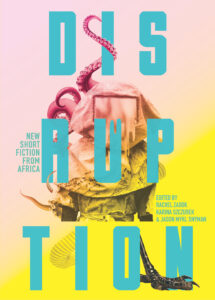
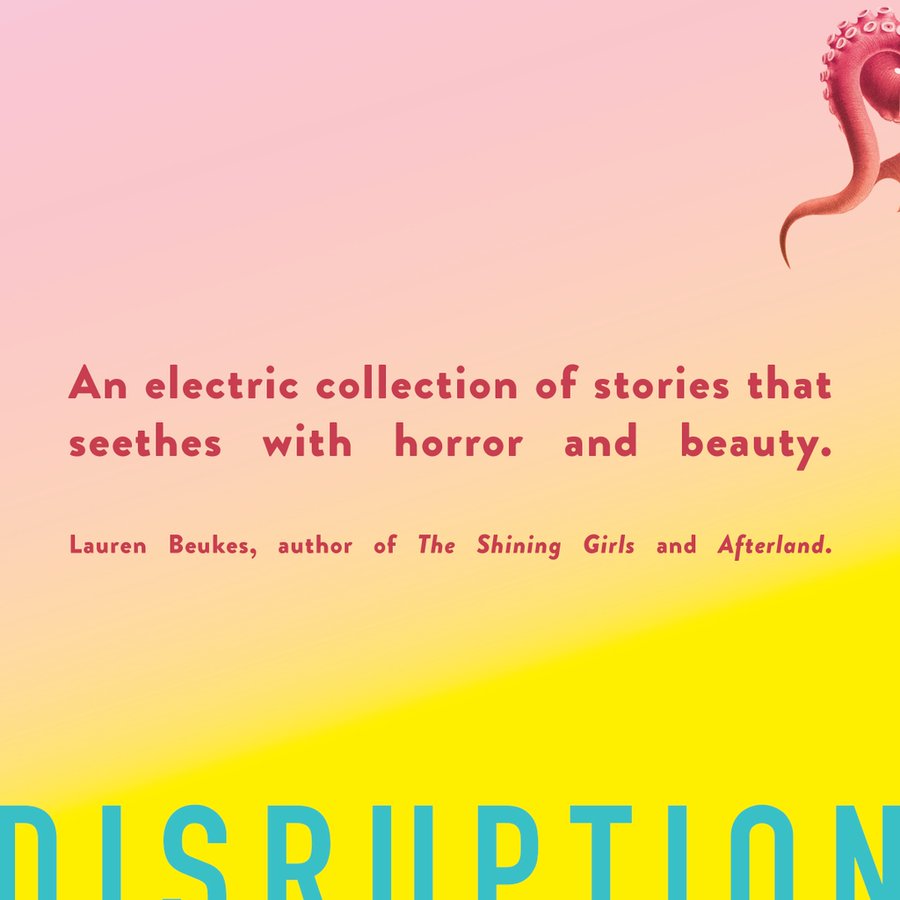
DISRUPTION: New Short Fiction from Africa, edited by Rachel Zadok, Karina Szczurek and Jason Mykl Snyman

Today, I had to go to Digital Action, the printers responsible for printing the Short Story Day Africa anthologies and most Karavan Press books, and spotted a small pile of Disruption copies – I could not resist and disrupted the ordinary order of things: I brought one copy home before the official release. The book should be ready for distribution next week. Get your copy as soon as you can – these stories are brilliant!

DISRUPTION

dis• rup • tion /dɪsˈrʌp.ʃən/ [noun] 

Disturbance or problems which interrupt an event, activity, or process.

This genre-spanning anthology explores the many ways that we grow, adapt, and survive in the face of our ever-changing global realities. In these evocative, often prescient, stories, new and emerging writers from across Africa investigate many of the pressing issues of our time: climate change, pandemics, social upheaval, surveillance, and more.

From a post-apocalyptic African village in Innocent Ilo’s “Before We Die Unwritten”, to space colonization in Alithnayn Abdulkareem’s “Static”, to a mother’s attempt to save her infant from a dust storm in Mbozi Haimbe’s “Shelter”, Disruption illuminates change around and within, and our infallible capacity for hope amidst disaster. Facing our shared anxieties head on, these authors scrutinize assumptions and invent worlds that combine the fantastical with the probable, the colonial with the dystopian, and the intrepid with the powerless, in stories recognizing our collective future and our disparate present.

Disruption is the newest anthology from Short Story Day Africa, a non-profit organization established to develop and share the diversity of Africa’s voices through publishing and writing workshops.

Published by Short Story Day Africa in SA and Catalyst Press in the US.

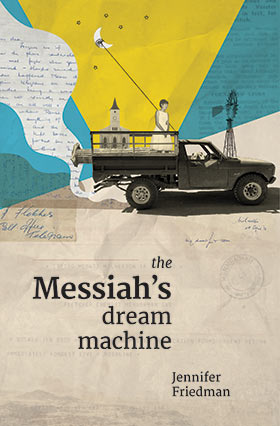
Book launch: The Messiah’s Dream Machine by Jennifer Friedman

Messiah-invitation-Book-Lounge

Jennifer Friedman was born and raised in the Orange Free State in South Africa. She studied at the University of Cape Town, and her Afrikaans poetry has been published in various academic journals such as Tydskrif vir LetterkundeWetenskap en KunsStandpunte and Buurman, as well as Rooi Rose. She emigrated with her husband and children in 1992 to Sydney, Australia, where she got her pilot’s licence. After her husband’s death in 1997, Friedman bought her own Grumman Tiger plane and she flies to the small outback towns and stations around Australia, often just for a lunch date and wherever the sun is shining. She now lives on the Central Coast of New South Wales with her partner.

Queen_of_the_Free_State The-Messiah's-Dream-Machine

The Messiah’s Dream Machine is Friedman’s second memoir, after Queen of the Free State (2017).

On 4 April 2019, I will be in conversation with the author at the launch of this wonderful book. I look forward to seeing you all at the Book Lounge!

Review: Patriots and Parasites – South Africa and the Struggle to Evade History by Dene Smuts

denesmutsDene Smuts once said that “there are two approaches to opposition lawmaking work: making a noise and making a difference.” Throughout her courageous life she chose to make a difference. Smuts completed the manuscript of Patriots and Parasites: South Africa and the Struggle to Evade History shortly before her unexpected death in April last year. Her daughter Julia midwifed the project to completion.

In the Festschrift included at the end of the book, Jeremy Gauntlett notes Smuts’s “portable spine” which she lent out “often to many weaker people.” Before entering politics, she took a stance against censorship as a journalist and editor of Fair Lady. She resigned from the magazine in protest when her editorial independence was threatened over a story she ran about Winnie Mandela. She insisted on “readers’ right to know”. The longest-serving female parliamentarian, the first female chief whip, a lawmaker renowned for her work on the Constitution, Smuts was central to the birth of the new South Africa. She understood the importance of “cultivating the garden” that is our country.

The memoir is not a blow by blow account of Smuts’s private life. But when you read closely, the person who emerges from between the lines is a remarkable, inspiring human being who led by example. The book is testimony to her brilliant mind and fierce integrity. You might not always agree with what she has to say, but you never doubt that her heart is in the right place. She is unflinching in her analysis of contemporary socio-political developments and does not hesitate to call a spade a spade, or to mention when she is “incandescent with anger”.

There is no pussyfooting around burning issues of racism, polarisation, affirmative action, corruption, or reconciliation: “Just as apartheid was triggered by fanning the embers of cultural resentment of colonialism into the fire of Afrikaner nationalism, Thabo Mbeki brought out the bellows to reignite black resentment against white rule, both colonial and Afrikaner nationalist, when both had become history.” It is just another example of the ancient adage that we do not learn from history. And if anything, South Africa is one of the best embodiments of the effectiveness of the well-known policy: divide and rule (or conquer).

This is not the time to look for differences when common causes have to be addressed in order for the country to thrive as a whole, and Smuts’s incisive scrutiny of Mbeki’s legacy and the present government’s “misrule” points to the pitfalls we are facing. Only if we can all feel that we are “contributing to a new country”, will we be able to feel “at home”. Smuts recalls Jakes Gerwel’s words: “we had created the institutional mechanisms to deal with” the “remnants of the racist past”; “we should build on the positive foundations of transition and the Constitutional order to develop the non-racial reality already emerging.”

Patriots and Parasites is a passionate account of the importance of free speech, which Smuts championed in all her incarnations, whether as journalist or legislator. She points out the dangers of political correctness if allowed to stultify vigorous and necessary debate. Dialogue is pertinent to a healthy democracy. Communication consists as much of voicing concerns as listening. Smuts reminds of the occasion when in 1985 Ellen Kuzwayo was asked by white fellow women writers what they could do to help the cause: “All you can do is listen, listen.” Smuts herself kept her ear close to the ground as she knew the power of informed decision-making.

She gives compelling insight into the nitty-gritty of law-making, taking us back in time to the transition and recalling the turning points in history that made political change possible. The forces at play in the writing and implementing of the 1994 Interim Constitution and the 1996 Constitution are recorded in fascinating detail. Smuts remembers Kader Asmal acknowledging that “probably never before in history has such a high proportion of women been involved in writing a constitution.”

At the core of Patriots and Parasites is the knowledge that this is just one account of the palimpsest that is history. Other stories have to be told: “If the question is whether South Africa can evade history, then we need, at least, to hold up as true a record as possible of that history. The best way of doing so where records are not available, or are as contested … is to give as many accounts of what occurred as possible. This memoir is one such contribution to our recent history.” We owe it to ourselves to nurture and study these testimonies; not to allow recorded history to fall “into disarray, or decay”. Looking back, Smuts warns against apathy towards diverse manifestations of evil. Otherwise, as the reality around us shows over and over again, we will be “doomed to inhabit a world of false narratives”.

Smuts writes that “all we have to defeat this time, however hopeless it may sometimes look, is misrule and the erosion of everything we have already achieved”, and ends on an optimistic note: “It will be easier, this time.”

Patriots and Parasites: South Africa and the Struggle to Evade History

by Dene Smuts

Quivertree, 2016

Review first published in the Cape Times, 17 February 2017.