
 A house robbery “gone bad” is sadly not an uncommon occurrence in South Africa, in reality or in fiction. The one with which NR Brodie’s debut thriller Knucklebone opens seems routine enough: two young men try to break into a home in Johannesburg; one escapes but is eventually caught, the other one is shot dead by the owner. But here, nothing is at it appears.
Old colleagues, Ian Jack and Reshma Patel, meet on the scene of the crime. Ian is a former police officer who now lectures at the university and is present because he’d accompanied the armed response team on their call for his research. Reshma is investigating the case.
It all looks simple in the beginning, but then there is something unusual about the shot wound of the victim, and the strangely unperturbed woman who killed him is definitely not who she claims to be. Born in Romania, Eva Lecca runs a thriving enterprise as a taxidermist, but it soon transpires that she has lethal secrets to hide. Did she fire her gun in self-defence or did she have a completely different motive? “Eva stepped closer to him, her shadow making a grotesque short shape against the wall. Ian pressed his back against the brick, trapped between the building and the woman. His mouth was dry. He couldn’t understand why, but every nerve in his body screamed danger.”
When unexpectedly the apprehended robber, Njabulo, has a diabetic fit in the interrogation room, collapses and ends up in a hospital, things go from strange to otherworldly and then to outright scary. It becomes clear that there are other thieves involved who deal not only in house break-ins, but also animal poaching and trafficking. Soul kidnappings or demon possessions are also not beyond them.
A monkey’s paw leads Ian and Reshma to a much more gruesome find in a hidden warehouse. A collection of one-cent copper coins are found during an autopsy. Demons are on the loose. And a friend goes mysteriously missing. Reshma and Ian do not really know what or who they are dealing with and they have to keep their minds open to face the eerie challenges of this case. They seek the help of a sangoma and a coven of witches to understand and survive the forces they are trying to bring to justice.
Ian has a personal history with Reshma and encountering her again brings back memories of their failure at a relationship while they were still working together in the past. His hope for another chance is rekindled when she responds positively to his invitation to dinner, but is her returned interest real or is she under the influence of some sinister power?
Knucklebone is set in an African metropolis where people from all over the world live and practice their rich and intriguing beliefs. Brodie brings them seamlessly into the story. Reshma finds out about a “Witchcraft Indaba” – “Africa’s first multi-national conference dedicated to sharing knowledge and information about magickal [referring to real magick] practices around the continent!” – and gets in touch with the organisers to help her solve the uncanny puzzle of her case. Ian does not know what to believe when he witnesses an exorcism – which is one of the best scenes of the novel, Brodie’s descriptions making you want to scream and run and simultaneously keep you glued to the page:
“Njabulo arched his neck, his mouth falling open in a wide grimace. He started breathing harder, his breath coming in laboured pants. His features were so swollen that it was hard to make out any expression on his face.
“Ian was about to ask if he should get help when he saw something.
“A fingertip emerged from the inside of the boy’s mouth.
“Then it was joined by another, waving from the cavity between his teeth. The two fingers, edged with blackened nails, curled around the outside of Njabulo’s lips.”
When Ian questions what he saw, the sangoma performing the ritual, MaRejoice, tells him: “Everything is real, Mr Jack. It all depends on what you want to see”. I don’t believe in witchcraft, but I find the way Brodie writes about it and weaves it into her storyline fascinating and wonderfully convincing. You see magic or spiritual and religious practices at work through the eyes of her characters and even though you might not think any of it possible, it seems quite real in the most ordinary way within the context of the narrative. While reading, I often found myself thinking of The X-Files UFO poster displayed in Agent Mulder’s office, stating: “I want to believe.”
Brodie is an established journalist and the author of five successful non-fiction books, among them one about the Mother City and one about Joburg – its history, places of interest and people. It is thus no surprise that the Joburg of Knucklebone is as vividly portrayed as its striking characters: “The eastern part of town had once been the heart of the city’s garment district. Now it was a mix of semi-abandoned industrial buildings and offices as it bled from City and Suburban into Jeppestown and Troyeville. The noise from the highway rumbled down through concrete, to where the traditional Mai Mai market carried on its business just a few blocks away from the new hipster cool of the Maboneng precinct.”
Brodie’s crisp writing, her short chapters which often end in nail-biting cliff hangers and a great plotline drive the narrative along. She brings all its strands together in a stunning magical finale which I found highly satisfying.
This is Brodie’s first foray into the thriller genre. Her take on it is very refreshing. I don’t read thrillers often, and I am usually not too keen on fantasy either, but I found Knucklebone’s pace and imaginative prowess invigorating and could not put the book down. A sequel is something to be wished for.
Knucklebone
by NR Brodie
Macmillan, 2018
Review first published in the Cape Times on 16 February 2018.

 I have been away.
 The occasion for trying to fly long distance again was of high importance: Miś, aka our mother, was celebrating her 70th birthday this month and all she wished for was to have both her children in the same room. For most mothers this is no problem whatsoever, but for our mother – with me living in South Africa and my brother’s itchy feet – the two of us in one room is a rare occurrence. She lives in Austria. The last time she was in the same room with both her children was in Cape Town three years ago when she was here to take care of me after André’s death. But she couldn’t stay here forever.
 And now, finally, we sat there all together as a family and ate the traditional Sacher Torte and celebrated Miś’s 70th birthday for an entire week. It snowed. There was water. And my favourite beer, Uttendorfer. To welcome me, Miś prepared the special dish I always ask for when I visit. We spent a few days around her birthday – one of them was the anniversary of André’s death – in Bad Ischl. Thermal springs, a hike on the Katrin, the Zauner restaurant, and the ghosts of the imperial past lingering everywhere. The birthday dinner was a Hauben-delight.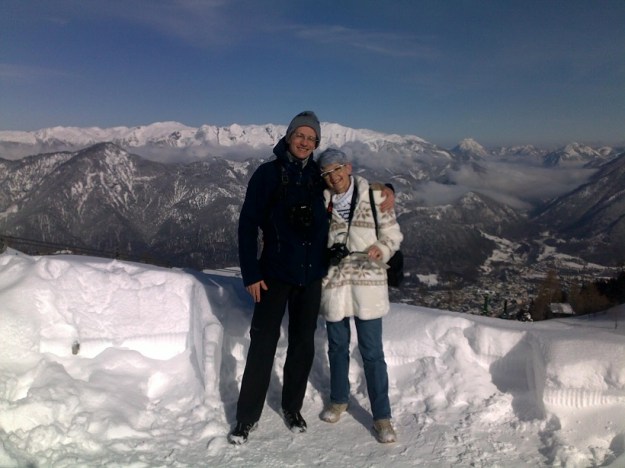
 During my visit, I had lots of coffee with Miś who is solely responsible for my addiction; had long chats with Krystian sitting next to him and not in front of a computer screen; saw old friends and knew exactly why they have always been so dear; in my mother’s attic, found the small green fork I used to eat with as a child; walked along my beloved Mattig; spoke German; sat quietly in my mother’s guest bed in the mornings when everyone else was still asleep and read Rehana Rossouw’s latest novel, New Times, set in Cape Town, in preparation for
  Like most readers across the world, I first became aware of the South Korean writer Han Kang when she won the Man Booker International Prize two years ago for her phenomenal novel, The Vegetarian. It was recommended to me by a friend who bought it because of the award. Since then, I have read Han’s other works translated into English: the harrowing Human Acts and her latest, The White Book.
 “The true character of a society is revealed in how it treats its children.” Nelson Mandela’s famous words echo the understanding that we can be judged by the way we treat the most vulnerable members of our communities, whether these are children, the elderly or the differently abled. Reading Valeria Luiselli’s Tell Me How It Ends: An Essay in Forty Questions, we are reminded how we fail to protect those who need our care. The story she outlines is set across the two Americas, but it resonates with so many other tales across all continents where displaced people are escaping horror or looking for decent opportunities to build their lives.
 Despite her impressive résumé, I had not heard of Jesmyn Ward before her latest novel, Sing, Unburied, Sing, was recommended to me by two local booksellers in the beginning of December. But I am thrilled that I finally came across her work. Ward is an American novelist and the first woman to win the prestigious National Book Award twice. This is no small feat, as she has only turned forty and Sing, Unburied, Sing is only her third novel. She received the National Book Award for it and its predecessor, Salvage the Bones (2011), but already her debut, Where the Lines Bleed (2008), was highly acclaimed. Ward is also the author of a memoir, Men We Reaped (2013), and the editor of an essay and poetry collection, The Fire This Time: A New Generation Speaks about Race (2016). Her potential has been recognised with the famous MacArthur Fellowship, better known as the “Genius Grant” ($625,000 – allow a moment for this number to sink in) given to individuals residing in the United States who exemplify “extraordinary originality and dedication in their creative pursuits and a marked capacity for self-direction”. I look forward to exploring more of her work, past and future.
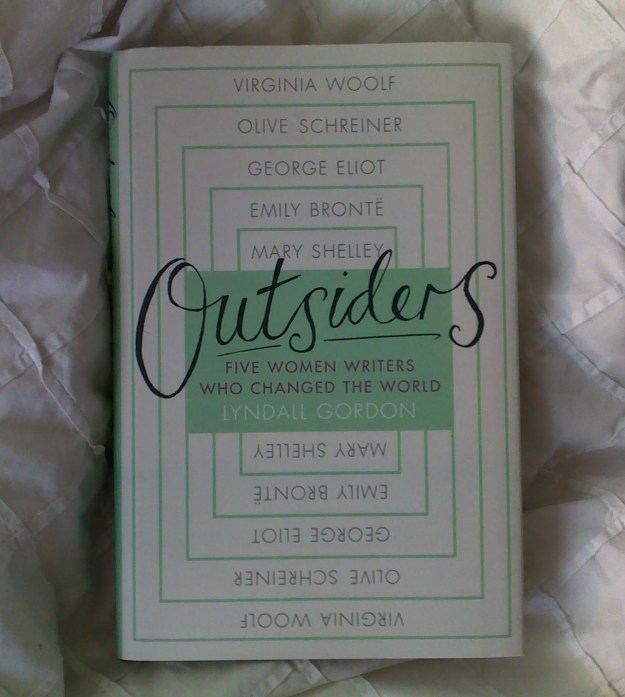 Beyond Power: An Interview with Lyndall Gordon
 Gordon’s entire oeuvre, however, makes it clear that the vision from the train did not remain dormant. Even when writing the two men’s biographies, she focused on the women who shaped their creative consciousness. Daring to conceptualise a contrasting reality to the insanity of our present, she is drawn to women who, like James’s Isabel Archer “affront their destiny”.
 Fiona Melrose’s Johannesburg is only her second novel, but it feels like the work of a much more seasoned writer. After her highly acclaimed debut, Midwinter (2016), which chronicled the grief and survival of a Suffolk farmer’s family and was set in the UK and Zambia, Melrose returns to the country of her birth and locates her latest story, as the title suggests, in the City of Gold on a very specific day in history, 6 December 2013. Melrose seems to be a fearless writer; her imagination leads her where surprisingly few dare to go and she gives credible and moving voices to characters of all backgrounds. It is the hallmark of a true writer. As is her literary scope. Melrose is not afraid of intertextuality, allowing Johannesburg to beat with the heart of a few literary giants, Virginia Woolf most prominent among them, but the storytelling rhythm is entirely Melrose’s own.
 In no particular order, nor according to any genre categories, these are simply the books I enjoyed reading – for whatever reasons – the most this year. Some of them were not published in 2017, but I only got around to reading them now. This list excludes some recently released treats which are still waiting for me during the festive season.
 Karina Magdalena