 The second Reshma Patel and Ian Jack thriller by NR Brodie, Three Bodies, is here and, if you enjoyed the first one as much as I did, you can get excited. Yes, it’s also available as an ebook and Brodie has announced on social media that she will be donating all her royalties from the sales during the lockdown to the Sex Workers Education and Advocacy Taskforce supporting sex workers in this time of crisis when they are at risk more than ever.
In Three Bodies, the risk to the three women who are discovered dead in different bodies of water around Gauteng comes from a dark source. At first, the cases seem unrelated and, when Ian Jack comes across the first one during an investigation in which he helps to trace a security guard gone missing, and his partner Reshma Patel discovers a severed finger and a stash of money and guns next to two corpses deep underground in Johannesburg’s tunnels while also pursuing a missing person case, they find it difficult to connect the dots. Both finds are accidental, but Reshma’s has immediate consequences for her career when she takes a bold step behind her superior’s back and contacts another unit to investigate the gruesome crime scene she stumbles upon.
As in Knucklebone, the first book in the series, Brodie offers a cast of fascinating characters. Is Myburgh, the ex-cop turned head of security for a group of housing estates, past his best? Despite his impeccable credentials, can Super Sobukwe be trusted after it comes to light that he might have put Reshma and her new colleague, Wayde Claassen, carelessly in lethal danger? And who is the fierce Angela de Bruyn from the Church of Saint Mary the Virgin trying to protect? Do mermaids exist?
It was good to see MaRejoice from Knucklebone return with all her wisdom and intuition. And Joburg is there in all its gore, grit and glory again. Having written a lot of non-fiction about South African cities, Brodie knows a thing or two about how to portray a metropolis like Johannesburg with aplomb. There were a few descriptive passages of characters’ comings and goings when the writing slowed down to a pace that reduced the impact of the narrative, but the vivid cash-in-transit heist scenes and the final showdown of the novel made up for a lot in the page-turning department.
Knucklebone does not have to be read before you can dive into Three Bodies, yet the private and professional relationships between Reshma and Ian are better understood if you know how they have developed since the spectacular ending of Brodie’s debut novel. The magic realism elements of the first book are toned down in the latest, but are used to a great effect towards the end of the novel, allowing us to wonder at the reality we think we know.
Three Bodies
NR Brodie
Macmillan, 2020
Review first published in the Cape Times on 8 May 2020.


 It has been a while since I’ve read, edited or contributed to an anthology of theoretical essays on South African literature. But, occasionally, I still have academic longings; therefore, I approached
 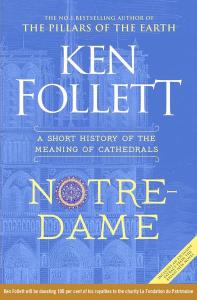 “Something priceless was dying in front of our eyes. The feeling was bewildering, as if the earth was shaking”, writes Ken Follett about watching the Notre-Dame Cathedral burning on 15 April last year. Not an expert on cathedrals, but known across the world for his The Pillars of the Earth, a novel about the construction of a cathedral for which he did an enormous amount of research, he became the media’s go-to person for commentary about the Notre-Dame fire and, together with his French publisher, decided to write Notre-Dame: A Short History of the Meaning of Cathedrals to support the reconstruction efforts of the architectural treasure after the catastrophe. All the royalties generated by the book go to the charity La Fondation du Patrimoine.
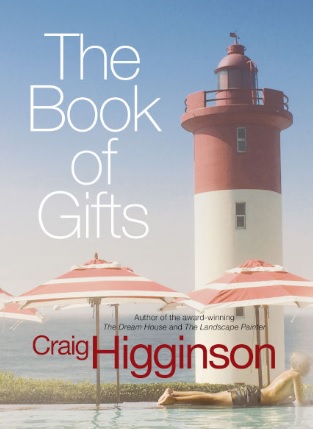 As readers, we turn to specific authors when we don’t want to be disappointed. The internationally acclaimed writer, Craig Higginson, has become one of these for me. His latest novel, The Book of Gifts, is another gem in his impressive oeuvre. It begins with a family trip to uMhlanga Rocks and radiates from this particular moment into the past and the future, gradually piecing together the puzzle of the intricate – often toxic – relationships that play out during the holiday in KwaZulu-Natal. At the centre of the unfolding story and the complex familial constellation are the two half-sisters, Emma and Jennifer. Emma is a successful sculptor and mother to Julian, at the time of the holiday an eleven-year-old boy who falls in love for the first time with an enthralling, slightly older Clare. Jennifer is a teacher at Julian’s school back in Johannesburg where they all live, and wife to Andrew, a psychologist struggling to find his professional and personal bearing.
 The internationally acclaimed, Durban-born writer, Elleke Boehmer, has a second short story collection out: To the Volcano, and Other Stories. Set mostly in the southern hemisphere and illuminated by the legendary southern light artists and tourists travel the world to experience, the twelve stories in this collection explore the tenuous and tenacious relationships people have with the South.
 We have entered an era when biographers and literary scholars bemoan the fact that most of us have stopped writing letters, the ones composed with a pen on paper, folded into an envelope and posted to be received and perhaps kept under a pillow or in a jacket’s pocket because of the precious content they contain. For centuries, such letters were frequently lifelines to others and bore testimonies to our lives in ways that our modern world, despite all our inventions and our seeming connectedness, is no longer capable of reproducing.
 Missing Person, the latest thriller from the author of The Three, Day Four and The White Road, Sarah Lotz, was my companion on a recent overseas flight and kept me so entertained that I hardly noticed the long hours flying by.




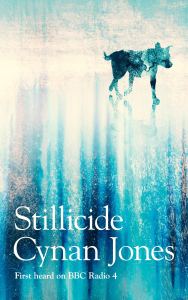 In his writing, Cynan Jones showcases the full potential of the short forms of prose – the novella and the short story. I have been a fan for years. The economy of his prose and the uncanny insight he offers into the human condition are a rare gift. Stillicide, his latest book, is a collection of short fictions which originated as a BBC Radio 4 series. The pieces are interlinked and centre around the theme of water, as the title suggests. “Stillicide” is defined as “a continual dropping of water” or “a right or duty relating to the collection of water from or onto adjacent land.”
