 In his novels, Richard Zimler, who is best known for The Last Kabbalist of Lisbon, has been chronicling Jewish history throughout the ages and from all corners of the world for many years. His latest offering is an unusual, deeply touching retelling of the gospel. At its centre, Zimler places Lazarus and allows him to tell the story in a long letter to his grandson: “Picture me endeavouring to tell you matters that will never be able to fit easily or comfortably on a roll of papyrus.”
Lazarus, a widower and a father of two, lives with his sisters and is a tile maker commissioned to design symbolic mosaics for affluent citizens of Galilee. He is friends with the man whom most readers will know as Jesus of Nazareth. It is this relationship that leads Lazarus into danger and tests his faith as well as the people closest to him.
The Gospel According to Lazarus goes back and forth in time, but focuses on the days following Lazarus’s return from the dead. Zimler’s daring recreation of this tale from Lazarus’s perspective is a truly remarkable feat of the imagination and of empathy. The experience is described with sublime sensitivity, as is the unshakable friendship that binds the two main characters of the story. “I have found that most men and women huddle behind their own heartwalls and only rarely peek outside. We spend thirty, forty, fifty years or more not seeing one another”, Lazarus tells his grandson. “But he looked and saw.”
Whether we are believers or not, through Zimler’s fearless storytelling, we are reminded that there are “profound and hidden things in our world” and that fiction, not unlike faith, can bring us closer to understanding our own humanity and the stories that have sustained it for millennia.
The Gospel According to Lazarus
Richard Zimler
Peter Owen Publishers, 2019
Review first published in the Cape Times on 24 January 2020.
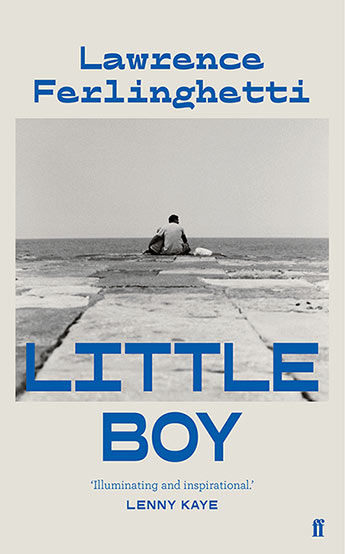 The versatile American artist Lawrence Ferlinghetti is a literary legend. For his hundredth birthday last year, Faber & Faber published a beautiful hardback edition of his latest work, a memoir in verse titled Little Boy. The cover and the first few pages lured me in at the bookshop; I couldn’t wait to take it home.
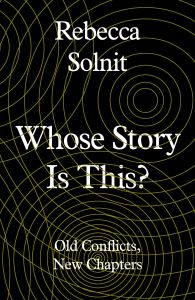 There are numerous writers out there who understand the complexity of the present. Many can also clearly convey their insights. But few do it as strikingly as Rebecca Solnit. I have discovered her work only recently, but have read and loved all the books she has authored by now. Her latest is another intellectual delight.
 When a doctor pushed a shunt into her “unborn baby’s thorax to save his life from a deadly condition called hydrops”, Olivia Gordon and her husband had no way of knowing what other challenges would await them and their son before or after his birth.

 The first in the Intimate Geographies series, Cape Town: A Place Between by Henry Trotter is a thought-provoking, genre-crossing book that will intrigue locals and foreigners alike. Incorporating elements of memoir, guide book, socio-political history and travelogue, Trotter tells a compelling story and captures the essence of what makes the Mother City so irresistible on the one hand, and so impossible to grasp on the other.
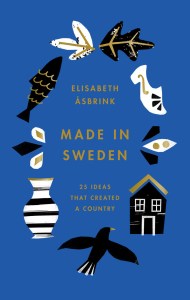 Whether it is ABBA, Pippi Longstocking, Scandi noir, Swedish massage, Volvo or IKEA furniture, these famous Swedish exports usually evoke positive connotations. We often associate Scandinavian countries in general and Sweden in particular with innovative ideas and socio-political stability. Award-winning Swedish author, Elisabeth Åsbrink, decided to test these assumptions about her country and ask herself the following questions: What are the real Swedish values? Who is the real Swedish model?
 Friends Neha, Devon, Shejal, Janine and Kumari live in the Indian suburb of Lenasia and spend a lot of time together. It is the early 90s, just before the first democratic election in South Africa. The country is preparing for change when the teenagers witness a terrible crime on one of their outings in the township. Their sense of belonging and identity is shaken as they embark on the rough path to adulthood after this lethal incident. Alongside them, South Africa is also trying to come into its own. This is the premise of Nedine Moonsamy’s beautifully crafted debut novel, The Unfamous Five. Although clearly echoing Enid Blyton’s The Famous Five novel series, Moonsamy makes this story completely local and her own.
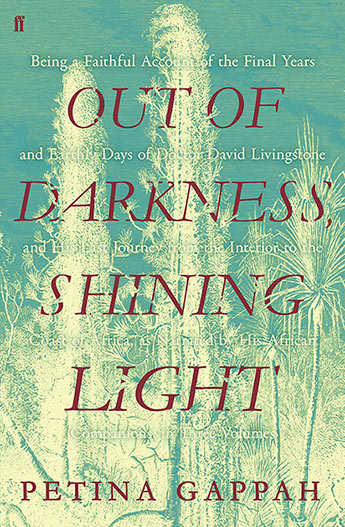 “Whoever heard of a group of people marching from place to place with a dead body?” It is precisely such a journey that is at the centre of Petina Gappah’s latest novel, Out of Darkness, Shining Light. Two decades in the making, the book tells the story of the sixty-nine men and women who decided to carry the body of Bwana Daudi – the Scottish physician and explorer David Livingstone – across the African continent after his death, so that his remains could be interred in his own country.
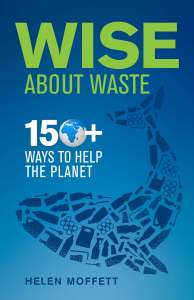 There is nothing to be done. We are coming too late to the party, allowing doom and gloom to persist. It’s easier to remain in a state of stupor than to take up the torch of an eco-warrior. Looking around, you will be forgiven for thinking that the war is already lost anyway. And there is no doubt about it: we are the bad guys on the wrong side of history. We are destroying our environments with ignorant dedication at a mind-boggling speed. The results are undeniable and crushing.
