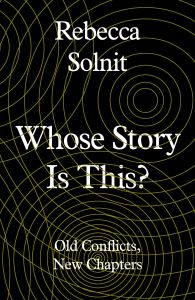
 There are numerous writers out there who understand the complexity of the present. Many can also clearly convey their insights. But few do it as strikingly as Rebecca Solnit. I have discovered her work only recently, but have read and loved all the books she has authored by now. Her latest is another intellectual delight.
Whose Story Is This? Old Conflicts, New Chapters is a collection of essays Solnit penned over the last three years. At the heart of the book is the ancient question of who and how is allowed to tell a story. It might seem simple at first glance, but there are no easy answers. And when one realises how many seminal stories are silenced and for which reasons, one can grow terrifyingly worried about the narratives that infiltrate our lives.
Storytelling and power are tensely interlinked. Credibility or lack thereof forms part of that connection. Having a voice doesn’t necessarily mean that it is your time to speak. Truth and accuracy are paramount. And perhaps most importantly for our strange times, the dominant story is often the one that is lethally misleading: “Gaslighting is a collective cultural phenomenon, too,” Solnit notes, “and it makes cultures feel crazy the way it does individual victims.” Whose Story Is This? is worth reading just for the explanation of this concept. But the book offers so much more.
Solnit’s intense clarity of thought and compassion allows us to follow her as she “maps or machetes” paths out of “this horrible tangle.” She says that it is all about the “active practice of paying attention to other people.” It is also about kindness. Our world can use a lot more of these vital skills, if we want to envisage a future that is meaningful to most, not only a few.
Whose Story Is This? Old Conflicts, New Chapters
Rebecca Solnit
Granta, 2019
Review first published in the Cape Times on 20 December 2019.
 When a doctor pushed a shunt into her “unborn baby’s thorax to save his life from a deadly condition called hydrops”, Olivia Gordon and her husband had no way of knowing what other challenges would await them and their son before or after his birth.
 The first in the Intimate Geographies series, Cape Town: A Place Between by Henry Trotter is a thought-provoking, genre-crossing book that will intrigue locals and foreigners alike. Incorporating elements of memoir, guide book, socio-political history and travelogue, Trotter tells a compelling story and captures the essence of what makes the Mother City so irresistible on the one hand, and so impossible to grasp on the other.
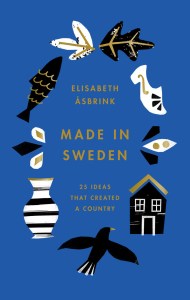 Whether it is ABBA, Pippi Longstocking, Scandi noir, Swedish massage, Volvo or IKEA furniture, these famous Swedish exports usually evoke positive connotations. We often associate Scandinavian countries in general and Sweden in particular with innovative ideas and socio-political stability. Award-winning Swedish author, Elisabeth Åsbrink, decided to test these assumptions about her country and ask herself the following questions: What are the real Swedish values? Who is the real Swedish model?
 Friends Neha, Devon, Shejal, Janine and Kumari live in the Indian suburb of Lenasia and spend a lot of time together. It is the early 90s, just before the first democratic election in South Africa. The country is preparing for change when the teenagers witness a terrible crime on one of their outings in the township. Their sense of belonging and identity is shaken as they embark on the rough path to adulthood after this lethal incident. Alongside them, South Africa is also trying to come into its own. This is the premise of Nedine Moonsamy’s beautifully crafted debut novel, The Unfamous Five. Although clearly echoing Enid Blyton’s The Famous Five novel series, Moonsamy makes this story completely local and her own.
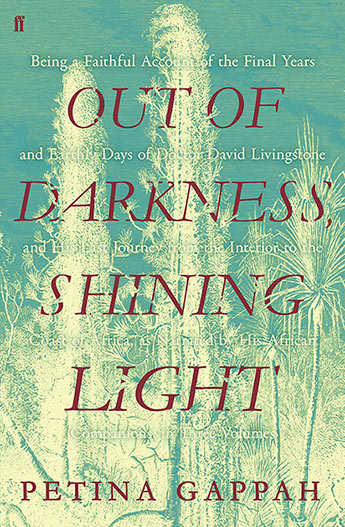 “Whoever heard of a group of people marching from place to place with a dead body?” It is precisely such a journey that is at the centre of Petina Gappah’s latest novel, Out of Darkness, Shining Light. Two decades in the making, the book tells the story of the sixty-nine men and women who decided to carry the body of Bwana Daudi – the Scottish physician and explorer David Livingstone – across the African continent after his death, so that his remains could be interred in his own country.
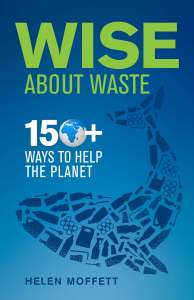 There is nothing to be done. We are coming too late to the party, allowing doom and gloom to persist. It’s easier to remain in a state of stupor than to take up the torch of an eco-warrior. Looking around, you will be forgiven for thinking that the war is already lost anyway. And there is no doubt about it: we are the bad guys on the wrong side of history. We are destroying our environments with ignorant dedication at a mind-boggling speed. The results are undeniable and crushing.
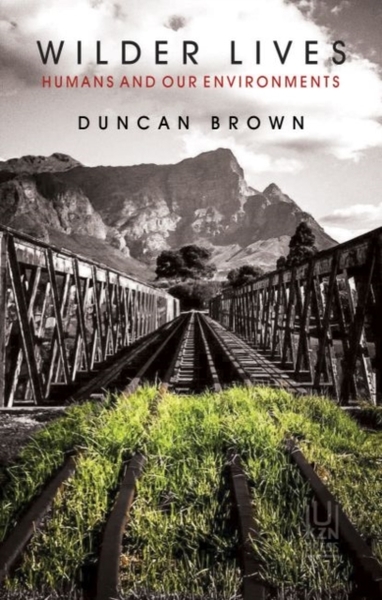 Not all is well with the world. In moments of dark disillusionment, it is easy to give in to despair and just do nothing. But it is worthwhile to remember that if all of us, or at least most of us, institute even the tiniest of changes in our lives, we can make these lives better and we can make the world a better place, for ourselves and others.
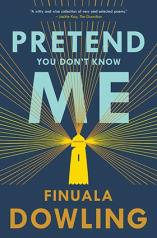 If you are a reader of poetry, the last thing you should do is heed the instructions of the title of Finuala Dowling’s latest collection. Pretend You Don’t Know Me: New and Selected Poems brings together a selection of some of her best poetry from four previous volumes (three of them out of print now) and twenty-two new poems, each of which will make you want to know her work – not only the poetry, but the prose as well. Dowling is also the author of four novels, with a fifth to be published later this year. She is the recipient of the Ingrid Jonker, Sanlam and Olive Schreiner Prizes and is rated as one of the most significant South African poets writing in English today.
 It was by chance that I read Musawenkosi Khanyile’s debut poetry collection on a rainy morning, still tucked up in my bed. But it was no coincidence that the juxtaposition of the comfort of my bedroom and the realities described in the volume repeatedly moved me to tears. Unapologetically autobiographical, the poems included in the book trace the author’s journey from childhood to adulthood, from his rural family home, through the township, to the city. A journey undertaken by many, but not often evoked in poetry with such distinct tenderness that it takes your breath away.
 Karina Magdalena