
 Eight years have passed since Nozizwe Cynthia Jele’s striking debut novel, Happiness is a Four-Letter Word, was published and won the Commonwealth Writers’ Prize in the Best First Book category for the Africa region. It was also chosen as the winner of the M-Net Literary Award in the Film category and turned into a highly successful movie that made a huge splash in local cinemas two years ago. I loved the book and the screen adaptation and was very eager to see what kind of novel Jele would write next.
The Ones with Purpose was well worth the eight-year-long wait. I couldn’t put it down and devoured it in the course of a single day. It has been a long time since a novel captivated me to such an extent. To say that I feel truly bereft after finishing it is only fitting, since the plot of the book centres on the death and funeral of one of the main characters, the narrator’s sibling: “I imagined a dying person’s last breath as something resembling an exclamation mark, distinct and hanging mid-air like an interrupted thought. My older sister Fikile’s last breath before she dies is nothing of the sort. There is no rattling noise at the back of her throat. No relentless twitching. No clinging to life. Fikile dies with no more fuss than a switch of a light bulb.”
The life that is extinguished with that last switch was one lived to the fullest. When Fikile is first diagnosed with breast cancer, she has everything going for her. With a national diploma in Early Childhood Development to her name, she is running a successful crèche and lives in a comfortable home with her husband Thiza and her own three children. It is clear from the start that growing up wasn’t a stroll in the park for her and her two siblings, Anele and Mbuso, but as the oldest, Fikile did whatever she could to keep the family going after their father’s death in a horrifying road accident and their mother’s subsequent descent into alcoholism: “Ma had returned to life too soon after our father’s death, before her heart was completely healed and before much of the grief had poured out of her system.” Neglected by their mother who, shattered by the loss of her husband, was too ill and self-absorbed to care for the young children, Anele and Mbuso looked up to Fikile to provide for and guide them when the adults in their lives had messed up. “I didn’t bring you into this world,” she exclaimed, “I’m not responsible for you and I cannot be expected to raise you. I have my own life to live.” But even though the burden was too much to handle, she did her best.
As the family gathers to mourn and bury Fikile, Anele recalls her sister’s life and the choices they all made in order not only to survive, but to thrive and aim at a different, more fulfilling future. Sacrifices and impossible compromises had to be made, some best forgotten. But Fikile’s passing brings their individual histories into focus and long-supressed tensions and regrets surface, demanding to be faced and resolved: “Ma maintains that when people come to pay respects to the aggrieved family it is rarely about the deceased; she says people are there to mourn their past personal losses, and that as an aggrieved family it is important to keep your grief in check and not to get caught up in other people’s emotional tangles.”
Anele is ridden by guilt. She is also angry with her brother-in-law for abandoning Fikile in her hour of need. It is now her turn to accept an enormous responsibility for the bringing up of Fikile’s children entrusted into her custody by a sisterly promise. And there is her own daughter to think of, and the child’s father Sizwe, who showed up one day unexpectedly and stayed to the benefit of the entire family. But now, his own past comes back to haunt him.
After a long, painful absence Mbuso returns home to be with the family and has to navigate the minefield of the hurt he had left behind. Unspoken truths fester and need to be revealed. Love springs up in the most unlikely places. Betrayals, old and new, want to be acknowledged and have to be atoned for to bring healing and closure. Some things cannot be unremembered, no matter how hard you might try to escape your ghosts. Throughout it all, traditions have to be observed and respects paid according to family customs. In the middle of the necessary arrangements, Anele makes a crucial resolve: “I ask that we bury first, hold court later.”
Reading The Ones with Purpose, I was often reminded of Anne Enright’s brilliant The Gathering which won the Man Book Prize in 2007. Both novels have the same premise: family dynamics and secrets are explored through the prism of the death of one of family members and the emotional chaos which ensues after such a traumatic event. Jele’s take has a wonderful local flavour which makes it even more appealing, and like the other novel, it tackles psychological landscapes we are all familiar with, independent of where and how we grow up.
Using a quote from Elizabeth Berg for her epigraph, Jele dedicated The Ones with Purpose to “women with cancer who have found their fire, and for those who are still searching.” Having once experienced what it means to be confronted with the threat of a breast cancer diagnosis, I understand the all-consuming fear one has to deal with knowing that perhaps nothing will ever be the same again. “All through this,” Anele tells us, “Fikile hadn’t cried.” Jele captures the utter helplessness and the unbelievable courage required to soldier on when the battle rages inside your own body.
The Ones with Purpose is a powerful novel about endings and new beginnings. Written with wisdom and compassion, it will resonate long after the last page is turned.
The Ones with Purpose
by Nozizwe Cynthia Jele
Kwela Books, 2018
Review first published in the Cape Times on 17 August 2018.

 Authors like Margaret Atwood, Nadine Gordimer or Jeanette Winterson impress with their literary chameleon natures. Their craft is writing. Their tools – an empty page, words, punctuation – might seem simple. But they astound with the versatility of their use. Their talents and imaginations do not fear rules or boundaries. They bend forms to accommodate the multifaceted observations and ideas that come alive through their creativity. They are no cookie cutters. Whether it is poetry or prose, fiction or non-fiction, literary or genre, these writers rise to the challenge of versatility and deliver excellence.
 Rachel Haze is the author of a local erotic novel which teasingly proclaims on its back cover that “there are far more than fifty shades.” The reference will be clear to most readers, even if you have never succumbed to the lure of E.L. James’s über-bestselling creations. I have never had the dubious pleasure of reading the books, but in general I have absolutely nothing against erotic fiction of any kind, and I have delighted in a few local titles of the genre in recent years. The anthology of short stories, Adults Only, edited by Joanne Hichens, or the Girl Walks Into series by Helena S. Paige come to mind. However, the book that still haunts me is Donvé Lee’s fierce and exquisitely written An Intimate War. It captivated me because it felt authentic and was touchingly erotic.
 “There were too many weddings that summer,” writes
 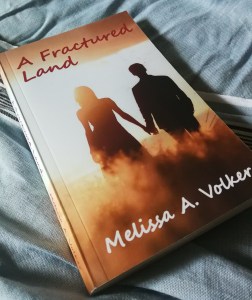 Divorced and penniless, Lexi Taylor returns to Graaff Reinet with the tail between her legs. Only a little while ago, her future looked all glamour and romance when she left her hometown to pursue professional opportunities in the hospitality industry and married the guy of her dreams. But now, her crooked ex-husband is on the run, and she is left behind to deal with his enormous debts. When her friend Paul offers her to be his singing partner at the local pub and old Marika asks for her help to open a guest house on Apricot Farm, Lexi thinks that she is back on track of regaining some control over her life. But nothing is as it seems in the sleepy Graaff Reinet, and both Paul and Marika have hidden agendas which will challenge Lexi in unexpected ways.
 When they board the “gleaming white Toyota Quantum with black-tinted windows pulled into a vacant parking space opposite Max’s Garage” in Bulawayo, the characters in Sue Nyathi’s second novel, The GoldDiggers (unusual spelling intended), know that they are embarking on a precarious trip. But none of them is truly prepared for the rough ride which lies ahead. Before they even leave the parking lot, Melusi, the driver and owner of the vehicle, is ready to throw out the young Shona couple at the back because they insist on conversing in their mother tongue. As a Ndebele, Melusi “had been raised to hate them…but his desire for their money surpassed his intolerance. All the passengers in his car were going to be ferried across the border illegally.”
 Niq Mhlongo is one of my favourite South African storytellers. He is the author of three novels (Dog Eat Dog, After Tears, Way Back Home) which have been reprinted several times and translated into other languages like French and Spanish. Mhlongo is also well known for his short stories. His debut collection, Affluenza, gave readers a fascinating insight into contemporary South Africa. In those stories, Mhlongo tackled such wide-ranging issues as suicide and farm murders, exposing our prejudices and inability to communicate. He writes about the crucial nexus between race, gender and class and has a wicked sense of humour, often making you laugh while you squirm with discomfort.
 We all know about them. They are often quite (in)famous. Most of us have encountered them in our personal lives or at work. Some of us are their victims. And no matter what you call them, once you have had to deal with one, you will never forget it. They go by many names: psychopaths, toxic people, malignant narcissists or master manipulators. All charm and seduction when you first meet them, whether socially or professionally, and then…! By the time they are done with you, nothing is the same any longer. To any human being with empathy, these people never make sense in the long run: their lies, manipulations, subterfuges, risk-taking, and constant deflection of blame and responsibility will have you tied up in knots. They live by different rules, and they always go for the kill. They are human parasites, unable to feel, emphasise or care for others. They are just brilliant at pretending that they can when it suits their own agendas.
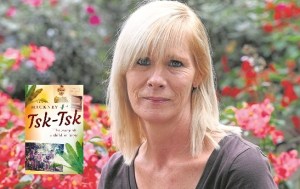 It is painful to think and write about Suzan Hackney’s courageous memoir, Tsk-Tsk: The story of a child at large, around Mother’s Day when many of us celebrate our fabulous mothers or are cherished as such by our kids. The relationship between a child and a mother is not always one of joy, and Hackney’s story is mostly one of unimaginable heartbreak. She was given up for adoption as a baby by her biological parents. Still in the hospital, the moment she found herself in the arms of the woman who was to become her mother, she started screaming her lungs out. The scream was a foreboding. Her memoir reads like a reckoning with that primal anguish she experienced as an infant and the torment which followed. It is also a story of survival in the face of impossible odds, and of laying ghosts to rest.
 Karina Magdalena