 “Loss helps you remember, and loss of a library helps you remember who you truly are”, writes the remarkable Argentine-Canadian wordsmith, Alberto Manguel. Nine years ago, I had the great fortune of spending an afternoon in his company. It was just after a visit to the special collection of a library in the French province of Champagne where I had seen manuscripts from the Middle Ages. The librarian responsible for them handled the treasures in white cotton gloves and, for understandable reasons, would not allow anyone else to touch them. Still spellbound, I told Mr Manguel of the encounter with the precious books and how much I had longed to touch their pages. That is when I found out about his own famous library, located in the home he shared with his partner near Paris, and containing thousands of books, some as ancient and unique as the ones I had seen. And in his kindness, he said that if I ever came to visit, he would allow me to hold these books in my hands.
Sadly, I never had the opportunity to take him up on this generous offer, but the dream remained with me until I read Packing My Library, Alberto Manguel’s farewell to the library he told me about, an extraordinary collection of thirty-five thousand books “housed in an old stone presbytery south of the Loire Valley, in a quiet village of fewer than ten houses.” He doesn’t go into details why the home – and the library – had to be packed up in 2015, but the experience had been clearly traumatic. To adapt an African proverb: When an old library dies, a man burns to the ground.
“I’ve often felt that my library explained who I was, gave me a shifting self that transformed itself constantly throughout the years.” With the help of friends, the books are catalogued and put into boxes before being shipped to Canada. Packing My Library is, as the subtitle suggest, a lament for the absent books and the lost space where they had come to rest for many years, where the author “never felt alone”. Manguel recalls how the library took shape throughout his nomadic life, how individual titles became part of the collection and how they influenced the author’s reflections. The digressions of the subtitle are short pieces on topics as diverse as literary creation, revenge and Jorge Luis Borges, the writer who at one stage of his life became the director of the National Library of Argentina, a post now occupied by Manguel.
Most known for his outstanding A History of Reading, Manguel has been sharing his love of language and reading with us for decades. Packing My Library is a touching tribute, an obituary to a self formed and informed by a library now dormant until – hopefully – its next “unpacking”.
Packing My Library: An Elegy and Ten Digressions
by Alberto Manguel
Yale University Press, 2018
Review first published in the Cape Times on 2 November 2018.
 It is nearly impossible to know where to start when writing about postcolonial studies. This vast field of inquiry has influenced diverse schools of thought and disciplines all over the world. One of its leading scholars in the literature corner is Elleke Boehmer, the author of such seminal works as Colonial and postcolonial literature: Migrant metaphors (1995; expanded edition, 2005), Empire, the national, and the postcolonial, 1890–1920: Resistance in interaction (2002) and Stories of women: Gender and narrative in the postcolonial nation (2005). What sets Boehmer’s work apart from many other academic writers’ is its readability. She is also an acclaimed novelist and short story writer. These two facts are most likely related. They also allow the author to view the topic of her latest book, Postcolonial poetics: 21st-century critical readings, from a rare perspective, as a theorist and practitioner of the art of creative writing.


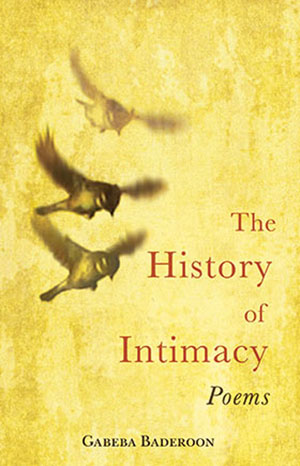 It is heartening to see the proliferation of high quality poetry collections on the local literary scene, publishers like uHlanga Press, Modjaji Books, Protea Book House and Dryad Press leading the way. The history of intimacy by Gabeba Baderoon – “[a]n exquisite new collection from one of South Africa’s finest, most treasured poets”, according to Nadia Davids – is the only poetry volume published by Kwela Books this year, but one which is a most welcome addition to the plethora of distinguished South African poetic voices. It is Baderoon’s fourth after The dream in the next body (2005), The museum of ordinary life (2005) and A hundred silences (2006). She is also the author of the monograph Regarding Muslims: From slavery to post-apartheid (2014).
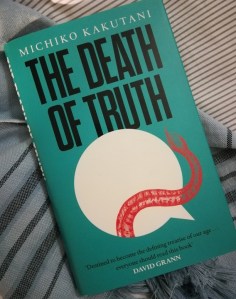 “For journalists everywhere working to report the news”, says Michiko Kakutani’s dedication in her latest book, The Death of Truth, published only a few weeks ago. The Pulitzer Prize-winning literary critic started her journalism career at The Washington Post, the newspaper that Jamal Khashoggi was writing for at the time of his brutal murder earlier this month.
 The city is Lviv. The house with the stained-glass window is an architectural treasure. The four generations of women living in it are steeped in the setting’s rich and deeply troubled history. And so begins Żanna Słoniowska’s magnetic debut novel. Ukrainian-born, Słoniowska has settled in Cracow, Poland, and published The House with the Stained-Glass Window in Polish. It won the esteemed Znak Publishers’ Literary Prize and the Conrad Prize for first novels. It was shortlisted for Poland’s most prestigious literary award, the Nike (not to be confused with the sports brand), a respected recognition. Translated seamlessly into English by Antonia Lloyd-Jones, the book is one of those historical novels that manages to encapsulate a century of socio-political hopes and upheavals in Ukraine’s most famous city by portraying the private and intimate lives of a single family, specifically the women who shaped its core.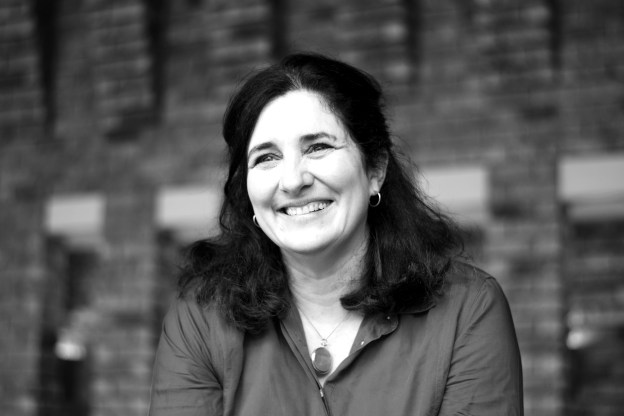

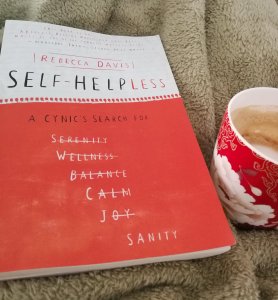 We can thank the giraffes. The threat of their extinction had driven Rebecca Davis into despair and sent her on a rollicking search for meaning. The resulting book, Self-Helpless: A Cynic’s Search for Sanity, was at times dangerous to research, but it is witty and delightful to read.
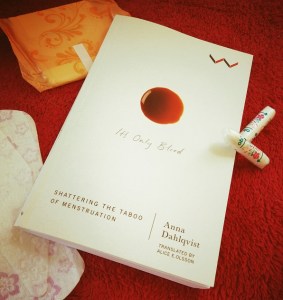 A friend from my university days in Wales once told a group of women gathered at my student residence that when she started menstruating, her parents gave her a bunch of flowers and took her on a river boat excursion to celebrate the occasion. She was German, and the rest of us were, like her, exchange students from different European countries. Most of us had rather bleak stories to tell about our own individual memories of our first periods. By then, we were all in our early twenties and had about a decade of painful monthly woes behind us. I still remember the relief we all felt when sharing these stories and our experiences, as opportunities to talk about or reflect on menstruation without feeling a certain degree of shame, anger or disillusionment had been rare for most of us up to that point.

 Karina Magdalena