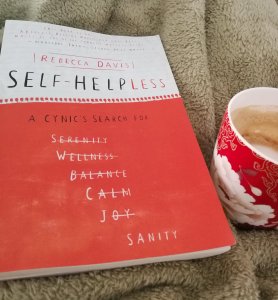
 We can thank the giraffes. The threat of their extinction had driven Rebecca Davis into despair and sent her on a rollicking search for meaning. The resulting book, Self-Helpless: A Cynic’s Search for Sanity, was at times dangerous to research, but it is witty and delightful to read.
In the past, when confronted with the disappearance of a species and other symptoms of the appalling state of the world around us, Davis had the perfect solution to all her worries: alcohol. She did not just drink socially and in moderation. Most of the time, she preferred to drink herself into oblivion. When her excessive consumption of alcohol began to threaten her relationship with her wife Haji, she decided to call it quits and find other ways of engaging with reality in her free time.
During her investigation, Davis acknowledges her inner demons, occasionally risks her life and finds insightful answers to some of the most pressing questions of our times. Self-Helpless records her adventurous year-long journey towards “wellness, spiritual enlightenment and good old-fashioned happiness”. Living in Cape Town, she is at home in the city that has the latest fads of self-improvement, no matter how outlandish, on offer.
Magic mushrooms might not seem like an obvious point of departure for all, but Davis attends a Sacred Mushroom Ceremony and is nearly converted, but then, she and her wife attempt to replicate the experience at home – with nearly disastrous consequences. A visit to a sweat lodge ends up nearly as lethal. Davis is sceptical of the possibility of reincarnation, but allows herself to be hypnotised in order to explore her past lives.
Having married into a family observing the fast of Ramadan, Davis joins her relatives, hoping to become “free and light; empty and pure” through fasting. She quits social media and turns for guidance to the good, old-fashioned plethora of self-help books available in our bookshops. She discovers the existence of the “exercise pills” and orders the illegal wonder-drug online. What gets her truly hooked, though, are gyms and exercise apps.
Following Marie Kondo’s path to minimalist living, Davis declutters her home, leaving behind only objects that “spark joy” (some famous books do not survive the purge). She finds peace through meditation, on a silence retreat and inside an isolation tank. Her encounters with her cursed ancestors turn out to be much less satisfying. Luckily, even though she has a brush or two with her own mortality, no giraffes are harmed during her quest. And you will not want to miss the story of her “pet goat” and the “icky guy”.
Although highly entertaining, the book is much more than a humorous romp. Davis is great at making us chuckle and think at the same time. At the end of it all, for life to be meaningful, each one of us has to know what gets us “out of bed on a Saturday morning”. If that thing makes you smile, hold on, you are on the right path.
Self-Helpless: A Cynic’s Search for Sanity
Rebecca Davis
Macmillan, 2018
Review first published in the Cape Times on 21 September 2018.
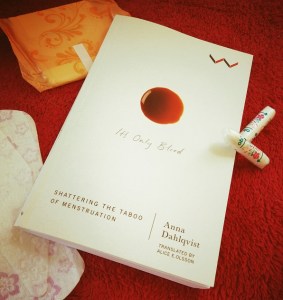 A friend from my university days in Wales once told a group of women gathered at my student residence that when she started menstruating, her parents gave her a bunch of flowers and took her on a river boat excursion to celebrate the occasion. She was German, and the rest of us were, like her, exchange students from different European countries. Most of us had rather bleak stories to tell about our own individual memories of our first periods. By then, we were all in our early twenties and had about a decade of painful monthly woes behind us. I still remember the relief we all felt when sharing these stories and our experiences, as opportunities to talk about or reflect on menstruation without feeling a certain degree of shame, anger or disillusionment had been rare for most of us up to that point.

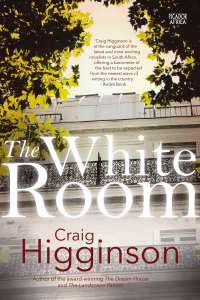 The White Room, Craig Higginson’s latest novel, is sublime. Sometimes a simple, strong word can express it all, especially when you are reviewing a book so intricately fascinated by language – how we use it to communicate, to obfuscate or to hurt.
 Eight years have passed since Nozizwe Cynthia Jele’s striking debut novel, Happiness is a Four-Letter Word, was published and won the Commonwealth Writers’ Prize in the Best First Book category for the Africa region. It was also chosen as the winner of the M-Net Literary Award in the Film category and turned into a highly successful movie that made a huge splash in local cinemas two years ago. I loved the book and the screen adaptation and was very eager to see what kind of novel Jele would write next.
 Authors like Margaret Atwood, Nadine Gordimer or Jeanette Winterson impress with their literary chameleon natures. Their craft is writing. Their tools – an empty page, words, punctuation – might seem simple. But they astound with the versatility of their use. Their talents and imaginations do not fear rules or boundaries. They bend forms to accommodate the multifaceted observations and ideas that come alive through their creativity. They are no cookie cutters. Whether it is poetry or prose, fiction or non-fiction, literary or genre, these writers rise to the challenge of versatility and deliver excellence.
 Rachel Haze is the author of a local erotic novel which teasingly proclaims on its back cover that “there are far more than fifty shades.” The reference will be clear to most readers, even if you have never succumbed to the lure of E.L. James’s über-bestselling creations. I have never had the dubious pleasure of reading the books, but in general I have absolutely nothing against erotic fiction of any kind, and I have delighted in a few local titles of the genre in recent years. The anthology of short stories, Adults Only, edited by Joanne Hichens, or the Girl Walks Into series by Helena S. Paige come to mind. However, the book that still haunts me is Donvé Lee’s fierce and exquisitely written An Intimate War. It captivated me because it felt authentic and was touchingly erotic.
 “There were too many weddings that summer,” writes
 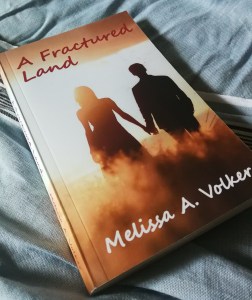 Divorced and penniless, Lexi Taylor returns to Graaff Reinet with the tail between her legs. Only a little while ago, her future looked all glamour and romance when she left her hometown to pursue professional opportunities in the hospitality industry and married the guy of her dreams. But now, her crooked ex-husband is on the run, and she is left behind to deal with his enormous debts. When her friend Paul offers her to be his singing partner at the local pub and old Marika asks for her help to open a guest house on Apricot Farm, Lexi thinks that she is back on track of regaining some control over her life. But nothing is as it seems in the sleepy Graaff Reinet, and both Paul and Marika have hidden agendas which will challenge Lexi in unexpected ways.
