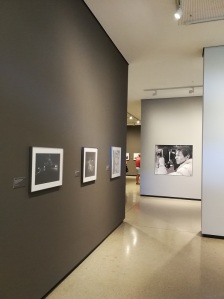
I joined the Norval Foundation as a member after my second visit to the art museum. It has become one of my favourite places to go to, for art, coffee or a G&T with a view – the bar overlooks the artistically and botanically lush museum gardens.
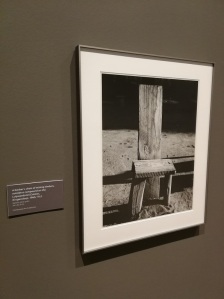
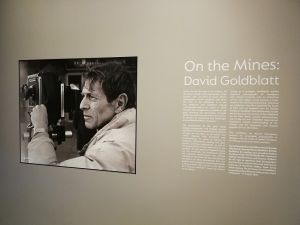 One of the current exhibitions is very close to my heart: “On the Mines” by David Goldblatt.
“Shown for the first time in its entirety, On the Mines: David Goldblatt is the last exhibition that the photographer personally helped conceptualise before his death in 2018. Goldblatt is revealed as the great chronicler and documenter of South Africa: the quiet observer of how the country, its peoples, its institutions and landscape have been inscribed by politics and power.”
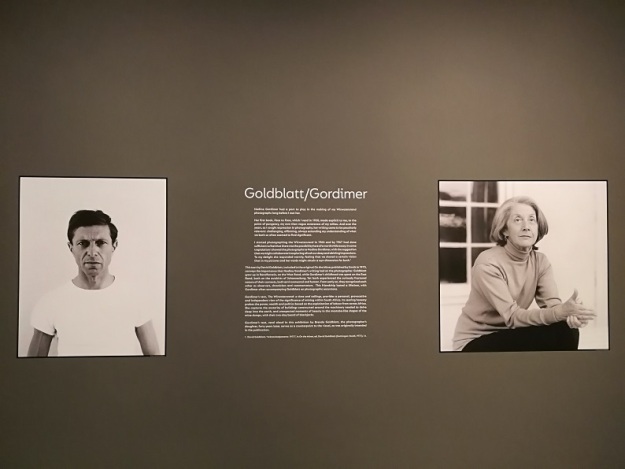
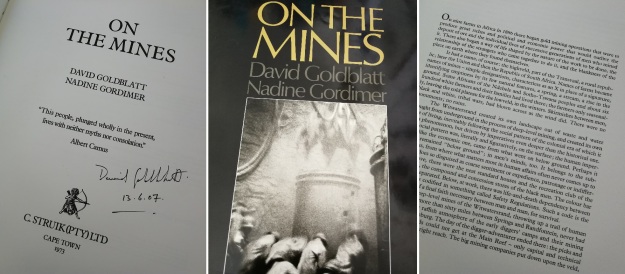
The photographs on display were partly published in 1973, in a book by the same title as the exhibition. The book included an essay by Nadine Gordimer, one of the countless texts I read when writing my PhD.
I cannot help but wonder whether I would be here today, living and writing in Cape Town, if it hadn’t been for Gordimer’s extraordinary work. Her writing – its beauty, probing wisdom – was my entry point to South Africa’s literature and then to the country. I will be forever grateful for the introduction. It was because Gordimer agreed to an interview that I visited South Africa for the first time fifteen years ago. The rest is history.
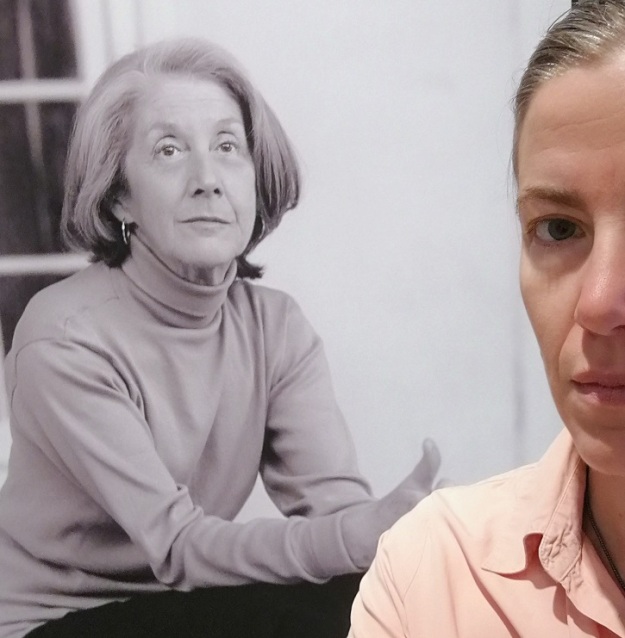
It is difficult to believe that she is no longer among us, but her work lives on, a great consolation. I hardly knew her, but the few hours spent in her company and the many years spent thinking and writing about her work make me miss her, a lot…
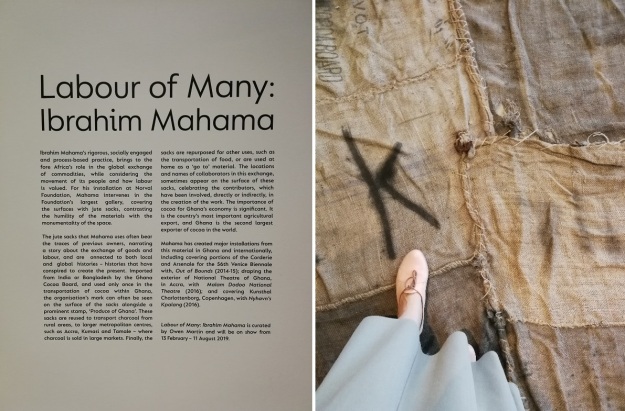
Three other stunning exhibitions can be seen at the Norval Foundation right now: the work of Yinka Shonibare and Ibrahim Mahama – thought-provoking and enthralling.
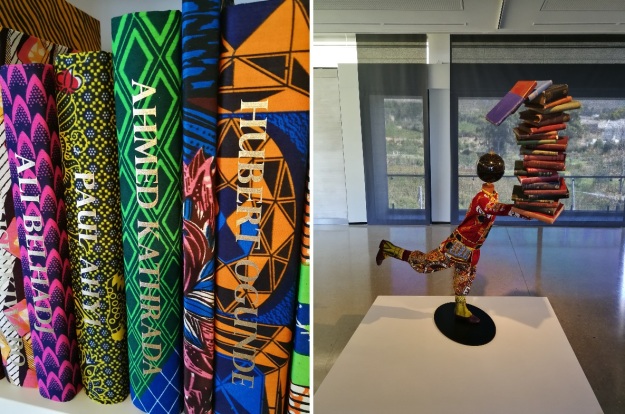
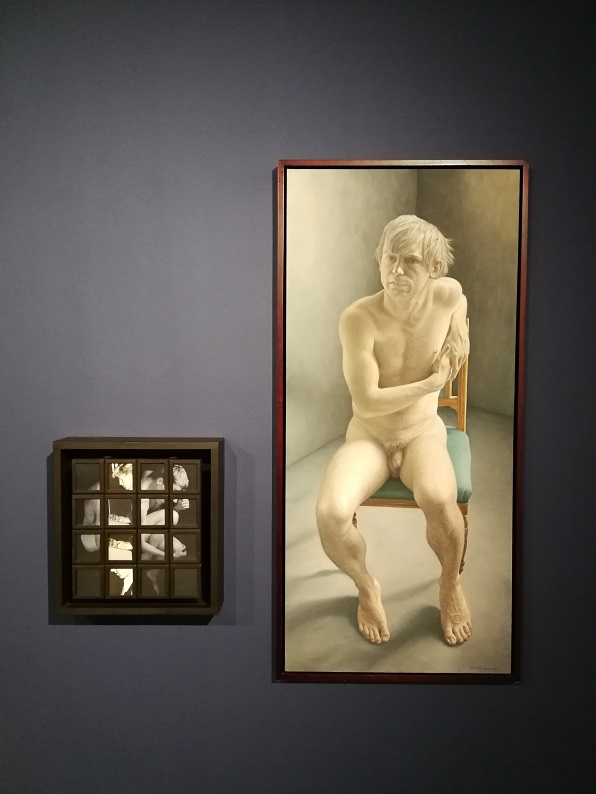
And then a collection of nudes from the Sanlam Art Collection. Not to be missed.


 The importance of truth and the careful use of language cannot be underestimated. “Precision, accuracy, and clarity matter, as gestures of respect toward those to whom you speak; toward the subject, whether it’s an individual or the earth itself; toward the historical record. It’s also a kind of self-respect”, writes the award-winning author and intellectual Rebecca Solnit in her latest collection of essays, Call Them by Their True Names. The individual pieces draw our attention to the roots of the present crises facing America and beyond: the infamous election of 2016, inequality, and climate change.
 “Loss helps you remember, and loss of a library helps you remember who you truly are”, writes the remarkable Argentine-Canadian wordsmith, Alberto Manguel. Nine years ago, I had the great fortune of spending an afternoon in his company. It was just after a visit to the special collection of a library in the French province of Champagne where I had seen manuscripts from the Middle Ages. The librarian responsible for them handled the treasures in white cotton gloves and, for understandable reasons, would not allow anyone else to touch them. Still spellbound, I told Mr Manguel of the encounter with the precious books and how much I had longed to touch their pages. That is when I found out about his own famous library, located in the home he shared with his partner near Paris, and containing thousands of books, some as ancient and unique as the ones I had seen. And in his kindness, he said that if I ever came to visit, he would allow me to hold these books in my hands.
 It is nearly impossible to know where to start when writing about postcolonial studies. This vast field of inquiry has influenced diverse schools of thought and disciplines all over the world. One of its leading scholars in the literature corner is Elleke Boehmer, the author of such seminal works as Colonial and postcolonial literature: Migrant metaphors (1995; expanded edition, 2005), Empire, the national, and the postcolonial, 1890–1920: Resistance in interaction (2002) and Stories of women: Gender and narrative in the postcolonial nation (2005). What sets Boehmer’s work apart from many other academic writers’ is its readability. She is also an acclaimed novelist and short story writer. These two facts are most likely related. They also allow the author to view the topic of her latest book, Postcolonial poetics: 21st-century critical readings, from a rare perspective, as a theorist and practitioner of the art of creative writing.


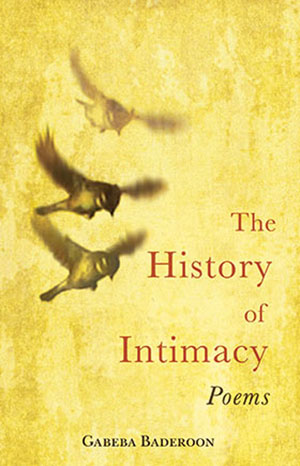 It is heartening to see the proliferation of high quality poetry collections on the local literary scene, publishers like uHlanga Press, Modjaji Books, Protea Book House and Dryad Press leading the way. The history of intimacy by Gabeba Baderoon – “[a]n exquisite new collection from one of South Africa’s finest, most treasured poets”, according to Nadia Davids – is the only poetry volume published by Kwela Books this year, but one which is a most welcome addition to the plethora of distinguished South African poetic voices. It is Baderoon’s fourth after The dream in the next body (2005), The museum of ordinary life (2005) and A hundred silences (2006). She is also the author of the monograph Regarding Muslims: From slavery to post-apartheid (2014).
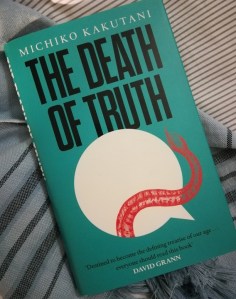 “For journalists everywhere working to report the news”, says Michiko Kakutani’s dedication in her latest book, The Death of Truth, published only a few weeks ago. The Pulitzer Prize-winning literary critic started her journalism career at The Washington Post, the newspaper that Jamal Khashoggi was writing for at the time of his brutal murder earlier this month.
 The city is Lviv. The house with the stained-glass window is an architectural treasure. The four generations of women living in it are steeped in the setting’s rich and deeply troubled history. And so begins Żanna Słoniowska’s magnetic debut novel. Ukrainian-born, Słoniowska has settled in Cracow, Poland, and published The House with the Stained-Glass Window in Polish. It won the esteemed Znak Publishers’ Literary Prize and the Conrad Prize for first novels. It was shortlisted for Poland’s most prestigious literary award, the Nike (not to be confused with the sports brand), a respected recognition. Translated seamlessly into English by Antonia Lloyd-Jones, the book is one of those historical novels that manages to encapsulate a century of socio-political hopes and upheavals in Ukraine’s most famous city by portraying the private and intimate lives of a single family, specifically the women who shaped its core.