Category Archives: Uncategorized

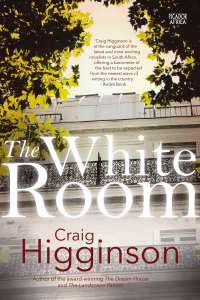
Review: The White Room by Craig Higginson

The White RoomThe White Room, Craig Higginson’s latest novel, is sublime. Sometimes a simple, strong word can express it all, especially when you are reviewing a book so intricately fascinated by language – how we use it to communicate, to obfuscate or to hurt.

I have been reading Higginson’s work – his internationally recognised plays and award-winning novels – religiously since the publication of his third novel, The Last Summer. In The White Room, his fifth, Higginson returns to many of the themes he explores in his narratives: the nature of storytelling, trauma and loss, our place in history, familial ties and other human relationships, the fragility of love and, as mentioned above, the sheer wonder of language.

The novel has undoubtedly autobiographical echoes, as the protagonist, like Higginson himself, is a Zimbabwean-born playwright, living in South Africa, and travelling to London for the opening night of one of her plays. But, Hannah Meade is not Craig Higginson, although the play she wrote and is about to see performed for the first time strongly resembles Higginson’s own work, the remarkable The Girl in a Yellow Dress.

This is not the first time Higginson picks up the skeleton of one of his plays and fleshes it out to transform and resurrect it in the form of a novel. His previous, The Dream House, was based on another of his plays, Dream of the Dog. The reverse adaptation, for want of a better term, was extremely successful in both cases – the richly layered novels expounding the core truths of the theatrical pieces.

The White Rooms opens in London, where after the performance of her play, Hannah is hoping to reconnect with Pierre, the Frenchman of Congolese descent with whom she had a brief but turbulent affair while he was one of her English students many years ago in Paris. She is now a successful playwright, teaching creative writing, and walking the beaches of the Cape Peninsula where she “lives in a small town not far from Cape Town that is stuck between a high wild mountain and a wrinkled bay filled with sharks.” In this latest play of hers, Hannah works through the events of the past, looking “back at that earlier version of herself as an old antagonist still capable of harming her and all she has accomplished since leaving Europe.”

She goes back to her memories of the time she spent in Paris with Pierre and tries to come to terms with her more distant past, when her beloved twin brother Oliver was still alive and Hannah thought she would become an actress. Sitting next to his wife in the audience in London, Pierre has no idea what he is about to witness on stage and how the play’s dramatically filtered unfolding of the past events – “her version of Pierre – which, like a figure in a dream, is little more than an extension of herself” – will once again shatter his life.

The White Room takes us seamlessly back and forth in time as we are confronted with the inability of the young couple to not only recognise, but also acknowledge and accept each other for who they truly are when they meet in Paris, and the inevitability of their present encounter in London with all its surfacing anxieties and possibilities: “She withdraws deeper into the shadows as the rest of the audience fades into insignificance, and the world of the play, with hideous alacrity, starts to rearrange itself around him.”

Just as effortlessly, the narrative moves between fiction and reality. What adds intrigue to the story are the recurring references to Higginson’s own oeuvre as it has evolved in the last two decades since the publication of his first novel, Embodied Laughter.

Most of the story is set in Paris where, meeting once a week for their private lesson, Pierre and Hannah attempt to dissect their reality as it is reflected in the grammar rules of the English language. But whereas these are relatively easy to convey and Hannah feels “happiest in the place of language”, the dishonesty and escalating misunderstandings between the overeager student and his conflicted teacher erupt in scenes of heart-wrenching violence: “From the outset, there was a strong and dangerous attraction between them, an ineluctable force that wanted to draw them together, as mismatched as they might have appeared to be. But that did not make them compatible or healthy for one another.”

Higginson’s prose is luminous. He is one of those writers that make you look at individual words and phrases and delight in the multifaceted variants of their meanings. He seems always aware of how they relate to one another and, how through those connections, they enrich our experience and understanding of the world as well as our place in it. It is engrossing to trace through the narrative how the colour in the novel’s title refers to a physical and metaphorical space, the starkness of the blank page, as well as the traumatic history embedded in skin colour. And even though Hannah “tells her students that she in only interested in the life of the text”, that “[t]heir so-called lives are of no relevance”, her own story explores the undeniable entanglement of the two realms: “She was like a house that in the end no one wanted to inhabit. She required too much work. No matter how hard they tried to paint her walls white, she was a step behind, painting them black.”

Both Hannah and Pierre are intensely troubled characters, riddled with guilt, shame, insecurities and dark longings. But no matter how distant their internal conflicts might come across at times in comparison with one’s own life, they are simultaneously deeply familiar. It is impossible to remain unmoved by their story.

When opening a book with Higginson’s name on the cover, I have come to expect excellence – to be enthralled and challenged, emotionally and intellectually. The White Room not only delivers on these expectations, it goes far beyond them.

The White Room

by Craig Higginson

Picador Africa, 2018

Review first published in the Cape Times on 24 August 2018.

Review: The Ones with Purpose by Nozizwe Cynthia Jele

The Ones with PurposeEight years have passed since Nozizwe Cynthia Jele’s striking debut novel, Happiness is a Four-Letter Word, was published and won the Commonwealth Writers’ Prize in the Best First Book category for the Africa region. It was also chosen as the winner of the M-Net Literary Award in the Film category and turned into a highly successful movie that made a huge splash in local cinemas two years ago. I loved the book and the screen adaptation and was very eager to see what kind of novel Jele would write next.

The Ones with Purpose was well worth the eight-year-long wait. I couldn’t put it down and devoured it in the course of a single day. It has been a long time since a novel captivated me to such an extent. To say that I feel truly bereft after finishing it is only fitting, since the plot of the book centres on the death and funeral of one of the main characters, the narrator’s sibling: “I imagined a dying person’s last breath as something resembling an exclamation mark, distinct and hanging mid-air like an interrupted thought. My older sister Fikile’s last breath before she dies is nothing of the sort. There is no rattling noise at the back of her throat. No relentless twitching. No clinging to life. Fikile dies with no more fuss than a switch of a light bulb.”

The life that is extinguished with that last switch was one lived to the fullest. When Fikile is first diagnosed with breast cancer, she has everything going for her. With a national diploma in Early Childhood Development to her name, she is running a successful crèche and lives in a comfortable home with her husband Thiza and her own three children. It is clear from the start that growing up wasn’t a stroll in the park for her and her two siblings, Anele and Mbuso, but as the oldest, Fikile did whatever she could to keep the family going after their father’s death in a horrifying road accident and their mother’s subsequent descent into alcoholism: “Ma had returned to life too soon after our father’s death, before her heart was completely healed and before much of the grief had poured out of her system.” Neglected by their mother who, shattered by the loss of her husband, was too ill and self-absorbed to care for the young children, Anele and Mbuso looked up to Fikile to provide for and guide them when the adults in their lives had messed up. “I didn’t bring you into this world,” she exclaimed, “I’m not responsible for you and I cannot be expected to raise you. I have my own life to live.” But even though the burden was too much to handle, she did her best.

As the family gathers to mourn and bury Fikile, Anele recalls her sister’s life and the choices they all made in order not only to survive, but to thrive and aim at a different, more fulfilling future. Sacrifices and impossible compromises had to be made, some best forgotten. But Fikile’s passing brings their individual histories into focus and long-supressed tensions and regrets surface, demanding to be faced and resolved: “Ma maintains that when people come to pay respects to the aggrieved family it is rarely about the deceased; she says people are there to mourn their past personal losses, and that as an aggrieved family it is important to keep your grief in check and not to get caught up in other people’s emotional tangles.”

Anele is ridden by guilt. She is also angry with her brother-in-law for abandoning Fikile in her hour of need. It is now her turn to accept an enormous responsibility for the bringing up of Fikile’s children entrusted into her custody by a sisterly promise. And there is her own daughter to think of, and the child’s father Sizwe, who showed up one day unexpectedly and stayed to the benefit of the entire family. But now, his own past comes back to haunt him.

After a long, painful absence Mbuso returns home to be with the family and has to navigate the minefield of the hurt he had left behind. Unspoken truths fester and need to be revealed. Love springs up in the most unlikely places. Betrayals, old and new, want to be acknowledged and have to be atoned for to bring healing and closure. Some things cannot be unremembered, no matter how hard you might try to escape your ghosts. Throughout it all, traditions have to be observed and respects paid according to family customs. In the middle of the necessary arrangements, Anele makes a crucial resolve: “I ask that we bury first, hold court later.”

Reading The Ones with Purpose, I was often reminded of Anne Enright’s brilliant The Gathering which won the Man Book Prize in 2007. Both novels have the same premise: family dynamics and secrets are explored through the prism of the death of one of family members and the emotional chaos which ensues after such a traumatic event. Jele’s take has a wonderful local flavour which makes it even more appealing, and like the other novel, it tackles psychological landscapes we are all familiar with, independent of where and how we grow up.

Using a quote from Elizabeth Berg for her epigraph, Jele dedicated The Ones with Purpose to “women with cancer who have found their fire, and for those who are still searching.” Having once experienced what it means to be confronted with the threat of a breast cancer diagnosis, I understand the all-consuming fear one has to deal with knowing that perhaps nothing will ever be the same again. “All through this,” Anele tells us, “Fikile hadn’t cried.” Jele captures the utter helplessness and the unbelievable courage required to soldier on when the battle rages inside your own body.

The Ones with Purpose is a powerful novel about endings and new beginnings. Written with wisdom and compassion, it will resonate long after the last page is turned.

The Ones with Purpose

by Nozizwe Cynthia Jele

Kwela Books, 2018

Review first published in the Cape Times on 17 August 2018.

Review: Shame on You by Amy Heydenrych

Shame on You

Amy Heydenrych has been writing for many years in different capacities, but Shame on You is her first novel. It was snatched up by a highly regarded UK publisher in a two-book deal last year. It is topical and edgy, qualities one expects from a psychological thriller. The protagonist, Holly Evans, is a social media sensation, one of those public figures whom we have come to identify as “brands” or “influencers”.

For all its wonders, the Internet is a scary place that makes terrifying things possible at the click of a button. Its seeming anonymity brings out the worst in human nature. And like millions before or after her, Holly can’t resist its pull. She is known as a cancer survivor and a devoted proponent of super healthy eating. Her followers adore her. Companies are falling over themselves to attach their brand to her name. Everything she has – the luxurious flat, the nice car, the fancy clothes and the latest beauty products – comes from lucrative sponsorship deals. Her image is everything.

But it about to be destroyed by a man who wants her to suffer at all costs. In a moment of carelessness, when Holly lets her guard down, she is attacked in the most brutal way. She immediately realises that the assault is an act of revenge, but she is scared to cooperate with the police because she does not want an investigation into her life to reveal all the secrets she has been desperate to hide for many years. And whoever is out there baying for her blood seems to know more about her than she cares to contemplate. “She should have known that secrets make you sick,” the narrator tells us about Holly, “that they have a way of coming back to haunt you.”

Set in London, and written from the perspective of both Holly and her attacker, Shame on You goes into the heart of everything that is sickening and dangerous about the online world. Heydenrych presents us specifically with the pitfalls women face in this precarious space, particularly when their engagement with the social media community goes horribly pear-shaped: “Up, down, up and down. The pornography that is public shame. They came here for a train wreck. Well, here she is, in all her filthy glory.”

Although I would have preferred a tighter edit – more showing, less telling – Heydenrych’s debut is a page-turning read from the shocking start to the final cliff-hanger. Both her main characters have hardly any redeeming features, but the fact that we want to know everything about them exemplifies the addictive nature of our fascination with the online/offline presence of the rich and famous. Shame on You is making me reconsider the way I use social media platforms, as a content producer and consumer. Above all, the novel sheds light on a disturbing phenomenon which has the potential to make or break lives in the twenty-first century and should never be underestimated.

Review first published in the Cape Times on 24 August 2018.

Review: Space Inhabited by Echoes by Karen Jennings

Space Inhabited by EchoesAuthors like Margaret Atwood, Nadine Gordimer or Jeanette Winterson impress with their literary chameleon natures. Their craft is writing. Their tools – an empty page, words, punctuation – might seem simple. But they astound with the versatility of their use. Their talents and imaginations do not fear rules or boundaries. They bend forms to accommodate the multifaceted observations and ideas that come alive through their creativity. They are no cookie cutters. Whether it is poetry or prose, fiction or non-fiction, literary or genre, these writers rise to the challenge of versatility and deliver excellence.

The South African author Karen Jennings, who is currently based in Brazil, is only at the beginning of her career as a wordsmith, but it is showing all the signs that she is destined for the kind of greatness the writers mentioned above have achieved in the course of their lives. Not even forty, Jennings has already published a novel, Finding Soutbek (2012), which was shortlisted for the prestigious Etisalat Prize for Literature. It was followed in 2014 by Away from the Dead, a short story collection, and two years later by a profoundly touching autobiographical work – part memoir, part novel – Travels with My Father.

Jennings’s short stories won the Africa Region prize in the Commonwealth Short Story Competition and the Maskew Miller Longman Award. They have been featured in publications around the world, along with her poetry. A few of these poems have now found a home in Jennings’s elegant debut collection with the evocative title Space Inhabited by Echoes.

Inspired by the varied transitions in the author’s personal life, the poems included in the volume trace the impact of change on the young woman’s trajectory. The book is divided into four parts, each of which focuses on a different aspect of the lived private transformations, whether experienced in relationships, or through migration across continents and the following adaptation and integration into a new country, or through the people who accompany Jennings on her path.

Readers familiar with Travels with My Father will remember that Jennings fell in love with a Brazilian scientist working in Cape Town soon after her father died of cancer. The couple were married and Jennings decided to relocate to Brazil to be with her husband when he received a job offer in his home country. In the poems of the first two parts of Space Inhabited by Echoes, Jennings records the process of falling in and out of love, its insecurity and longing, and the heat of desire. The collection opens with the sensual poem set at the height of summer, January: “By nightfall we had removed / our clothes, slipped / into a pool thick as breath, / no longer able to distinguish / between ourselves and the water.” Eventually, the lovers emerge and break apart: “And in that separation / was held the memory of tomorrow; a rehearsal for the heat to come.”

Jennings is a storyteller. She chooses her images and the narrative links with care. In Morning Alone, one of the lovers is still fast asleep behind a closed door, the other waiting: “But for me there is no day until you / wake, despite the fading light, the hours few.” The two lines are perfect examples of how Jennings captures the fragile tenderness of a relationship. The poems are intimate and deeply personal, but like all good poetry they hold universal truths. In a piece like A Study, Jennings tells the story of life’s evolution on our planet only to juxtapose it with what it would mean not to be able to experience yearning and heartbreak, the loss that we all feel when a loved one has left our warm embrace.

She writes about the end of a relationship with equal insight, how sometimes disillusionment takes over and promises spoken with conviction no longer apply, “Just words from a chill summer / as sodden as the boat bottom / in which we rowed and rowed, / our eyes on our watches, and the land.” Or consider the exquisite lines from the poem Phonecall which lend the entire collection its title: “How strange to find / after years of love that / what remains between / us is only // space inhabited by echoes / and the people we / once were.”

An echo is quieter than the original sound it follows. And poetry has that ability to distil and deliver the most essential of impressions travelling through the space of memory. In the third and fourth part of the book, Jennings concentrates on the move to another country and the attempt to find belonging. The flat the newlyweds rent is on the seventeenth floor. With its merciless heat and foreign ways, the city around feels constantly unfamiliar. In her dreams, Jennings is haunted by her previous home in the Cape and struggles to adjust to her new reality in We Came to Stay: “I didn’t do as well / as expected. / Not with change, / the shared house, / a new language.”

To navigate the “dark river” of depression and alienation which follows is extremely tough, not only as an individual but as a couple. In Let Me Go, Jennings speaks of “my failure to come home.” And in Survival, we find “a genus of fish, / compelled to adapt / by exile, stark isolation / and rarity of food // is able, by pushing / aside its gills / and relocating its heart, to swallow its victims / whole.” Sometimes that is what it takes to make a living in a hostile environment.

Towards the end of Space Inhabited by Echoes, Jennings turns to the important figures in her life to face the weight of inheritance and family secrets, and brings a sense of closure to a process of becoming. As an author, Jennings is already delivering on the huge promise of her early successes. Words sparkle in her hands. Readers of her work can expect to be enlightened in all possible ways.

Space Inhabited by Echoes

by Karen Jennings

Holland Park Press, 2018

An edited version of this review was first published in the Cape Times on 10 August 2018.

Review: The Ecstasy of Brush Strokes by Rachel Haze

The Ecstasy of Brush StrokesRachel Haze is the author of a local erotic novel which teasingly proclaims on its back cover that “there are far more than fifty shades.” The reference will be clear to most readers, even if you have never succumbed to the lure of E.L. James’s über-bestselling creations. I have never had the dubious pleasure of reading the books, but in general I have absolutely nothing against erotic fiction of any kind, and I have delighted in a few local titles of the genre in recent years. The anthology of short stories, Adults Only, edited by Joanne Hichens, or the Girl Walks Into series by Helena S. Paige come to mind. However, the book that still haunts me is Donvé Lee’s fierce and exquisitely written An Intimate War. It captivated me because it felt authentic and was touchingly erotic.

On the front cover, Rachel Haze’s The Ecstasy of Brush Strokes promises the following: “Sexy. Intelligent. Erotic.” And it comes with an intriguing mystery surrounding its author. Her publisher, Melinda Ferguson, said in a radio interview that the person behind the pseudonym is a well-known South African writer who prefers to remain anonymous so as not to tarnish her respectable literary reputation. The heroine of her novel, The Ecstasy of Brush Strokes, has no such qualms, and no hesitations to share any of her secrets, erotic or otherwise, with the reader.

Alex is in her late thirties, once divorced, but in a stable relationship with Mark. Yet she continues obsessing about her university lover Nicholas with whom she had a turbulent affair. When the old flame suddenly reappears in her life, visiting from Canada in Cape Town on his way to a conference, Alex’s seemingly steady existence is turned upside down. She decides to rent an old house in a remote place in the Karoo and to return to her early passion for painting. She wants to capture desire on canvas. To help her with the project, she hires a former lover and a local heartthrob to be her nude models.

The narrative oscillates between the present in the sleepy dorpie where Alex is frustrated with her artistic efforts and where the erotic tension between the models rises with the Karoo heat, and Alex’s memories of her student days with Nicholas in Grahamstown and her attempts to forget him in the aftermath of their explosive breakup. And all the while Mark is waiting for her to rediscover herself and Nicholas is only a sext message away.

Haze explores different shades of sexuality with confidence. But occasionally she lost me when summarising large chunks of Alex’s backstory. Specifically, a few of the descriptions of the psychological makeup behind her actions did not ring true. However, The Ecstasy of Brush Strokes holds your attention long enough to make you want to know what happens to Alex in the end and, most importantly, at times it simmers with the kind of eroticism which will appeal to many readers.

The Ecstasy of Brush Strokes

by Rachel Haze

MF Books, 2018

An edited version of this review was first published in the Cape Times on 10 August 2018.

Review: Free Woman – Life, Liberation and Doris Lessing by Lara Feigel

Free Woman“There were too many weddings that summer,” writes Lara Feigel in the opening line of her brilliant and daring Free Woman: Life, Liberation and Doris Lessing. At the end of the first paragraph she promises herself that she “would work out why I minded it all so much”.
The resulting quest is a tour de force of biography writing and self-discovery. Literary scholars are often drawn to topics that are of interest and consequence for their own lives. Yet, even if that spark of private recognition is openly acknowledged, it is seldom explored in the official research.

The inclusion of intimate, personal reflections by the author when writing a biography of someone else is usually frowned upon. And it can be risqué. To do so anyway is heroic.

Feigel is a Reader in Modern Literature and Culture at King’s College London. In her most recent books, The Love-charm of Bombs and The Bitter Taste of Victory, she traced the public and private lives of writers and intellectuals during and after World War 2.

Published to great critical acclaim, they established Feigel as a cultural historian and literary critic of note. Both books are focused on the intersection of life and literature in history.

Free Woman follows in their footsteps, but this time Feigel herself becomes one of the book’s subjects. While exploring Lessing’s work and dedication to, in the words of one of her famous characters, “living as fully as I can”, Feigel searches for what the “right to live fully” would entail in her own life and writing.

“It seemed that Lessing was a writer to discover in your 30s; a writer who wrote about the lives of grown-up women with an honesty and fullness I had not found in any novelist before or since.”

We are mysteries, even to ourselves, and not many have had the ability to penetrate the silences shrouding our lives. In 1931, Virginia Woolf spoke about not having solved the problem of articulating “the truth about my own experience as a body… I doubt that any woman has solved it yet.”

Feigel’s attempt to do just that is fascinating. Facing her own sense of claustrophobia, frustration and lack of fulfilment as a woman, sexual being, wife and mother, Feigel seeks to understand what it means to be a truly “free woman” – most importantly, one “who is also happy”…

Continue reading: Free Woman: Life, Liberation and Doris Lessing a tour de force of biography writing and self-discovery, writes Karina M. Szczurek

Review first published in the Sunday Times.

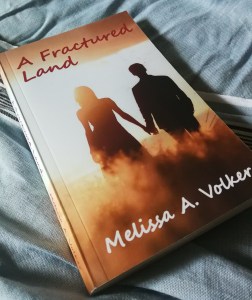
Review: A Fractured Land by Melissa A. Volker

cofDivorced and penniless, Lexi Taylor returns to Graaff Reinet with the tail between her legs. Only a little while ago, her future looked all glamour and romance when she left her hometown to pursue professional opportunities in the hospitality industry and married the guy of her dreams. But now, her crooked ex-husband is on the run, and she is left behind to deal with his enormous debts. When her friend Paul offers her to be his singing partner at the local pub and old Marika asks for her help to open a guest house on Apricot Farm, Lexi thinks that she is back on track of regaining some control over her life. But nothing is as it seems in the sleepy Graaff Reinet, and both Paul and Marika have hidden agendas which will challenge Lexi in unexpected ways.

The town has a much bigger issue to deal with: Terebro, a big American oil company, was granted permits to explore the area for shale gas. The locals are divided as to the risks and profits fracking might bring to the community and their land. Carter O’Brien is sent to investigate the possibilities: “He looked like he’d walked from the United States to Graaff Reinet, but Lexi was optimistic that he would clean up well.” To say he is received in the Karoo with suspicion and hostility is a gross understatement. But Lexi tries to keep an open mind and, against the wishes of the other townsfolk, offers him a place to stay on Apricot Farm. Carter arrives with his own personal and professional baggage, but Lexi soon realises that she does not only want to give him a chance to do his job, but is danger of losing her heart to him, too. When someone starts firing bullets at them both, they have to fight for their lives and a future they both feel is within reach, but it will take all their courage and determination to see whether they can make it work.

Melissa A. Volker’s debut romance novel, A Fractured Land, is a declaration of love for passion, adventure and the beauty of the South African landscape. Born in Port Elizabeth to an American mother and a South African father, Volker now lives in Cape Town and divides her time between writing and surfing, often combining both by blogging and penning magazine articles about her experience as a stand-up paddler. Anyone following Volker on social media or reading her blog will also discover her deep commitment to preserving and celebrating our natural environment. And unsurprisingly, A Fractured Land combines sizzling romance with environmental awareness. Volker’s second romance novel with an eco-conscious theme has already been accepted for publication and will appear later this year. If her first is anything to go by, we are all in for another treat. As her feisty heroine affirms: “Love or hate fracking, concluded Lexi, at last things were interesting in her quiet corner of the desert.”

A Fractured Land

by Melissa A. Volker

Literary Wanderlust, 2018

Review first published in the Cape Times on 6 July 2018.

Review: The GoldDiggers by Sue Nyathi

cofWhen they board the “gleaming white Toyota Quantum with black-tinted windows pulled into a vacant parking space opposite Max’s Garage” in Bulawayo, the characters in Sue Nyathi’s second novel, The GoldDiggers (unusual spelling intended), know that they are embarking on a precarious trip. But none of them is truly prepared for the rough ride which lies ahead. Before they even leave the parking lot, Melusi, the driver and owner of the vehicle, is ready to throw out the young Shona couple at the back because they insist on conversing in their mother tongue. As a Ndebele, Melusi “had been raised to hate them…but his desire for their money surpassed his intolerance. All the passengers in his car were going to be ferried across the border illegally.”

The couple Melusi hates are siblings who “shared a womb” and are now – after the suspicious, violent death of their father – hoping to join their mother who had abandoned them when they were small. The other passengers are a woman from the rural area with her little son, a man in his late twenties, and a young girl travelling alone: “An old woman had dropped her off earlier. How she had cried when the matronly woman had turned to leave. If anything he has been annoyed by her noisy lamentations. Children were the worst cargo to carry.” And cargo, not human beings, they all are to Melusi, who can only think of himself and the rewards his passengers might bring him.

On this particular trip Melusi is accompanied by his latest girlfriend, Lindani, and his friend and co-driver, Givemore who brings along a teenage girl, Thulisiwe, and announces: “She’s coming with us…You think you’re the only one who can pull a hot chick?” He is as selfish and ruthless as Melusi, but he is needed to bring the illegal “cargo” across the border on foot while his partner drives the car through the official crossing: “Givemore prided himself on the fact that he had a lower mortality rate for his goods than most. The last thing they wanted was to ‘lose’ cargo because essentially that meant no payment.”

In Gwanda, they stop to refuel and pick up one more passenger, Malume, a middle-aged man who had just lost his job with a cement company. The twins Chamu and Chenai are leaving behind years of abuse and hoping for a new start. The young man Dumisani, well-educated and recently released from a high-profile job, is also dreaming of an opportunity to rebuilt his successful life and provide anew for his family. Gugulethu, the little, weeping girl, is on her way to be reunited with her mother – a woman she cannot recall, having been brought up by her grandmother. Portia and her son want to find Vusani, who years earlier had left the family to seek a fortune in South Africa. Lindani is escaping a life of prostitution and horror.

Their destination is Johannesburg, the City of Gold, “the promised land; supposedly flowing with milk, honey and other countless opportunities.” All over the world, countless dreams of a “promised land” turn to nightmares and in the case of Melusi’s passengers the nightmares are particularly horrific. Some of them don’t even make it across the border. At the end of this novel, one could even perhaps argue that drowning while crossing the Limpopo River might be a better way to go than being taken as hostage by vicious bandits or facing the horrors Johannesburg has to offer for its “gold-diggers”. The city where “the gold is paved with streets”, as somebody once referred to it in the South African Airlines inflight magazine, is not exactly waiting with open arms for its undocumented visitors. “But whatever you wanted to call her”, writes Nyathi, “Johannesburg was undeniably one of Africa’s economic powerhouses and it is for this reason that she was able to lure people from all over the continent. All of them were gold-diggers seeking fame or fortune. Or both.”

Nyathi, herself born and raised in Bulawayo, is merciless in exposing the kind of circumstances illegal immigrants encounter on the border to South Africa and then in Joburg. She takes her characters to places of unimaginable hardship: “There is nothing for mahala here.” And even if some of them seem to strike it lucky and are allowed to work hard and achieve their goals, somewhere in the shadows of the city, their pasts are lurking and are ready to pounce, rendering them permanently vulnerable.

Thulisiwe’s and Malume’s fates are sealed well before their time. When Gugulethu’s mother does not turn up to claim her upon arrival in Joburg, Melusi decides to take the girl’s lot into his own conscienceless hands. Portia is shocked to reconnect with her husband and has to make some drastic decisions to survive. The twins find it very difficult to find a way into their mother’s life. Briefly, Chenai sees the light at the end of the tunnel, but success comes at a high price. Her brother’s destiny is equally disastrous. Living with distant relatives, one day, Dumisani ends up in a compromising position that nearly costs him his life. Lindani thinks she has struck gold, but it quickly turns to dust.

“No one man could experience Johannesburg in the same way.” The stories Nyathi tells about the city from the perspective of her characters’ lives are heart-wrenching and do not provide a comfortable read. But The GoldDiggers, though fiction, is relentless at capturing these essential tales of what our reality is like at its harshest, what dark deeds we are capable of, how there are some things no one can survive and thrive beyond. Nyathi does not preach for a second, but she exposes how much remains to be done to regain a sense of dignity among us and the people who seek refuge in our society. The GoldDiggers is tough to take, but it makes for a remarkable read and Nyathi is a writer to watch.

The GoldDiggers

by Sue Nyathi

Macmillan, 2018

An edited version of this review was first published in the Cape Times on 6 July 2018.

Review: Soweto, Under the Apricot Tree by Niq Mhlongo

Soweto Under the Apricot TreeNiq Mhlongo is one of my favourite South African storytellers. He is the author of three novels (Dog Eat Dog, After Tears, Way Back Home) which have been reprinted several times and translated into other languages like French and Spanish. Mhlongo is also well known for his short stories. His debut collection, Affluenza, gave readers a fascinating insight into contemporary South Africa. In those stories, Mhlongo tackled such wide-ranging issues as suicide and farm murders, exposing our prejudices and inability to communicate. He writes about the crucial nexus between race, gender and class and has a wicked sense of humour, often making you laugh while you squirm with discomfort.

Soweto, Under the Apricot Tree is Mhlongo’s second collection of short stories which takes us on a similar journey as the one before. The topics are as diverse, but the execution even more sophisticated. Mhlongo is one of those writers who go from strength to strength with every book. “If the apricot trees of Soweto could talk, what stories would they tell?” The question on the book’s back cover invites us to ponder. Stories are the easiest way of travelling to anywhere in the world, and Soweto, Under the Apricot Tree takes us into the heart of the famous township of Johannesburg. Unfortunately, in the fourteen years I have lived in South Africa, I have not had an opportunity to visit Soweto yet apart from when experiencing it through the eyes of some of its greatest storytellers. And having read everything else Mhlongo has written, I felt I was in good hands while embarking on this particular literary trip.

The short story is considered a tough genre to write, and an even tougher one to sell. As a writer, you have to make the limited space count. Mhlongo knows exactly how to lure you in and make you want to know more. Consider these opening lines for a few of the stories: “The bizarre address you gave me some ten years ago is still stuck in my memory.” Or: “Oupa Eastwood has reported the same incident more than ten times at different police stations.” Or: “Sitting next to the coffin were five men dressed in black suits.” And then you find out that the bizarre address referred to is in a cemetery. The incident Oupa Eastwood reports is of seeing “people attempting to commit suicide at the big hole near his home in Riverlea.” And despite the sombre occasion mentioned in the last of the three quotes above, you cannot help but smile soon after when you come across the following inverted reference to a popular classic: “the Dobsonville people had to deal with the fact that the marriage and the three funerals were happening on the same day.”

Mhlongo knows how to keep his readers hooked and guessing. As to the selling of his fiction, he doesn’t only wait for the publishers and booksellers to do their job. He is known for going from place to place and offering his books to interested readers from the boot of his car. And for those lucky ones to encounter him on his path, I bet he throws in a tale or two into the bargain.

The eleven short stories in Soweto, Under the Apricot Tree are at times heart-wrenching, but the overwhelming impression they leave behind is one of satisfaction and delight in the art of the telling.

In the collection’s titular story a family gathers under an apricot tree on the day they unveil a tombstone for one of their relatives who passed away the previous year. Food is served and drink loosens some tongues. Secrets kept for many years spill out in the hours which follow.

At the centre of “My Father’s Eyes” is also a secret which leads a woman on a quest to search for her absent father: “Mokete was convinced it was my fault that our daughter was born with cerebral palsy. He insisted that I find my father and appease my ancestors with traditional sacrifices to make things right.”

In “Curiosity Killed the Cat”, two neighbouring families and cultures clash over the drowning of Bonaparte, a cat. Following the cat’s funeral, the Phalas family finds it difficult to connect to their grieving neighbours, the Moerdyks: “None of the cards came from the Phalas. They could not mourn. For them, and for Ousie Maria, a cat was just another animal. It could not be equated to a human being. In fact, to most Africans a cat is a symbol of witchcraft and bad luck.” But Ousie Maria has a different worry concerning the dead cat and as the conflict escalates, she has to face her own believes and guilt concerning the animal’s drowning.

Opinions and expectations collide on board of a flight to the UK in “Turbulence” when a young black scholar has to endure the ramblings of an elderly white lady relocating to her family in Australia: “I’m glad to see young black people like you studying”, she tells him. “You know, South Africa is going to the dogs because we’re led by uneducated people. That’s why I’m leaving.” Their journey takes an unforeseen turn which makes you look at their lives anew.

In “Nailed”, MEC Mgobhozi and one of his mistresses experience the shock of their lives when the woman’s husband comes home to find them together and decides to deal with the adulterers in his own way. Another romance ends badly in “Private Dancer Saudade”. “My heart has been broken before, but you are the first and the last person to break my life”, the narrator explains in a letter to her lover.

Like anywhere else, life under the apricot tree moves on in a dizzying speed and is often stranger than fiction. Niq Mhlongo brings the people and the places of Soweto to life. Between the funerals and the marriages, there are high hopes, devastating betrayals, and unexpected twists and turns as the streets of Soweto captivate on every page.

Soweto, Under the Apricot Tree

by Niq Mhlongo

Kwela, 2018

Review first published in the Cape Times, 15 June 2018.

Review: Taming Toxic People – The science of identifying and dealing with psychopaths at work or at home by David Gillespie

Taming Toxic PeopleWe all know about them. They are often quite (in)famous. Most of us have encountered them in our personal lives or at work. Some of us are their victims. And no matter what you call them, once you have had to deal with one, you will never forget it. They go by many names: psychopaths, toxic people, malignant narcissists or master manipulators. All charm and seduction when you first meet them, whether socially or professionally, and then…! By the time they are done with you, nothing is the same any longer. To any human being with empathy, these people never make sense in the long run: their lies, manipulations, subterfuges, risk-taking, and constant deflection of blame and responsibility will have you tied up in knots. They live by different rules, and they always go for the kill. They are human parasites, unable to feel, emphasise or care for others. They are just brilliant at pretending that they can when it suits their own agendas.

Taming Toxic People: The science of identifying and dealing with psychopaths at work or at home by Australian author David Gillespie is a guide on how to manage the psychopaths in our lives. Gillespie bases his analysis on available research, personal experience and observations, as well as stories of psychopaths and their victims. Most of the victims prefer to remain anonymous. It is frightening to read in the author’s acknowledgements that psychopaths “frequently ruin lives so thoroughly and are so likely to seek revenge for any slight, be it real or perceived, that even people who have not seen them for decades still crave anonymity.”

It is hard to admit to yourself that you might be or had been ensnared in the toxic power games of such an individual, but it helps to understand that you stand no chance against such ruthlessness if you are vulnerable and unprepared. Gillespie opens his book with comparing an encounter with a psychopath to that of an encounter with a tiger: “He will use every faculty millions of years of adaptation have given him, to determine whether you are trouble, or lunch. You cannot reason with him, you cannot threaten him, you cannot plead for mercy. Your only chance of survival is to convince him that you are more trouble than you are worth.” Taming Toxic People teaches you how not to be devoured.

One of the first signs of being in the territory of such a predator is bewilderment. Psychopaths “behave in bizarre and often unpredictable ways. And as soon as we are entangled with them, we spend more time worrying about how to deal with them than we do running our own lives.” The harm and distress they are causing in the process may take a long time to recover from, sometimes the rest of your life. Some damage is irreparable. And, as Gillespie points out, nowadays we are living in a reality that encourages psychopathic behaviour and allows people with such traits to flourish. The 21st century seems to be the perfect habitat for psychopaths. It is essential for anyone who has empathy to know how to survive in such dangerous environments that are spreading worldwide. If you have any doubt, watch the news on any channel or go onto social media: “We are no longer a community; we are individuals who happen to live in the same place. The result is we no longer trust in authority because it is not earned through a life of unimpeachable honesty. We no longer trust in experts because they are often for sale to the highest bidder. We no longer trust the media because it chases clicks rather than the truth. Instead, we invest our faith in anyone who tells us they have simple answers to our problems and who looks and talks like us. It is a perfect set-up for any psychopath.”

Gillespie divides Taming Toxic People into four parts: “The Theory”, “The Everyday Psychopath”, “Managing Psychopaths” and “The Psychopath in Society”. He writes accessibly and has a good sense of humour (comic relief is most welcome in between the scary bits). Each part is comprehensive and offers extremely valuable advice. The author goes into the history of psychopathy and the terminology associated with the condition. He lists a few key tests for identifying psychopaths and explains the science behind them. He gives some more or less obvious examples from history (the Mother Theresa story was a shocker, I must admit) and our contemporary world (for example, the most obvious one – the US president). What is empathy and how it helped us evolve is discussed in detail. The chapters on how to manage the psychopath in different spheres of our lives are fascinating – reading them could potentially save your life, or at least spare you a lot of unpleasantness.

If you are lucky, you will never encounter a psychopath in your life, but the chances are that you already have or will at some stage. It will frighten or perplex you, or both. And sometimes there will be a high price to pay. Taming Toxic People will make you re-examine your life and relationships. It will make many confusing situations – whether in the past or the present – seem suddenly clear. It might not be too late to do something about them. Gillespie is very confident that the “taming” is possible and the methods he proposes are doable, even if they sometimes mean completely walking away.

What I found most inspiring about Gillespie’s book is his solution to the broader issue of how our societal structures which have kept us safe in the past have been eroded and are letting us down. He proposes a way of living our private lives and directing our professional conduct in such a way that psychopaths cannot thrive among us. It is a path based on transparency and accountability, and orientated towards communal rather than individual goals. It is truly worth thinking about and aspiring to.

Taming Toxic People: The science of identifying and dealing with psychopaths at work or at home

by David Gillespie

Macmillan, 2017

Review first published in the Cape Times on 8 June 2018.