Category Archives: What I’ve Read

ON THE MINES at the Norval Foundation

rbt

I joined the Norval Foundation as a member after my second visit to the art museum. It has become one of my favourite places to go to, for art, coffee or a G&T with a view – the bar overlooks the artistically and botanically lush museum gardens.

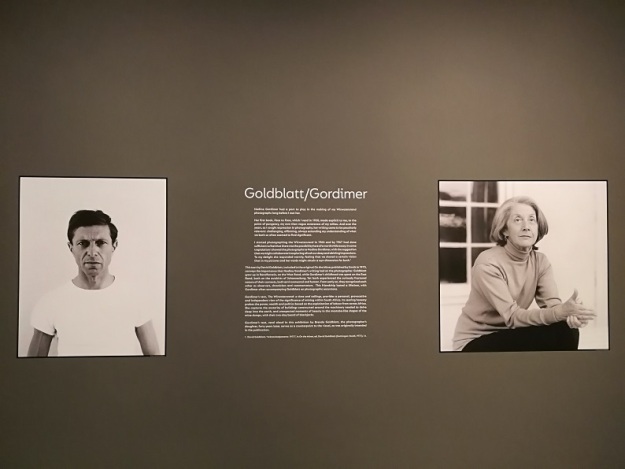
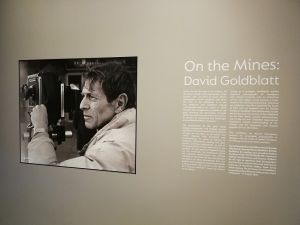
btrOne of the current exhibitions is very close to my heart: “On the Mines” by David Goldblatt.
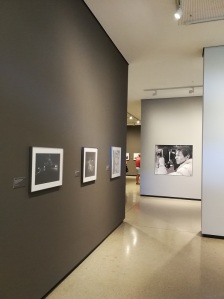
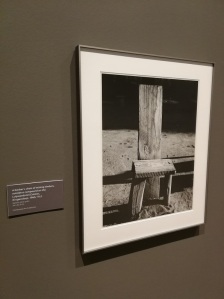
“Shown for the first time in its entirety, On the Mines: David Goldblatt is the last exhibition that the photographer personally helped conceptualise before his death in 2018. Goldblatt is revealed as the great chronicler and documenter of South Africa: the quiet observer of how the country, its peoples, its institutions and landscape have been inscribed by politics and power.”

btr btr

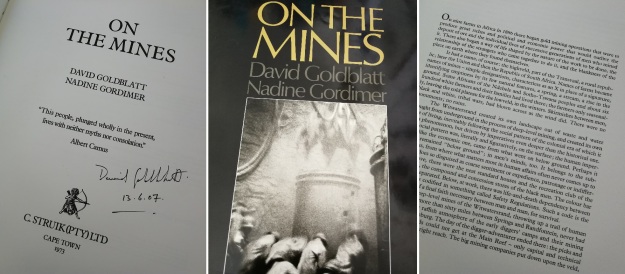
The photographs on display were partly published in 1973, in a book by the same title as the exhibition. The book included an essay by Nadine Gordimer, one of the countless texts I read when writing my PhD.

btr

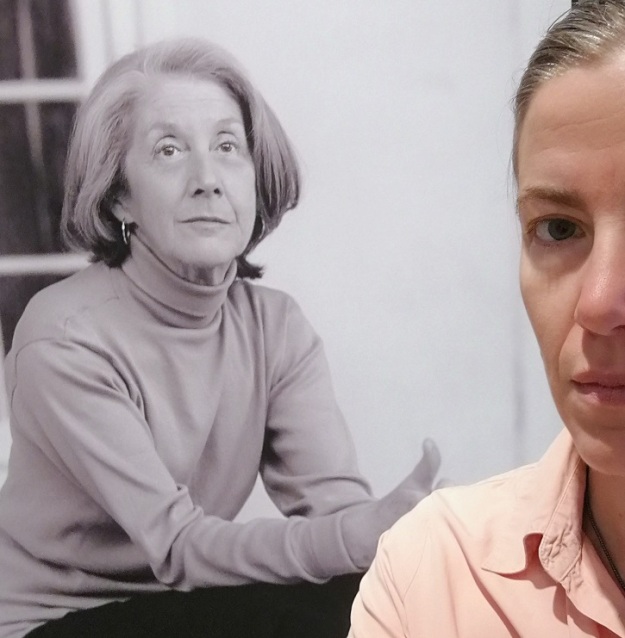
I cannot help but wonder whether I would be here today, living and writing in Cape Town, if it hadn’t been for Gordimer’s extraordinary work. Her writing – its beauty, probing wisdom – was my entry point to South Africa’s literature and then to the country. I will be forever grateful for the introduction. It was because Gordimer agreed to an interview that I visited South Africa for the first time fifteen years ago. The rest is history.

fbt

It is difficult to believe that she is no longer among us, but her work lives on, a great consolation. I hardly knew her, but the few hours spent in her company and the many years spent thinking and writing about her work make me miss her, a lot…

btr

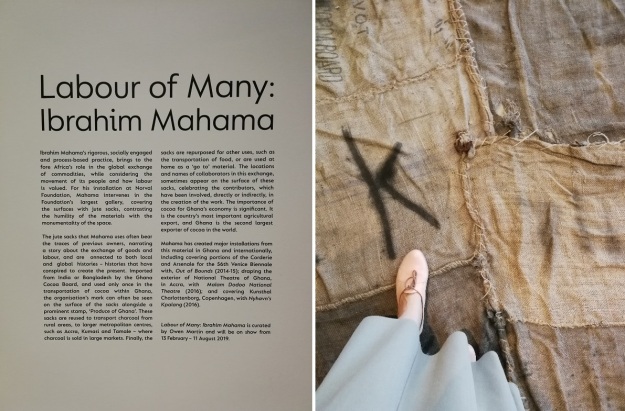
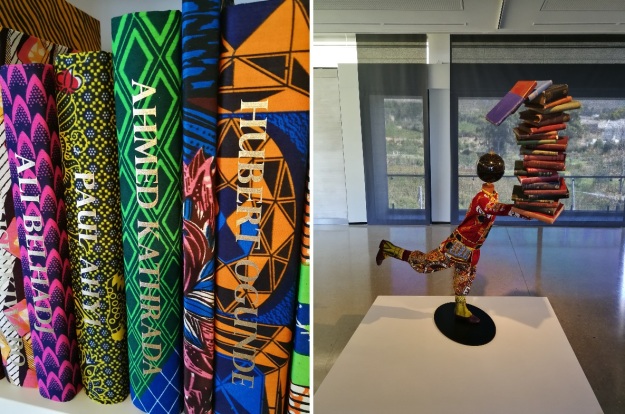
Three other stunning exhibitions can be seen at the Norval Foundation right now: the work of Yinka Shonibare and Ibrahim Mahama – thought-provoking and enthralling.

btrhdr

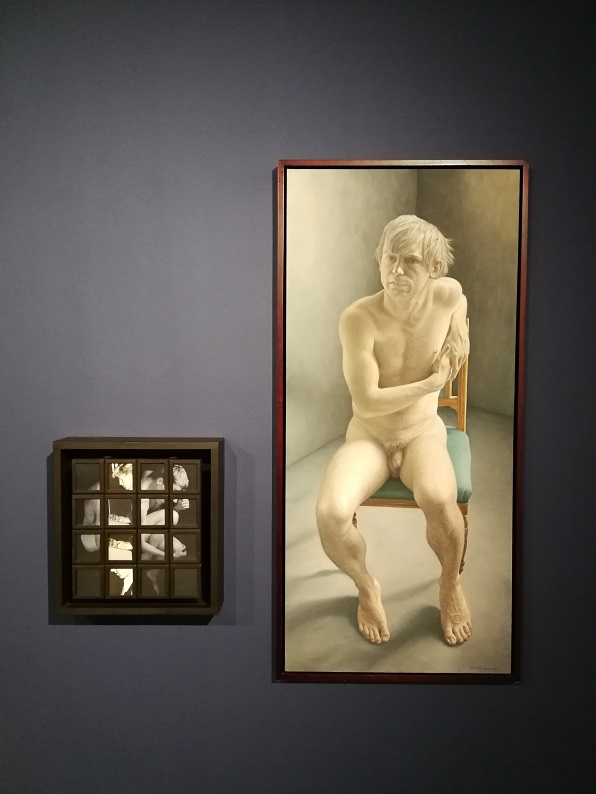
And then a collection of nudes from the Sanlam Art Collection. Not to be missed.

btr


Review: Nasty Women Talk back – Feminist Essays on the Global Women’s Marches, edited by Joy Watson and Amanda Gouws

Nasty Women Talk Back

Most of us despair, but publishers around the world are probably laughing all the way to the bank because of Donald Trump. The president of the United States might not be good for anything else, but he is certainly great for the book business. I can no longer count the titles I have come across recently, written in reaction to the innumerable atrocities – in words and deeds – committed by the man.

Nasty Women Talk Back: Feminist Essays on the Global Women’s Marches, published in South Africa but with contributions by women from around the world, is a collection documenting diverse responses to Trump’s campaign, his election, and the ensuing Women Marches organised in protest to Trump’s presidency.

In the introduction to the book, the editors talk about a period of “deep mourning” many of us have been experiencing since November 2016. It is not to be underestimated. Having Trump in power has not only exposed numerous vulnerabilities we experience in our everyday, but also reversed progress already gained in areas of gender rights and equality.

The twenty-five essays and three poems included in Nasty Women Talk Back are an attempt “to put pen to paper and show fervour for ongoing feminist activism”. Reading the individual pieces, I also felt inspired. Ranging from academic comments to deeply personal stories, all the essays are illustrated. The texts and images refer to the striking signs participants of the Women Marches carried during the protests.

“My arms are tired from holding this sign since the 1960s”, reads one of the signs, but as Rebecca Davis points out: “We may be tired, but we cannot afford to shut up.” Books like Nasty Women Talk Back allow us to counter the violence of silencing and to find solidarity in a common cause.

Nasty Women Talk Back: Feminist Essays on the Global Women’s Marches

Edited by Joy Watson & Amanda Gouws

Imbali Academic Publishers, 2018

Review first published in the Cape Times on 22 February 2019.

CREATIVE WRITING MENTORSHIP OPPORTUNITY WITH KAREN JENNINGS

Karen JenningsKaren Jennings is a South African, married to a Brazilian, and in September of 2015, due to various circumstances, they were compelled to move from South Africa to Brazil. It has been a challenging and difficult time for Karen. Perhaps most difficult has been feeling removed from the country of her birth, a place that she loves and had hoped always to be part of. This year she started to look at her life and consider how she could realistically be involved in the future of her country, in even the smallest of ways, at the distance and without the benefit of any sort of income to assist her. She was inspired by the organisers of Short Story Day Africa and Writivism who work incredibly hard to bring opportunities to African writers. With this in mind, she has decided to offer a mentorship/writing course to an aspiring writer for a period of 12 weeks, starting on 1 April 2019.

For more details click here: CREATIVE WRITING MENTORSHIP OPPORTUNITY WITH KAREN JENNINGS

And here are two of my reviews of Karen Jennings’s work:

Travels with My Father – An Autobiographical Novel by Karen Jennings

Space Inhabited by Echoes by Karen Jennings

If you are an aspiring writer, please apply. This is a rare opportunity to work with someone who is passionate about what we do and who truly cares.


Review: Somewhere in Between by Niki Malherbe

Somewhere in BetweenHow to be a feminist? What does it mean to be a good parent, especially a good mother? What is success? What is justice and how does it relate to ethics? How can reading and writing help with the answers to these, and other, vital questions? Somewhere in Between is Niki Malherbe’s attempt at resolving some of these conundrums in the context of her own life. She dedicates her book “To all women who try hard to get the balance right and all the men who do too”.

Malherbe is also the author of From Courtrooms to Cupcakes. In Somewhere in Between, she continues the themes of her debut, trying to reconcile her private and professional aspirations. Her background is in law. She is a wife and a mother of four. Writing is her enduring passion. She is an avid reader, and it is the writers who intrigue her, along with her family’s experiences, that fuel her literary pursuits. Somewhere in Between is part diary, part memoir, part essay; throughout, Malherbe comments on the authors she turns to when seeking guidance or comfort. Writing a book is like having a relative in jail, she says: “You don’t want to admit it but it’s very tricky to hide.”

Oscar Pistorius is no relation to the author, but she is writing at the time of his trial. As she watches the proceedings, she approaches the case not only through the lens of her legal training and feminism, but also from the perspective of a mother.

Malherbe tries to narrow and unpick the ambiguities she encounters on her path. Like most of us, she has her blind spots: occasionally dismissing her own writing as “frivolous” and her thinking as “trivial” – whereas she wants to and should be taken seriously; or, probably unconsciously, using terminology that undermines her feminist perspective; and often leaving the women who, willingly or not, never become mothers out of her considerations. However, to her credit, she does not settle for any easy, sloppy answer. And, many of the conflicts she describes remain unresolved, despite her attempt to tackle them head-on. For some, only approximations are possible; there simply are no straightforward solutions.

There were moments in the book where I wished Malherbe had dared more, especially when the narrative becomes self-reflective, but what she already reveals – especially her doubts, anxiety and envy – is extremely courageous and her pursuit of truth and understanding deserves not only applause but close examination. Somewhere in Between opens up many conversations we could all profit from taking further. Along with Mary Pipher, Malherbe believes that: “Using words, writers have the opportunity to bring justice and make their own mark on the world.” That is the incalculable power of storytelling and we can do much worse than endeavour to make sense of the world and find what gives meaning to our existence.

Somewhere in Between

by Niki Malherbe

2018

Review first published in the Cape Times on 1 February 2019.

Review: These Bones Will Rise Again by Panashe Chigumadzi

these bones will rise againIn November 2017, the “coup that was not a coup” in Zimbabwe held the world’s attention as the seemingly impossible became reality: after decades of rule, Robert Mugabe was ousted from power. These Bones Will Rise Again by Zimbabwean-born journalist and novelist, Panashe Chigumadzi, is an incisive exploration of these events and the author’s personal response to the historical moment as it unfolds as well as the past that shaped it: “The struggles over history are complex, because the present continuously slips into the past, marking history as always ambivalent, incomplete, a work in progress.”

Chigumadzi interrogates the way we remember. She is acutely aware of language and storytelling as a way of preserving memory and belonging. “In search of those answers, I must lower my eyes from the heights of Big Men who have created a history that does not know little people, let alone little women, except as cannon fodder”, she writes and decides to listen closely to what the bones of her female ancestors have to tell and teach her about her own life and that of an entire nation.

Reading other black women, she confronts “the unflinching stories of our mothers and grandmothers and aunts and sisters” and wonders for the first time “what did it mean for a black woman to be in my grandmother’s time?” She interviews the women in her family who are still alive and mourns the ones who had passed away too soon. Those who “refused their place in time” are returned to history.

Growing up between Zimbabwe and South Africa offers Chigumadzi a fascinating perspective. I am writing this review during the social media shutdown in Zimbabwe. It is voices like Chigumadzi’s that guide us through times of uncertainty. These Bones Will Rise Again is an inspiration.

These Bones Will Rise Again

by Panashe Chigumadzi

Jacana, 2018

Review first published in the Cape Times on 25 January 2019.

Review: Vintage Love and Other Essays by Jolyon Nuttall

vintage loveA few years ago, after the death of his wife, Jolyon Nuttall joined his daughter and her family during a work visit at Harvard University in Cambridge, Massachusetts, in the United States. There, in a bookshop, he rediscovered the essay as a literary form and specifically fell under the spell of George Orwell’s essayistic endeavours. A newspaper man through and through, Nuttall has made a life out of words, as a journalist and a media manager. Retired now, he decided to turn to “episodes in my life that stand out in memory” and explore his past through the medium of the essay.

The resulting collection, Vintage Love and Other Essays, elegantly published in a hardcover edition by Jacana, tells a few key episodes in a rich life of growing up during the turbulent time in South Africa’s more recent history, of travel and intellectual exchange, of managing some of the most influential local media, and of trying to pick up the pieces after a great loss. As a literary scholar, I found Nuttall’s recollections of the two famous writers, Alan Paton and Lewis Nkosi, particularly intriguing.

“Writing these essays has helped enormously to reintegrate myself into my life as a whole from childhood through adulthood towards old age”, says Nuttall. The experience filled him “at times with a headiness that is light-hearted.” Vintage Love captures the essence of a life well lived and exude a calm that is rare in South African life writing.

Vintage Love and Other Essays

by Jolyon Nuttall

Jacana, 2018

Review first published in the Cape Times on 25 January 2019.

Review: Intruders by Mohale Mashigo

intrudersMohale Mashigo is a well-known musician who debuted two years ago as an author with the best-selling and award-wining novel, The Yearning. Since then, she has adapted a movie for a young adult novel, Beyond the River, and co-written comic books for the Kwezi series. Intruders is her first short story collection.

In her author’s note, Mashigo dedicates the stories “for the weird, the wonderful … and us, who never see ourselves in the stars but die in seas searching for them.” Before we are allowed to jump into the extraordinary stories of this volume, Mashigo offers us a thought-provoking essay on Afrofuturism: “What I want for Africans living in Africa is to imagine a future in their storytelling that deals with issues that are unique to us”, she writes and encourages writers on the continent to engage in a “project that predicts (it is fiction after all) Africa’s future ‘post-colonialism’; this will be divergent for each country on the continent because colonialism (and apartheid) affected us in unique (but sometimes similar) ways.”

Mashigo’s own stories shine the light as she lets her imagination explore these future territories. A young woman has to deal with the consequences of her actions when she discovers her family’s legacy and their connection to the sea in Manoka. A mother disappears and leaves a long letter with instructions for her fifteen-year-old child to follow into safety and to find family members who will be able to assist with her own challenging inheritance in Nthatisi. When people’s hearts are extracted and those responsible are burned by vigilantes, Koketso tries to save his friend Steven against all odds in Ghost Strain N. Café Ferdi in The Palermo is a place where you agree to having your memories stolen when you enter: “The only way to access those memories was to come back and have them play out like a movie in front of you.” Two orphans hunt monsters in BnB in Bloem and a woman kills a man with her shoe and grows wings in The High Heel Killer. An unlikely couple set up a home in an abandoned zoo with guinea fowls and pigs in Once Upon a Town. The three stories Untitled I to III take more unexpected twists and turns.

Synonyms for ‘intruders’ are listed at the back of the collection’s cover: “trespassers, interlopers, invaders, prowlers, infiltrators, encroachers, violators” – the characters in Mashigo’s stories are all of these and more. They might be werewolves, mermaids, apocalypse survivors or vampires, but they also feel familiar as their author taps into emotional worlds which are common to most of us.

Intruders is story-telling at its most eclectic: Mashigo challenges us to be “fantastical” – as in “conceived or appearing as if conceived by an unrestrained imagination; odd and remarkable; bizarre; grotesque” – and “to remain true to ourselves.” The resulting collection lives up to its remarkable promise.

Intruders

by Mohale Mashigo

Picador Africa, 2018

Review first published in the Cape Times on 4 January 2019.

Review: The Lion’s Binding Oath and Other Stories by Ahmed Ismail Yusuf

btrhdrWritten over many years, the short stories included in Ahmed Ismail Yusuf’s debut collection have a mythical quality to them and tell a tale of a people searching to find peace in a time of turmoil. Yusuf grew up as a nomad in his native Somalia and relocated to the United States where he still lives and where he discovered his love for books and storytelling.

Set during the years preceding and spanning the civil war in Somalia, the individual stories in The Lion’s Binding Oath and Other Stories are deceptively simple in structure, but read together as a whole, they reveal a rich mosaic of voices and lives that are at once of a different time and place and yet strikingly familiar.

The opening story, A Slow Moving Night, explores the ties of a rural family through the eyes of a boy shepherd. The five stories of The Mayxaano Chronicles focus on the life and influence of a remarkable woman in the time of war and peace. Old legends allow a young man to survive hardship and find a way back to his people in the titular story.

Broad socio-political and religious themes form the background to Yusuf’s stories about ordinary people who would otherwise remain anonymous in official histories. It is exciting that, among a growing list of other intriguing title from across the continent, the American Catalyst Press is now making these stories available to our local reading public in The Lion’s Binding Oath and Other Stories.

The Lion’s Binding Oath and Other Stories

by Ahmed Ismail Yusuf

Catalyst Press, 2018

Review first published in the Cape Times on 28 December 2018.

Literary dreaming: A visit on board of Queen Elizabeth II

btrhdrI have only done it once. On the Hurtigruten’s Trollfjord many, many years ago. It was spectacular – the fjords, the North Pole, the Northern Lights. A few hundred members of the Norwegian Book Club and many Norwegian and international writers were on board. A dream cruise for any literature lover.

Since that bookish adventure on the Trollfjord, however, I have never really considered going on another ship cruise. After reading Sarah Lotz’s Day Four, I gave up on the idea altogether. For a while, I was intrigued by the possibility of travelling as a passenger on a cargo ship, but then I watched the silver screen version of Yann Martel’s Life of Pi and decided to abandon that idea, too. Yet, somewhere, somehow, a vague dream persisted of a week or two of uninterrupted plain sailing across the globe’s oceans, of sipping piña coladas next to a pool, of writing and reading the days away on deck, and of watching spectacular sunsets before retiring for a night of midnight blue solitude that a ship cabin with a view can offer.

btr

And then, Cunard’s Queen Elizabeth II sailed into Cape Town’s arms and reawakened these subliminal longings. I had the opportunity to go on board with CapeTalk’s broadcasting team and was enchanted.

If you have never sailed on one of these ships before, it is difficult to imagine what to expect. During CapeTalk’s special outdoor broadcast, John Maytham interviewed Nikki van Biljon, the events manager of the luxurious ship, about her job and its joys and challenges. Listening, I remembered J.M. Coetzee’s descriptions of an author’s life on board of such a cruise in his Elizabeth Costello. A series of lectures or readings with captivated and appreciative passenger audiences would appeal to me as a writer, I think.

btr

I was definitely thrilled to discover Susan Fletcher, one of my favourite authors, in the Library on board of Queen Elizabeth II. Her latest, House of Glass, is also already on my bookshelf and I look forward to reading it in the near future.

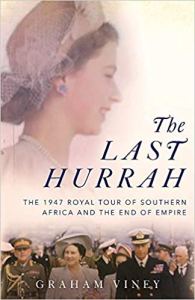
the last hurrahI recently read Graham Viney’s marvellous book, The Last Hurrah: The 1947 Royal Tour of Southern Africa and the End of Empire, and while boarding the ship named after one of the 1947 tour’s main royal guests, I recalled the evocative way Viney had described the approach of the ship that carried the royal family into Cape Town’s harbour in 1947.
Viney also records Princess Elizabeth’s reaction on first seeing the Mother City: ‘It was a wonderful day as we approached Cape Town and when I caught my first glimpse of Table Mountain I could hardly believe that anything could be so beautiful.’

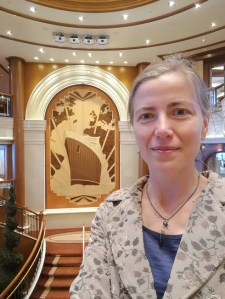
fbtThe ship named after now Queen Elizabeth impresses with its elegant interiors, an old-world charm that is irresistible to hopeless romantics like myself. You enter the main hall and cannot help thinking of similar scenes from the movie Titanic – the opulence and the beauty, the promise of an adventure (before the encounter with The Iceberg, of course). The live harp music started playing just after six pm, in time for dinner. Luckily, nobody was sinking. I did not count the restaurants and bars on board, but there seemed to be many, something for every taste.
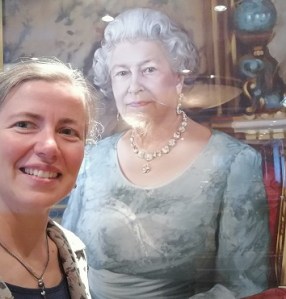
I painted my nails pale blue, wore my dark blue princess dress and perfume, and felt unusually glamorous.

fbtA selfie with the Queen seemed compulsory. She celebrated her twenty-first birthday during that famous tour of 1947. In a few days, I will be twice her age of the time. The average on board of the QEII is probably thrice as much or even more, so maybe a sea voyage like this should wait for a while yet. But ever since visiting the ship, I have been fantasising about sailing for two or three weeks, a stranger among strangers, and writing, writing, writing. With no everyday distractions, and only the sea as my companion, I could probably have a rough draft of a novel at the end of such an expedition. The mere possibility is incredibly tempting…

So while I dream on, here is my review (first published in the Sunday Times on 23 December 2018) of Graham Viney’s book:

The monarchy is not my cup of tea, thus I was rather surprised how thoroughly Graham Viney’s The Last Hurrah had charmed me. Talking about the book to other readers, it has also been intriguing to discover how firmly this particular historical moment is lodged in the psyche of the country, no matter where you or your family stood on the broad spectrum of local politics of the era. Viney’s portrayal of the complex time before the infamous elections of 1948, and the role the royal visit played in it, brings the bygone days with all their vibrant possibilities and uncertainties to life. There is a strong sense that it all could have turned out differently. It is a dizzying thought which should not be underestimated, especially at present, when South Africa is once again transitioning before a potentially monumental election and so much could be at stake.

Viney writes with flair. His is a strikingly literary tour of the British royal family’s grand visit to South Africa as he puts his readers in the front seat, or rather in the main carriages, of the White Train that transported the distinguished guests over vast distances around the country from February to April 1947. Viney asks us “to conjure up the pervading smells of heat and dust, of acrid railway-engine smoke and cinders, of eucalyptus and pepper trees, of Yardley’s Lavender and the friendly tang of the Indian Ocean on a summer’s morning”, among a list of other sensations that his evocative descriptions capture for us to enjoy. They allow a total immersion into the past, akin to time travel.

“I could hardly believe that anything could be so beautiful”, wrote Princess Elizabeth after her first sighting of Table Mountain. Up close, we witness the royals arriving in Cape Town by ship, trekking across this part of the continent as far as Victoria Falls and Durban, and stopping along the way wherever people gathered to welcome them. It was a spectacle like no other. “‘We have to be seen to be believed’ is an oft-repeated adage of the Royal Family,” as Viney reminds us. Anyone who’d followed the most recent royal wedding in Britain might understand how everywhere the royal family appeared at the time (long before television and the internet), people of all races and creeds flocked to see them. The visit provided rare opportunities “in the context of the segregated society” when all people could still come together to participate in some of the events scheduled.

Viney records the triumphs and tribulations of the journey, including the King’s Opening of Parliament and, “to the astonishment of everyone”, his few lines in Afrikaans; the slight caused by the royal itinerary which allocated only two days of their time to Johannesburg; the Ngoma Nkosi at Eshowe; the tea the royal family had with Mrs Smuts and other guests who were secretly in attendance; as well as “the climax of the tour” – Princess Elizabeth’s 21st birthday celebrations and her moving speech which was broadcast worldwide to around 200 million people.

The book is richly illustrated and includes never before published photographs. Viney’s meticulous research and fluent prose result in a full-bodied portrait of the royal tour, its charged politics and all the major players involved, each with his or her own agenda. However, his narration is never bogged down by unnecessary details as he sweeps us along on this remarkable trip, when “for one brief shining moment much of South Africa had put their best foot forward and pulled together.”

btr

Being a cat

btr

In the Acknowledgements of my novel, Invisible Others, I wrote: ‘My furry family, Glinka, Salieri and Mozart, true experts at life, keep trying to teach me how to make the most of it; I hope they will succeed one day.’ It is four years later, but no matter how desirable, being a cat is not an easy task. I might, however, be closer than ever. ‘Your immediate goal is to be a cat’, writes Jaron Lanier in the introduction to his Ten Arguments for Deleting Your Social Media Accounts Right Now (2018), a book that is, despite its title, ‘about how to be a cat.’

‘Cats have done the seemingly impossible: They’ve integrated themselves into the modern high-tech world without giving themselves up. They are still in charge. There is no worry that some stealthy meme crafted by an algorithm and paid for by a creepy, hidden oligarch has taken over your cat. No one has taken over your cat; not you, not anyone… Cats on the internet are our hopes and dreams for the future of people on the internet’, says Lanier. And he should know, not only as a Silicon Valley insider, but as someone who shares his life with cats – Loof, Potato, Tuno and Starlight – who taught Lanier ‘how not to be domesticated’.

Books, like cats, have the ability to change lives. I read Ten Arguments for Deleting Your Social Media Accounts Right Now over the festive season and it did exactly that: changed my life. I haven’t deleted the only social media account I have (yet?); that, too, is ‘part of your prerogative, being a cat’, as Lanier emphasises. But I did decide to change the way I interact with social media.

The problem with social media that Lanier identifies – ‘relentless, robotic, ultimately meaningless behaviour modification in the service of unseen manipulators and uncaring algorithms’ – is, of course, something that many of us have been aware of for quite a while. But it was ultimately his book that encouraged me to do something against it in my own private capacity. I am tired of the exploitative, manipulative, addictive, artificial, often toxic and aggressive, nature of social media. It seems that no matter how much you try to curate your experience, there is no way of avoiding all the negative side effects of engaging with the diverse platforms. There are just so many accounts that you can block without feeling that you are totally wasting your time and could invest it in something much more creative and positive, something that perhaps you yourself – and not some ruthless, greedy company – can profit from, if not exactly financially, then definitely intellectually and emotionally. It’s time to ‘detach from the behaviour-modification empires for a while’, as Lanier says.

‘Go to where you are kindest,’ he suggests, and it resonates with me deeply. Kindness is essential to my survival. It is kindness that has carried me to safety across the roughest storms of my life, and there have been way too many in recent years. I want kindness and calm in my life, and cats and books. That is what makes me happy, what makes life worthwhile for me.

What has changed? Nothing drastic. I stopped tweeting on 31 December. Mid-January, I am still missing it sometimes (it is addictive, after all), especially the interaction with friends and followers I truly care about but, mostly, I feel a lot of relief. I still look at notifications every now and then and acknowledge the ones which I would have in the past, and I use DMs to communicate with a few people, but I completely ignore my timeline. Many social media accounts are of interest to me, but I look at them directly when I feel like it. Basically, I shifted from an active participant to a passive observer. I want to give it a few months to see how I will feel about it all later in the year.

It is amazing how much time I save every day by not engaging with social media. And I decided to use that time for creativity. As Lanier says, the internet is not the problem, the problem is how we use it and how it is being used against us. Producing and sharing creative content about topics I am passionate about, that I or others can also profit from – directly or indirectly (from the exchange of ideas or book sales, for example) – feels right. It is crucial to consider, in Lanier’s words, ‘sustainable, dignified business models’ where a transaction between two parties does not have to go through a third one ‘who is paying to manipulate them.’ Lanier asks for social media that he can pay for, and where he can ‘unambiguously own and set the price for using my data, and it’s easy and normal to earn money if my data is valuable.’ I like that idea very much.

Lanier asks, ‘What if listening to an inner voice or heeding a passion for ethics or beauty were to lead to more important work in the long term, even if it measured as less successful in the moment? What if deeply reaching a small number of people matters more than reaching everybody with nothing?’

What if? Indeed.

I upgraded my blog, so that it does not feature any ads I cannot control; I love the new, clean look which is focused on my – personally chosen – content. The costs involved were minimal in comparison to the benefits.

I decided to choose my online news and entertainment sources directly and to pay for content I find valuable. Well-researched, -considered, -written and -presented content costs money to produce and I want its creators to be well-paid for their intellectual and creative work. Quality, not quantity – that’s what I seek.

The word ‘content’ itself deserves more attention. I find it problematic, but that’s a thought that needs further consideration.

I love paper and never read e-books if I can help it. Reading print media of diverse nature during the festive season made me remember how good it feels to lie next to the pool and turn the pages of an informative, fun magazine. I want more of that in my life again, too.

There is a wonderful passage about writing in Ten Arguments for Deleting Your Social Media Accounts Right Now. It turns a premise writers live by on its head: ‘You can’t read well until you can write at least a little’, claims the author, and continues, ‘The reason we teach writing to students is not in the hopes that they’ll become professional writers… Instead, we hope they’ll learn what it means to write, and to think, which will make them more thoughtful when they read.’ And he adds, challenging us: ‘You can’t use the internet well until you’ve confronted it on your own terms, at least for a while. This is for your integrity, not just for saving the world.’

Integrity, like kindness, deserves to be cultivated with the utmost care.

Finally, I find Lanier’s description of certain questions as ‘tender’ beautiful. Let’s ask more of those ‘tender questions’ together.

Empathy is the fuel that runs a decent society.’

— Jaron Lanier

(PS I tweeted the link to this post and pinned it to my timeline as a way of explaining my disappearance from Twitter; my friends have been asking whether everything was all right. It is. Thank you for caring!)