OYSTERHOOD is reclusiveness or solitude, or an overwhelming desire to stay at home.
— @HaggardHawks
I don’t have a personal Instagram account, but I run the one for Karavan Press. And via that account I follow a few accounts that are not strictly literary, but rather food-related. One of them is the account of Richard Bosman, or “Foodie, charcutier, Jedi knight, frustrated musician, personal chef of Commander J”. A while back, I attended one of Richard’s meat curing courses and was astounded what quality of bacon I could cure myself at home, but now… Unless pigs start roaming the streets of Rosebank like the goats of Llandudno, and my hunting instincts awaken, the chances for self-prepared cured bacon look slim. So, when I saw this post on Richard’s Instagram account on Friday just after the lockdown, I smiled from ear to ear and placed my order immediately. My cured meats and bratwurst were delivered – very professionally, tailored for our times – yesterday. Thank you, Richard and Patrick! You saved this meat-eater’s bacon, that’s for sure!
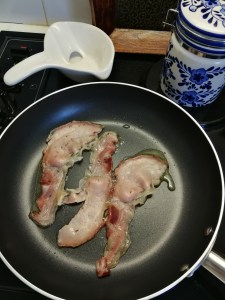
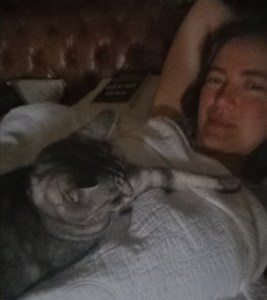
When he was here in February, my brother decided to give me a new frying pan (his sole comment on the state of my kitchen), and this morning I could fry my newly acquired bacon in my gorgeous new pan. Salieri, watching all of this, was very fussy about her own breakfast, and I ended up sharing both my bacon and the yolk of my egg with her. She doesn’t understand the concept of limited resources and that I won’t be able to share her food with her at crunch time… I can always explain to myself why there is only a sixteen-year-old vodka bottle (a gift for my twenty-seventh … no comment!) and mustard in the fridge; it’s impossible to explain the lack of food to Salieri.
Last night, I had a bizarre dream: I was in my early twenties and still living with my parents, but the dream had me at a party, socialising with Mirka and Roger Federer, and then going with my boyfriend (a complete stranger in reality), doing voice-overs for Star Trek, to his place and feeling super-cool. Dr Freud is turning in his grave.
At this stage, I had given up on the garbage bin. Someone had gone through it yesterday despite lockdown. I’d decided to try my luck next week again.
After my bacon-and-egg breakfast, I made a few attempts to read in bed, but my mind wasn’t obliging. Luckily, my wonderful friend Debbie phoned to discuss the artworks that she will be doing for one of Karavan Press’s titles later this year. She is reading the manuscript and coming up with brilliant ideas. I love her work, so this was exciting to dream about together. One day, when books can be printed again…
Talking to Debbie, I realised that I hadn’t brushed my teeth yet. The fact that I was still in my PJs wasn’t that unusual. But the teeth non-brushing was unacceptable. After years of neglect in other countries, under South African oral hygiene standards, I was finally taught at my dentist’s here how to take care of my teeth and I haven’t had a single issue with my teeth for about a decade. This is not the time to go back to the old bad habits of dental neglect. It was around 1pm, so high time to get going. I brushed my teeth and was ready for the day. I looked at my stepper, then at the sunshine outside, and went for a swim. I am getting high doses of vitamin D nowadays.
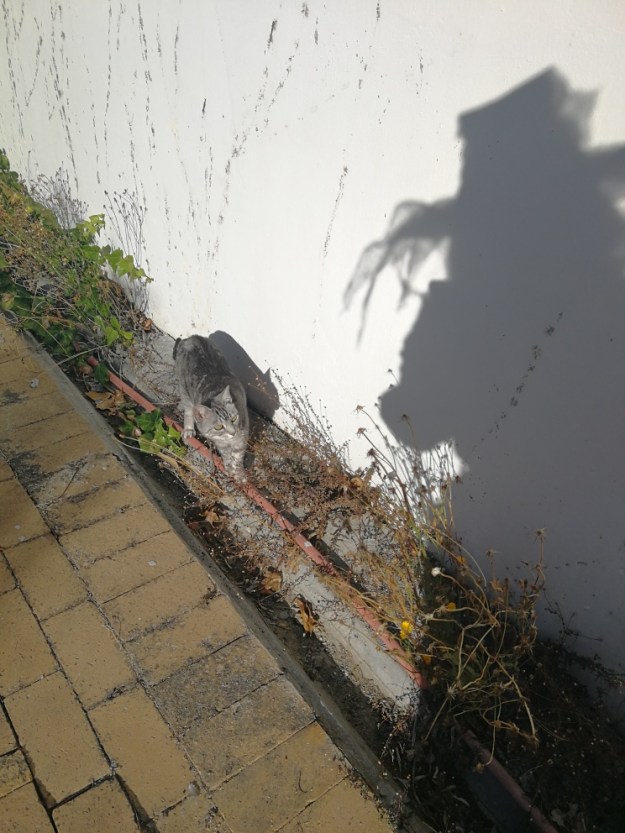
It’s the first of the month, so time for flea repellent for The Cats. They all watched me swim (one of their favourite pastimes). Then, one by one, they were subjected to the flea repellent application. The Ladies HATE it with a passion, and they usually take out all their frustrations on poor Mozart, the only one who doesn’t care about the application whatsoever, but because of The Ladies’ puffing and hissing in his direction, eventually, I didn’t have a single friend in the house – the entire property! During lockdown, this was rough.
But lunch was being served in the kitchen, so I was forgiven my flea trespasses.

In the afternoon, I did some ironing, one of my favourite pastimes. The phone rang: my lovely neighbours alerting me to the refuse truck tumbling down the neighbourhood’s streets – yay! At least I did not have to run half-naked in my nighty after them, hair flying, slippers falling off my feet (yes, it has sadly happened before).
Satisfied with some kind of normality returning to my weekly schedule, I touched up a beautiful, moving piece of writing that Sue Brown had sent to me on Monday evening. I asked her whether I could put it up on the Karavan Press website and she kindly agreed. Do yourself a favour and take a few minutes of “being still” to read it:
“BEING STILL” by SUE BROWN

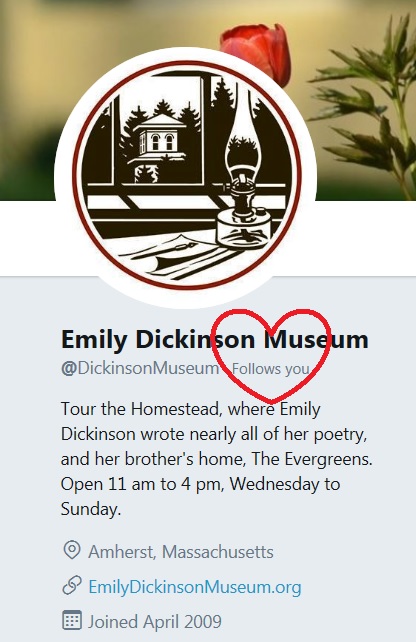
Twitter highlight of the day: the EMILY DICKINSON MUSEUM followed me back!!! Yes, it deserves three exclamation marks. I have loved this account for as long as I can remember. Needless to say I am a huge fan of Ms Dickinson, have visited the Museum in 2011, and hope to return one day… Until then, I am happy to delight in the virtual engagement.
My brother was there when we visited Ms D’s home in 2011. When he visited me in 2018, he left behind three sweet potatoes. Now, I am not fussy about food. I am probably the easiest person to feed. I am only allergic to bananas, and I cannot – CANNOT – eat licorice. Otherwise, I am easy. But, I can do without sweet potato. In the end, after a few months of staring at me, the poor sweet potatoes started sprouting in my kitchen, and I finally decided to plant them a few weeks ago, just before Krystian’s most recent visit. They have turned into this remarkably beautiful treasure in my garden:
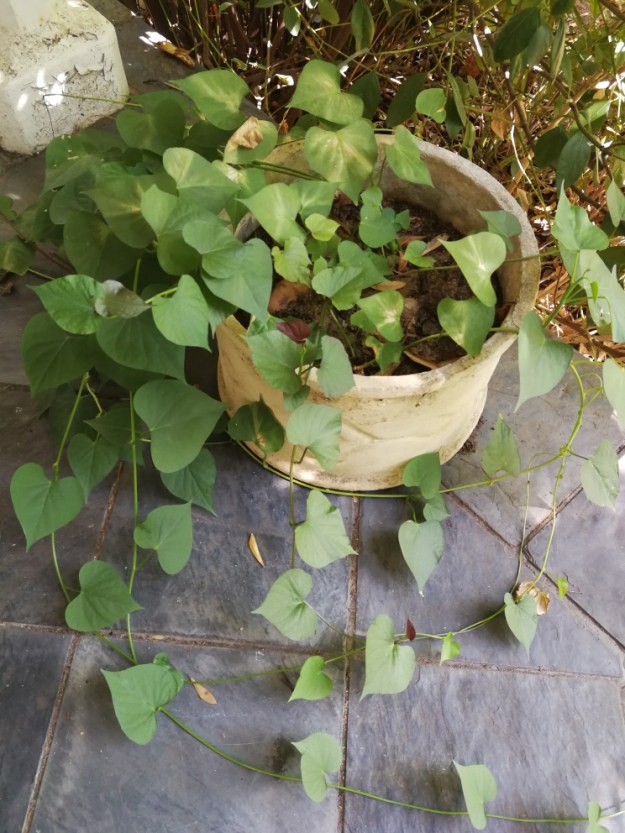
Who would have thought?
But: I was somehow disheartened when I found two new sweet potatoes abandoned by Krystian in my kitchen cupboard at the end of February. This time, I decided to eat them. Tonight was the night. I had bratwurst (also part of yesterday’s meat delivery) in my fridge. No charcoal, no firelighters, but some firewood and old candle stumps – a trick I was taught by Bill of Oudrif – they are celebrating their twentieth anniversary of existence today! HAPPY TWENTIETH, dear OUDRIF! To think that we were supposed to spend Easter 2020 together… Sigh!
Anyway, sigh, “I have made a fire!” (all Tom-Hanks-Castaway-style), and braaied bratwurst (now, that’s a mouthful: braaied bratwurst) for dinner, and thought of Oudrif and the day when we will be able to travel and celebrate together again…
Listening to my favourite Austrian radio station tonight, I finally discovered which song the dancing friars () used for their video. Soundtrack for my own attempts sorted.
Glinka has been waiting for me in bed for something like three hours now. A positive day. I got almost nothing of substance done, but at least there won’t be any sweet potatoes begging to be eaten for a year in my kitchen. The small successes of a lockdown.
Be kind to yourself. Be kind to others. Stay at home.
PS Floss and brush your teeth.







 It has been a while since I’ve read, edited or contributed to an anthology of theoretical essays on South African literature. But, occasionally, I still have academic longings; therefore, I approached


 The cover photograph is by Philip de Vos (among his many amazing achievements is the translation of The Gruffalo into Afrikaans:















 “Something priceless was dying in front of our eyes. The feeling was bewildering, as if the earth was shaking”, writes Ken Follett about watching the Notre-Dame Cathedral burning on 15 April last year. Not an expert on cathedrals, but known across the world for his The Pillars of the Earth, a novel about the construction of a cathedral for which he did an enormous amount of research, he became the media’s go-to person for commentary about the Notre-Dame fire and, together with his French publisher, decided to write Notre-Dame: A Short History of the Meaning of Cathedrals to support the reconstruction efforts of the architectural treasure after the catastrophe. All the royalties generated by the book go to the charity La Fondation du Patrimoine.


 Karina Magdalena