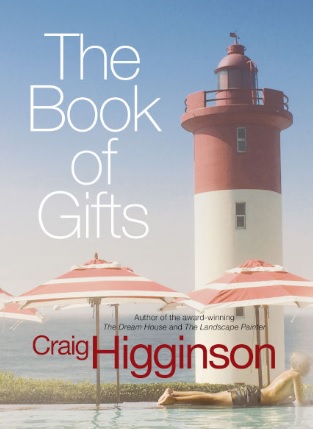
 As readers, we turn to specific authors when we don’t want to be disappointed. The internationally acclaimed writer, Craig Higginson, has become one of these for me. His latest novel, The Book of Gifts, is another gem in his impressive oeuvre. It begins with a family trip to uMhlanga Rocks and radiates from this particular moment into the past and the future, gradually piecing together the puzzle of the intricate – often toxic – relationships that play out during the holiday in KwaZulu-Natal. At the centre of the unfolding story and the complex familial constellation are the two half-sisters, Emma and Jennifer. Emma is a successful sculptor and mother to Julian, at the time of the holiday an eleven-year-old boy who falls in love for the first time with an enthralling, slightly older Clare. Jennifer is a teacher at Julian’s school back in Johannesburg where they all live, and wife to Andrew, a psychologist struggling to find his professional and personal bearing.
“A gift is never a destination in itself,” Andrew tells one of his patients, “but a means to an end – a stepping stone towards somewhere else.” Every chapter of The Book of Gifts is told from the perspective of one of the main characters and contains a mention of a gift that one of them gives to another with diverse intentions and consequences. The gift that stands out throughout is the one of life, whether it is the life a parent gives to their child or the life that an artist gives to their creation. Emma continues asking herself whether she is capable of managing both these callings, as a mother and as a creative person, and experiences guilt that allows a potentially lethal gift, “the poisoned apple”, to threaten her and her son’s well-being.
In a world where everyone has a secret and integrity is torn apart by betrayals, the gift of truth has the biblical potential to set one free, but speaking up takes courage. When Julian ends up in a comma after a mysterious fall, the adults in his life have to dig deep in order to comprehend – and perhaps finally accept – their responsibilities towards the conflicted young man and towards one another. But not all of them are ready for the effort involved.
Higginson explores how an act of creation can also reshape reality in order to reveal or disguise culpability, which adds another fascinating dimension to The Book of Gifts that made me reconsider my own understanding of the relationship between truth and storytelling. This finely layered, mesmerising novel will cement Higginson’s position as one of the most gifted – yes, that word again – writers in South Africa and beyond. His ability to shine a light into the darkest places of the human heart and confronting them with empathy is remarkable: “This is where life begins, he thinks, as he takes another step into the dark.”
The Book of Gifts
Craig Higginson
Picador Africa, 2020
Review first published in the Cape Time on 20 February 2020.
 The internationally acclaimed, Durban-born writer, Elleke Boehmer, has a second short story collection out: To the Volcano, and Other Stories. Set mostly in the southern hemisphere and illuminated by the legendary southern light artists and tourists travel the world to experience, the twelve stories in this collection explore the tenuous and tenacious relationships people have with the South.
 Adamastor City is a first in all kinds of fascinating ways: for the author, Jaco Adriaanse, it is a debut novel and the first book in The Metronome Trilogy, and it is the first title for the new, independent publisher on the block, Burnt Toast Books, established this year by Robert Volker, who wants to focus on shorter forms and allow authors more freedom to experiment.
 We have entered an era when biographers and literary scholars bemoan the fact that most of us have stopped writing letters, the ones composed with a pen on paper, folded into an envelope and posted to be received and perhaps kept under a pillow or in a jacket’s pocket because of the precious content they contain. For centuries, such letters were frequently lifelines to others and bore testimonies to our lives in ways that our modern world, despite all our inventions and our seeming connectedness, is no longer capable of reproducing.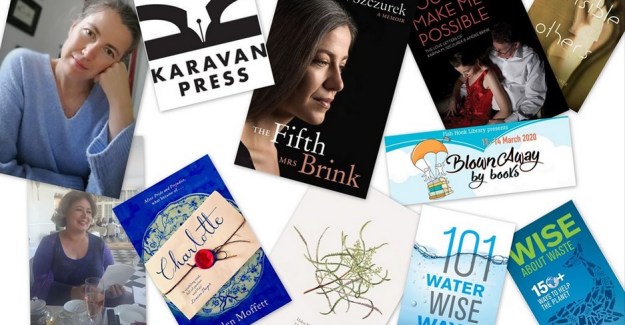
 Missing Person, the latest thriller from the author of The Three, Day Four and The White Road, Sarah Lotz, was my companion on a recent overseas flight and kept me so entertained that I hardly noticed the long hours flying by.


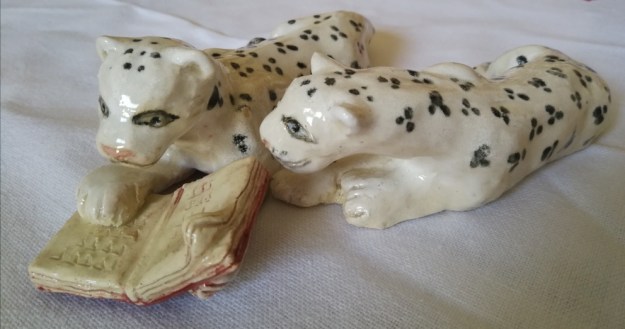



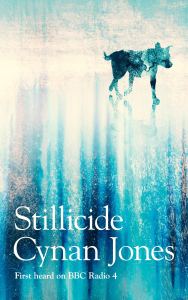 In his writing, Cynan Jones showcases the full potential of the short forms of prose – the novella and the short story. I have been a fan for years. The economy of his prose and the uncanny insight he offers into the human condition are a rare gift. Stillicide, his latest book, is a collection of short fictions which originated as a BBC Radio 4 series. The pieces are interlinked and centre around the theme of water, as the title suggests. “Stillicide” is defined as “a continual dropping of water” or “a right or duty relating to the collection of water from or onto adjacent land.”
 In his novels, Richard Zimler, who is best known for The Last Kabbalist of Lisbon, has been chronicling Jewish history throughout the ages and from all corners of the world for many years. His latest offering is an unusual, deeply touching retelling of the gospel. At its centre, Zimler places Lazarus and allows him to tell the story in a long letter to his grandson: “Picture me endeavouring to tell you matters that will never be able to fit easily or comfortably on a roll of papyrus.”
 Karina Magdalena