 We have entered an era when biographers and literary scholars bemoan the fact that most of us have stopped writing letters, the ones composed with a pen on paper, folded into an envelope and posted to be received and perhaps kept under a pillow or in a jacket’s pocket because of the precious content they contain. For centuries, such letters were frequently lifelines to others and bore testimonies to our lives in ways that our modern world, despite all our inventions and our seeming connectedness, is no longer capable of reproducing.
Jolyon Nuttall was a journalist and media manager before retiring and returning to his love of writing. He published Vintage Love, a book of essays about his personal and professional life, in 2018. Last year, before his death of cancer, he compiled Letters Home, a collection of letters he wrote to his family in the early 1960s while he was assigned by a South African newspaper to the foreign correspondent desk in New York. The book also contains essays which contextualise the letters and record the time’s influence on Nuttall’s subsequent life.
Letters Home is dedicated to Misa Ban, a Japanese actress Nuttall met and fell in love with during his stay in New York. The letters tell the story of a young man trying to find his way in the turbulent world of the 1960s, in South Africa and abroad, and experiencing an impossible love, forbidden by the apartheid laws of his home country. The personal essays which follow describe the consequences of the choices Nuttall felt compelled to make as a result of these socio-historical tensions.
Published posthumously, Letters Home is a beautiful homage to the letter as an art form and to the rich life of a man who did not shy away from difficult questions.
Letters Home
Jolyon Nuttall
Staging Post, 2019
Review first published in the Cape Times on 6 March 2020.
 Missing Person, the latest thriller from the author of The Three, Day Four and The White Road, Sarah Lotz, was my companion on a recent overseas flight and kept me so entertained that I hardly noticed the long hours flying by.





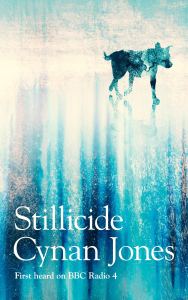 In his writing, Cynan Jones showcases the full potential of the short forms of prose – the novella and the short story. I have been a fan for years. The economy of his prose and the uncanny insight he offers into the human condition are a rare gift. Stillicide, his latest book, is a collection of short fictions which originated as a BBC Radio 4 series. The pieces are interlinked and centre around the theme of water, as the title suggests. “Stillicide” is defined as “a continual dropping of water” or “a right or duty relating to the collection of water from or onto adjacent land.”
 In his novels, Richard Zimler, who is best known for The Last Kabbalist of Lisbon, has been chronicling Jewish history throughout the ages and from all corners of the world for many years. His latest offering is an unusual, deeply touching retelling of the gospel. At its centre, Zimler places Lazarus and allows him to tell the story in a long letter to his grandson: “Picture me endeavouring to tell you matters that will never be able to fit easily or comfortably on a roll of papyrus.”
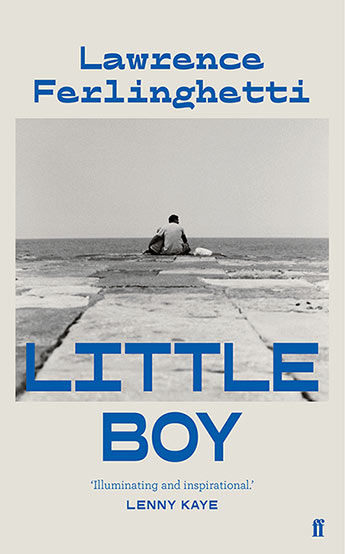 The versatile American artist Lawrence Ferlinghetti is a literary legend. For his hundredth birthday last year, Faber & Faber published a beautiful hardback edition of his latest work, a memoir in verse titled Little Boy. The cover and the first few pages lured me in at the bookshop; I couldn’t wait to take it home.
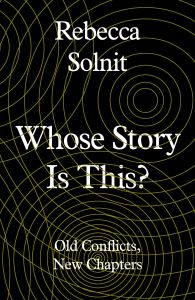 There are numerous writers out there who understand the complexity of the present. Many can also clearly convey their insights. But few do it as strikingly as Rebecca Solnit. I have discovered her work only recently, but have read and loved all the books she has authored by now. Her latest is another intellectual delight.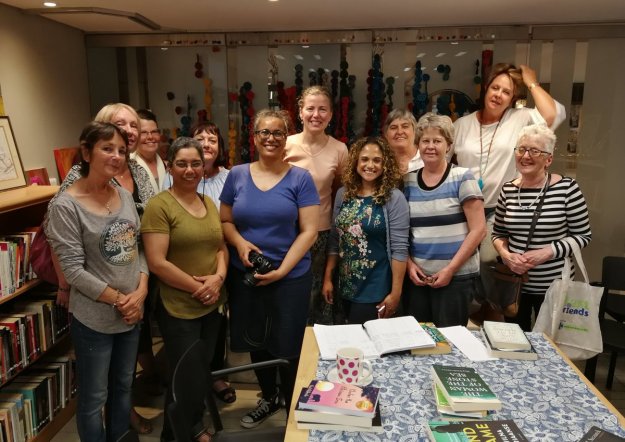
 For obvious reasons, I chose to speak about a few of the women in my life who shaped my creativity and were instrumental in paving my way towards a career in writing, editing and publishing. It was impossible to honour all of them in a short time, but these are the women who featured in my talk yesterday: my grandmother, Babcia Marysia, and my Mom, both of them nurtured my creativity in indirect but significant ways; Mrs Nellie Fahy, the librarian who awakened my passion for reading; Nadine Gordimer, whose writing brought me to South Africa for the first time; Maureen Isaacson, who first gave me the opportunity to hone my craft as a book reviewer when she was book page editor of the Sunday Independent; Lyndall Gordon, whose work and friendship showed me how to continue being a writer in the world when I was doubting that I could; Rachel Zadok, who believed in me as an editor and through work kept me sane when my world lost nearly all connection to sanity; and Joanne Hichens, who was a stranger when I asked her to visit me in an hour of utter despair nearly five years ago, but we became friends and are now co-editors of an anthology of short stories we published together: HAIR: Weaving and Unpicking Stories of Identity.


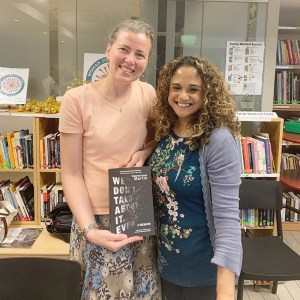 During the book club reviewing session, I also briefly spoke about the book I had finished reading that morning: Desiree-Anne Martin’s remarkable
  Karina Magdalena