 The city is Lviv. The house with the stained-glass window is an architectural treasure. The four generations of women living in it are steeped in the setting’s rich and deeply troubled history. And so begins Żanna Słoniowska’s magnetic debut novel. Ukrainian-born, Słoniowska has settled in Cracow, Poland, and published The House with the Stained-Glass Window in Polish. It won the esteemed Znak Publishers’ Literary Prize and the Conrad Prize for first novels. It was shortlisted for Poland’s most prestigious literary award, the Nike (not to be confused with the sports brand), a respected recognition. Translated seamlessly into English by Antonia Lloyd-Jones, the book is one of those historical novels that manages to encapsulate a century of socio-political hopes and upheavals in Ukraine’s most famous city by portraying the private and intimate lives of a single family, specifically the women who shaped its core.
“I remember that on that particular day Great-Granma was ‘having hysterics’, in other words lying in bed and loudly sobbing”, her great-granddaughter, our narrator tells us. “Days like this occurred since time began, and weren’t necessarily proceeded by any kind of nasty incident. ‘It’s to do with the past,’ Aba would explain… I imagined ‘the past’ as uncontrollable, intermittent blubbering.”
Aba remembers how Great-Granma’s husband, her father, was one of the “people who started to vanish from the flats in our house”. She was awake when they came for her Papa: “He kissed me goodbye, and said it was an error, he’d be back soon, while two men stood waiting for him in the doorway. I never saw him again,” Aba recalls and her granddaughter knows exactly what it means to lose a parent to historical forces. Her mother, Aba’s daughter, the renowned opera singer Marianna is assassinated.
The novel opens with her final moments: “On the day of her death, her voice rang out, drowning many other, raucous sounds. Yet death, her death, was not a sound, but a colour. They brought her body home wrapped in a large, blue-and-yellow flag – the flag of a country that did not yet exist on any map of the world.” But it soon would, the country that we know today as Ukraine, in which Marianna’s daughter tries to carve out a space for herself.
The young woman’s intuition tells her “to be beware of people who can change your memories.” One of them is Mykola, her mother’s married lover with whom she, too, begins an affair after Marianna’s death.
Słoniowska is a noteworthy storyteller with the remarkable ability to evoke an entire era with a few simple images. The Lviv of her narration – “this city, worn out by history” –becomes the fifth main character of the book, along with the women who make it their own despite the demanding circumstances they face. The English translator provides us with a short, useful introductory note on the history of the region to familiarise the reader with the broader context. The House with the Stained-Glass Window is beautiful and announces a great talent on the international literary scene.
The House with the Stained-Glass Window
by Żanna Słoniowska
Maclehose Press Editions, 2017
Review first published in the Cape Times on 19 October 2018.


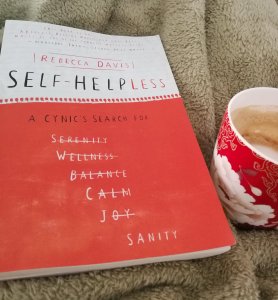 We can thank the giraffes. The threat of their extinction had driven Rebecca Davis into despair and sent her on a rollicking search for meaning. The resulting book, Self-Helpless: A Cynic’s Search for Sanity, was at times dangerous to research, but it is witty and delightful to read.
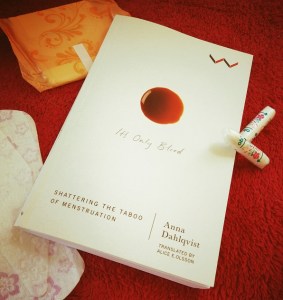 A friend from my university days in Wales once told a group of women gathered at my student residence that when she started menstruating, her parents gave her a bunch of flowers and took her on a river boat excursion to celebrate the occasion. She was German, and the rest of us were, like her, exchange students from different European countries. Most of us had rather bleak stories to tell about our own individual memories of our first periods. By then, we were all in our early twenties and had about a decade of painful monthly woes behind us. I still remember the relief we all felt when sharing these stories and our experiences, as opportunities to talk about or reflect on menstruation without feeling a certain degree of shame, anger or disillusionment had been rare for most of us up to that point.

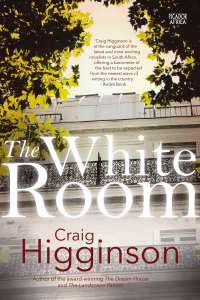 The White Room, Craig Higginson’s latest novel, is sublime. Sometimes a simple, strong word can express it all, especially when you are reviewing a book so intricately fascinated by language – how we use it to communicate, to obfuscate or to hurt.
 Eight years have passed since Nozizwe Cynthia Jele’s striking debut novel, Happiness is a Four-Letter Word, was published and won the Commonwealth Writers’ Prize in the Best First Book category for the Africa region. It was also chosen as the winner of the M-Net Literary Award in the Film category and turned into a highly successful movie that made a huge splash in local cinemas two years ago. I loved the book and the screen adaptation and was very eager to see what kind of novel Jele would write next.
 Authors like Margaret Atwood, Nadine Gordimer or Jeanette Winterson impress with their literary chameleon natures. Their craft is writing. Their tools – an empty page, words, punctuation – might seem simple. But they astound with the versatility of their use. Their talents and imaginations do not fear rules or boundaries. They bend forms to accommodate the multifaceted observations and ideas that come alive through their creativity. They are no cookie cutters. Whether it is poetry or prose, fiction or non-fiction, literary or genre, these writers rise to the challenge of versatility and deliver excellence.
 Rachel Haze is the author of a local erotic novel which teasingly proclaims on its back cover that “there are far more than fifty shades.” The reference will be clear to most readers, even if you have never succumbed to the lure of E.L. James’s über-bestselling creations. I have never had the dubious pleasure of reading the books, but in general I have absolutely nothing against erotic fiction of any kind, and I have delighted in a few local titles of the genre in recent years. The anthology of short stories, Adults Only, edited by Joanne Hichens, or the Girl Walks Into series by Helena S. Paige come to mind. However, the book that still haunts me is Donvé Lee’s fierce and exquisitely written An Intimate War. It captivated me because it felt authentic and was touchingly erotic.
 Karina Magdalena