Author Archives: Karina

Unknown's avatar

About Karina

Author living in Cape Town.

Operation Oysterhood: Day One

OYSTERHOOD is reclusiveness or solitude, or an overwhelming desire to stay at home.
@HaggardHawks

1

I wanted to remember them, because it felt like a good omen that my dreams were about something positive, but after I had surfaced properly into the morning, they were all gone, leaving behind a vague feeling of warmth and uncertainty.

My cats were there, all real and demanding. They like having their human permanently at home and have decided to smoke the peace pipe to allow me to enjoy their company together at the same time. They only do that when they know they are needed, when loss and anxiousness are in the air.

‘Be kind to yourself’ is the wisest advice I have ever been given. It is my intention for the duration of the lockdown, twenty-one days or longer, whatever is necessary to do my bit in this battle, to be kind to myself. I am staying at home. No routines, because they don’t work for me. Just being, breathing, seeing what is possible, and doing my best. I move between two beds. One is in front of the TV – contrary to most sane advice, the TV helps me fall asleep and it makes me feel safe that it keeps watching me through the night. I never finish an episode of anything before I fall asleep, so I usually catch up during the day if I am interested in who did it. This morning, I finished watching a pre-recorded episode of “Coroner” (the Universal Channel is the only channel I watch regularly, apart from SuperSport channels, and now news from around the world).

Coffee. Beautiful sunrise illuminating the side of the Mountain I can see from my garden. Simple breakfast. Coffee. Then, Refilwe Moloto on CapeTalk in tears just before the 9am news, reporting on the first two Covid-19 deaths in South Africa, here in the Western Cape. (Later, it was reported that one of the women was not Covid-19 positive, but she died at the age of 28, which is a tragedy in itself.)

I know people are dying everywhere, every day, of a multitude of causes. But there is something so simple, silent and sinister about this threat that one cannot help feeling terrified. I am terrified.

For the rest of the morning, I returned to my usual bed to finish proofreading a collection of struggle poetry by ANC women that will be published later this year by uHlanga. My electric blanket was on, Salieri was by my side, the coffee was good. The poetry was fierce and inspiring. An archival treasure of note.

Apart from the virus, the thing that dominates my thoughts is my privilege. The roof over my head, the wild garden, the stunning view of the Mountain, my pool (even though it has been leaking because of cracks on one side). I am doing what I possibly can to assist others during this unprecedented crisis, but it all feels insignificant in comparison to all the personal blessings I can count in my own life right now, even in this very difficult situation when I feel lost and scared. I have survived a severe case of pneumonia in my teens. I remember the nights when I couldn’t breathe and in my thoughts begged to be released from the agony. It was the only time I gave up my will to live. And yet, I don’t fear so much for myself as for what I could possibly inflict on others if I am careless…

I have been watching the pandemic unfold and have known before it was officially announced here in South Africa that we would end up on this spot. It seemed unavoidable. I bought my non-perishable supplies (no toilet paper though! – what I had from before will last a long time) very calmly almost three weeks ago and they will keep me and my Furry Ones going for a while.

The next few days are also predictable. I don’t dare attempt to look further into the future, because I know that if we don’t take this lockdown seriously, our actions might result in carnage. There is very little I can do, but I can stay at home.

Twitter has been a source of information and support. I have some really great people on my timeline and I count quite a few of them as friends, even if we barely know each other, or not at all, outside the platform. But I also worry about online predators for whom this crisis must feel like paradise: all these people openly signalling distress, all stuck at home, vulnerable and ready to be taken advantage of. It’s a topic for another day. Soon.

The funniest thing I saw online today were the Standup Paddleboard Witches during their annual event in Portland, US:

Standup Paddleboard Witches

(Image: Sam Bugarsky)

@womensart1

When I finally finished the poetry proofreading just after 1pm, inspired by the Standup Paddleboard Witches, I put on my witch’s hat in order to attempt to fix the cracks in my pool. The water started leaking noticeably a few days ago, so there was no time to ask the pool people to assist me, but I had once accidentally bought some putty meant for this purpose and I decided to try my luck with it. We will know by tomorrow how successful I have been.

Chicken soup for lunch (obviously!), quite a literary dish, because my recipe combines the recipes of Rahla Xenopoulos and Sally Partridge who both participated in the ‘Fatten Up Karina’ campaign a few years back when I lost too much weight after André’s death.

I was supposed to interview Rahla’s sister, Gigi Fenster, at the postponed Jewish Literary Festival about her excellent memoir, Feverish. At the time of reading, I did not know that Rahla and Gigi were sisters, but was delighted to find out afterwards. Gigi wrote about the period of her life when she thought of inducing a fever in herself for creative purposes. It is a fascinating account about the reasons behind this idea and about what happened with the experiment. I hope that I will still be able to do this interview. If not, I promise to write about the book one day.

Apart from me and the Furry Ones, there are only six other living creatures (officially, not counting the uninvited visitors creeping and crawling around) in the house: five orchids and a kombucha. I prepared a new batch of kombucha today and fertilised parts of my garden with the overflow scoby (a gift from Jacqui L’Ange).

After some emails and a lot of admin, it was time for a simple dinner and then another wonderful phone call with my Mom. I try not to think about it, but it is very difficult to know that even if I wanted to, I could not rush to her. She lives alone in Austria with her cat Myszka. Whenever I speak to her, Myszka’s brother, Mozart, who lives with me, comes to the phone and wants to cuddle with me. I think he recognises that I am speaking Polish and finds this somehow comforting. He has been blind for more than three years now and, even though he has always been independent, he has become very elusive, spending his time in the garden alone and not wanting to be bothered. Today, he sat on my lap while I spoke to Mom.

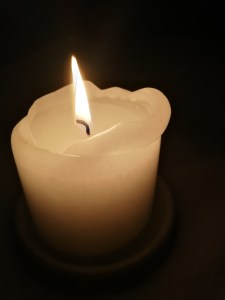
It is now time for bed. I am lighting a candle for someone I know who is in distress and needs kind thoughts right now.
5

May you all be safe tonight and be surrounded by kindness in your lives.

Be kind to yourself. Be kind to others. Stay at home.
Review: The Book of Gifts by Craig Higginson

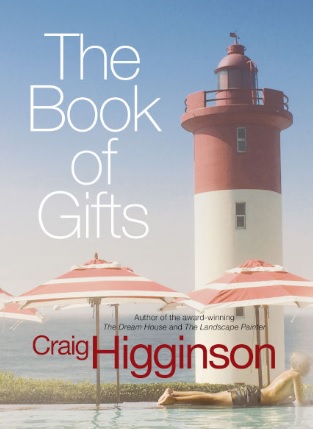
The Book of GiftsAs readers, we turn to specific authors when we don’t want to be disappointed. The internationally acclaimed writer, Craig Higginson, has become one of these for me. His latest novel, The Book of Gifts, is another gem in his impressive oeuvre. It begins with a family trip to uMhlanga Rocks and radiates from this particular moment into the past and the future, gradually piecing together the puzzle of the intricate – often toxic – relationships that play out during the holiday in KwaZulu-Natal. At the centre of the unfolding story and the complex familial constellation are the two half-sisters, Emma and Jennifer. Emma is a successful sculptor and mother to Julian, at the time of the holiday an eleven-year-old boy who falls in love for the first time with an enthralling, slightly older Clare. Jennifer is a teacher at Julian’s school back in Johannesburg where they all live, and wife to Andrew, a psychologist struggling to find his professional and personal bearing.

“A gift is never a destination in itself,” Andrew tells one of his patients, “but a means to an end – a stepping stone towards somewhere else.” Every chapter of The Book of Gifts is told from the perspective of one of the main characters and contains a mention of a gift that one of them gives to another with diverse intentions and consequences. The gift that stands out throughout is the one of life, whether it is the life a parent gives to their child or the life that an artist gives to their creation. Emma continues asking herself whether she is capable of managing both these callings, as a mother and as a creative person, and experiences guilt that allows a potentially lethal gift, “the poisoned apple”, to threaten her and her son’s well-being.

In a world where everyone has a secret and integrity is torn apart by betrayals, the gift of truth has the biblical potential to set one free, but speaking up takes courage. When Julian ends up in a comma after a mysterious fall, the adults in his life have to dig deep in order to comprehend – and perhaps finally accept – their responsibilities towards the conflicted young man and towards one another. But not all of them are ready for the effort involved.

Higginson explores how an act of creation can also reshape reality in order to reveal or disguise culpability, which adds another fascinating dimension to The Book of Gifts that made me reconsider my own understanding of the relationship between truth and storytelling. This finely layered, mesmerising novel will cement Higginson’s position as one of the most gifted – yes, that word again – writers in South Africa and beyond. His ability to shine a light into the darkest places of the human heart and confronting them with empathy is remarkable: “This is where life begins, he thinks, as he takes another step into the dark.”

The Book of Gifts

Craig Higginson

Picador Africa, 2020

Review first published in the Cape Time on 20 February 2020.

Review: To the Volcano, and Other Stories by Elleke Boehmer

To-the-VolcanoThe internationally acclaimed, Durban-born writer, Elleke Boehmer, has a second short story collection out: To the Volcano, and Other Stories. Set mostly in the southern hemisphere and illuminated by the legendary southern light artists and tourists travel the world to experience, the twelve stories in this collection explore the tenuous and tenacious relationships people have with the South.

Boehmer is also a novelist and a literary scholar; her work across the disciplines is devoted to understanding the complexities involved. The way she presents her observations and insights in fiction is a balm for the soul. The one word that came to mind throughout the reading of To the Volcano was “gentleness”. Not necessarily when it comes to themes touched on in the stories – these are often anything but gentle (trauma, colonialism, illegal migration, ageing, loss, etc.) – but the way they are presented in exquisite, considered prose.

A little boy keeps his frail grandmother, who is suffering from dementia, grounded by constructing paper planes for her. A woman on holiday is given a bracelet that feels like a portal to a disquieting reality. Two shelf stackers in a supermarket connect on Valentine’s Day. The widow of a writer continues taking care of his legacy. During a trip to the titular volcano, the lives of a group of university lecturers and students are transformed: “You have lit a fire in my soul,” writes one of them to another, “My love is strong as death, its flashes are flashes of fire.”

Boehmer’s stories “flash fire”. They are about seeing, about interconnectedness and about the shifting of perspectives. By flipping the globe on its axis and placing the South at the centre of our attention, she allows us to look at the world from a vantage point that is unusually regarded as peripheral.

To the Volcano, and Other Stories

Elleke Boehmer

Myriad Editions, 2019

Review first published in the Cape Time on 20 February 2020.

Review: Adamastor City by Jaco Adriaanse

Adamastor-CityAdamastor City is a first in all kinds of fascinating ways: for the author, Jaco Adriaanse, it is a debut novel and the first book in The Metronome Trilogy, and it is the first title for the new, independent publisher on the block, Burnt Toast Books, established this year by Robert Volker, who wants to focus on shorter forms and allow authors more freedom to experiment.

Volker is redefining the publishing threshold in the sense that, as an author, you don’t have to offer him a conventional doorstopper of a manuscript in order to be acknowledged. As a reader, you can expect to be engaged and entertained. In this respect, Adamastor City is an excellent flagship for Burnt Toast Books. Written in the form of a long prose poem that rhymes, it tells the story of a young boy who questions whether there isn’t more to life than his predictable parents have to offer. He asks the universe to intervene and is granted his wish, setting out with his robot on a quest to save the world. Inspired by the Adamastor myth, first recorded by the Portuguese poet Luís de Camões in his epic poem Os Lusíadas (1572) about the mythical character Adamastor, a personification of the Cape of Storms, Adamastor City is set in a futuristic Cape Town that is infused with the stories of the past.

Perhaps a little challenging at first glance, Adriaanse’s sci-fi take on this ancient story is anything but. The quirky plot and the rhythm of the text draw you in and keep you going until the last page is turned. The accompanying illustrations by Luami Calitz are stunning. It might not be everyone’s cup of novel, but for those readers wanting to experience something refreshingly different, it is a literary joyride.

The Metronome: Adamastor City

Jaco Adriaanse

Burnt Toast Books

2020

Review was first published in the Cape Times on 13 March 2020.

Review: Letters Home by Jolyon Nuttall

Letters HomeWe have entered an era when biographers and literary scholars bemoan the fact that most of us have stopped writing letters, the ones composed with a pen on paper, folded into an envelope and posted to be received and perhaps kept under a pillow or in a jacket’s pocket because of the precious content they contain. For centuries, such letters were frequently lifelines to others and bore testimonies to our lives in ways that our modern world, despite all our inventions and our seeming connectedness, is no longer capable of reproducing.
Jolyon Nuttall was a journalist and media manager before retiring and returning to his love of writing. He published Vintage Love, a book of essays about his personal and professional life, in 2018. Last year, before his death of cancer, he compiled Letters Home, a collection of letters he wrote to his family in the early 1960s while he was assigned by a South African newspaper to the foreign correspondent desk in New York. The book also contains essays which contextualise the letters and record the time’s influence on Nuttall’s subsequent life.

Letters Home is dedicated to Misa Ban, a Japanese actress Nuttall met and fell in love with during his stay in New York. The letters tell the story of a young man trying to find his way in the turbulent world of the 1960s, in South Africa and abroad, and experiencing an impossible love, forbidden by the apartheid laws of his home country. The personal essays which follow describe the consequences of the choices Nuttall felt compelled to make as a result of these socio-historical tensions.

Published posthumously, Letters Home is a beautiful homage to the letter as an art form and to the rich life of a man who did not shy away from difficult questions.

Letters Home

Jolyon Nuttall

Staging Post, 2019

Review first published in the Cape Times on 6 March 2020.

‘Living a life of words’ at Blown Away by Books, Fish Hoek Library, 12 March 2020

Blown Away by Books_Helen and I

Living a life of words

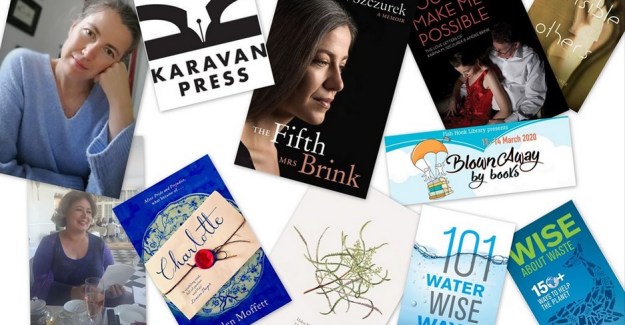
Drs Helen Moffett (Charlotte) and Karina M. Szczurek (The Fifth Mrs Brink; You Make Me Possible) chat to each about where their lives of words have taken them. From novel writing to editing, writing reviews to writing poetry, from starting a small publishing press to being published, being an environmental warrior to writing life story and memoir the stories are endless!

Books will be on sale at a pop-up book stall. R15.00 for tea and filter coffee.

Fish Hoek Library, Thursday, 12 March 2020, 19:00-20:30

Review: Missing Person by Sarah Lotz

Missing PersonMissing Person, the latest thriller from the author of The Three, Day Four and The White Road, Sarah Lotz, was my companion on a recent overseas flight and kept me so entertained that I hardly noticed the long hours flying by.
Lotz is one of those versatile storytellers whose imagination knows no bounds. She addresses themes that are topical, but is never predictable or didactic and is not afraid to push the boundaries of genres. Despite part one opening “in a cemetery on a damp October evening”, unlike her previous three novels, Missing Person does not include the supernatural. Instead, it ventures into a space that is just as inscrutable: the internet.

An online platform specialising in identifying victims of unresolved crimes in the States goes on a mission to find the person behind the corpse knows as the Boy in the Dress, suspected to be Teddy Ryan. Unbeknownst to them, the group of hobby detectives involved are joined in their search by the killer responsible for the young man’s death. They are also assisted by Teddy’s nephew, Shaun, who’d been made to believe by his family that his uncle had died in a car accident years ago in Ireland. Determined to understand what led to Teddy’s demise, Shaun travels from Wales to the States and meets with the amateur sleuths of Missing-linc.com, none of them suspecting that he might be on direct collision course with his uncle’s murderer and that a single wrong gesture can have lethal consequences.

“If he doesn’t approach me, I’ll leave him alone”, the killer remembers first seeing his victim at a bar. The young man approached, sealing his fate. But was he the only one? Is this crime connected to another unsolved case?

The attempt to piece together the puzzle of Teddy’s mysterious disappearance is a way for Shaun of trying to cope with his life after the loss of his mother to cancer. His relationship with the rest of the family is strained. The affair he is having with a married man is burdened by too many lies. It’s hard to trust others when so much of your experience is steeped in deceit. Shaun likes his work at a bookshop, but questions whether there isn’t more to life than that.

Lotz’s other characters – the cyber detectives with their own fascinating stories and motives as well as the people in Shaun’s everyday life – are movingly drawn, believable and thus highly relatable. The murderer’s back story and his present life are chilling in their calculated simplicity. Missing Person is well-paced and, even though you know from almost the start who the killer is, the novel has great twist and turns that I did not see coming. Dialogue is another aspect of the book that Lotz does extremely well. No wonder that the thriller comes with endorsements from the master himself, Stephen King, and our own queen of the genre, Lauren Beukes.

Missing Person

Sarah Lotz

Hodder & Stoughton, 2019

Review first published in the Cape Times, 28 February 2020.

Jewish Literary Festival 2020

12 March 2020: PLEASE NOTE THAT THIS EVENT HAS BEEN POSTPONED DUE TO CONCERNS ABOUT THE SPREAD OF COVID-19.

JLF 2020

This is the third edition of the bi-annual Jewish Literary Festival, a one-day event for lovers of literature and Jewish life. It takes place at Cape Town’s Gardens Community Centre, home to the iconic Jacob Gitlin Library, SA Jewish Museum and Cape Town Holocaust Centre. Between 10 a.m. and 5 p.m. on Sunday, 15 March 2020, readers can engage with more than 70 wordsmiths, poets, journalists, filmmakers and educators over more than 40 sessions. The presenters all have some Jewish connection, are engaged with subjects of Jewish interest or have a way with words and, with multiple sessions running simultaneously throughout the day, the organisers offer genres that cover fiction, sport, food, memoir, politics, journalism, the arts and more – a wide choice to suit all tastes. It is a literary feast of note. Don’t miss it! Tickets sell out quickly, so do not hesitate to book yours here: Quicket.

I wrote about the first JLF for LitNet. During the second JLF, I had the pleasure of interviewing one of my favourite authors, Lyndall Gordon. Both times, I loved the atmosphere of the event so much that I am delighted I can be part of the third edition of the festival.

I am chairing two sessions:

10:00AM, ISRAEL ABRAHAMS 2

Writing Jewish characters — when you’re not Jewish: Where angels fear to tread…
Helen Moffett, Qarnita Loxton and Dawn Garisch talk to Karina Szczurek.

12:10PM, OLD SHUL

“Feverish: A memoir”: Author Gigi Fenster had an unusual proposal for a PhD — she would induce a fever in herself in an effort to experience fevered dreams. The result inspired her second book, Feverish, which she discusses with fellow author Karina Szczurek.

This memoir is a fascinating discovery and I am infinitely grateful to the JLF organisers for asking me to interview Gigi Fenster at the festival. I can’t wait to meet her in person and to talk to her about memoir writing, creativity, migration and all other feverish endeavours that drive and inspire us.

For the rest, I will be attending other events throughout the day. One is spoiled for choice at the JLF. The programme is a basket of literary treats. Get your ticket and enjoy! See you there…

JLF_programme_2020

Snow leopards

Despite being able to transform into an object that exists in the world, in its essence, a book is a communion between an author and her readers. Unless you are writing a manual for wig making, the content of a book will hardly ever manifest as an artefact in reality. The kind of traces fiction or non-fiction leave behind are emotional and mental states, occasionally of life-changing consequences, but book content usually doesn’t metamorphose into material things.

Imagine how moved I was when I pulled, out of a box, a longing which had only ever existed in my soul and as a phrase in my writing. And suddenly I held it – all real and beautiful – in my hands. It was a gift beyond imagination, a gift that only creativity can birth into the world. Pure magic: right there before my teary eyes, in my unbelieving hands. One of the most touching gifts I have ever received.

Snow leopards

The power of storytelling.

Snow leopards Paper House by Julia Smuts Louw

Once upon a time, I compiled a collection of stories. Among them was Julia Smuts Louw’s “Paper House”. I have encountered Julia’s work when she was a creative writing student at UCT and I asked her to contribute to Touch: Stories of Contact. We didn’t particularly keep in touch after the project, but bumped into each other at literary events and, more recently, reconnected over our tasks of taking care of our loved ones’ literary legacies.

A while back, I got an inspiring and beautiful message from Julia about my memoir. She came to Karavan Press events. We went out to dinner. We have started thinking of working together on another literary project in the near future.

And then, a few days ago, she messaged me to say that she wanted to meet to give me something.

We had coffee. I opened the box containing my gift. A man observing the handover felt compelled to come over after we’d stopped hugging to say that it was wonderful to witness the exchange and the happiness it’d so obviously brought into the world.

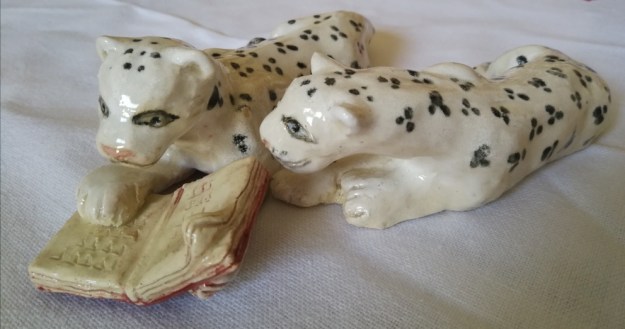
Snow leoprads reading

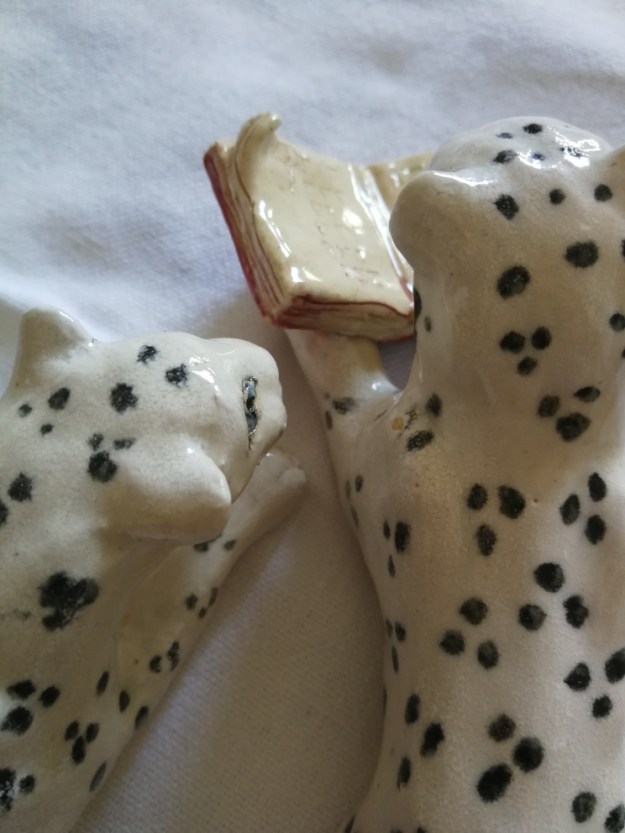
There they were: my snow leopards. Not only images in my head, but real creatures in the world that Julia had created herself after reading my memoir. The one phrase that encapsulates my being manifest in two clay statues – snow leopards reading a Karavan Press book to each other.

Snow leopards Karavan Press

It is difficult to articulate magic, but here it is, sprung up among words and inspired fingertips.

Words can do this.

And all of it was happening while my dear friend, Erika Viljoen, was adding the final touches to her Afrikaans translation of The Fifth Mrs Brink, to be published by Protea Book House later this year. Another longing manifesting in the world in ways that are difficult to articulate, accompanied by a gratitude which knows no bounds. My memoir could never feel complete without an Afrikaans translation. Now it is almost here, and Die vyfde mev. Brink will have both of our names on the cover, Erika’s and mine. And we will be publishing another book together in 2020.

That’s the power of storytelling. And friendship that is like family, and more. And all those incredible journeys – new and old – that are still continuing …

… en net ’n handvol mense ken waarlik die Karina wat wild rondhol saam met sneeuluiperds.

Thank you.


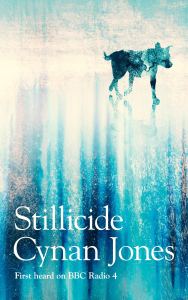
Review: Stillicide by Cynan Jones

StillicideIn his writing, Cynan Jones showcases the full potential of the short forms of prose – the novella and the short story. I have been a fan for years. The economy of his prose and the uncanny insight he offers into the human condition are a rare gift. Stillicide, his latest book, is a collection of short fictions which originated as a BBC Radio 4 series. The pieces are interlinked and centre around the theme of water, as the title suggests. “Stillicide” is defined as “a continual dropping of water” or “a right or duty relating to the collection of water from or onto adjacent land.”

Highly topical not only for drought-stricken South Africa, but globally, the stories of Stillicide are set in an imagined, but not too-distant future where water is a highly priced commodity. The cityscape is familiar as the Thames still runs through it, but the iceberg transports to the city signal a new threatening reality. The characters of Stillicide attempt to carve out a meaningful existence in this hostile world.

A man with nothing left to lose is tasked with the security of the titular “water train” of the opening story. A neglected woman discovers hope within herself and nature. Two boys walk through a desolate landscape with a dog. An elderly couple are about to lose their house to rising sea levels, but they remain like limpets, “they barely move more than half a metre from their home scar all their lives”. The discovery of a rare insect has the potential to stop a development that half a million people are marching against with little hope. “The belligerent will of a thing to exist”, the need for a voice to be kept alive cannot be underestimated. Both find refuge in the stunning stories of Stillicide.

Stillicide

Cynan Jones

Granta, 2019

Review first published in the Cape Times on 24 January 2020.