
 Friends Neha, Devon, Shejal, Janine and Kumari live in the Indian suburb of Lenasia and spend a lot of time together. It is the early 90s, just before the first democratic election in South Africa. The country is preparing for change when the teenagers witness a terrible crime on one of their outings in the township. Their sense of belonging and identity is shaken as they embark on the rough path to adulthood after this lethal incident. Alongside them, South Africa is also trying to come into its own. This is the premise of Nedine Moonsamy’s beautifully crafted debut novel, The Unfamous Five. Although clearly echoing Enid Blyton’s The Famous Five novel series, Moonsamy makes this story completely local and her own.
The Unfamous Five is narrated from the perspective of all five friends at different stages of their lives from June 1993 to April 2003. The individual stories are told in affecting vignettes that reveal the multi-facetted connections between the friends, their families and other people who come to share their lives with them as time progresses.
“As she lives through the moment she already knows that she will remember it for the rest of her life”, it is revealed about Janine at one point in the book, as the account continues: “She records it in her mind as one of those moments. Those moments when reality bursts open like a volcano and spits hot lava across one’s front lawn.” It is the perfect description of how the novel records the essential stages of the group’s journey as individual young adults and as a whole.
It took me a few pages to get into the intense rhythms of the narration, but once I did, I could not put The Unfamous Five down, curious of how these lives would develop and whether the relationships depicted would survive their many permutations and challenges. All five stories are compelling, but I was particularly moved by Janine’s.
Through these characters, Moonsamy brings the transition alive in a way that is truly tangible, never shying away from the most difficult aspect of the period, exposing the devastating consequences of racism, homophobia and intolerance of any kind: “This is how they choose to spend their time, undressing each other until they stand there, naked and raw, clinging together as they desperately search in one another for a new truth about themselves.” The observation is made during an argument about the past and the New South Africa. It is the private and the personal that becomes political here as in the best of fiction addressing these concerns through this specific place and time in history.
“This is the adventure of life, he [Devon] thinks, travelling through each other’s lives, each other’s weeks.” Moonsamy offers us a generous insight into what the adventure of life entailed for the unfamous – but fascinating – five of her novel.
Nedine Moonsamy
Modjaji Books, 2019
Review first published in the Cape Times on 15 November 2019.
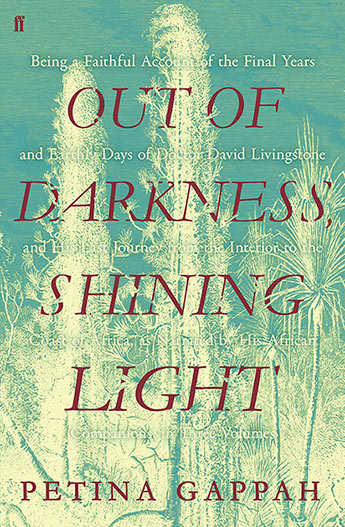 “Whoever heard of a group of people marching from place to place with a dead body?” It is precisely such a journey that is at the centre of Petina Gappah’s latest novel, Out of Darkness, Shining Light. Two decades in the making, the book tells the story of the sixty-nine men and women who decided to carry the body of Bwana Daudi – the Scottish physician and explorer David Livingstone – across the African continent after his death, so that his remains could be interred in his own country.
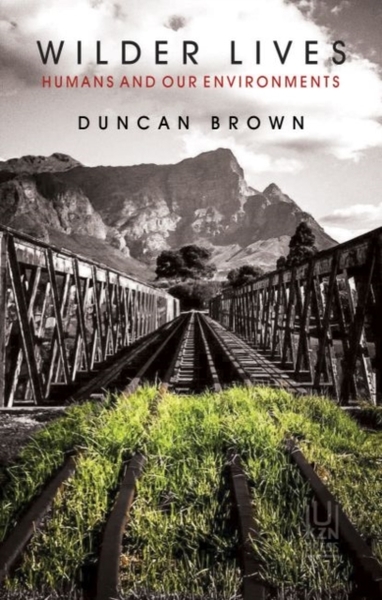
 There is nothing to be done. We are coming too late to the party, allowing doom and gloom to persist. It’s easier to remain in a state of stupor than to take up the torch of an eco-warrior. Looking around, you will be forgiven for thinking that the war is already lost anyway. And there is no doubt about it: we are the bad guys on the wrong side of history. We are destroying our environments with ignorant dedication at a mind-boggling speed. The results are undeniable and crushing.
 “You learn to like the taste of sand out here … It gets to a point where you don’t feel quite right without a grain or two in your mouth. After all, it’s what the miners eat, isn’t it?” With these words the new magistrate of a mining town in Namaqualand is welcomed by his predecessor. It is winter of 1886, and after an arduous journey, William Hull arrives in Springbokfontein to guard the rule of law in the desolate place. Hull is well-meaning but obtuse and naïve; it takes him a while to grasp that there is only one real authority in town, the Cape Copper Mining Company, and that his attempts at justice are also being treacherously undermined in his own home, under his very nose. The battle of wills that ensues has tragic consequences.
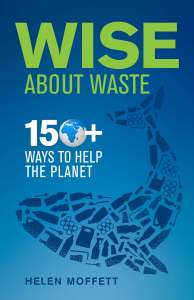
 Not all is well with the world. In moments of dark disillusionment, it is easy to give in to despair and just do nothing. But it is worthwhile to remember that if all of us, or at least most of us, institute even the tiniest of changes in our lives, we can make these lives better and we can make the world a better place, for ourselves and others.
 If you are a reader of poetry, the last thing you should do is heed the instructions of the title of Finuala Dowling’s latest collection. Pretend You Don’t Know Me: New and Selected Poems brings together a selection of some of her best poetry from four previous volumes (three of them out of print now) and twenty-two new poems, each of which will make you want to know her work – not only the poetry, but the prose as well. Dowling is also the author of four novels, with a fifth to be published later this year. She is the recipient of the Ingrid Jonker, Sanlam and Olive Schreiner Prizes and is rated as one of the most significant South African poets writing in English today.


 It was by chance that I read Musawenkosi Khanyile’s debut poetry collection on a rainy morning, still tucked up in my bed. But it was no coincidence that the juxtaposition of the comfort of my bedroom and the realities described in the volume repeatedly moved me to tears. Unapologetically autobiographical, the poems included in the book trace the author’s journey from childhood to adulthood, from his rural family home, through the township, to the city. A journey undertaken by many, but not often evoked in poetry with such distinct tenderness that it takes your breath away.
 The Wickerlight is the second book in Mary Watson’s The Wren Hunt series for young adults. In the first book, the protagonist Wren is chased and taunted by a few boys in the woods around Kilshamble, the village where they all live. Set in modern day Ireland, but one in which magic is as real to the novel’s characters as social media, the next instalment in the series picks up the story of one of these boys, David. He is a member of the judges, one of the ancient draoithe clans. Their sworn enemy for centuries are the augurs.
 Karina Magdalena