‘If you want a really good thriller,’ Geoff said, ‘try Mick Herron.’ I trust Geoff’s literary taste, so unsurprisingly, soon after our conversation, I got Slow Horses, the first in Herron’s Jackson Lamb series, at the Book Lounge. But it had to wait its turn, no matter how promising it looked on the to-read pile in my bedroom.
Around this time, I was also making one of the most important decisions of my life: a new car. I caused a terrible car accident almost two years ago: fortunately, I was the only one hurt, but the car was a write-off. It was an old, heavy, safe car – it probably saved my life.
Buying a new car, I was looking for three things: it had to be safe, small, and affordable. I wanted a new car with a warranty and no worries. I never had one before. I wanted to know what it’s like to drive and not worry about the condition of your car, to have other people take care of everything for a few years. I wanted to feel safe.
My heart whispered Fiat 500. I had driven two of them across France and Germany as rentals and loved both times – think Normandy to Paris and Görlitz to München (there are no speed limits on some stretches of the Autobahn; the little Fiat is quite comfortable with 160km/h). It is definitely small. I checked the safety ratings. They were perfect: seven airbags, standard. The affordability surprised me, although I had to think carefully how to go about financing it. Finally, end of July, I was ready.
Tyler of William Simpson in Cape Town assisted with the purchase. We went for a test drive and the car felt as good as I’d remembered it. Tyler was very patient in explaining everything; he answered all my weird questions and understood my quirks. My decision was made. Blue is my favourite colour, so I was set on getting the Fiat 500 in the available Azzuro Cappelini and placed the order. A few days later, Tyler informed me that he was terribly sorry, but they would not be able to provide the model I wanted in the colour I desired. They were all gone and the availability in the next shipment was also uncertain. We spoke. ‘I will probably live with this car for the next decade or beyond,’ I explained why I wanted it to be perfect. He promised to see what he could do. In the meantime, to my utter delight, I found out that, in Italy, the Fiat 500 is often referred to as “Topolino”. So Szczurek (little rat) would drive a Topolino (little mouse). We were meant for each other!
The solution Tyler came up with for the body of the car was a colour wrapping that is usually used for higher price range cars. But what is good enough for an Alfa Romeo is good enough for a Topolino. Tyler promised me a Fiat 500 in Azzuro Cappelini and that is what he would deliver – the car would be colour-wrapped for me in the desired blue. Once I heard about this option, I asked whether, in this case, I could perhaps have my absolutely favourite blue…? ‘Sure,’ Tyler said, ‘just please bring me something that is exactly the shade of blue you want.’
I put down the phone and glanced around me. The first thing I found sporting my favourite blue was the spine of Mick Herron’s Slow Horses…
The next day in his office, Tyler had a look at the book spine and said, ‘It will be done. Do you also want it matt, like the book?’
‘Is that possible?’
‘Anything is possible.’
‘Then yes! A resounding yes!’
He had a closer look at the novel in his hands. ‘Do you mind if I read it while it is in my possession?’
‘Of course not! Enjoy. I hope it is really good. I haven’t read it yet, but it was recommended to me by people I trust.’
A few days later, Tyler sent me a note, saying that he was enjoying Slow Horses very much.
Trust me to find a reader to sell me a car.
Trust me to buy a car the colour of a book spine…
When Topolino arrived, it was love at first sight.

That day, I wrote the following message to Tyler:
‘My life in the last two-and-a-half years has been tough, to say the least. My husband died in February 2015 and I have been through hell and back since then. There haven’t been many opportunities for joy or laughter, but today I am happy – truly happy. It is a good feeling to experience. Thank you for my perfect Mick-Herron-book-spine blue Fiat 500. I am thrilled to have it and I am looking forward to driving it across South Africa, my home. Thank you for making the entire process of acquiring a new car so easy and pleasant.’
My first trip was to the Book Lounge – obviously! – where I had to pick up some books in preparation for the Open Book Festival. It rained that day. A blessing.

The first time I filled up Topolino, I overheard the following exchange between the two attendants helping me:
‘Nice colour.’
‘Nice blue.’
Indeed.
Book-spine blue.

I have now read Mick Herron’s Slow Horses. Sheer brilliance. I can’t wait to read the other books in the Jackson Lamb series and everything else Herron has written.
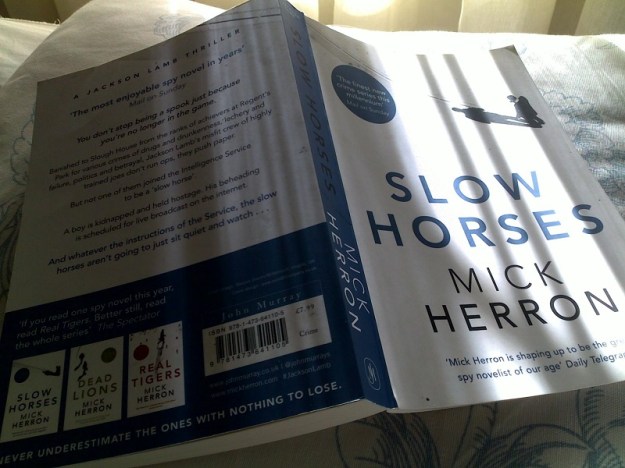
Thank you, Geoff, Tyler and Mick Herron from Topolino and Szczurek!
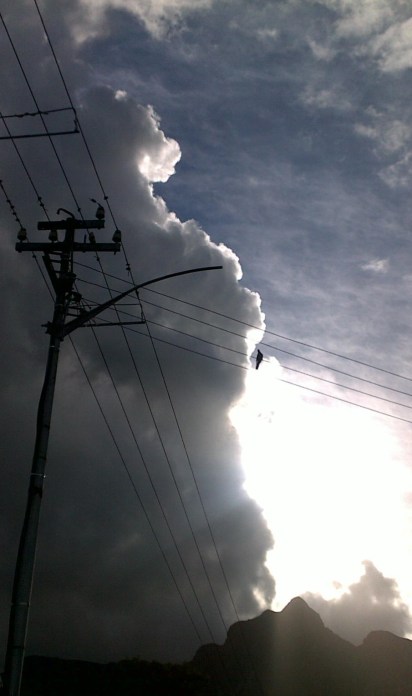 Traumatic events in your life have a tendency of distorting your perception of time. Accumulated layers of distress and pain can be paralysing. One of the saddest consequences of trauma is that it often becomes extremely difficult to live beyond the present moment, to imagine a future, especially a future that is kinder, filled with light. Survival mode takes a lot out of you. You have to be careful with your limited resources to simply take the next breath, to move one step forward. Just keeping still requires enormous effort.
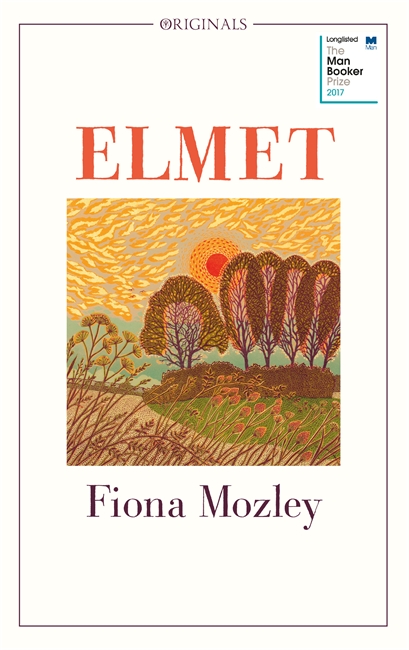 Every year, I try to pick at least one of the titles shortlisted for the prestigious Man Booker Prize and read it before the winner is announced in mid-October. This time, the novel which intrigued me the most on the list was Fiona Mozley’s debut, Elmet. The narrative draws you in from the first sentence: “I cast no shadow”, it begins, and continues in Mozley’s beautifully balanced prose that is balm for the aesthetic soul: “Smoke rests behind me and daylight is stifled. I count sleepers and the numbers rush. I count rivets and bolts. I walk north. My first two steps are slow, languid.” This kind of writing is difficult to resist.
 Opening Dark Chapter, Winnie M Li’s debut novel, you will find out the following: it is a work of fiction, but the book is “inspired by the author’s own rape in similar circumstances”. Dedicated to “all the victims and all the survivors – and most of us, who are somewhere in between”, the narrative plays out in that “in between” space and is a harrowing account of a woman’s attempt to come to terms with her new frightening reality after being raped. The circumstances Li describes are somehow unusual, the telling perhaps even more so.

 “What is it about our society that excuses these monsters? Why are we not holding people accountable on all levels?” Redi Tlhabi asked at the recent Cape Town launch of her latest book, Khwezi: The remarkable story of Fezekile Ntsukela Kuzwayo. She was referring to the horrifying prevalence of sexual violence in South Africa and our inability to prevent it as well as to offer justice to its victims. In Khwezi, Tlhabi demonstrates how the legal system and we, as society, have failed the victims of sexual violence in general, and one person in particular: Fezekile Ntsukela Kuzwayo, for over a decade known to most of us only as Khwezi – the woman who decided to fight for her right to safety and dignity and accused Jacob Zuma of rape when he ignored both by having sex with her without her consent on 2 November 2005. Zuma was acquitted of the rape charge in May 2006. Kuzwayo, vilified and violated by his supporters, had to flee the country.
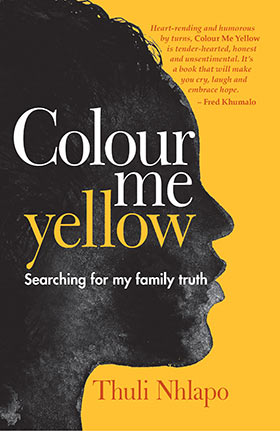 Reading Thuli Nhlapo’s powerful memoir, Colour Me Yellow, two thoughts dominated my mind. The book reminded me of a Polish saying that “families are best in photographs”. It also made me think of what Mphuthumi Ntabeni said at the recent Open Book Festival: “We need to address the failures of our traditions.” At the same time, I was overcome by an array of emotions. I was seething at the injustice of what happened to Nhlapo throughout her life, while simultaneously being filled with incredible sorrow for the child she once was and the deepest admiration for the woman she became.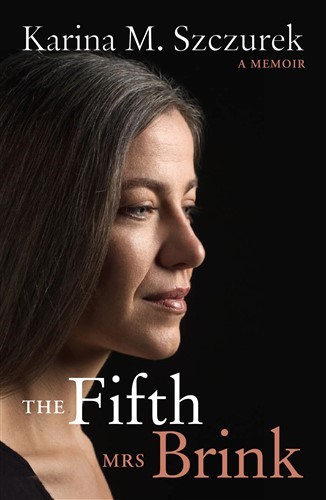

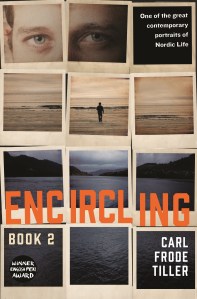 The second instalment in Carl Frode Tiller’s Encircling trilogy, this novel follows the predecessor’s structure by allowing three different narrators to tell us about their lives around the month of July 2006 in the small Norwegian town of Namsos. While they relate their present-day stories in occasionally minutiae detail, they also reveal more or less relevant facts about themselves through the letters they write during this time to David, a man they all knew at some stage in their lives. They respond to a newspaper article in which David, supposedly suffering from amnesia, asks those who knew him to help him regain his memory.
