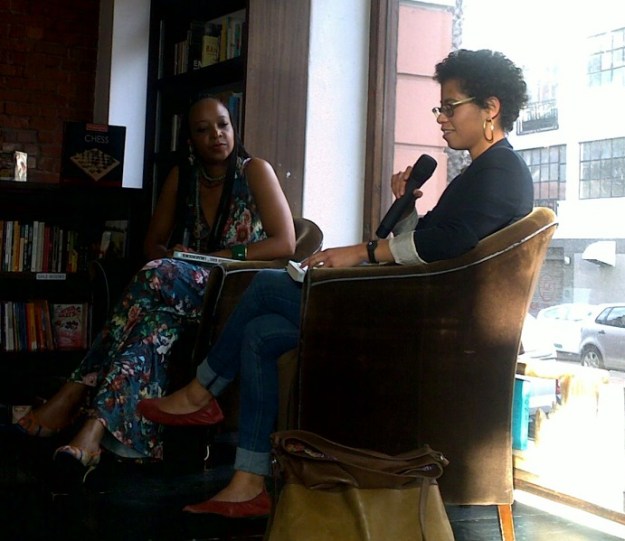
 Beyond Power: An Interview with Lyndall Gordon
by Karina M. Szczurek
In 1915, Virginia Woolf emerged from a mental breakdown only to witness the madness of the Great War’s senseless slaughter. As a woman opposed to violence, she felt she had no country to call her own. Disillusioned, she encouraged women to form “the outsiders society”. Woolf is one of the women Lyndall Gordon includes in Outsiders: Five Women Writers Who Changed the World.
The inspiration for the book came to her in 1975 on a train journey to Reading, where Gordon was to give a talk on D.H. Lawrence. “It was early morning, a beautiful day,” she remembers, “I suddenly thought I wanted to write a book about women through the generations, and the kind of ideas they had about how the world could be.” The creative seed for Outsiders was planted, but Gordon went on to author six individual biographies – of T.S. Eliot, Virginia Woolf, Charlotte Brontë, Henry James, Mary Wollstonecraft and Emily Dickinson – as well as two memoirs before embarking on the envisaged project.
 Gordon’s entire oeuvre, however, makes it clear that the vision from the train did not remain dormant. Even when writing the two men’s biographies, she focused on the women who shaped their creative consciousness. Daring to conceptualise a contrasting reality to the insanity of our present, she is drawn to women who, like James’s Isabel Archer “affront their destiny”.
It is late morning when we meet in her light-flooded flat in Sea Point. Her permanent home is overseas but she always returns to the Cape with longing. An ardent writer and, in person, also a compelling storyteller, she enriches the conversation with her remarkable memory as luminous literary quotes and insights soar from her lips.
Looking out to sea from where we sit, it is easy to picture Woolf’s “fin of a submerged form lurking in the waves.” Much is at risk. Outsiders, a “dispersed biography”, is unlike Gordon’s other work. She recalls her apprehension before it went to print. A culmination of four decades of meticulous consideration, the book is a record of revolutionary outlooks. Interweaving the intellectual and creative work of “prodigy” Mary Shelley, “visionary” Emily Brontë, “outlaw” George Eliot, “orator” Olive Schreiner, and “explorer” Virginia Woolf, Gordon shows how these “outsiders” imagined a new world order into existence. By staying true to themselves, the five defied norms and expectations.
“I wanted to show how these women looked at what is crude, ugly, abusive, dismaying in human nature, but then found a voice that was a different strain in civilised men and women: Mary Wollstonecraft spoke of ‘tenderness’ and George Eliot of ‘sympathy’.” Each rebelled against inequality and misogyny. “Power is rotten,” Gordon says, appalled at the hunger for it, in men and women alike. “I feel like an outsider as a feminist because I don’t think power is a good thing.” At the very core of this book is what Gordon refers to as “an alternative to power”. The Brontë sisters were criticised as “brutal, unwomanly” for exposing domestic violence in their novels, she points out. “This speaks right to this time when there is a tsunami of public opinion sweeping everywhere with the #MeToo Campaign.” The challenge of silence surrounding victims of power persists.
Gordon quotes the young Jane Eyre: “Speak, I must.” For the five writers speaking was a “creative and moral act”. Gordon herself believes in “being a moral being” and explains: “The moral being inside me is responding in a small way to the gigantic moral being in all these writers.” They wanted to be seen for who they believed themselves to be. Their legacy endures because of the intellectual and emotional potential they unlocked for us to recognise. It dazzles in Outsiders.
(An edited version of this article first appeared in the Sunday Times on 21 January 2018.)
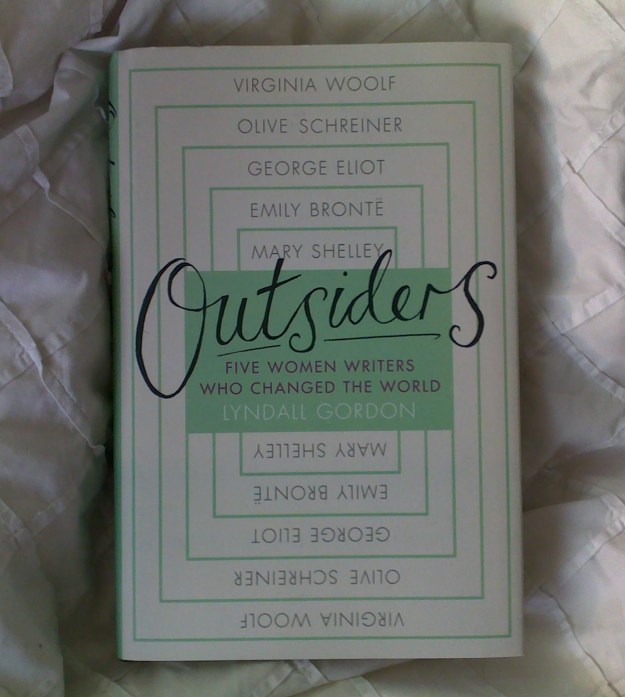
Outsiders: Five Women Writers Who Changed the World
by Lyndall Gordon
Virago, 2017
Review by Karina M. Szczurek
In the epigraph of her Outsiders: Five Women Who Changed the World, Lyndall Gordon quotes one of the subjects of the book, George Eliot: “Souls live on in perpetual echoes”. The four other “outsiders” she writes about are Virginia Woolf, Olive Schreiner, Emily Brontë and Mary Shelley. Another great literary soul looms large in the lives of these writers – the formidable women’s rights champion Mary Wollstonecraft, Mary Shelley’s mother who died shortly after giving birth to her. Schreiner described her as “one of ourselves”.
In 1787, Wollstonecraft famously proclaimed that she was “the first of a new genus”. She unmistakably was, and the five remarkable women on which Outsiders focuses clearly belong in the same novel category. Because of their ingenious outlooks and their bold defiance of norms, they were all outsiders in their societies in one way or another: “In a period when a woman’s reputation was her treasured security, each of these five lost it. Each endured the darkness of social exclusion.”
In her foreword, Gordon specifies why she has chosen these five “outsider voices rising in the course of the nineteenth century: a prodigy, a visionary, an outlaw, an orator and an explorer. To my mind, they came, they saw and left us changed.” I remember what discovering Wollstonecraft and these five writers she inspired meant for me as a young woman and as an aspiring author. Even if we might not realise it, we owe many of our freedoms and rights to these pathbreakers. When Mary Shelley ran away with the still then married Percy Bysshe and soon after published Frankenstein (first anonymously in 1818), which was to become one the best-known novels of all times, respectable women obeyed their fathers and “did not indulge in a public arena”. To speak out as a woman was seen as “unnatural”, to publish an aberration. William Makepeace Thackeray admired Emily Brontë’s writing, but “thought it driven by a spinster’s ‘hunger’ for a man. If she had a husband, he said, she’d have no need to write.” This attitude persists and will be familiar to modern women writers and intellectuals. Back in the nineteenth century, “Emily’s unsociable habits and unwillingness to please must be seen in this gendered context, which makes her no freak: rather a woman courageous enough to resist absurd norms.” Emily Dickinson and Virginia Woolf thought her “gigantic”. Her Wuthering Heights (1847) endures through the ages, engaging generations of readers in myriad ways.
Genius cannot be explained, Gordon notes. It often refuses to be silenced, even if it can only be articulated in private. The subjects of Outsiders joined the fictional heroine, Jane Eyre, in emphatically stating “Speak I must.” Whether it was in public or in their intimate communications, they wrote against their silencing, and their voices continue to resound.
Denied proper education, which was usually reserved for the men in their families, these women were mostly self-taught. They sought out the company of those who recognised their brilliance and in some cases entered relationships with the men who truly saw them for who they were, with whom they could “communicate with unlimited freedom”, as Mary Shelley felt she could with her husband or George Eliot did with her lover, George Lewes. But Mary Ann Evans (which was the given name of the author of Middlemarch), first “glimpsed the possibility of being a different sort of woman” in her uncle’s wife who was considered “strange” in her time when she became a Methodist preacher; her “candour” and “sympathy” for the young Mary Ann inspired the future novelist, editor and essayist.
Like Mary Ann and the Brontë sisters, Olive Schreiner ventured into the publishing world under a male pseudonym. She published The Story of an African Farm as Ralph Iron. However, when her true identity surfaced, it became “an asset with the rise of the New Woman in the 1890s.”
It was Mary Shelley’s stepsister Claire Clairmont who “dreamt up in her night-time confab with Shelley: ‘a subterraneous community of women’.” And it is this community that has been sustaining the “outsiders” through the ages until they could reclaim their rightful place. “Schreiner’s voice is a link in the chain coming down from Mary Wollstonecraft, whose watchword was ‘tenderness’, and George Eliot, whose watchword was ‘sympathy’.” Both Schreiner and Wollstonecraft “want to elicit what is distinctive in women’s experience with a view to constructing a different world” and the former strongly believed that “there lies something deeper” for women to attain beyond the vote, independence and education.
Since the publication of her first biography in 1977, Gordon herself has been considering these ‘depths’ in the biographies and memoirs she has published. Life writing is a way of seeing, recognising. Nowhere is it as evident as in Outsiders, this “dispersed biography”. Gordon reminds us of Woolf’s essay “The Art of Biography” (1938): “a biographer, she says, ‘can give us much more than another fact to add to our collection’. A biographer can give us rather ‘the creative fact; the fertile fact; the fact that suggests and engenders’.” Outsiders thrives precisely in this kind of terrain and continues to examine Woolf’s question about “the true nature of women”.
The writers Gordon depicts fought for equality but not at all cost; they understood the corrosive quality of power. For Eliot “imagination” and “imaginative sympathy” were to “replace ill-feeling, scoring, greed, all base forms of aggression.” She and the other “outsiders” sought something different, a way of being beyond power and violence, especially when it manifests as, in Schreiner’s words, “the bestiality and insanity” of war. Today, Schreiner’s “dreams of women to be are like dispatches from an unmapped land, a country everyone knew existed, but still unseen.”
Lyndall Gordon’s mother named her after Schreiner’s protagonist from The Story of an African Farm who believed: “Men are like the earth and we are like the moon; we turn always one side to them, and they think there is no other, because they don’t see it – but there is.” Indeed. By recalling and amplifying these voices from the past, Gordon is addressing our present. Through her five subjects’ lives, their genius and creativity, she allows us a glimpse of a world without the abuse of power, one without violence – a world at peace. What saddens me is that I will probably not live long enough to see this alternative vision become reality. It remains, however, up to us to nourish the dream and for future generations to realise it.
(An edited version of this review was first published in the Cape Times on 29 December 2017.)
 Fiona Melrose’s Johannesburg is only her second novel, but it feels like the work of a much more seasoned writer. After her highly acclaimed debut, Midwinter (2016), which chronicled the grief and survival of a Suffolk farmer’s family and was set in the UK and Zambia, Melrose returns to the country of her birth and locates her latest story, as the title suggests, in the City of Gold on a very specific day in history, 6 December 2013. Melrose seems to be a fearless writer; her imagination leads her where surprisingly few dare to go and she gives credible and moving voices to characters of all backgrounds. It is the hallmark of a true writer. As is her literary scope. Melrose is not afraid of intertextuality, allowing Johannesburg to beat with the heart of a few literary giants, Virginia Woolf most prominent among them, but the storytelling rhythm is entirely Melrose’s own.
 In no particular order, nor according to any genre categories, these are simply the books I enjoyed reading – for whatever reasons – the most this year. Some of them were not published in 2017, but I only got around to reading them now. This list excludes some recently released treats which are still waiting for me during the festive season.
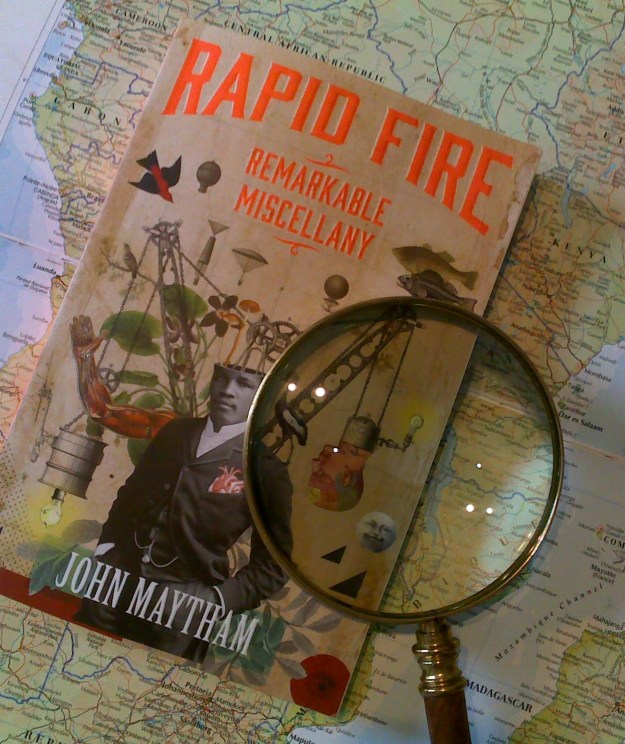 CapeTalk radio station’s Rapid Fire feature will be familiar to many listeners in the Cape. During the segment, two people phone in with general knowledge questions and John Maytham, the host of the afternoon drive show, attempts to answer them on air. Independent of whether he knows the correct answer or not, the question deemed more interesting by the CapeTalk team present in the studio receives a prize. Rapid Fire: Remarkable Miscellany is a collection of the most fascinating questions asked on the programme over the years. Using what he refers to as his “magpie memory” and traversing the depths and widths of the internet, Maytham provides the answers to them all in an accessible, lively manner in this quirky book.

 Anyone who has read Anne Fadiman before will know what to expect of her latest book, The Wine Lover’s Daughter: A Memoir – excellent writing. I adore her work. It engages, soothes and delights me. She could write about any topic and I would want to read what she has to say. Her superb The Spirit Catches You and You Fall Down: A Hmong Child, Her American Doctors, and the Collision of Two Cultures (1997) is one of the most insightful renderings of the challenges which people encounter across cultures and languages. She is a master of the familiar essay. Book lovers will remember her marvellous Ex Libris: Confessions of a Common Reader (1998), Fadiman’s declaration of love for the written word.
 “It’s easy to explain why you like something. But love? That’s tricky. That’s a story, not a sentence,” writes Jeffrey Gettleman, a foreign correspondent for the New York Times, in his first book, Love, Africa: A Memoir of Romance, War, and Survival. This is the story of two “obsessions”: a woman and a continent. As a young man, Gettleman travels to Africa for the first time and meets Courtenay, a fellow Cornell student. Both encounters shape the rest of his life. Now in his late forties, Gettleman has come to call Nairobi his home; and after many ups and downs, he and Courtenay married and started a family in Kenya.
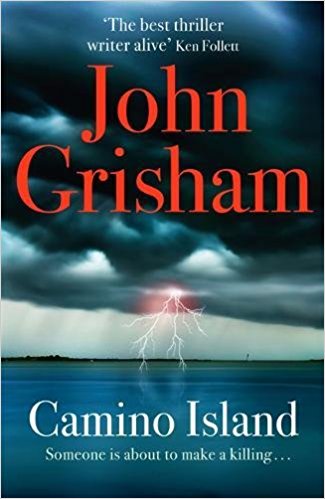 John Grisham has published two dozen books since I last read him at university. His The Partner was my introduction to the thriller genre and, thinking back to the impact the brilliant twist at the end of the novel had on me, I still think I could not have asked for a better one. Twenty years on, and I still remember the shock and delight of the final revelation. Grisham had me fooled as much as the main character had been fooled by the real “partner” of the story. I read some of his other titles at the time, have watched a few of the films based on his books since then and loved all, but have not longed to return to reading Grisham until recently. The premise of Camino Island sounded too intriguing for a reader and writer like me to resist. Once again, Grisham did not disappoint.
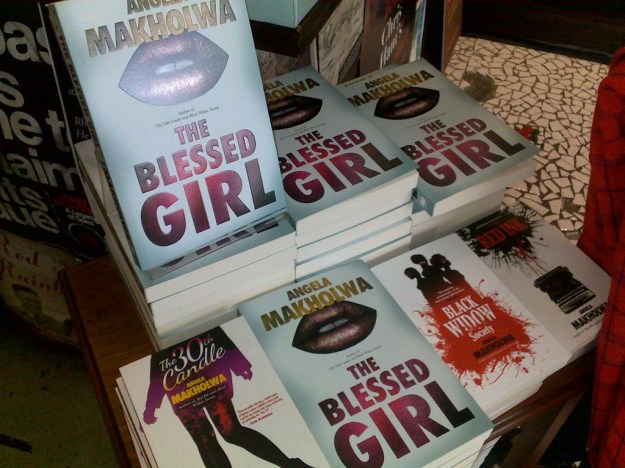 The Blessed Girl is Angela Makholwa’s fourth novel. Although it was published only a few weeks ago, it has already gone into its second print run and I have an idea it is not going to be its last. The book sheds light on a phenomenon which has moved into the public eye in the last couple of years: the life of a blessee (usually a woman “who lives a luxurious lifestyle funded by an older, sometimes married partner in return for sexual favours” and who flashes that lifestyle on social media) and her blessers (the sponsors of that lifestyle and recipients of the sexual favours).