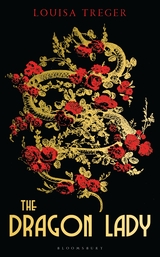
 South African-born Louisa Treger used to work as a classical violinist before she turned to literature, first gaining a PhD in English at University College London and then trying her hand at creative writing. Her academic research focused on early 20th-century women writing and eventually resulted in her first novel, The Lodger, which told the story of Dorothy Richardson, a British author and journalist who was one of the earliest modernist novelists and, in her heyday, was considered among the greats of the era, but was subsequently neglected by readers and critics alike.
Remaining within the realm of the historical novel, Treger went on to write her latest offering, The Dragon Lady. Blending fact and fiction, the novel chronicles the remarkable life of Lady Virginia Courtauld, or Ginie, most famous for her – at the time considered outrageous – tattoo of a dragon on her leg.
The novel opens with the shooting of its protagonist on La Rochelle, the Courtaulds’ Rhodesian estate, in the 1950s: “At that instant, a loud noise splintered the air… Her body tensed and convulsed, her limbs sprawled gracelessly, blood spilled onto the ground. For a few moments, there was an unearthly stillness.”
Narrated from various perspectives, The Dragon Lady takes us back and forth in time and place to record the events and achievements in Ginie’s extraordinary life story. Unconventional, daring and visionary, Ginie was a woman way ahead of her time. We follow her life from Italy at the beginning of the previous century, via England and Scotland of the 20s to 40s, to Rhodesia at a time of great social and political upheavals. It might be Treger’s musical training that allows her to capture all these setting in a language that is so evocative, it enables readers to experience them as if they had been there themselves. And because some of the places the Courtaulds built or restored in their time still exist today, you might find yourself longing to visit their Eltham Palace in south-east London or La Rochelle in the Imbeza Valley in present-day Zimbabwe.
Lady Virginia Courtauld fascinates in her own right. She was a divorcée and a foreigner when she met and married Sir Stephen Lewis Courtauld, upsetting London society’s ‘delicate’ sensitivities. When they relocated to Africa, Ginie’s and her husband’s progressive views did not endear them to their white neighbours, dead-set on maintaining their privilege in a segregated society.
Treger depicts the vast socio-historical changes taking place at the centre of Ginie’s life with exceptional skill, weaving them into the intimate love story of the Courtauld couple. Throughout the narrative, she also keeps us guessing as to the origins of the mysterious dragon tattoo and the identity of the person who fired the gun at the beginning of the story. Immaculately researched and told with passion, The Dragon Lady enchants and intrigues long after the last page has been turned.
The Dragon Lady
by Louisa Treger
Bloomsbury Caravel, 2019
An edited version of this review was published in the Cape Times on 28 June 2019.
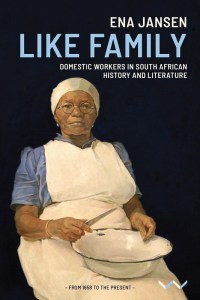 The relationship between domestic workers and their employers in South Africa has a complex and deeply troubled history. Yet, it lies at the heart of many local homes, whichever side of this relationship you find yourself on: as job creator or taker. The connection between the two defines everyday life for millions of South Africans. For foreigners, it is often unfathomable. Thus, I found Ena Jansen’s study of the subject, Like Family: Domestic Workers in South African History and Literature, extremely illuminating.
 Zikr is the debut poetry collection of the writer and photographer Saaleha Idrees Bamjee. Once opened, it is not a book you will want to close again easily, unless for a moment of silence to contemplate the beauty of what you have just read before you return eagerly for more.
 The Thames runs through it. North and south of the famous river lie the “hidden histories” of mostly forgotten women. London Undercurrents brings them vividly back into our literary consciousness in this remarkable collection, written and compiled by two of the city’s female poets. Joolz Sparkes and Hilaire researched the past of these two geographical spaces located around the natural aquatic divide and retrieved from its archives the voices of women who have occupied them throughout the ages: “Woke up to find / I’d lived here half my life. / Felt the pull of community. / Began to dig. Began to sow.”
 Following her critically acclaimed debut memoir, Queen of the Free State, Jennifer Friedman returns with a sequel that takes us back to the moment when she was leaving the Free State for boarding school and continues her story into adulthood. The Messiah’s Dream Machine is spread over many more years and settings than the first book, and thus is perhaps more disjointed in its retelling of anecdotes from the chronicles of Friedman’s rather eccentric family. However, like its literary sibling, it focuses not only on a life full of adventure and discovery, but also on the darker sides of adolescence and of growing into the often unexpected roles fate has in store for us.
 Stephen Symons is a versatile wordsmith. His work has appeared in numerous publications locally and abroad. A writer who is as comfortable with prose as he is with poetry, Symons knows how to invite a reader on a journey of discovery. You never feel alienated when following in his literary footsteps, even if the topics are unfamiliar or difficult to confront.
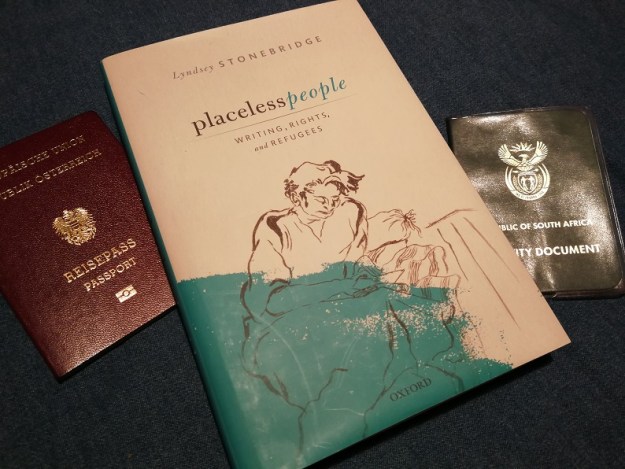 Throughout the ages, humans have been migrating across the globe; it is ingrained in our nature. Depending on time, place, and reason, these individual or mass movements of people have been welcomed or deplored by others. But being a refugee has never been easy. When you are forced to leave your home country and seek refuge elsewhere, whatever initiated the journey is usually only half of the ordeal you are facing – the uncertainty on the other side can be as daunting, if not more so.
 Secret Keeper