 The Wickerlight is the second book in Mary Watson’s The Wren Hunt series for young adults. In the first book, the protagonist Wren is chased and taunted by a few boys in the woods around Kilshamble, the village where they all live. Set in modern day Ireland, but one in which magic is as real to the novel’s characters as social media, the next instalment in the series picks up the story of one of these boys, David. He is a member of the judges, one of the ancient draoithe clans. Their sworn enemy for centuries are the augurs.
When a new family settles in Kilshamble and the older daughter Laila dies under mysterious circumstances on the village green, the judges and the augurs are set for another confrontation. Laila’s sister Zara tries to unravel the puzzling clues she receives about her sister’s death. Grieving and desperate to find out what happened, she stumbles into a world of magic that is beyond her comprehension and control. Falling in love with David puts her at the centre of the merciless battle for power between the draoithe clans. She enters a “new real, with its beating intensity”, which proves impossible to resist.
Through her spellbinding storytelling, Watson not only reveals a moving tale of love and redemption, but tackles a serious contemporary issue: toxic masculinity, how it is instilled into young minds and souls, and how difficult it is to live with for all concerned. David worries how he is drilled to believe “that strength and ambition are more important than kindness. That feelings are something to be overcome.” It will take great courage to break free from those shackles.
‘Wickerlight’ is defined as threshold time, like stepping “into pure magic”. It is exactly what reading Watson’s novels feels like.
The Wickerlight
by Mary Watson
Bloomsbury, 2019
An edited version of this review was published in the Cape Times on 8 August 2019.
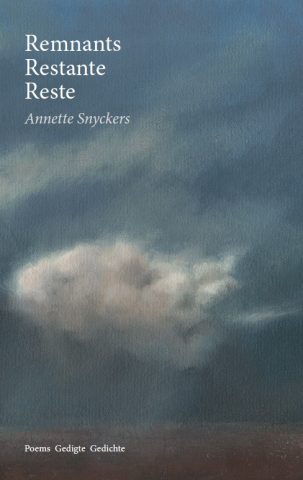 It isn’t often that you can delight in a poetry collection in three languages, but Annette Snyckers’s debut Remnants Restante Reste invites you to do precisely that. Writing in English, Afrikaans and German, Snyckers explores the possibilities of translation and creative expansion. Not all the poems included are presented in all three languages, but the ones that are add a magical layer to the poetry as the individual manifestations enhance and augment one another. The author notes: “Where a poem appears in more than one language, the first version is not necessarily the original version. Poems were written in different languages as I felt the need to write them, and all subsequent translations were done by me.” I feel fortunate to be able to enjoy all three versions in meaningful ways, but even if one of them eludes you, the remaining offerings in the collection are rich enough to suffice for a satisfying read…
 There aren’t really many among the cast of characters in Mick Herron’s Jackson Lamb spy thriller series that you would want as a friend. On the whole, they are a bunch of losers. It’s almost always certain that they’ll either let themselves or their colleagues down. Yet, you can’t help but follow their (mis)fortunes with feverish anticipation.
 Opening an Ingrid Winterbach novel fills me with excitement every single time. She is one of my favourite contemporary Afrikaans writers and I am immensely grateful that her work is available in English.
 The sixth Jackson Lamb thriller, Joe Country by Mick Herron, is hitting our bookshelves. The Drop is a novella in the series that only a few months ago introduced a new character into the cast of Regent Park’s drop-outs whiling away the time as “slow horses” in Slough House, where Jackson Lamb rules supreme. Whereas most of them arrive on Lamb’s doorstep after a major screw up in the field, the new addition ends up in the dubious care of the obnoxious Cold War spy through a set of weird coincidences. His fate is sealed after Solomon Dortmund, an old spook, observes an envelope changing hands in a way that stirs all the retired spy’s hard-wired intuitions into action.
 “Now, there are storytellers, and there are Storytellers”, the narrator of Water No Get Enemy, one of Fred Khumalo’s stories collected in Talk of the Town, tells us about Guz-Magesh, a larger than life character who features in two of the pieces: “His well of tales is bottomless.” He has that in common with his creator. Khumalo is the author of four novels. His short stories have been considered for prestigious awards and featured in several magazines and anthologies. Talk of the Town is his debut collection.
 A seminal step in the right direction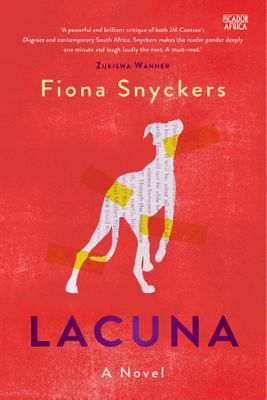
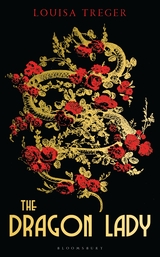 South African-born Louisa Treger used to work as a classical violinist before she turned to literature, first gaining a PhD in English at University College London and then trying her hand at creative writing. Her academic research focused on early 20th-century women writing and eventually resulted in her first novel, The Lodger, which told the story of Dorothy Richardson, a British author and journalist who was one of the earliest modernist novelists and, in her heyday, was considered among the greats of the era, but was subsequently neglected by readers and critics alike.
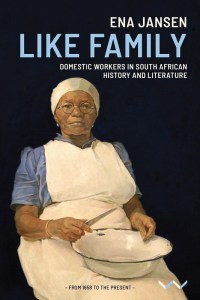 The relationship between domestic workers and their employers in South Africa has a complex and deeply troubled history. Yet, it lies at the heart of many local homes, whichever side of this relationship you find yourself on: as job creator or taker. The connection between the two defines everyday life for millions of South Africans. For foreigners, it is often unfathomable. Thus, I found Ena Jansen’s study of the subject, Like Family: Domestic Workers in South African History and Literature, extremely illuminating.
 Karina Magdalena