Author Archives: Karina

Unknown's avatar

About Karina

Author living in Cape Town.

Women who roam The Blazing World, Part II

The Blazing World_HustvedtThere are some intriguing and inspiring real-life creative women mentioned in Siri Hustvedt’s latest novel, The Blazing World, which is about a fictional artist, Harriet Burden, who believes that she does not receive the recognition her art deserves because she is a well-off, middle-aged woman. To remedy the situation Burden employs three young, upcoming male artists to front her next three exhibitions. The project has some unexpected consequences. I reviewed the novel a few weeks ago.

Yesterday, I presented three of the amazing women who roam The Blazing World. Here are three more:

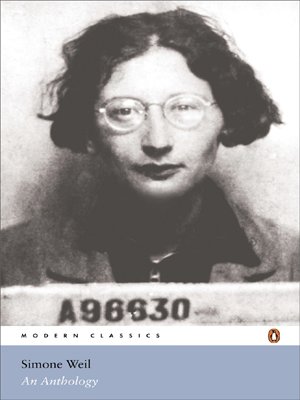
Simone WeilSimone Weil (1909 – 1943)
Guided by compassion, the French philosopher, activist, and Christian mystic Simone Weil wrote consistently throughout her life, but her work began to be truly appreciated only after her death. She was prepared to suffer hunger or fight in Spanish Civil War for her beliefs. Shortly before her death, she joined the French Resistance in London, but never returned to France because of her poor health. For an introduction to her writings see Simone Weil: An Anthology (1986, reprinted in 2005 as a Penguin Classic). Apparently, Albert Camus said of her that she was “the only great spirit of our times”. And she herself said: “Imagination and fiction make up more than three quarters of our real life.

Susanne LangerSusanne K. Langer (1895 – 1985)
An American philosopher who specialised in art and the mind. Best known for her Philosophy in a New Key: A Study in the Symbolism of Reason, Rite and Art (1942), she was a pioneer in her field as one of the first women to lead a successful academic career in philosophy. It is interesting to note that the book has ten customer reviews on Amazon.com which were written between 1998 and the present. All but one reviewer gave the title a five-star rating. The latest review (14 June 2014) by LOGICRAT is titled “EVERYONE on the internet needs to read this book” and includes the following quote: “This is a profoundly important book, and is extraordinarily relevant to human life today.”

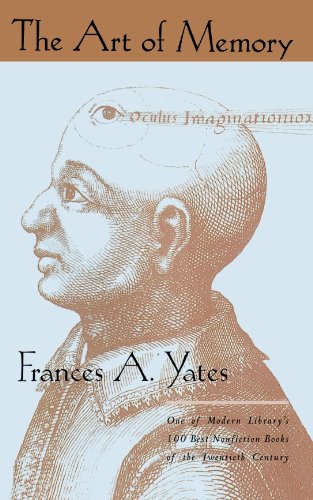
Fraces YatesFrances A. Yates (1899 – 1981)
Yates was an English Renaissance scholar renowned for her studies Giordano Bruno and the Hermetic Tradition (1964), The Art of Memory (1966), and The Rosicrucian Enlightenment (1972). The Art of Memory is considered as one of the most significant non-fiction books of the past century. Between 1964 and 1981, Yates regularly contributed to The New York Review of Books. Yates was also a Shakespeare scholar and author of Shakespeare’s Last Plays: A New Approach (1975). Her last review for the NYRB, “An Alchemical Lear”, of Charles Nicholl’s The Chemical Theatre (1981), appeared posthumously with this note from the Editors: “We mourn the death of this brilliant and original scholar, a longstanding contributor and friend.”

Sources: Wikipedia, Amazon, Brainy Quote, The New York Review of Books Homepage

Interested in receiving a copy of The Blazing World by Siri Hustvedt? Please take part in my BOOK GIVEAWAY this month and stand a chance of having it (among others) sent to you. Good luck!

Women who roam The Blazing World, Part I

the-blazing-worldThere are some intriguing and inspiring real-life creative women mentioned in Siri Hustvedt’s latest novel, The Blazing World, which is about a fictional artist, Harriet Burden, who believes that she does not receive the recognition her art deserves because she is a well-off, middle-aged woman. To remedy the situation, Burden employs three young, upcoming male artists to front her next three exhibitions. The project has some unexpected consequences. I reviewed the novel a few weeks ago.

Here are some of the amazing women who roam The Blazing World:

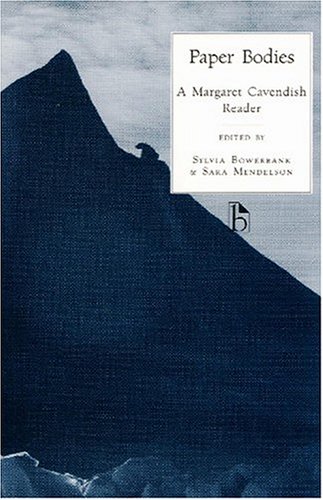
Cavendish-BlazingCavendish readerMargaret Cavendish, the Duchess of Newcastle-upon-Tyne (1623–1673)
A scientist and writer who dared to publish under her own name at a time when this was not encouraged in women, Cavendish is the author of, among many other writings, the utopian romance The Description of a New World, Called the Blazing World (1666). In its epilogue she refers to herself as Margaret I, the ruler of the philosophical world. It is one of the earliest pieces of science-fiction writing. Modern readers can turn to Sylvia Bowerbank’s and Sara Mendelson’s (eds.) Paper Bodies: A Margaret Cavendish Reader (2000) for a taste of the Empress’s work.

Sheldon novelSheldon biographyAlice Bradley Sheldon (1915 – 1987)
A ‘daughter’ of Cavendish, she was the woman hiding behind the pseudonym James Tiptree, Jr. She wrote feminist science-fiction which was seen as quite masculine until it was discovered a decade after her first publication that she was a middle-aged woman. She was a pioneer in many ways. Widely travelled and well-educated, she was promoted to major in the US Army Air Forces during World War II, ran a business, worked for the CIA, and had an annual literary award named after her pen name: The James Tiptree, Jr. Award. It is given to works of science fiction or fantasy “bold enough to contemplate shifts and changes in gender roles, a fundamental aspect of any society”. It was initiated in February 1991 by science fiction authors Pat Murphy and Karen Joy Fowler. For a biography of Sheldon/Tiptree see James Tiptree, Jr.: The Double Life of Alice B. Sheldon by Julie Phillips (2006).

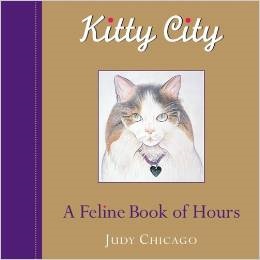
Kitty CityJudy Chicago (1939 – )
The American artist who is responsible for the coinage of the term “feminist art” and whose last name is all her own (she dropped her father’s and her first husband’s names when they both died to become Chicago). In her multimedia artworks and performances she knows how to use her knitting needles as well as her welding torch and incorporates both in her work. In the late 70s, she founded Through the Flower, a non-profit organisation which aims to educate people about women’s achievements in the art world. She is the author of several books, among them one co-authored with Frances Borzello about Frida Kahlo and one on our feline friends, Kitty City: A Feline Book of Hours (2005). Click here for Chicago’s Illustrated Career History.

Sources: Wikipedia, Amazon, The James Tiptree, Jr. Award Homepage, Judy Chicago Homepage, Through the Flower Homepage

Interested in acquiring a copy of The Blazing World by Siri Hustvedt? Please take part in my BOOK GIVEAWAY this month and stand a chance of having it (among others) sent to you. Good luck!

A test of faith

I am not the only picturing this with a smile on my face: Vatican, Sunday night, Pope Francis and Pope Emeritus Benedict XVI together in front of a TV wearing comfy slippers, beige and red respectively, and a bowl of divinely delicious popcorn between them. Whose prayer will be heard?
Pope Francis and Benedict
This is one final I cannot lose as a fan. May the best team win!

Alex Smith

Alex Smith1A long time ago, behind seven mountains and seven rivers… That is how fairy tales begin in Polish. The words make me think of the time I met Alex Smith when she was looking for people to translate her Orphan’s Lullaby. I did the Polish version and we met for coffee at the Book Lounge to discuss the project and to get to know each other. It’s hard to believe that this already happened six years ago. Since then we have become friends and have supported each other through the ups and downs of writing careers.

We share a deep love for literature, even if our reading tastes often differ and the kind of stories we tell are sometimes worlds apart. The one thing which has always stood out for me in Alex’s work is her powerful, versatile, irresistible prose which has few equals in contemporary South African literature. I once told her that I would even read the history of toilet paper, if she were to write it. Her prose is like a cup of delicious tea, like a favourite bar of chocolate, like a warm breeze on a perfect day on the beach. One wallows in it with pleasure, no matter what her subject matter.

My absolute favourite of Alex’s books until now is Drinking from the Dragon’s Well (2008), a quirky travel memoir about the time she spent in Asia. I will never forget the kettle falling scene. Simply wonderful, like the rest of the book. I reviewed it along with her Four Drunk Beauties (2010) for ITCH.

Alex contributed a funny, moving story to Touch: Stories of Contact. She has been shortlisted for the prestigious Caine Prize. One of her more recent stories features in the Adults Only anthology and I am told that it is remarkable (can’t wait to get the book just to read it). She has been recognised for her work with the Nielsen Booksellers’ Choice Award, has been short-listed for the SA PEN Literary Award, won a silver award in the English category of the Sanlam Prize for Youth Literature, and was shortlisted for the international Rolex Mentor & Protégé Arts Initiative. And I believe even greater things are to come for her.

Her latest novel, Devilskein & Dearlove (published by Umuzi locally and Arachne Press in the UK) is about to be launched at the Book Lounge next week. Alex will be in conversation with the amazing Versuhka Louw. We are in for a real literary treat.

“Young Erin Dearlove has lost everything in a violent attack on her family. She now lives with her bohemian aunt Kate in a run-down Cape Town apartment block. Locked into a fantasy of her previous life, she shuns all overtures of friendship from her new neighbours, until she meets Mr Devilskein, the demon who lives on the top floor… and opens a door into another world. Just as Neil Gaiman’s The Graveyard Book reworked Kipling’s The Jungle Book for a modern audience with a liking for the supernatural, Devilskein & Dearlove is a darker, more edgy, contemporary reworking of Frances Hodgson Burnett’s classic The Secret Garden. An orphaned teenager is taken in by a reluctant distant relative, and in her new home makes an unexpected friend and finds a secret realm. It has shades of the quirky fantastical in the style of Miyazaki’s (Studio Ghibli) animated films like Spirited Away and Howl’s Moving Castle (originally a novel by Diana Wynne Jones). Alex says ‘As a child The Secret Garden was one of my first favourite novels – one of the first I relished reading by myself. Although Devilskein & Dearlove is very different, it was inspired by that novel and its themes.'” (Arachne Press)

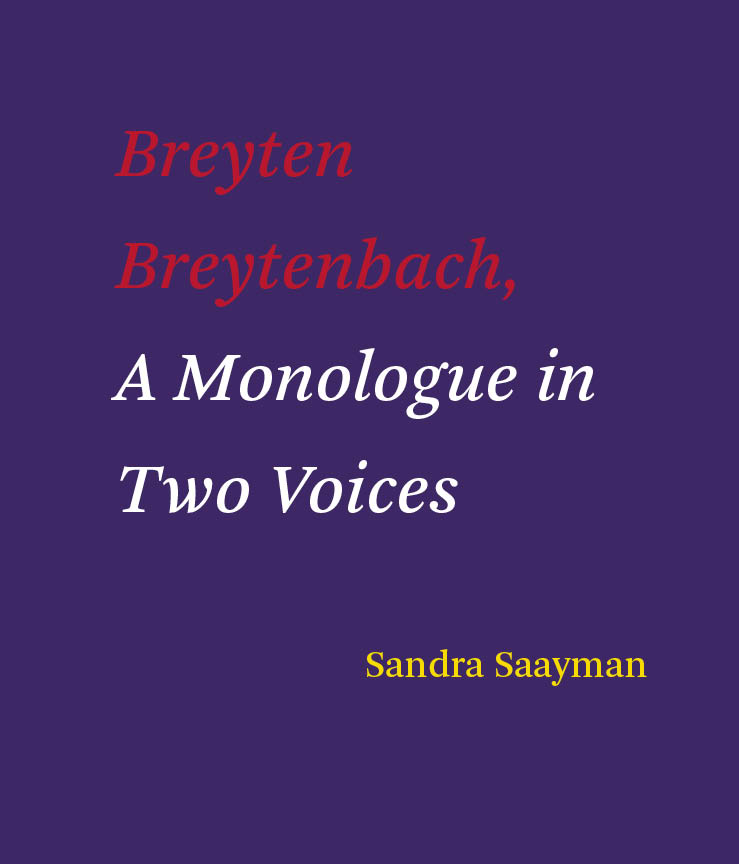
Book mark: Breyten Breytenbach, A Monologue in Two Voices by Sandra Saayman

BB_coverThe poet and painter Breyten Breytenbach was imprisoned in the 70s for high treason. In this exquisitely produced book, Saayman explores a new approach to this multifaceted artist’s work which was defined by his prison experience. Illustrated by quotes as well as the disquieting drawings and paintings from this period, Saayman’s analysis focuses on the key iconographic signs of Breytenbach’s oeuvre: bird, angel, strings and ropes. She remedies its fragmented reception by attempting to “find a way to look and read at the same time”, and invites us to study the web of meanings the visual and the textual mediations on execution, captivity, and fear of death create in context. They take the “reader and spectator beyond the threshold of easy contemplation” as they confront the horrors of imprisonment and the survival strategies of the artist.

"Steve Biko" and "Autoportrait devant le miroir" (both 1990) in Breyten Breytenbach, A Monologue in Two Voices (Fourthwall Books)

“Steve Biko” and “Autoportrait devant le miroir” (both 1990) in Breyten Breytenbach, A Monologue in Two Voices (Fourthwall Books)


An edited version of this book mark was published in the Cape Times on 4 July 2014, p. 12.

Breyten Breytenbach, A Monologue in Two Voices
by Sandra Saayman
Fourthwall Books, 2014

Interested in acquiring a copy of this book? Please take part in my BOOK GIVEAWAY this month and stand a chance of having a copy of Breyten Breytenbach, A Monologue in Two Voices (among others) sent to you. Good luck!

So far so good: Best of 2014 book giveaway

Best of 2014_1
For me, one of the best tests for a good read is whether I find myself wanting to share it with others. The bookshops I visit will testify to the fact that I often return to the same title over and over again when searching for presents. I don’t know how many copies of the original versions and their translations into other languages I have bought in the last few years of, among others, Mark Rowlands’ The Philosopher and the Wolf, or Carsten Jensen’s We, the Drowned, or Alastair Bruce’s Wall of Days, or Siri Hustvedt’s What I Loved. The authors of these books must have enjoyed at least a bottle of really nice wine or bought a book or two by other authors from the royalties my book-shopping sprees have generated for them. And it makes me happy to think that this might have been the case. Cheers!

The last six months have been particularly plentiful in good reads. I’ve been lucky. There is nothing worse than finishing a great book and encountering a dozen duds before discovering the next good one (especially if you are like me and finish most of the books you’ve started). But 2014 is turning out to be a really satisfying reading year. Of the books I’ve read until now there are twelve that I have either already bought for or at least wholeheartedly recommended to others.

The twelve titles in no particular order:
Ash WednesdayAsh Wednesday by Ethan Hawke (2002)
My dear friend Isabella and I have been fans of Ethan Hawke, the actor, since high school. I will never forget how we saw Great Expectations with him and Gwyneth Paltrow at a student cinema in Łódź – the screen was made out of three bed sheets and we sat on ordinary kitchen chairs in the audience… When we found out that Hawke was a novelist, too, I bought Isabella his debut novel as a present, and ever since then I have been meaning to read one of his books myself, but somehow never got around to it. But then earlier this year, I accidently saw Reality Bites again and thought of Isabella and decided to make up for lost time. Ash Wednesday was a real treat: Jimmy and Christy are in love, pregnant, and want to get married, but nothing is simple when you are young and life with all its choices looms large around the corner. On a road trip across America they confront their secret dreams and hidden fears, risking everything for what they believe in. Ash Wednesday is written in a crisp prose that carries you across the page like a good old Chevy Nova across an alluring landscape. It has turned me into a fan of Ethan Hawke, the novelist.

The Last Man in Russia by Oliver Bullough (2013)
I was asked to write a short review of this book for the Cape Times. The book broke my heart because it resonated so much with my memories of my native Poland. It saddens me that the one characteristic that Russians and Poles are (in)famous for in the world is their heavy drinking. Alcoholism is a plague which has taken a heavy toll on both countries. I believe that things are changing in Poland, at least that is what my family and friends assure me of, but it will take at least a generation or two for the new ways of life to have real impact on society and to begin to heal the wounds. Bullough explores the historic trauma at the root of the pandemic with incisive insight. Anybody interested in understanding that part of the world will be wise to read The Last Man in Russia. It not only throws light on the past of the region but also its current situation.

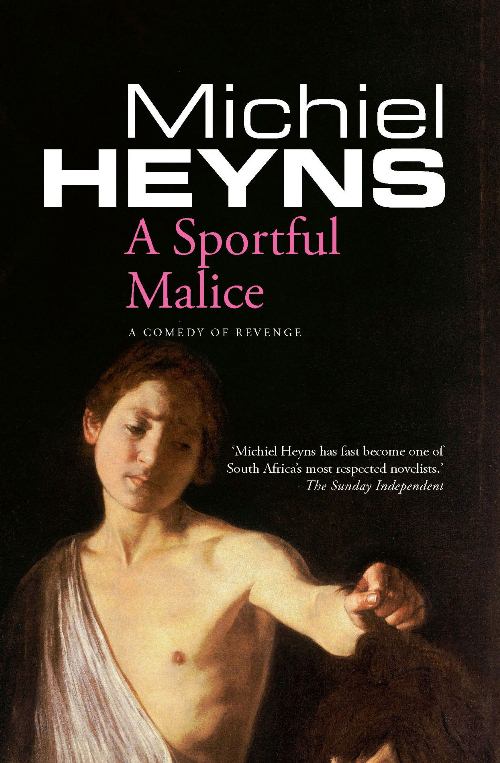
A Sportful MaliceA Sportful Malice by Michiel Heyns (2014)
I brought this book back from the FLF. It is the funniest novel I have read in the last few years. I take books with me wherever I go and I found myself reading this one in a few public places where I got a lot of curious stares from strangers because I couldn’t stop laughing while reading. Every page brings a smile to one’s face, and some of the humour is truly and deliciously dark. A Sportful Malice takes the reader to Tuscany via London Stansted on a nightmare Ryanair flight which turns out to be the least worrisome aspect of Michael Marccuci’s trip. Micheal is a gay South African literary scholar. One of his many Facebook contacts offers him a house for rent in a small Tuscan village where Michael plans to finish the book he is currently working on. On his trip, Michael encounters the obnoxious Cedric, a clumsily inexperienced but not unwilling Wouter, his eccentric (to say the least!) landlord and his wife, and the irresistible Paolo. But nobody and nothing is as it seems. Full of himself, Michael is too blind to realise that he is not entirely in charge of his fate. The novel is told in a series of Michael’s letters to his lover back home. As always, Heyns’ prose is pure pleasure, and the humour of A Sportful Malice is sheer delight.

Arctic Summer by Damon Galgut (2014)
I had the honour of reviewing Galgut’s latest for the Cape Times. I read an advance proofs copy but have bought the strikingly pink hardcover edition for a young friend who is discovering and exploring his sexuality. A lot has changed in our society since the days of E.M. Foster, but despite our amazing constitution, there is still so much hatred and bigotry around that it makes one desperate. It is such a precious gift to find that other person who shares your dreams and longings. What sex or gender that person is shouldn’t concern anybody else but the people doing the searching and the finding.

The Maze Runner by James Dashner (2009)
While reading up on the touching and wise film The First Time, I accidently stumbled upon the trailer for The Maze Runner. It intrigued me and when I realised that it was based on a novel I decided to read the book before the movie came out later this year. It didn’t disappoint. Fast-paced, the novel itself is like a maze. You have no clue where you are going to end up turning the next corner. And the ending just makes you want to read more. I was relieved to discover it’s the first in a series. I’m a sucker for stories about friendship (one of those got me hooked on the writer whose book is next on my list here!) and I liked the portrayal of the dynamics between the characters in The Maze Runner. The thrilling action all around was a bonus.

Die DreiThe Three by Sarah Lotz (2014)
I’m supposed to review this novel so the proper review is pending. For now, I would just like to confess that I am a Stephen King virgin. I remember Isabella devouring King novels but I’ve never really felt that they were something for me. I have seen some of the films based on the novels, enjoyed Carrie and Misery very much, and my favourite TV series at the moment, Haven, is based on one of King’s short stories, “The Colorado Kid”, and yet I haven’t felt tempted to turn to the books. I did buy a King novel for my brother on his 30th birthday (the novel was published the same year as he was born). But still, no King for me. Until now that is. After reading Lotz’s The Three – brilliant, riveting – and seeing King’s endorsement on the back cover, I have decided to give the man a chance since he has shown some really good taste there. I bought The Shining yesterday. Incidentally, it was published in the month and year of my birth. And JohaN from Protea Bookshop informed me that the sequel is out. Fortunately, unlike other readers, I won’t have to wait 37 years for it!
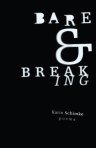
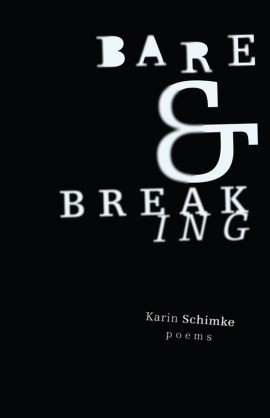
Bare and BreakingBare & Breaking by Karin Schimke (2012)
Schimke’s collection also came back home with me from Franschhoek. I haven’t felt so excited about a volume of poetry since Tracey K. Smith’s Pulitzer-winning Life on Mars (2011). I read Smith’s collection a few weeks before the prize announcement (which made me jump up and down with joy) and was simply bowled over by the power and wisdom of her words. Schimke’s volume has similar qualities, but it exhibits an intimacy and eroticism that I haven’t encountered in contemporary poetry for a long time. She writes skin and desire, allowing the reader to get lost in both. In simple images she captures the miracles of a couple’s everyday life, how those little wonders remain hidden from others but never cease to amaze those who experience them. The violence of desire explodes on the page and splits you open. Bare & Breaking echoes those moments when you face the inevitable, when loss threatens your sanity, when you can’t help longing for all the wrong reasons. And when you get to the last poem in the volume you will be struck by the quiet after the storm. Poetry can be so satisfying!

And speaking about ‘quiet’, next on the list is:

Quiet by Susan Cain (2012)
The book made me properly understand something about myself that I have always known only intuitively. It probably is such a bestseller because it resonates with a lot of people. Life has become somehow simpler for me since reading Quiet. It helped me crystallise certain ideas on how to stay in tune with my inner qualities. In the words of Ruben, the protagonist of André’s The Rights of Desire, “I don’t like shouting.”

The Blazing World by Siri Hustvedt (2014)
Hustvedt is one of only a handful of writers who have never disappointed me. A friend introduced me to her work and I have read every single title she has published. Every time I open one of them, I know I will be challenged, enriched and entertained. I bought a copy of The Blazing World for a friend even before I read my own, because I knew that one couldn’t go wrong with a novel by Hustvedt. I am waiting for the translations into German and Polish so that I can share the book with friends and family abroad. I reviewed The Blazing World for the Cape Times.

Road of ExcessThe Road of Excess by Ingrid Winterbach (2014)
Translated from Afrikaans, The Road of Excess was a wonderful companion read to The Blazing World. They are both set in the art world and deal with the insecurities of creativity and fame. Aaron Adendorff is a renowned painter recovering from cancer. After more than two decades of prosperous collaboration, it seems that the owner of the gallery where Aaron usually exhibits is threatening to drop him. Inexplicably though, he sends two new darlings of the art world Aaron’s way and asks him to assist them. All this time, Aaron is getting the weirdest messages from his brother, a recovering alcoholic, intent on confronting some uncomfortable truths about their family past. To make matters even more disturbing, Aaron’s home is invaded by the unforgettable Bubbles Bothma, a neighbour from hell, who is threatening to save Aaron from all his demons, if she doesn’t accidently get him killed first. A profound and funny read which lingers in one’s mind long after the last page is turned. I have now read all of Winterbach’s novels available in English and am hoping that my Afrikaans will be good enough one day to enjoy the ones which remain untranslated. Her work is extremely versatile, engaging, and her supple prose shines through even in translation.

Breyten Breytenbach, A Monologue in Two Voices by Sandra Saayman (2014)
My short review of this title is being processed for publication, but I can say here that this book simply as an object offers the reader a gratifying aesthetic experience. It is beautifully and carefully produced, includes a variety of reproductions of Breytenbach’s artworks, and encourages the reader/viewer to perceive them in context.

Bloody LiesBloody Lies: Citizens Reopen the Inge Lotz Murder Case by Thomas and Calvin Mollett (2014)
My review of this bold book should be published in the near future, so I won’t repeat myself here. I can just urge anybody interested in the history of the case to read Bloody Lies and to look at the Molletts’ website: Truth 4 Inge. If you are following the Oscar Pistorius trail, this book might also be for you. Bloody Lies is a highly informative, page-turning read.

I would like to invite other readers here to tell me which books have made such an impact on you in the first half of this year that you wanted to share them with others. At the same time, please let me know which of the titles I’ve mentioned above you would be interested in reading yourself. From your comments, I’ll draw one name at the end of July 2014 and send you the book you have chosen from my list of twelve titles. I will include my own Invisible Others in the parcel.

Happy reading & sharing everyone!

Four stories from Touch longlisted for TWENTY IN 20

TouchI am delighted to announce that the following four short stories from Touch: Stories of Contact by South African Writers have been included on the 50-titles strong longlist for the TWENTY IN 20 project which aims to publish an anthology of the best twenty South African short stories written in English during the past two decades of democracy:

“File Under: Touch (Avoidance of, Writers); Love (Avoidance of, Writers). (1000 words)” by Imraan Coovadia
“Threesome” by Emma van der Vliet
“Salt” by Susan Mann
“The Crossing” by Damon Galgut

Other Touch authors are also on the list, but with different stories:

Byron Loker with “New Swell” from his debut collection by the same title (2006)
Ivan Vladislavić with “The WHITES ONLY Bench” from Propaganda by Monuments and Other Stories (1996) and “The Loss Library” from The Loss Library and Other Unfinished Stories (2011)
Zoë Wicomb with “Disgrace” from The One That Got Away (2008)
Mary Watson with “Jungfrau” from Moss (2004)
Henrietta Rose-Innes with “Homing” from the collection by the same title (2010) and “Poison” from African Pens: New Writing from Southern Africa (2007)
Alistair Morgan with “Icebergs” from The Paris Review (2007)
Liesl Jobson with “You Pay for the View – Twenty Tips for Super Pics” from Ride the Tortoise (2013)
Nadine Gordimer with “Loot” from the collection Loot and Other Stories (2003)

About Touch: Stories of Contact (2009):

For this unique and impressive anthology, some of South Africa’s top storytellers were invited to interpret the theme of touch. The result is a scintillating collection of twenty-two stories about all kinds of human interaction. There are tales of love lost, and of discovering intimacy. Some describe encounters with strangers, others examine family relationships. Most deal touch in a physical sense; one or two explore the idea of ‘keeping in touch’.
Touch: Stories of Contact brings us work from such established luminaries as André Brink, Nadine Gordimer, Damon Galgut and Ivan Vladislavić, and exciting new voices such as Alistair Morgan and Julia Smuts Louw. Whether poignant or humorous, fictional or autobiographical, these innovative tales remind us of the preciousness of touch and are a testimony to the creative talents of South Africa’s writers.
All the authors have agreed to donate their royalties to the Treatment Action Campaign. Every copy sold therefore contributes to the fight against HIV and AIDS.

Touch Contributors: Emma van der Vliet, Michiel Heyns, Elleke Boehmer, Susan Mann, Willemien Brümmer, Julia Louw, Anne Landsman, Byron Loker, Maureen Isaacson, Ivan Vladislavić, Zoë Wicomb, Imraan Coovadia, Jonny Steinberg, Mary Watson, Henrietta Rose-Innes, Alex Smith, André Brink, Damon Galgut, Alistair Morgan, Liesl Jobson, Nadine Gordimer, Lauren Beukes.

(From the short stories I know, I am also thrilled to see “Where Will He Leave His Shoes” by Karen Jayes, “The Pigeon Fancier” by Sarah Lotz, “Porcupine” by Jane Bennett, “A Visit to Dr Mamba” by Andrew Salomon, among others, on the list – these are the kind of stories you will never forgot after reading.)

Review: The Blazing World by Siri Hustvedt

the-blazing-worldThe Blazing World_HustvedtReading Siri Hustvedt’s work is always a stimulating treat. She is the author of six internationally acclaimed novels and the recipient of the International Gabarron Award for Thought and Humanities.

I first fell in love with her essays on art and psychology of which the most recent collection, Living, Thinking, Looking (2012), is a wonderful example. The clarity and beauty of her novelistic and essayistic vision is matched by her stylistic virtuosity. The result is a deceptively effortless execution that leaves the reader completely fulfilled.

The Blazing World, Hustvedt’s latest novel, is perhaps her best to date. Similarly to her other masterpiece, What I Loved (2003), it ventures into the treacherous world of art, greed and fame. The novel’s unusual format imitates an anthology composed of various pieces – interviews, letters, statements, notes, reviews, editorial comments, and diary entries – all of which centre on the life and art of Harriet Burden. Tellingly referred to as Harry by her family and friends, Burden feels that her artistic talents have been eclipsed by three unavoidable facts of her circumstances: her gender, age, and marital status. Hardly anybody wants to take her or her art seriously because she is a woman, she is middle-aged, and she is the rich widow of the famous art dealer, Felix Lord. A lethal combination for any artist trying to make her way in today’s world.

Her whole life Burden searches for a way to dodge misogyny. She grows up with a father who wishes she were a boy. Tall and curvaceous, she feels unattractive. Her intelligence and intellectual pursuits don’t help and turn her into an outsider. Feelings of inadequacy follow her into her marriage to Lord, a philanderer with many secrets. As a mother she finds how hard it is not to repeat the mistakes of our parents.

The art she creates is highly sophisticated, but largely ignored. She wants “to blaze and rumble and roar”, but something that is nearly impossible to articulate, “something horrible”, weighs her down and then rises like bile to her lips.

She wants revenge. She wants to have the last word. After Lord’s death, Burden employs three male artists to exhibit her artwork as their own: “There will be three, just as in the fairy tales… And the story will have bloody teeth.” One after the other, the exhibitions garner the recognition and success Burden had been craving for, but instead of proving a point, they cause a great deal of turmoil in the lives of people directly or indirectly involved in the project Burden aptly calls Maskings.

The novel cuts close to the bone. As a woman artist, I also found myself reading with this huge indigestible lump of “something horrible”, “fat, leaden, hideous”, stuck at the bottom of my intellectual and emotional stomach, and I knew exactly what Burden was experiencing when attempting to break down the prejudices she encounters in her life. However, Hustvedt’s rumbling and roaring is reassuring.

Her The Blazing World shines as brightly as Sirius.

Review first published in the Cape Times on 20 June 2014, p. 31.

Book mark: DF Malan and the Rise of Afrikaner Nationalism by Lindie Koorts

MalanFor somebody acquainted with only a broad outline of South Africa’s turbulent past, this blow by blow account of DF Malan’s life, told against the background of the crystallisation of Afrikaner nationalism and its most lethal exponent apartheid, was a real eye-opener. Deeply religious and driven by a strong sense of duty towards his people, Malan was prepared to make great sacrifices to achieve what he believed in: a South African republic where the Afrikaans-speaking community leads economically and culturally viable lives. He navigated the minefields of the country’s volatile political landscape in the first half of the twentieth century with determination that nearly obscures the warped racial ideology which drove him. Although this is Koorts’ first biography, she weaves the individual life story into the larger socio-political context with meticulous skill. At times her narrative reads like a political thriller where the villain is indistinguishable from a hero.

An edited version of this book mark was first published in the Cape Times today, 13 May 2014, p. 32.

DF Malan and the Rise of Afrikaner Nationalism
by Lindie Koorts
Tafelberg, 2014

Interviewing Helen Moffett at the South African Book Fair

Girl-wallpaperThis Sunday I will be interviewing one part of the Helena S. Paige trio, Helen Moffett, on books, bars, and boys at the South African Book Fair.

A girl walks into a bar (and talks books):

Sunday
15 June
2pm

Cape Town International Convention Centre
Literary Forum 2