Author Archives: Karina

Unknown's avatar

About Karina

Author living in Cape Town.

Book review: The Death’s Head Chess Club by John Donoghue

Deaths Head Chess ClubA friend has recently suggested that my reluctance to read Second World War novels might be similar to many South Africans’ reluctance to read apartheid fiction, and that saturation might be at the heart of it. True, having grown up in Poland and Austria, I have heard, seen and read plenty about the war – the stories as related by both sides. It is not that I shy away from the horror, even though after having visited the Mauthausen concentration camp as a teenager I was unable to accompany my husband when he wanted to see the concentration camp in Auschwitz (throughout, I sat very still in a coffee shop just outside and wept without going in). Imagination and empathy can be deadly for a soul. But I understand that these (hi)stories must be told and listened to. Today, in the midst of xenophobia, racism and violence, we need to grasp, perhaps even more than ever, what is at stake when we declare others as subhuman…

Continue reading: LitNet

The Death’s Head Chess Club
by John Donoghue
Atlantic Books, 2015

1 July: Talking love and loss with Réney Warrington at Love Books, Johannesburg

invite vir love books
Next week at Love Books in Johannesburg, I will have the pleasure of talking to the author and photographer Réney Warrington whose debut novel October (also published in Afrikaans as Oktober) was one of my favourite reads of last year. At the moment, Réney is also exhibiting at the Circa Gallery in Johannesburg. From the few glimpses I have had of it online, I can’t wait to see the entire exhibition.
Apart from sharing a publisher (Protea Book House), being debut novelists, and writing about sexuality and the trials and tribulations of relationships, Renéy and I have something in common which has resulted in a meaningful exchange of letters and messages in recent months: grief. We have both lost Loved Ones at the beginning of the year and are trying to find our feet in a reality completely changed by the experience.

A poem for my Vatko

Vatko i ja
Resemblance

Long, not long ago
the little piggy went to the market
with the help of your fingers;
through touch
you recited poetry to me for the first time.

Back then, I walked up the stairs by lift
woven from your strong arms,
on the staircase, step by step
the neighbours heard the echoes of my happiness.

When I would not behave
I stood in corners, getting wiser;
you counted obedience on your fingers,
taught me to reach out my hand in peace,
tighten it to a fist when necessary.

Childish miniature of an adult one:
yours big, mine small;
despite gender and generation difference
almost identical.

Yours marked by work, full of responsibility.
In hardened fingertips
the rhythm of life chiselled with grease.
Mine innocent, pink-soft,
An eina underneath the plaster on the middle finger.

You taught me to use a screwdriver,
to put nipples on spokes with skilled fingers.
You strongly held the seat of my yellow bike
before I rode away

Alone, all grown-up, into the big world;
in search of the piggy and my happiness.
When I want to be nearer to you
I cut my nails short and lay
my hand on invisible shadows.

Today my fingers, born of you, write poetry.

(Written for my Vatko’s 50th birthday a few years ago. Translated from Polish.)

Darning

cardiganTrying to describe it is like the task itself. Elusive, not part of your everyday vocabulary. You don’t really know how to begin until you hold the tools in your hands and rely on intuition and muscle memory to take over. I was thinking this while sewing the belt loop of my grey cardigan back on to its side. You take a needle and a thread, the cardigan and the loop. The scissors are on standby. You actually don’t know how it will work out until you proceed to pierce the wool with the needle. The loop is not only to be reattached. You do want it to look pretty.
Writing is like that. And my life right now. I have no clue what I am doing, but the stiches are pulling something together. I am darning holes, picking up loose ends. The needle in my heart hurts. I hate needles, but I am brave that way.

Motherhood

It kicked in when I was 23 – this unexplainable, irrational, overwhelming need to have a baby. It was completely insane: I was still at university (thus penniless) with serious plans to continue with a doctorate, I wasn’t in a relationship (although that did not seem to be much of an issue, strangely enough), and whenever asked about kids, I would quote the comment of the alien beauty Celeste (Kim Basinger’s character in My Stepmother Is An Alien) upon seeing a child for the first time: “Like human, only smaller.” (Anyone who knows me will have heard me say this at least once.)

I was working at a florist’s back then and I remember that particular Mother’s Day when all these daddies would march their kids into the shop to pick up bouquets for their moms. I wanted to steal them all, especially the little ones. It was a purely biological need. I was flooded with baby-craving hormones, probably my body saying: “Now, Karina. This is the perfect biological time to have a child.” In the end reason prevailed. The moment passed. My body recovered from the baby-craze. My mind became my own. In biological terms, the invasion was unsuccessful, bore no fruits.

There was one other time in my life, many years ago, when I seriously thought of having a child, but the considerations had very little to do with a true need to become a mother – nothing like the first time – they were purely rational at that stage and did not lead anywhere either.

My brother and I have a wonderful Mother. But we won’t be celebrating her today. We still stick to the Polish tradition of celebrating Dzień Matki (Mother’s Day) on 26 May every year, no matter what day of the week it is. Plans are already being made.

I did not give birth to a child, but before even turning 30, I became a step-mother to four and a guardian to a girl, now a young woman, who is making her own way in the world today. They all became family. I haven’t always dealt well with the responsibilities attached, but I am trying my best, with love.

I am also lucky enough to be friends with a few fantastic mothers. Looking at you: Erika, Kristin, Alex, Joanne and Willemien! You are a joy to watch and your kids are very, very lucky to have you as their mothers! May you have a beautiful day full of sunshine and laughter.

I also know many women who, like me, are mothers in a different way. And it is these women I want to celebrate today.

Motherhood is a state of mind, of giving birth to or welcoming into your life a loved one, of nurturing them, of wanting their best, of selflessness, care and pure love. It is a highly creativity process. Unlike me, not all of us chose not to have children. For some of us fate had other plans. Unless you have suffered that fate, you will never understand the loss and grief connected to it.

No matter how we got here, though, we are mothers – mothers of loved ones, whether they are furry or fictional.

So here’s to you, all Cat & Story Mothers! Happy Mother’s Day!

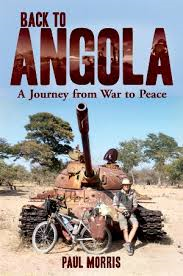
Reading Paul Morris’s Back to Angola: A Journey from War to Peace

Back to Angola…without language we are left to watch each other carefully…
– Paul Morris

I went to see it twice. I still don’t really understand why, but Anthony Akerman’s Somewhere On the Border (1983) moved me deeply. The scene when Bombardier Kotze crushes the conscripts’ cake with his boot still haunts me.

When you think about it for a second, war is so pointless that it’s impossible to imagine why we are still doing it in the twenty-first century. I don’t mean the greed and politics behind it, nor the ideologies abused to wage it – I get all of that. I mean the everyday, human aspect of it.

No, as a species we haven’t learned much.

I have this fantasy that, like during that famous Christmas Truce of 1914, one day soldiers all over the world will be compelled to simply put down all their weapons, exchange smiles, and go home to their loved ones. And never, ever pick them up again. Not because some government or leader has said they shouldn’t, but because they simply have had enough. I know I will never live to see the day, but just imagine it: it is a simple as that – a communal decision, a definite, ultimate NO. To greed, exploitation, violence and death.

Reading Paul Morris’s Back to Angola: A Journey from War to Peace (Zebra Press, 2014), I was constantly reminded of my naïve fantasy, of the heart-breaking Somewhere on the Border, of my grandfather’s dark recollections of Second World War, of my father’s mindboggling stories from his two years in the Polish Army around the time when I was born, of my brother’s strangely defining eight months of service in the Austrian Army when we were at university, and especially of a dear South African friend’s horror stories from the Angolan border. I am infinitely grateful that, to me, these are just stories. That I have never had to experience war or train for it myself. I hope I never will. The war stories I know, now Morris’s among them, bring home to me how, if it doesn’t kill you, soul-destroying and utterly futile war is.

In the beginning of Back to Angola, Morris mentions that he doesn’t consider himself a brave man. But only a brave man could have written this book. It is “my truth”, he says, but it is the kind of personal intimate truth which has universal appeal. A quarter of a century after his first involuntary visit to Angola in 1987 at the height of the military conflict, Morris decided to return to the country of his nightmares and confront what he refers to his “shadow side”. To fully experience the present-day Angola and to come as close as possible to its people, he chose an unusual way of travelling and went by bike. Assisted by friends and former enemies, he cycled for hundreds of kilometres to revisit the places haunting him and to transform the sinister image of Angola of the past into something different, more positive, more real today.

It is a parallel journey into the past and into the present; both have their challenges, both require guts, a lot of guts. During both, Morris confronts his understanding of courage, masculinity, loyalty, borders, and forgiveness. Confessional, shatteringly honest, beautifully written, Back to Angola tells a story of great relevance, specifically because it is told from a profoundly personal perspective. It captures the essence of why an entire generation of South African men is still dealing with the unimaginable.

A story about death is transformed into a story about life and facing up to one’s demons and responsibilities. It is a story of reaching out, of going back only to move forward. Back to Angola is also a chronicle of a riveting adventure in contemporary Africa. Not an easy read, but necessary. Highly recommendable.

Review: Sam and Me and the Hard Pear Tree by Jami Yeats-Kastner

sam_and_me_hard_pear_tree_covGrief is a curious creature. When you lose a beloved person, everything changes. You even have to learn to breathe anew. None of it is predictable. The process is highly individual. Reading Jami Yeats-Kastner’s heart-wrenching memoir about the death of Sam, her youngest son, was perhaps not the wisest choice for me after having experienced the greatest loss of my life, the death of my husband. Yeats-Kastner’s journey, however, is very different. Yet her story resonated with me in unexpected ways and gave me a measure of comfort.

“The Day It Happened” for Yeats-Kastner and her family was 8 February 2013. Her eighteen-months-old son drowned in their pool. That day she became the “Crazybutterflylady”, guided by signs in the form of butterflies on her path to acceptance and to herself.

As my favourite philosopher Mark Rowlands says: “To be at our best we have to be pushed into a corner, where there is no hope and nothing to be gained from going on. And we go on anyway.” Yeats-Kastner repeats the sentiment in the opening of her book: “Sometimes you need to be completely broken to find the most powerful part of yourself.”

As she notes, losing a child is “universally accepted” to be the greatest of pains. It is the loss of a life not lived, of the immense potential and its beauty. It is unbearable. Those left behind live in a void that is undefined: “If you lose your parents you’re an orphan; if you lose your husband you’re a widow. But what is the name for us, the broken ones? There isn’t one, because people can’t accept that it should happen.”

What Yeats-Kastner shows is how to transform the heartache of such a loss into a force for good. She seeks out messages which lead her on a path of discovery. She realises that in order to continue a meaningful life, to be a good mother to her other two sons (one of whom has severe low muscle tone), to be a loving wife and a fulfilled person, she needs to preserve her space and cultivate her creativity. Not afraid of what others might think of her, she pursues all avenues – whether spiritual, religious, or alternative – to achieve her goals. Together with friends, she starts a charity in her son’s name and learns to appreciate “life’s great truths”.

Nothing is easy. Guilt feelings persist. Reproach from others has to be confronted. There are days where everything seems impossible. Yeats-Kastner confronts it all with searing honesty and does not flinch, simply asking that we do not judge her too easily. She describes her family’s ordeal and their courage to find a new life. They move house, take up new professional challenges, and follow the butterflies which seem to appear out of the blue, but are in fact constantly around you if you are bold enough to look for and acknowledge them.

Sam and Me and the Hard Pear Tree is a moving memoir of survival, healing and hope.

Sam and Me and the Hard Pear Tree
by Jami Yeats-Kastner
Jacana, 2014

Review first published in the Cape Times, 2 April 2015, p. 24.

Off the grid

I’m an introvert. I like solitude & quiet. People are extremely important to me, but I am not a crowd person. Let me drink tea and talk to a friend for hours in the safety of my study & I’m happiest. I love being silent with others. When you can be comfortably silent in the company of another person, hold on tight to them. They are precious.

I have had a decade of sharing beauty and treasured silence with André. We spent almost every hour of every day together. In all these years, we were only a few times apart at night.

Now?
Now…

I have never been afraid of solitude. I’m not afraid of the dark. I’m good at being alone. Since I live mostly in my head, I can be alone anywhere with myself and be content.

I know loneliness. We have met and reached a quiet understanding. She understands that she can never replace solitude in my life.

Our house is full of memories. They hold me. I couldn’t return here in the darkness of that fateful night of 6 February when the last page of the most defining chapter of my life had been turned in the clouds above Brazzaville. Dear Friends took me in, said all the right words, hugged me, and then let me weep quietly through the night. In the morning, they took me home and have watched over me ever since. I do not fear the house, nor the dark. I am not alone.

The people in my life have been a source of comfort and strength. I am so proud of the kind of relationships André and I nurtured in our life together. So grateful. I’m wrapped in love and kindness.

I have never been as social as in the last few weeks. Totally out of character, but necessary and good. I’m surviving. There is very little I know. Nothing is predictable. I am only certain about knowing where I belong: here in Cape Town, home.

An orchid lives in the bath where André spent so many hours, thinking.
His suitcase remains unpacked.
I cannot wash his handkerchiefs.

I sleep in our bed.
Our cats watch over me carefully.
I bask in the sun in our wild garden.
I’m returning to reading & writing.
I dance alone at night.
I walk along the shores of the Cape.
I experience joy, deeply. Pleasure & delight have not left me.
Our family and friends have kept me sane. I’m infinitely grateful.

But I’m ready to withdraw now. I need time and space just for myself. I need to enter my headspace fully and more consciously without distraction. The need to write is stirring, taking a deep breath, inside. I need to be selfish…

This photograph was taken over Brazzaville by the wife of the doctor who was on board our flight from Amsterdam to Cape Town on 6 February at the time when her husband was called away to assist a passenger in need.
Brazzaville
I will fly again.

Philida van de Delta

I remember the pages of the manuscripts spread all around our lounge floor: Afrikaans, English, several versions of each, all a complete muddle. André and I going around with scissors and Sellotape, piecing the different scenes together, then transferring the final ‘cut’ to the computer, editing, correcting, arguing, crying, laughing, and every inch of the way loving the story and the remarkable woman at its centre – those were the final stages of André’s last novel, Philida (2012), longlisted for the Man Booker later that year just in time for the publication.
Philida4

She arrived like all stories do, unexpected.

A phone call from a man who’d bought a farm near Franschhoek. An uncanny family connection. A museum opening. A barefoot girl with a heart full of courage. No wonder André fell in love with her. She walked straight into his imagination. And now she is stepping out of the pages of his book into the songs of her descendants.
Philida3
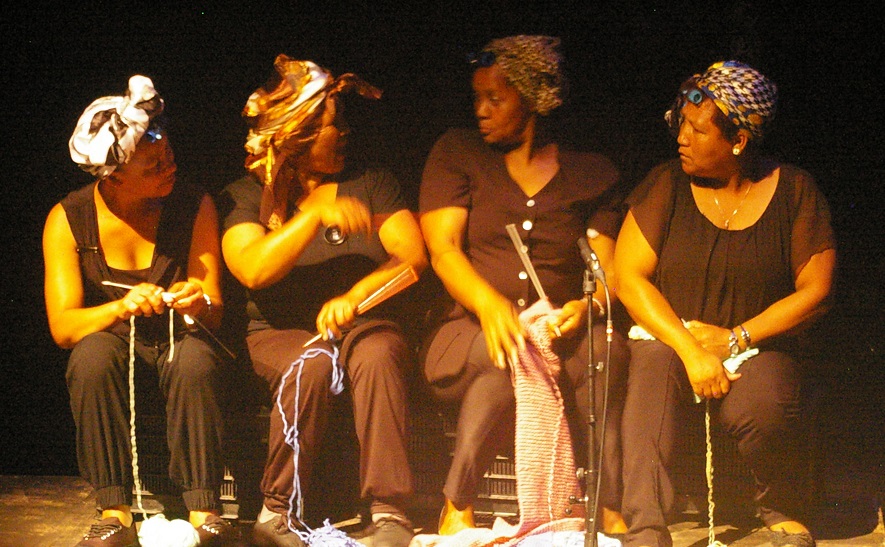
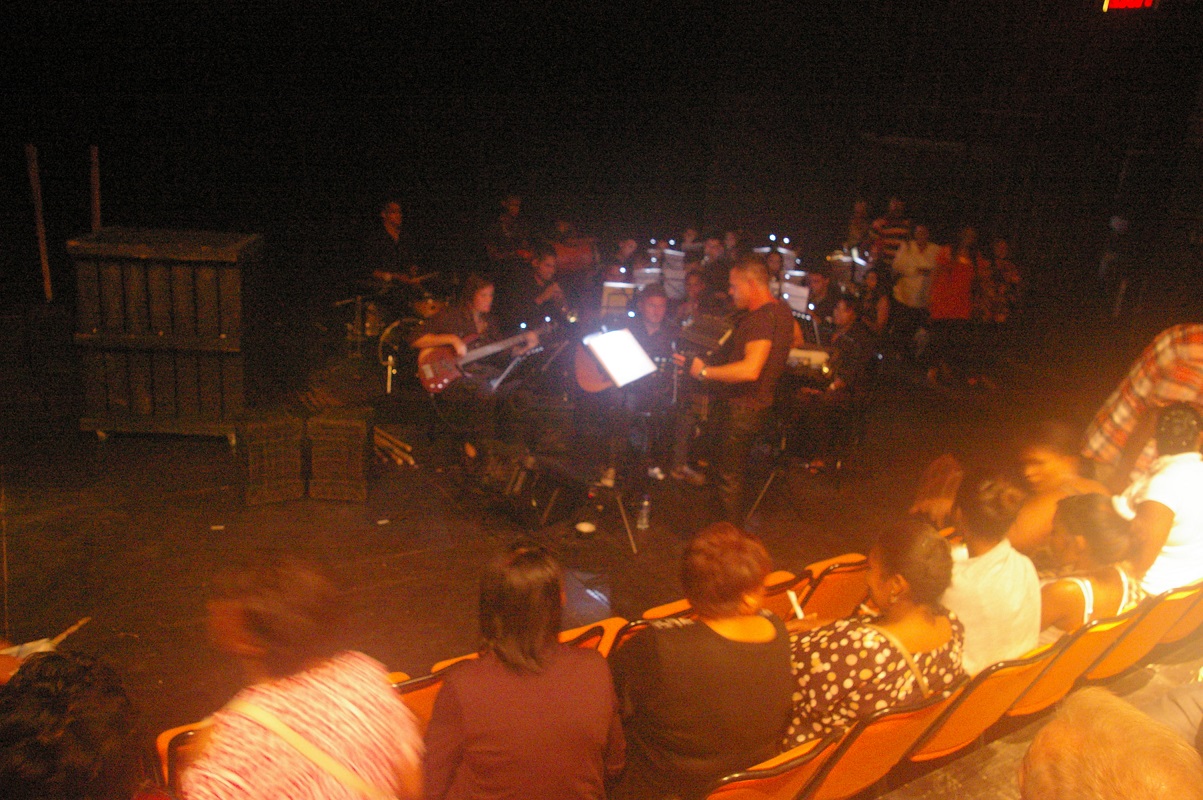
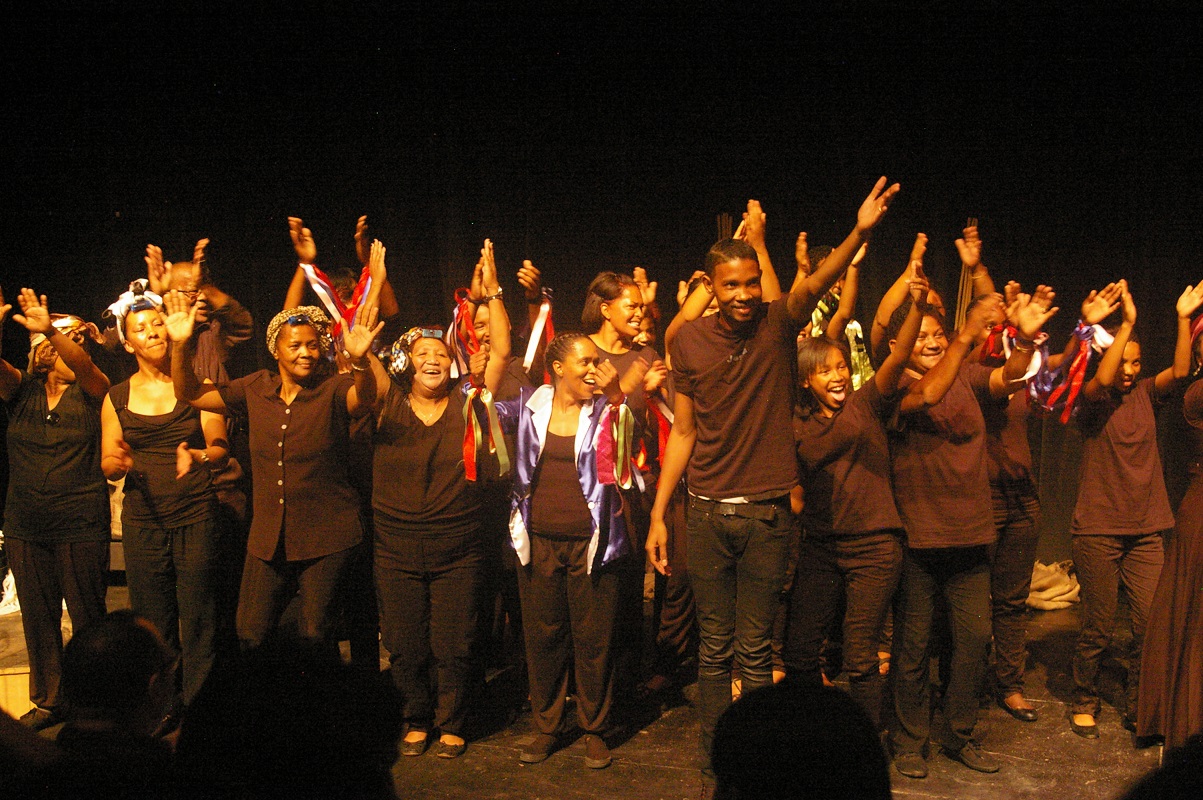
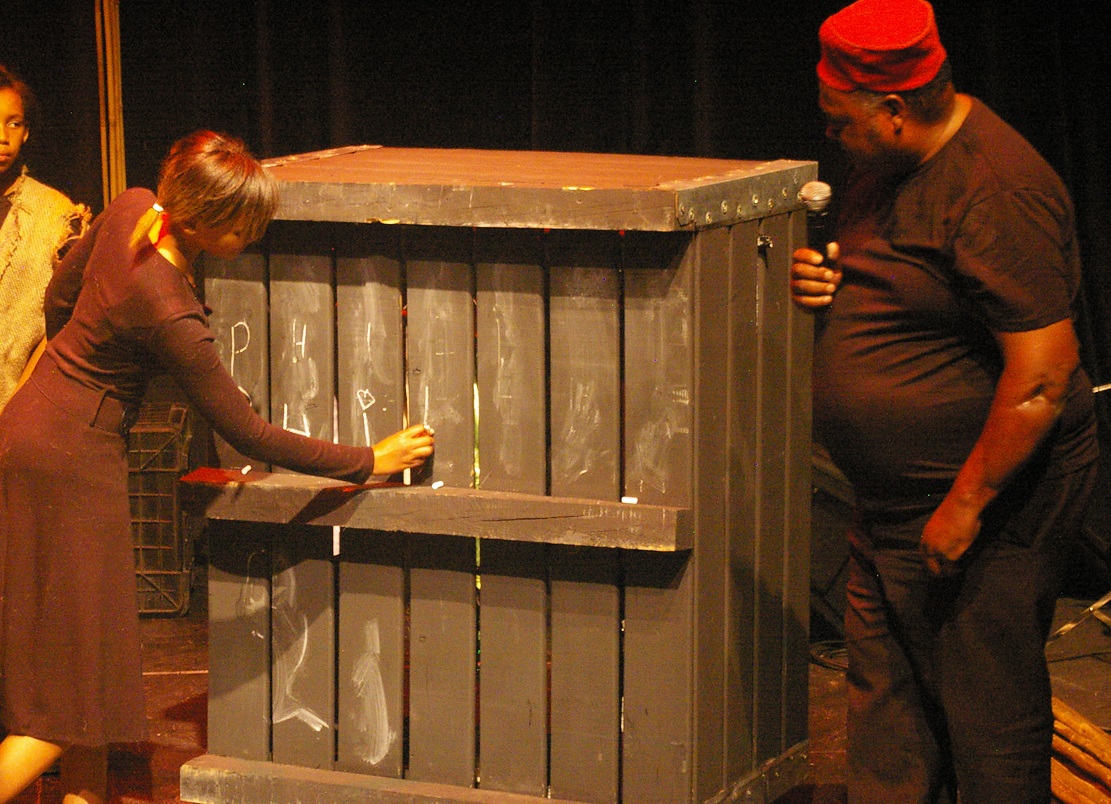
The people living, working and making music at Solms Delta have read Philida and turned her story into a musical.

I was invited to see the premier at the Baxter Theatre last night.
Philida1
Since André’s death, I have been unable to predict what will give me joy, what will hurt me. Everything is different now. What I believe will be difficult for me, turns out to be easy. At times, the easy stuff becomes impossible. Yesterday’s performance was utterly beautiful in all respects – simply stunning! Yet, it completely broke me. I wasn’t the only one who’d shed tears while following Philida’s moving story. I sat next to Tracey Randle, the wonderful historian who’d helped André do research for the book, and to Beverley Scott, mother of the late Alex van Heerden who, with his talent, charisma and enthusiasm, had brought music to the farm in the first place. We all cried, but I was the only one who had to leave, sobbing uncontrollably, just after the show.
Philida7
André and Alex should have been there last night, not only in the words and the music on stage, not only in our hearts…
Philida2
The beautiful young woman who sang Philida was the embodiment of André’s vision. He would have wept with all of us had he seen her come alive across space and time at the Baxter last night. The entire cast and the musicians were pure magic. They made my heart sing. The evening, though, broke it, too. And I was not prepared. I wish I could have said thank you or at least goodbye, but all I was capable of was finding refuge in the spare bedroom of my friends’ house which since early February has been on standby for such moments when being alone is not a viable option for me.
Philida5
I am humbled by the experience in all kinds of ways, and grateful. So many lives have been touched, changed, transformed for the better in all these years since we first heard Mark Solms’ message on our answering machine, that he wanted to meet, to tell us a story…
Philida9
Thank you.

PHILIDA VAN DE DELTA
at the 5th Annual Zabalaza Festival at the Baxter
Philida6
Company – Solms Delta
Writer – Members of Delta Soetstemme choir, facilitated by Amelda Brand
Director – Amelda Brand
Cast
Lyrics:
Delta Soetstemme choir, facilitated by Adriaan Brand, Leonore Bredekamp, Nick Turner, Amelda Brand and Jervis Pennington
Songs arrangement – Delta Langbroek band, musically facilitated by Adriaan Brand and Carlo Fabe
Language(s) – Afrikaans
Philida8
Performance Dates & Times:
22 March @ 18h00 – BAXTER FLIPSIDE THEATRE
27 March @ 16h00 – BAXTER Concert Hall

André Brink Tribute at the Woordfees

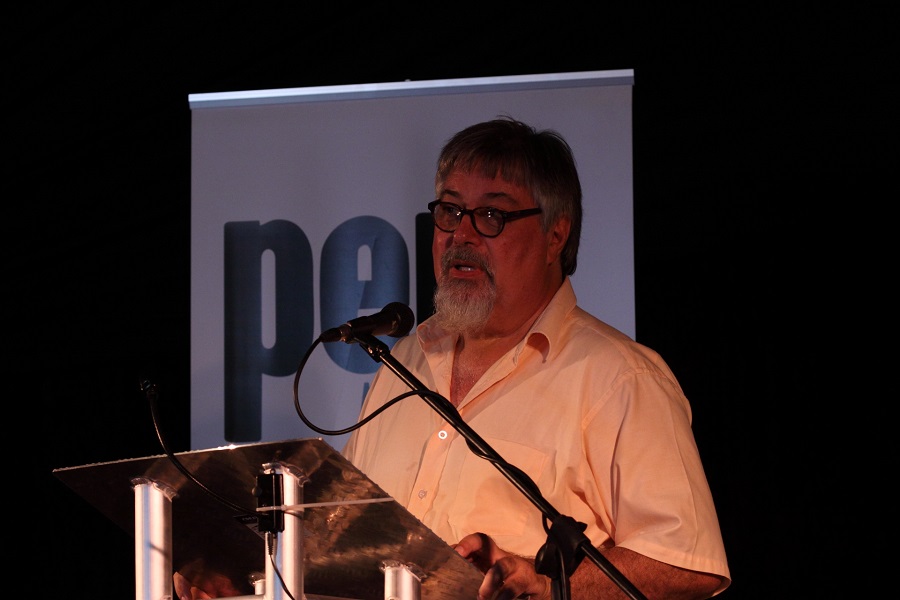
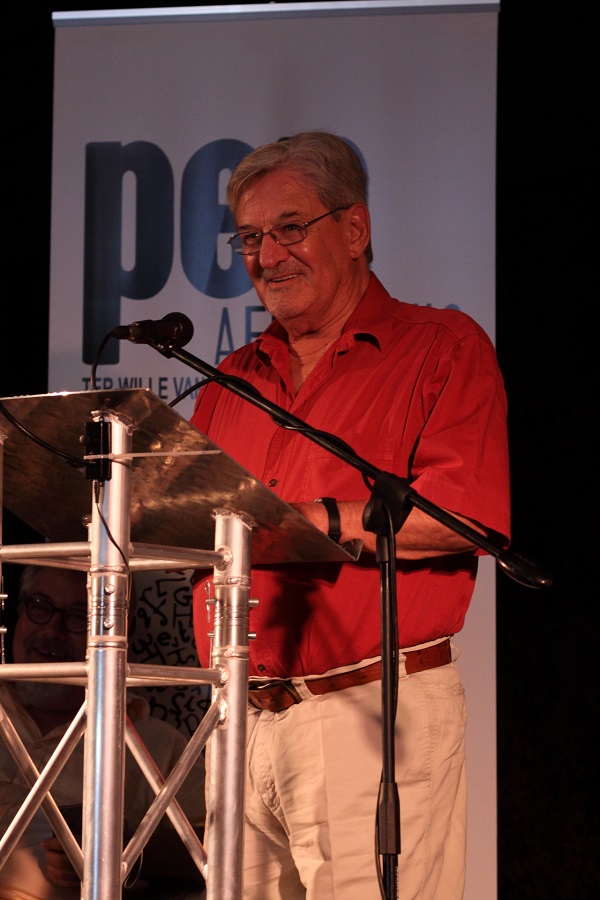
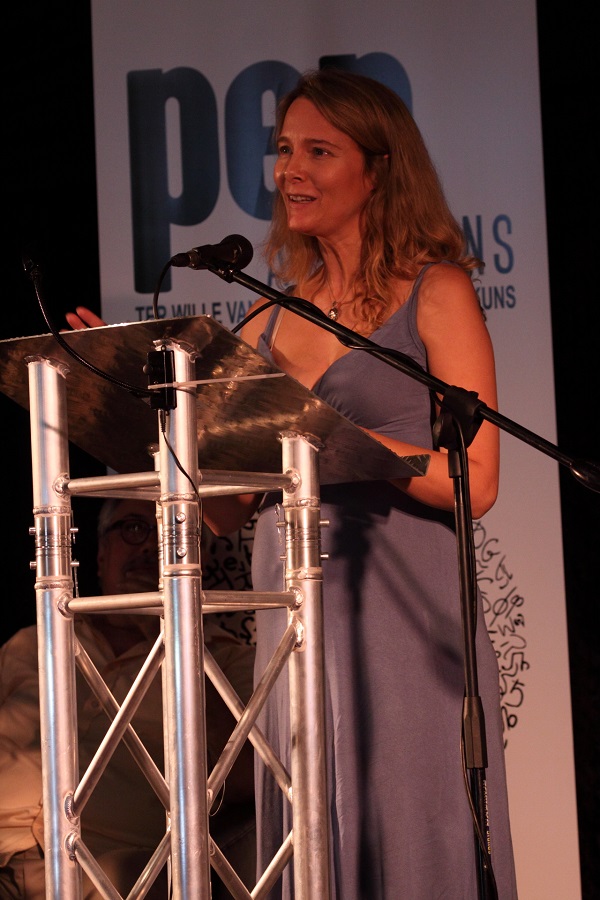
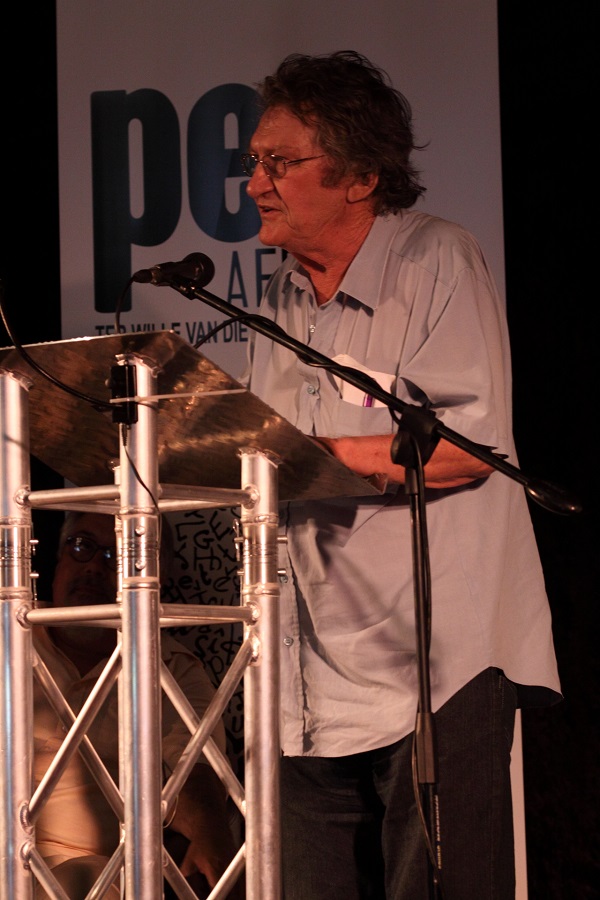
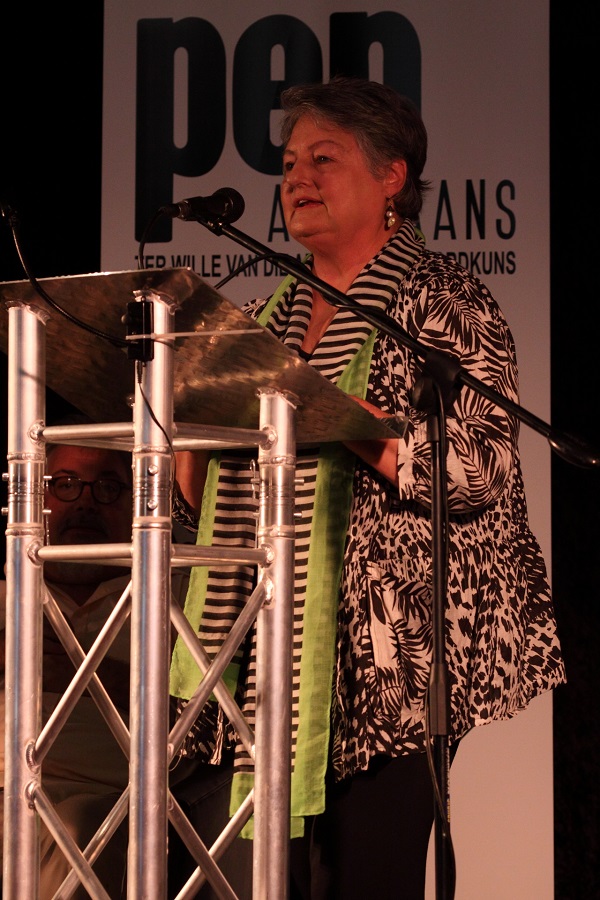
Writers, family and friends gathered on Saturday, 14 March 2015, in the afternoon at the Woordfees Book Tent to read from André’s work and correspondence, paying tribute and sharing stories. The event was organised by PEN Afrikaans & the Festival.

WoordfeesTribute1

Kerneels Breytenbach, friend, publisher, writer
WoordfeesTribute2

Sonja Brink, daughter
WoordfeesTribute4

Naas Steenkamp, friend, writer
WoordfeesTribute5

Abraham Phillips, writer
WoordfeesTribute6

Willemien Brümmer & Matthias, friend, writer, journalist
WoordfeesTribute7

Abraham H. de Vries, friend, writer
WoordfeesTribute8

Pieter Fourie, friend, playwright, director
WoordfeesTribute9

Antjie Krog, friend, poet, writer
WoordfeesTribute10

Ingrid Winterbach, friend, writer, painter
WoordfeesTribute11

Bettina Wyngaard, writer, activist
WoordfeesTribute12

Hettie Scholtz, friend, publisher, literary godmother
WoordfeesTribute13

Danie Marais, poet
WoordfeesTribute14

& I
WoordfeesTribute3

(Photographs: Krystian Szczurek)