
LitNet: You were a refugee, fleeing from an oppressive regime. Please share with us what those thousands of women and children who are now seeking refuge must feel like?
Karina Szczurek: I was a child when my parents decided to flee Poland in the 1980s. My brother was six and I was ten at the time. It was very difficult to comprehend what was happening to us, but at least we were secure in the knowledge that our parents were with us at all times and would take care of us, no matter what. Our lives were never in danger. Watching Ukrainian parents evacuate their children to safety while staying behind to fight for their future breaks my heart. I cannot imagine the levels of anxiety and distress this kind of separation causes for a family. These people will never fully recover from this, even if they survive.
LitNet: Do you know Ukraine at all?
Karina Szczurek: A little bit. I spent three weeks in the beautiful Lviv on a student exchange in 1997. We also travelled outside this historic city. It was a formative experience. During these three weeks, I experienced for the first time the real closeness of the two languages – Polish and Ukrainian – met Charlotte, who remains a very dear friend, and discovered my love for opera and ballet at the stunning Ivan Franko Lviv State Academic Theatre of Opera and Ballet (renamed since then). I specifically remember how friendly and welcoming everyone I met there was, and I will never forget their delicious black bread (I couldn’t get enough of it).
Continue reading: LitNet

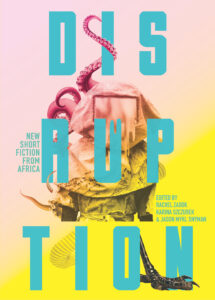
 Adamastor City is a first in all kinds of fascinating ways: for the author, Jaco Adriaanse, it is a debut novel and the first book in The Metronome Trilogy, and it is the first title for the new, independent publisher on the block, Burnt Toast Books, established this year by Robert Volker, who wants to focus on shorter forms and allow authors more freedom to experiment.
 “There is nothing boring about this anthology!” writes Consuelo Roland (author of The Good Cemetery Guide, Lady Limbo and Wolf Trap) on Goodreads, and continues: “Many of the stories are partially embedded in time and space against the background of South Africa’s apartheid legacy, but there is also spontaneity, humour and mystery, and a sense of how one might wriggle out from under the weight of our hair (the burdens of past and present). As the first brilliant story ‘The Collection’ by Alex Latimer reminds us hair is something dead and yet it makes us alive and present. Other stories that stayed with me (yours may well be different, this collection is that good!): ‘Before We Go’, ‘Spa Ritual’, ‘The Wisdom of Sunday’, ‘A Woman’s Glory’, ‘At Length, Hair’s Breath,’, ‘That Famous Winter Brown’, ‘Let The Music Play On’, ‘Reunion’. And then there’s the soulful, beautifully written (not an unnecessary word) ‘Lila’, by Bongani Kona, that felt like someone had thrown a brick at my chest so that I could hardly breathe with the sadness of it…”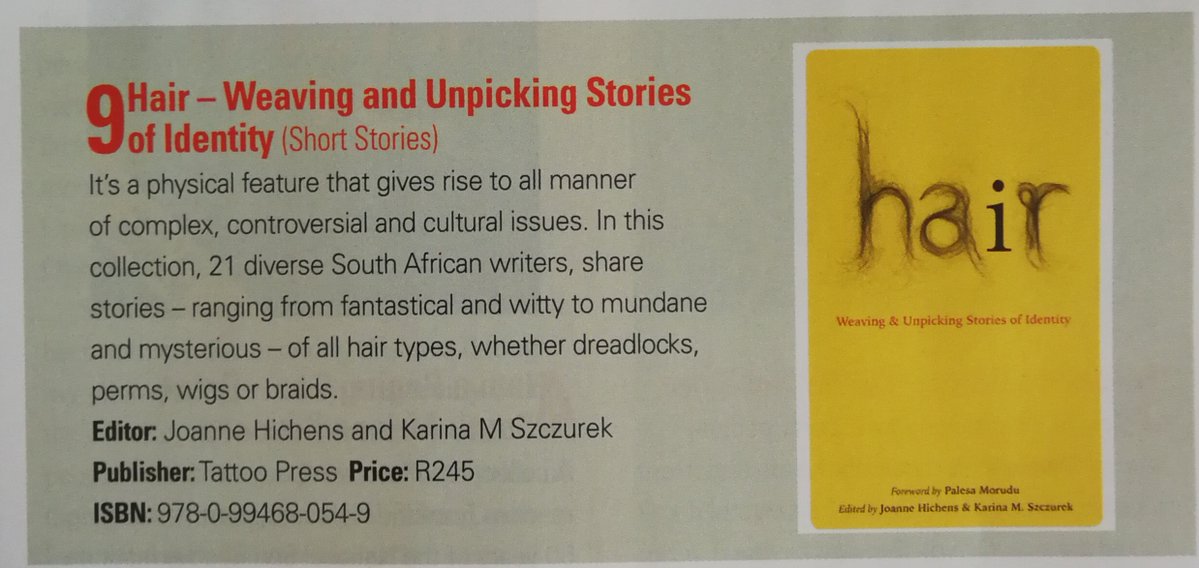




 Karina Magdalena