By the time we arrived in Prince Albert, Helen Moffett and I knew we would be publishing a book together. Put two writers in a car, let them travel for four hours through an inspiring landscape, and that is what happens. We drove into the town as the sky burst into crimson flames of sunset. I have never visited before, but when the Leesfees offered us slots on their beautifully curated programme, I jumped at the opportunity to experience the festival that I had been hearing wonderful things about for years.
I have said it before and I will repeat it many times: for readers literary festivals are fantastic opportunities for discovering new authors and interacting with the ones they love; for writers these events offer the possibility of engaging with their fans and introducing their work to new audiences, of course – it is a two-way process after all (a shout out to Ingrid Wolfaardt, Henry Welman and Azille Coetzee – it was lovely to meet you in person!). But for authors festivals are also great for socialising with colleagues: one feels less alone, more inspired, and often such events are the beginning of extraordinary literary projects and journeys. As a publisher now, every time I travel with Karavan Press authors, I get to know them and their craft a little bit more and my gratitude towards them deepens along the way.
Dawn Garisch, Melissa A. Volker and her husband Rick (no doubt Melissa’s greatest fan – he spoke about seeing someone read A Fractured Land at the Lazy Lizard festival café with the same enthusiasm as about the Springbok win!) booked us a table at The Olive Branch that first evening. The food was so delicious and the entire staff so friendly that Helen was ready to propose marriage to the talented chef.
The next day for breakfast, we ended up at the Lazy Lizard headquarters and accidentally bumped into Sally Andrew of Tannie Maria fame. She promptly offered to read us a passage from her latest novel, which features the Lazy Lizard and its famous Full Monty Breakfast as well as the even more famous Apple Pie. Helen and I tucked in while Sally read to us: a surreal literary experience if there ever was one.
Our blood was green and gold that day, but Sally and Fred Khumalo dutifully went off to entertain their Leesfees audiences while I marched off to find the nearest gin bar and cheered and cried with the rest of the crowd gathered there. Oh Captain, our Captain!
High on emotions, I had the enormous pleasure of interviewing Dawn and Melissa about “seeing things differently” next. This was the theme of the festival and these two incredibly talented authors allowed us a glimpse into their imaginations and their literary lives as they aim to entertain their readers while remaining true to their principles of caring about others and the planet we all share.

cof
The next day, I also had the opportunity to talk about environmental themes and the reality of our extremely wasteful and destructive ways with Helen. What I love about her approach to these highly topical concerns is her can-do attitude. Helen does not make her readers despair, she empowers us and encourages to do things differently, with more care and compassion. A true inspiration. And she is so funny, too!
No wonder all her books were sold out within minutes after the talk. The booksellers at the festival, Rosemary and Carmen of Bargain Books George, did a stellar job at getting our books to Prince Albert, but even they could not predict how popular Helen’s little books of environmental wisdom would turn out to be.
Whenever I present at a festival myself or interview authors, I always try to attend other events as a reader. In the morning of the first day, Dawn and I went to listen to Joanne Jowell and Miché Solomon speak to Vanessa Botha about Miché’s remarkable story as told to Joanne in Zephany: Two Mothers, One Daughter. And in the evening, we listened to Helen, Annette Snyckers and Archie Swanson read their poetry. It was the perfect way to end the day. Beauty and calm descended as the poets treated us to a literary feast.
I also attended Jan van Tonder’s talk at the festival. He was interviewed by Pieter Hugo. I love listening to Afrikaans and this was my way of indulging in the language a little bit again. What made the occasion truly special were the accompanying memories. When I first visited André in Cape Town in May 2005, on the day after my arrival he drove me to Oudtshoorn to introduce me to his dear friends, Marina and Gerrit. I met Jan during the visit, too. Two years later, in 2007, we all gathered in Stilbaai and watched the Rugby World Cup final together. Jan reminded me of the occasion when we spoke after the talk and said: “When I saw you in André’s Springbok shirt earlier in the day, I thought it a good omen for the final.” Indeed, both times Jan and I were in the same place for the final, the Boks won. I think we should plan something for 2023 together!
I can’t wait until Jan’s latest novel is translated into English. It sounded like something I would love to read. I will never forget his Roepman / Stargazer.
There was time to relax and to celebrate. Prince Albert welcomed us all with open arms. The organisers of the festival deserve medals for all their fantastic work. Thank you to Linda Jaquet and the Leesfees team! Our hosts were kind in providing us with the most beautiful places to stay. The audiences were attentive and generous. I already promised myself that I will be there for the next Leesfees in whatever capacity: as publisher, writer, interviewer or reader. And next time, on the way there or back, Helen and I are planning a longer visit at Matjiesfontein. There was only time for lunch and the celebratory springbok burger on this trip.
When we visit again, Helen promised to play the piano in the bar of the Lord Milner Hotel! And we might have a book to launch…
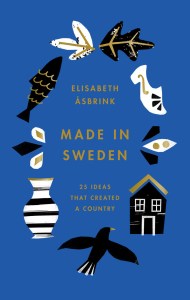 Whether it is ABBA, Pippi Longstocking, Scandi noir, Swedish massage, Volvo or IKEA furniture, these famous Swedish exports usually evoke positive connotations. We often associate Scandinavian countries in general and Sweden in particular with innovative ideas and socio-political stability. Award-winning Swedish author, Elisabeth Åsbrink, decided to test these assumptions about her country and ask herself the following questions: What are the real Swedish values? Who is the real Swedish model?
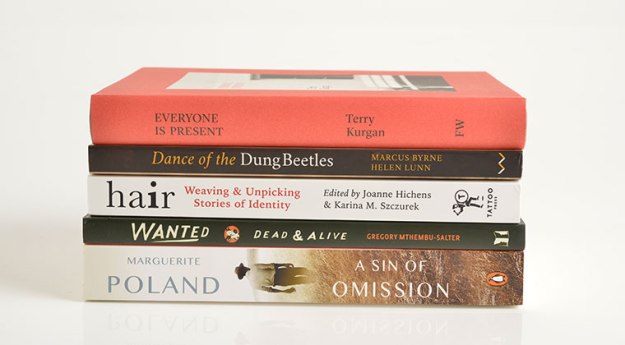
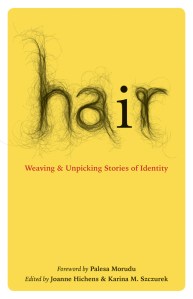 “There is nothing boring about this anthology!” writes Consuelo Roland (author of The Good Cemetery Guide, Lady Limbo and Wolf Trap) on Goodreads, and continues: “Many of the stories are partially embedded in time and space against the background of South Africa’s apartheid legacy, but there is also spontaneity, humour and mystery, and a sense of how one might wriggle out from under the weight of our hair (the burdens of past and present). As the first brilliant story ‘The Collection’ by Alex Latimer reminds us hair is something dead and yet it makes us alive and present. Other stories that stayed with me (yours may well be different, this collection is that good!): ‘Before We Go’, ‘Spa Ritual’, ‘The Wisdom of Sunday’, ‘A Woman’s Glory’, ‘At Length, Hair’s Breath,’, ‘That Famous Winter Brown’, ‘Let The Music Play On’, ‘Reunion’. And then there’s the soulful, beautifully written (not an unnecessary word) ‘Lila’, by Bongani Kona, that felt like someone had thrown a brick at my chest so that I could hardly breathe with the sadness of it…”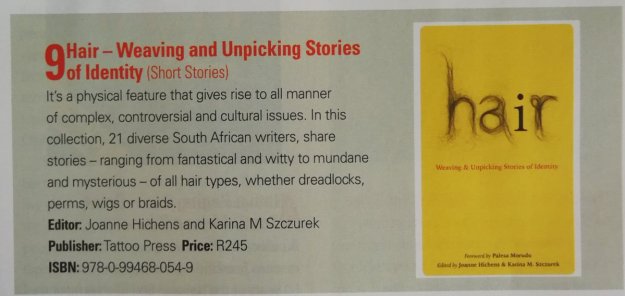


 Friends Neha, Devon, Shejal, Janine and Kumari live in the Indian suburb of Lenasia and spend a lot of time together. It is the early 90s, just before the first democratic election in South Africa. The country is preparing for change when the teenagers witness a terrible crime on one of their outings in the township. Their sense of belonging and identity is shaken as they embark on the rough path to adulthood after this lethal incident. Alongside them, South Africa is also trying to come into its own. This is the premise of Nedine Moonsamy’s beautifully crafted debut novel, The Unfamous Five. Although clearly echoing Enid Blyton’s The Famous Five novel series, Moonsamy makes this story completely local and her own.
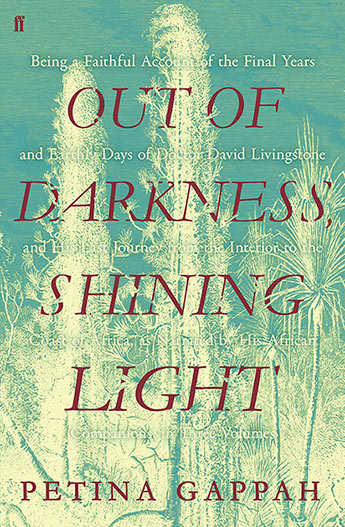 “Whoever heard of a group of people marching from place to place with a dead body?” It is precisely such a journey that is at the centre of Petina Gappah’s latest novel, Out of Darkness, Shining Light. Two decades in the making, the book tells the story of the sixty-nine men and women who decided to carry the body of Bwana Daudi – the Scottish physician and explorer David Livingstone – across the African continent after his death, so that his remains could be interred in his own country.
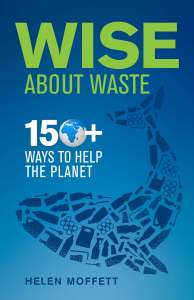 There is nothing to be done. We are coming too late to the party, allowing doom and gloom to persist. It’s easier to remain in a state of stupor than to take up the torch of an eco-warrior. Looking around, you will be forgiven for thinking that the war is already lost anyway. And there is no doubt about it: we are the bad guys on the wrong side of history. We are destroying our environments with ignorant dedication at a mind-boggling speed. The results are undeniable and crushing.
 “You learn to like the taste of sand out here … It gets to a point where you don’t feel quite right without a grain or two in your mouth. After all, it’s what the miners eat, isn’t it?” With these words the new magistrate of a mining town in Namaqualand is welcomed by his predecessor. It is winter of 1886, and after an arduous journey, William Hull arrives in Springbokfontein to guard the rule of law in the desolate place. Hull is well-meaning but obtuse and naïve; it takes him a while to grasp that there is only one real authority in town, the Cape Copper Mining Company, and that his attempts at justice are also being treacherously undermined in his own home, under his very nose. The battle of wills that ensues has tragic consequences.
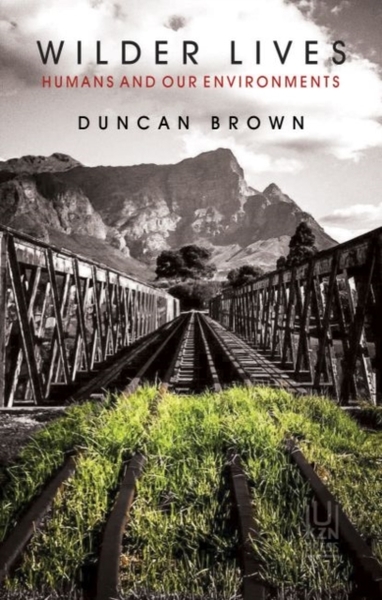 Not all is well with the world. In moments of dark disillusionment, it is easy to give in to despair and just do nothing. But it is worthwhile to remember that if all of us, or at least most of us, institute even the tiniest of changes in our lives, we can make these lives better and we can make the world a better place, for ourselves and others.
 If you are a reader of poetry, the last thing you should do is heed the instructions of the title of Finuala Dowling’s latest collection. Pretend You Don’t Know Me: New and Selected Poems brings together a selection of some of her best poetry from four previous volumes (three of them out of print now) and twenty-two new poems, each of which will make you want to know her work – not only the poetry, but the prose as well. Dowling is also the author of four novels, with a fifth to be published later this year. She is the recipient of the Ingrid Jonker, Sanlam and Olive Schreiner Prizes and is rated as one of the most significant South African poets writing in English today.


