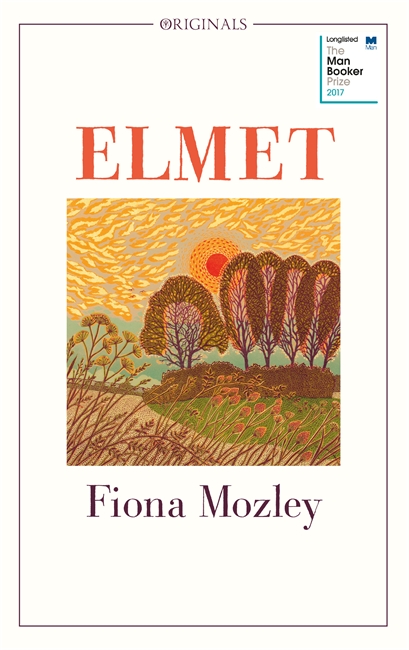
 Every year, I try to pick at least one of the titles shortlisted for the prestigious Man Booker Prize and read it before the winner is announced in mid-October. This time, the novel which intrigued me the most on the list was Fiona Mozley’s debut, Elmet. The narrative draws you in from the first sentence: “I cast no shadow”, it begins, and continues in Mozley’s beautifully balanced prose that is balm for the aesthetic soul: “Smoke rests behind me and daylight is stifled. I count sleepers and the numbers rush. I count rivets and bolts. I walk north. My first two steps are slow, languid.” This kind of writing is difficult to resist.
Mozley’s story is deceptively simple: the siblings Cathy and Daniel are living with Daddy in the house he built with his own hands for the family. The land their home stands on used to belong to the children’s mysteriously elusive mother. Before Daddy reclaimed the land for them, Cathy and Daniel lived with Granny Morley and still went to school. Their parents came and went for different reasons, until one day one of them did not return. And then their grandmother died and Daddy decided to move the family to the place where their mother came from. Now, a distant neighbour takes care of the children’s schooling, but otherwise they are mostly allowed to roam free. They keep house, live off the land, drink and smoke, and fend for themselves – more or less successfully. Their Daddy used to box in illegal fights arranged by migrating travellers. He never lost. His reputation opens up possibilities, but eventually also comes to haunt him and his secluded family: “Everything he did now was to toughen us up against something unseen.”
Daniel, the younger of the siblings, is the novel’s narrator. His sister is not only older but tougher, wise and brave beyond her years. Despite the seeming neglect the children experience, there is a lot of tenderness and love in the family and there is little doubt that they do the best they can to take care of their own. The place they settle in York has an ancient history. In the novel’s epigraph Mozley quotes Ted Hughes’s Remains of Elmet: “Elmet was the last independent Celtic kingdom … even into the seventeenth century […it was] a sanctuary for refugees from the law”.
Elmet is remarkable for its mythical quality. The novel is obviously set in recent times in a specific landscape, but the story could have happened anytime and anywhere where those who think and live distinctly and want to carve out an existence outside the norm are hounded down and made to conform or to pay the price for their independence. From the opening paragraphs we know that something dark and dangerous is looming. Mozley builds up her narrative masterfully and when it explodes, it leaves you reeling and dazed. She did not win the coveted prize, but Elmet was a worthy contender and Mozley is a writer to keep on your literary radar.
Elmet
by Fiona Mozley
JM Originals, 2017
Review first published in the Cape Times, 3 November 2017.
 Opening Dark Chapter, Winnie M Li’s debut novel, you will find out the following: it is a work of fiction, but the book is “inspired by the author’s own rape in similar circumstances”. Dedicated to “all the victims and all the survivors – and most of us, who are somewhere in between”, the narrative plays out in that “in between” space and is a harrowing account of a woman’s attempt to come to terms with her new frightening reality after being raped. The circumstances Li describes are somehow unusual, the telling perhaps even more so.


 “What is it about our society that excuses these monsters? Why are we not holding people accountable on all levels?” Redi Tlhabi asked at the recent Cape Town launch of her latest book, Khwezi: The remarkable story of Fezekile Ntsukela Kuzwayo. She was referring to the horrifying prevalence of sexual violence in South Africa and our inability to prevent it as well as to offer justice to its victims. In Khwezi, Tlhabi demonstrates how the legal system and we, as society, have failed the victims of sexual violence in general, and one person in particular: Fezekile Ntsukela Kuzwayo, for over a decade known to most of us only as Khwezi – the woman who decided to fight for her right to safety and dignity and accused Jacob Zuma of rape when he ignored both by having sex with her without her consent on 2 November 2005. Zuma was acquitted of the rape charge in May 2006. Kuzwayo, vilified and violated by his supporters, had to flee the country.
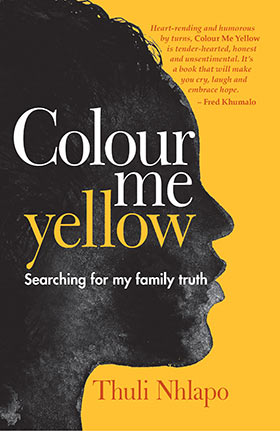 Reading Thuli Nhlapo’s powerful memoir, Colour Me Yellow, two thoughts dominated my mind. The book reminded me of a Polish saying that “families are best in photographs”. It also made me think of what Mphuthumi Ntabeni said at the recent Open Book Festival: “We need to address the failures of our traditions.” At the same time, I was overcome by an array of emotions. I was seething at the injustice of what happened to Nhlapo throughout her life, while simultaneously being filled with incredible sorrow for the child she once was and the deepest admiration for the woman she became.



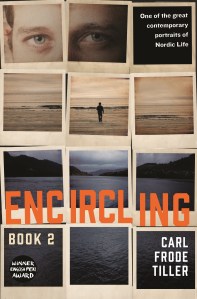 The second instalment in Carl Frode Tiller’s Encircling trilogy, this novel follows the predecessor’s structure by allowing three different narrators to tell us about their lives around the month of July 2006 in the small Norwegian town of Namsos. While they relate their present-day stories in occasionally minutiae detail, they also reveal more or less relevant facts about themselves through the letters they write during this time to David, a man they all knew at some stage in their lives. They respond to a newspaper article in which David, supposedly suffering from amnesia, asks those who knew him to help him regain his memory.
