 In the Afterword of At Risk: Writing On and Over the Edge of South Africa, a collection of personal narratives edited by Liz McGregor and Sarah Nuttall, Njabulo S. Ndebele writes about the book taking “us closer to the notion of ‘making public spaces intimate’ by infusing into the public domain, not gossip, but genuine, reflective, if sometimes agonised, personal testimony. Self-exposure of this kind is harder than the act of unmasking others. It allows for the public sharing of vulnerabilities as the basis for the restoration of public trust (against public hypocrisy) and makes possible a world of new, interpersonal solidarities that extend into broader, more affirming social solidarities.”
Narratives of this kind are not only fascinating but, in a world of lethal lies, increasingly essential. Hedley Twidle’s excellent Firepool allows the form to shine. The book contains nine essays on topics as diverse as skin, democracy, literature, Mandela, Verwoerd’s assassin, music, nuclear power, racism, the N2, universities and that swimming pool. Here is an incisive mind at work, writing about relevant issues, but not from a purely intellectual perspective of a distant observer, but from within the personal experience. The “vulnerabilities” Ndebele mentions in the above quote are on full display and allow for a deeply intimate engagement with each text – for the writer and, crucially, for the reader.
When Twidle says “I want to write about skin”, you would be forgiven in the present climate to expect that he will be writing about race. And in a sense he does, but not in any obvious way. Twidle recalls his school years and the intricacies of power one face as a young adult. He talks about transformation (from childhood to adolescence and then adulthood, but also in socio-political terms) and “troubled skin”, skin suffering from the most horrifying acne: “These registers of experience are revolting, and seldom written about – or, at least, were very hard to find in print during the pre-Google era.” There is a reason why Twidle goes where only Google does not fear to tread, why he is probing “the limit zones of disgust: political disgust, but also the intimate and democratic rankness of bodily disgust – in the belief that such an investigation might be a prelude to true metamorphosis, acceptance, love.”
“Twenty-Seven Years” is a tribute and a meditation on the remarkable life of musician Moses Taiwa Molelekwa. He was a child prodigy who died much too young at the age of twenty-seven, but who was not afraid “to risk being naive, and to begin at the beginning.” Twidle records his own music history with the awareness that “the challenge for all writing about anything that moves us, is to carry within the writing a memory of that initial ignorance, of the silence before the music started.” He structures the essay in narrative loops which manage to create that sense of innocence, eschewing the usual “scholarly mode” of linear developments and imitating an improvisation, as if on a musical theme.
In “Getting Past Coetzee” we are referred to the hermit crab of the book’s wonderful, but initially mysterious, cover (the illustration makes perfect sense once you reach the last page). I doubt there are any students of English literature anywhere in the world who have not come across JM Coetzee. Twidle is a great admirer, but not an uncritical one. Contrary to his literary hero, he acknowledges a South Africa that is a “generous one, where things are thrashed out in dialogue with others, rather than selves.”
The essays which gripped me the most were “A Useless Life”, “Thirteen Ways of Looking at the N2” and “Nuclear Summer”. The former two tackle unusual topics: Demitrios Tsafendas and the N2. The latter reverts to an all familiar consideration, but with refreshing urgency: nuclear energy.
Tsafendas is the man who murdered Verwoerd, but his existence has been nearly erased from public consciousness. He later testified he had acted “on instructions from a tapeworm inside his gut.” Twidle recounts his story in vivid details and reclaims it for “our national narrative”, showing what consequences suppression of truth and diverse definitions of and approaches to madness can have. It is an intriguing story if there ever was one. In “Thirteen Ways of Looking at the N2”, Twidle takes us on a walk along the N2 from the city centre to the airport – “a space where we are all in it together (though not, of course, all in the same way).”
“Nuclear Summer” exposes a peril that is common to us all and is a stark reminder that silence is “indefensible” in cases of life and death. No matter how tired we might feel because of the endless debates about nuclear power, Twidle returns us to basic truths: the anti-democratic nature of nuclear power and the fatal failure of our imaginations in connection to the environmental impact this form of energy production has. We know “that knowledge and authoritarianism can go very well together; that facts now live alongside alternative facts, that truths can coexist perfectly happily with lies.” And because we know, there is no excuse for silence.
The essays in Firepool are an intellectual and emotional feat, calling for understanding as well as compassion. The need for both cannot be underestimated.
Firepool: Experiences in an Abnormal World
by Hedley Twidle
Kwela, 2017
Review first published in the Cape Times, 18 August 2017.


 “What happens when the baby they buried comes back?” The question is asked on the cover of Sara-Jayne King’s stunning memoir, Killing Karoline. The story King relates is simultaneously heart-breaking and inspiring. A child is conceived during an illicit relationship in apartheid South Africa. Named Karoline, she is “born with a large, black question mark over my head”. Her biological parents – a white woman and a black man – are forbidden by law and custom to be together. Her official parents – both white – decide to hide the mother’s “indiscretion” with her black lover and smuggle her to the UK under false medical pretences. They proceed to give her up for adoption and return to South Africa, lying to all concerned that Karoline had died.


 The British author Katherine Stansfield has a mesmerising novel (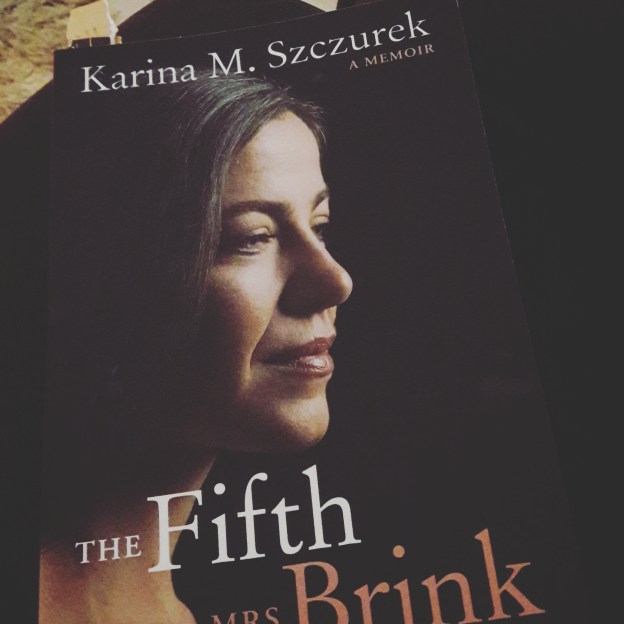


 – Fiction is the most dangerous place in the world; that’s where truth lives. –
 How do you cope with the death of your child? How do you capture the ungraspable in words? I can hardly imagine either, but reading Sue Brown’s account of the life and death of her son Craig, I felt that every single word she put down on the page was an act of heroism.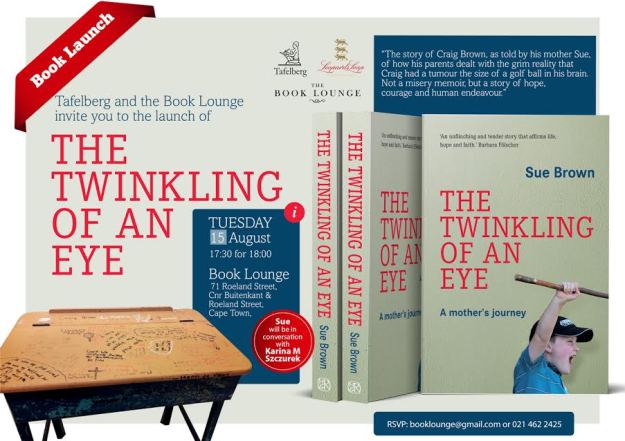
 A cup of tea contains many stories. There is one on the intriguing cover of Francine Simon’s debut poetry collection, Thungachi. Simon hails from Durban where she was born into an Indian Catholic family, a heritage that infuses her poems about myths, family, language and religion.
