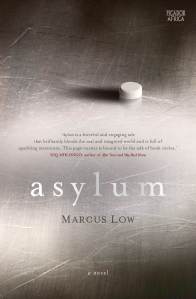
 There is something about a debut novel that excites beyond the ordinary experience of opening a new book by a familiar author. You have no way of knowing what to expect. When starting Marcus Low’s Asylum, I certainly did not anticipate that the novel would hold me captive for several hours. I read it in one go, even though I only intended to dip into it on the morning before its launch at the Book Lounge last month. A friend of mine was interviewing the author at the event and I meant to go to support my friend. By the time I arrived at the bookshop, however, I was there to cheer on everybody involved. Marcus Low has got himself a fan.
Asylum tells the story of Barry Wilbert James. He is locked up under quarantine in the titular asylum. The facility is located in the unforgiving nothingness of the Karoo. The time is the not too distant future (the twenties of our present century) after pulmonary nodulosis – a lethal illness – had affected vast numbers of the population: “We are sick and therefore we are isolated, locked up. We must wait out our days here, and then die – so that the healthy ones, the ones we have forgotten about, may live.”
There is no cure. Admitted to the asylum a couple of years ago in 2019, Barry spends most of his time contemplating his lot and dreaming of distant, frozen landscapes. He avoids other detainees – a “flock of coughing corpses”. To deal with their suffering, they are mostly drugged. Remembering loved ones is devastating. Thinking of the outside world is torture, especially since its state is uncertain. Violence erupts in the midst of the hopelessness the men face. Dreams “are the only way out of here – in those dreams anything is possible, any horror, any one, any thing, even snow.” In Barry’s dreams, some people speak Polish, men in tuxedos dance at masked balls, and there is a threatening presence, but also a white pill which promises relief. And there is consolation: “For it seems to me that even in the most bleak of worlds we’ll find something to hold on to…even if that is something as impossible as snow in this godforsaken landscape.”
After a suicide attempt, a psychologist is assigned to Barry to help him cope with his situation. She advises that he keep a journal. His notebooks form the core of Asylum. It is after they are discovered and stored in the Museum of the Plague in Beaufort West in 2026 that we learn about Barry’s life in the asylum and what led him to implicate himself in some of the other patients’ plans to escape. The eight recovered notebooks – incomplete and intriguingly unreliable – are accompanied by varied notes trying to make sense of the entries and to establish a “plausible chronology”.
Low’s handling of the narrative technique is extremely deft. The lyrical meditative passages of the notebooks are interspersed with fragments, marginalia, poems, and terse academic commentary, which offers factual, but not always enlightening data. The effect is striking. What we get is a version of the story, which might or might not be true, and it is up to the readers to piece it all together in their heads. We know about the documents. We are told that they were found by one of the asylum’s doctors and passed on to the psychologist, who, in turn, donated them to the museum. We are also informed that the body of another inmate, Jonathan Fox, “was found in a shallow grave” near the asylum and that the find corresponds with Barry’s account of the man’s death.
Marcus Low used to be the policy director of the Treatment Action Campaign. At the launch of the book, he mentioned that he is gradually losing his eyesight. Both of these real-life experiences allow him a unique insight into the reality of illness and what it takes to lead a fulfilled life beyond frightening medical diagnoses. His portrayals of Barry’s daily struggles with depression, delusions and his inevitably impending death are heart-wrenching. They provide not only an incisive take on incurable illnesses, but also policymaking in such institutions as health-care facilities or old-age homes.
Asylum explores how one can deviate from a predestined plot by dreaming, or telling stories. The strategy not only applies to fiction, but also life. In the novel, an academic studying Barry’s journals in the museum suggests that the texts show Barry “preoccupied with colour and light.” Barry realises: “I started imagining that someone would one day read all this…That is why I could keep on with it, why it became an obsession, why I’m sitting here now, months later, filling page after page of this notebook.”
Speculative, post-apocalyptic fiction has now firmly established itself in contemporary South African literature. Marcus Low’s Asylum is a remarkable addition to the genre. I am not the only one who found it unputdownable. Friends report similar experiences. Thought-provoking, alluring and sensitively written, it is a mesmerising novel which announces a new thrilling talent on the local literary scene.
by Marcus Low
Picador Africa, 2017
Review first published in the Cape Times on 12 May 2017.
 A few years ago when I read Donvé Lee’s illuminating debut novel An Intimate War (2010), I promised myself that I would read anything this author writes. I doubt I would have picked up Syd Kitchen’s biography otherwise. Kitchen’s name meant nothing to me before I read the book. An acoustic folk musician who came into prominence in South Africa in the 1970s, Syd Kitchen was not the kind of person I enjoy reading about: an addict and a gambler who “didn’t so much as burn the candle at both ends as apply a blowtorch to the middle” (according to Michael Cross). But there is no doubt that he had a unique talent and a charisma which touched many people’s lives, and Lee’s compassionate portrayal of the man made me curious about his music.

 In 2013, South African-born author Deborah Levy published Things I don’t want to know, a response to George Orwell’s 1946 essay “Why I write”. The Notting Hill Editions version of this exquisite book flourishes two quotes on the cover. On the front: “To become a writer, I had to learn to interrupt, to speak up, to speak up a little louder, and then louder, and then to just speak in my own voice which is not loud at all.” On the back: “Perhaps when Orwell described sheer egoism as a necessary quality for a writer, he was not thinking about sheer egoism of a female writer. Even the most arrogant female writer has to work over time to build an ego that is robust enough to get her through January, never mind all the way to December.”
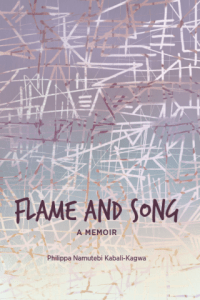 Levy’s incisive essay was very much on my mind when I was reading two recent titles published by Modjaji Books: the poetry volume How to open the door by Marike Beyers, and the memoir Flame and song by Philippa Namutebi Kabali-Kagwa. But it took me a while to figure out what the connection my intuition had been suggesting was, and then it hit me: since its inception, Modjaji Books has been offering a publishing platform for loud books by authors with soft voices – the kind of soft which utters the most powerful messages. No shouting necessary, please; we are getting all the way to the end of the year here.
 “Winterbach is the kind of writer any literature could be envious of” – Marlene van Niekerk is quoted on the cover of The Shallows, Ingrid Winterbach’s latest novel translated from the Afrikaans into English. The original, Vlakwater, was published in 2015. One of South Africa’s most distinguished novelists, Winterbach is the author of ten other highly acclaimed novels, five of which are also obtainable in English. Anyone who has engaged with her work will understand what a privilege it is to have it available in translation. She is a quintessentially Afrikaans, South African, writer; her narratives are deeply rooted in the local consciousness. However, their appeal is truly universal. The stories she tells, the way she tells them, remind me of authors like the American Siri Hustvedt, or the Pole Olga Tokarczuk, or the Israeli Etgar Keret. They come up more easily for comparison than other compatriots. In fact, the only writer I can think of locally whose work displays a similar storytelling intuition is the translator of The Shallows, Michiel Heyns. The supple prose of his translation testifies to the perfect match.
 A while back, I spoke to a friend about the phrases ‘to handle something’ or ‘to have a grip on something’ in connection with the physical ability to hold, handle, or have a grip on something as a manifestation of an emotional and psychological capability.
 I had this grand plan of learning how to quilt while resting (I always find it reassuring, comforting, to see something come into being in my hands – activities like crocheting, knitting, or ironing soothe me). But now, not only has my plan of a self-imposed sabbatical been delayed because of work-related commitments I simply cannot get out of (I know, I know!) by two to three weeks, I actually cannot quilt, at least not until my arm recovers.
 Stanzas No 4
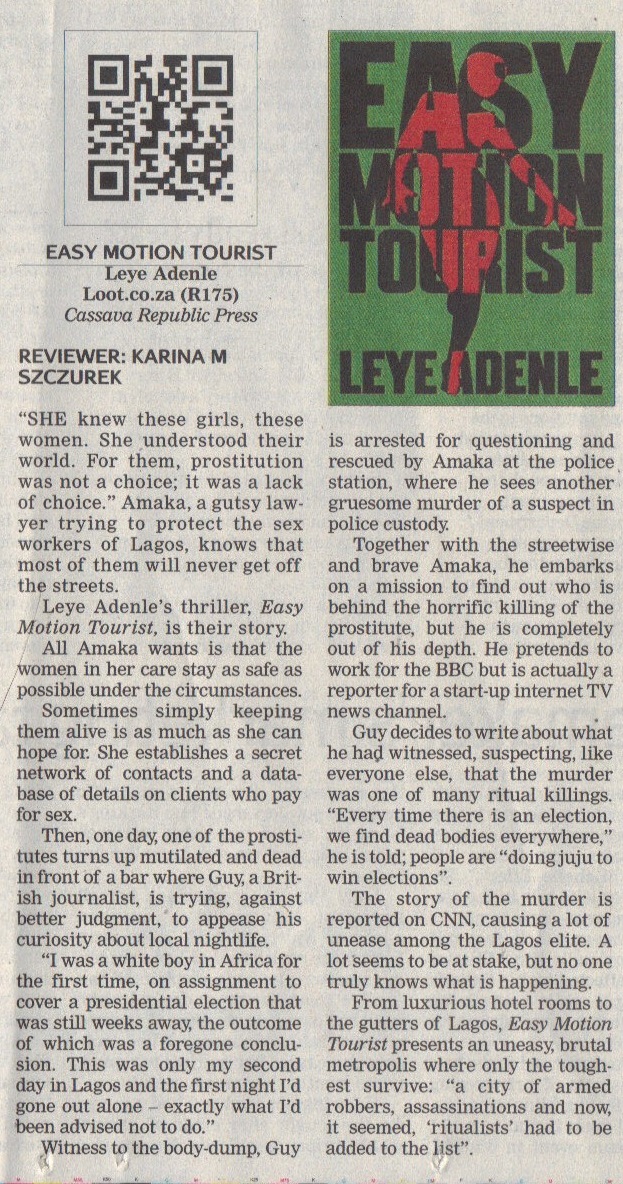
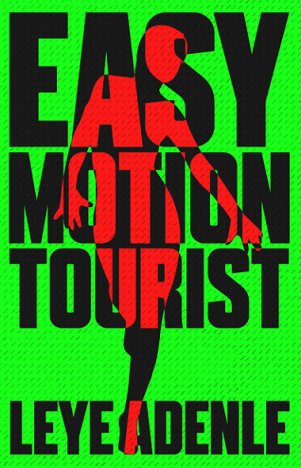 “She knew these girls, these women. She understood their world. For them, prostitution was not a choice; it was a lack of choice.” Amaka, a gutsy lawyer trying to protect the sex workers of Lagos, knows that most of them will never get off the streets. Leye Adenle’s thriller Easy Motion Tourist is their story.