 “You learn to like the taste of sand out here … It gets to a point where you don’t feel quite right without a grain or two in your mouth. After all, it’s what the miners eat, isn’t it?” With these words the new magistrate of a mining town in Namaqualand is welcomed by his predecessor. It is winter of 1886, and after an arduous journey, William Hull arrives in Springbokfontein to guard the rule of law in the desolate place. Hull is well-meaning but obtuse and naïve; it takes him a while to grasp that there is only one real authority in town, the Cape Copper Mining Company, and that his attempts at justice are also being treacherously undermined in his own home, under his very nose. The battle of wills that ensues has tragic consequences.
At the same time, Molefi Noki returns to the copper mines from his village in the Idutywa Reserve in the Transkei Territory, where he and his wife had just lost a baby after yet another difficult pregnancy and birth. Grieving and desperate, the Xhosa miner embarks on a search for his missing brother who had been sent to the notorious local jail for drunkenness and seems to have disappeared since then.
Tensions between the miners and the Company arise over working conditions and pay. After a tragedy claims many lives, the conflict escalates into outright horror. “It’s the way of the mines; you should know that well enough. How many old miners do you see walking around? … None. No miner sits by the fire in his old age with his grandchildren bouncing on his knees. It’s the same for all of us”, one of the mine workers reminds Noki.
Shattered by the Marikana Massacre of 16 August 2012, and inspired by historical sources about the Cape Copper Mining Company, Karen Jennings wrote Upturned Earth “as a comment on the history of commercial mining in South Africa – the exploitation, conditions and corruption that began in the 1850s and continue to the present,” as she states in her author’s notes. The novel is a sobering reminder of the roots of everything that has been going wrong in the mining industry for decades. Written from the perspectives of Hull and Noki, Upturned Earth throws a light into the darkest places of this history and shows that not much has changed, and there is so much to fight for.
Jennings is a novelist, short-story writer and a poet. Upturned Earth is her fifth book, showcasing her striking talent that is maturing with every new publication. Born in Cape Town in 1982, she currently lives in Brazil, but her creative consciousness is steeped in the African imaginary. Her latest novel is an incisive contribution to our understanding of what it means to endure a system that “no individual could ever hope to alter or redeem.”
Upturned Earth
by Karen Jennings
Holland Park Press, 2019
Review first published in the Cape Times on 13 September 2019.
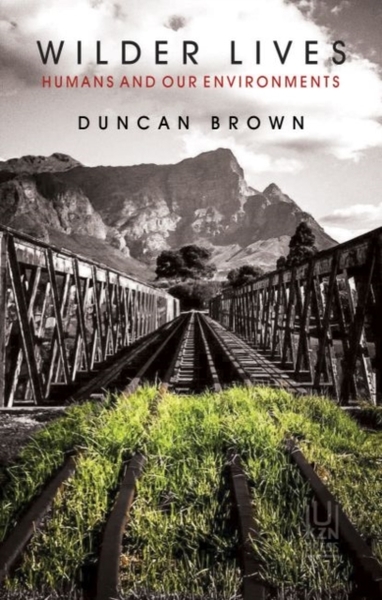 Not all is well with the world. In moments of dark disillusionment, it is easy to give in to despair and just do nothing. But it is worthwhile to remember that if all of us, or at least most of us, institute even the tiniest of changes in our lives, we can make these lives better and we can make the world a better place, for ourselves and others.
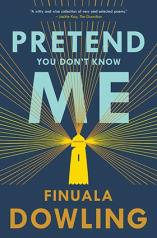 If you are a reader of poetry, the last thing you should do is heed the instructions of the title of Finuala Dowling’s latest collection. Pretend You Don’t Know Me: New and Selected Poems brings together a selection of some of her best poetry from four previous volumes (three of them out of print now) and twenty-two new poems, each of which will make you want to know her work – not only the poetry, but the prose as well. Dowling is also the author of four novels, with a fifth to be published later this year. She is the recipient of the Ingrid Jonker, Sanlam and Olive Schreiner Prizes and is rated as one of the most significant South African poets writing in English today.
 It was by chance that I read Musawenkosi Khanyile’s debut poetry collection on a rainy morning, still tucked up in my bed. But it was no coincidence that the juxtaposition of the comfort of my bedroom and the realities described in the volume repeatedly moved me to tears. Unapologetically autobiographical, the poems included in the book trace the author’s journey from childhood to adulthood, from his rural family home, through the township, to the city. A journey undertaken by many, but not often evoked in poetry with such distinct tenderness that it takes your breath away.
 The Wickerlight is the second book in Mary Watson’s The Wren Hunt series for young adults. In the first book, the protagonist Wren is chased and taunted by a few boys in the woods around Kilshamble, the village where they all live. Set in modern day Ireland, but one in which magic is as real to the novel’s characters as social media, the next instalment in the series picks up the story of one of these boys, David. He is a member of the judges, one of the ancient draoithe clans. Their sworn enemy for centuries are the augurs.
 There aren’t really many among the cast of characters in Mick Herron’s Jackson Lamb spy thriller series that you would want as a friend. On the whole, they are a bunch of losers. It’s almost always certain that they’ll either let themselves or their colleagues down. Yet, you can’t help but follow their (mis)fortunes with feverish anticipation.
 Opening an Ingrid Winterbach novel fills me with excitement every single time. She is one of my favourite contemporary Afrikaans writers and I am immensely grateful that her work is available in English.
 The sixth Jackson Lamb thriller, Joe Country by Mick Herron, is hitting our bookshelves. The Drop is a novella in the series that only a few months ago introduced a new character into the cast of Regent Park’s drop-outs whiling away the time as “slow horses” in Slough House, where Jackson Lamb rules supreme. Whereas most of them arrive on Lamb’s doorstep after a major screw up in the field, the new addition ends up in the dubious care of the obnoxious Cold War spy through a set of weird coincidences. His fate is sealed after Solomon Dortmund, an old spook, observes an envelope changing hands in a way that stirs all the retired spy’s hard-wired intuitions into action.
 “Now, there are storytellers, and there are Storytellers”, the narrator of Water No Get Enemy, one of Fred Khumalo’s stories collected in Talk of the Town, tells us about Guz-Magesh, a larger than life character who features in two of the pieces: “His well of tales is bottomless.” He has that in common with his creator. Khumalo is the author of four novels. His short stories have been considered for prestigious awards and featured in several magazines and anthologies. Talk of the Town is his debut collection.
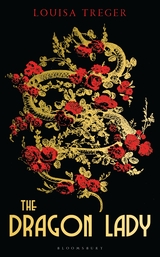 South African-born Louisa Treger used to work as a classical violinist before she turned to literature, first gaining a PhD in English at University College London and then trying her hand at creative writing. Her academic research focused on early 20th-century women writing and eventually resulted in her first novel, The Lodger, which told the story of Dorothy Richardson, a British author and journalist who was one of the earliest modernist novelists and, in her heyday, was considered among the greats of the era, but was subsequently neglected by readers and critics alike.
 Karina Magdalena