Tag Archives: Karina M. Szczurek

Book mark: The Alibi Club by Jaco van Schalkwyk

The Alibi ClubJaco van Schalkwyk is an artist and a writer with enormous promise. His visual and literary imageries correspond. Published simultaneously in Afrikaans and English, his debut novel The Alibi Club is a poignant, meticulously constructed narrative, written in a starkly revealing prose. It tells the story of a medley of striking individuals who frequent the titular club in Brooklyn where booze and drugs flow in abundance, the jukebox and the pool table provide entertainment, and human relationships are forged and discarded through the nights. The narrator is a young South African who progresses from cleaner to bartender at The Alibi. He arrives in Brooklyn in 1998 and departs nearly a decade later. His observations paint an incisive portrait of the neighbourhood during that time, especially the radical transformation it experienced after the horrific attacks of 9/11.

The Alibi Club
Jaco van Schalkwyk
Umuzi, 2014

First published in the Cape Times on 24 October 2014.

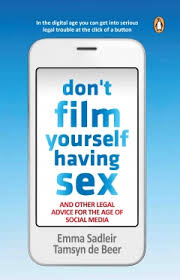
Book mark: Don’t Film Yourself Having Sex and Other Legal Advice for the Age of Social Media by by Emma Sadleir and Tamsyn de Beer

Dont Film YourselfFor many of us the internet is an integral part of our everyday reality. Accessible and highly entertaining, Don’t Film Yourself Having Sex is a must-read in the digital age, especially if you have children or are planning to marry Kate Winslet. Without excessive legalese, the authors give an overview of our on- and offline rights and responsibilities, and what consequences ignoring either might have for us as digital citizens. They offer practical advice on how to profit from the amazing medium and to have all the fun online without ruining your reputation, losing your job, having your identity stolen, being sued for damages, or becoming the laughing stock of social media. They also tell you what to do when something does go horribly wrong. ‘I had no clue’ won’t work as an excuse.

Don’t Film Yourself Having Sex and Other Legal Advice for the Age of Social Media
by Emma Sadleir and Tamsyn de Beer
Penguin, 2014

First published in the Cape Times on 10 October 2014.

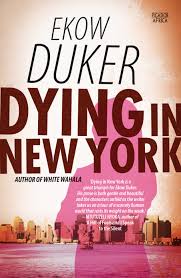
Book marks: White Wahala and Dying in New York by Ekow Duker

White WahalaA finalist in the 2011/12 European Literary Awards, White Wahala is a modern tall tale with a dark South Africa twist. When Alasdair Nicholson, a spoilt young banker from a wealthy family, heads towards Soweto with his little sister to buy drugs, he sets in motion a chain of disastrous events which will put his entire family in grave danger, expose a long-buried secret, and end up in the headlines amidst an intrigue of national proportions.

White Wahala is populated by exaggerated characters whose outrageous actions and the dubious reasoning behind them take us to the heart of the misunderstandings and fears we encounter in everyday life as South Africans of all backgrounds. Ekow Duker’s take on the present state of the country has the potential to generate a lot of debate. It is impossible to remain neutral towards the story. My own personal response was a mix of incredulity and anger.

White Wahala
by Ekow Duker
Picador Africa, 2014

First published in the Cape Times on 26 September 2014.

Dying in NYIt is difficult to write about Ekow Duker’s second novel, Dying in New York, without giving away the ending, an unexpected twist on which the entire narrative hinges. The book’s pre-teenage protagonist, Lerato Malema, suffers horrendous abuse at the hands of her father. Her mother, also a victim, unable to protect her daughter, stands by hopelessly. One day, the dynamics of the setup change with fatal consequences.

The only thing that keeps Lerato going is a vague fantasy about the city of New York which she shares with her mother. Propelled by her vivid imagination, she embarks on a roller-coaster ride through contemporary South Africa where she encounters the worst of what the country has to offer, with very little to relieve the alienation, horror and pain of her dark adventures. Reality and fantasy blur uncomfortably, revealing a highly unsettling picture of violence and insanity.

Dying in New York
by Ekow Duker
Picador Africa, 2014

First published in the Cape Times on 3 October 2014.

October Blackout

DisconnectDont Film YourselfThe Snowden FilesReading Luke Harding’s The Snowden Files: The Inside Story of the World’s Most Wanted Man, Emma Sadleir and Tasmyn de Beer’s Don’t Film Yourself Having Sex: And Other Legal Advice For the Age of Social Media, and Pico Iyer’s article in the New York TimesThe Joy of Quiet“, as well as watching Disconnect in the same week might have put anybody off the internet for a while (or for life). But it was only a chat (over tea, in the real world out there) I had with Alex Smith the same week in early September that made me want to consider the following: NO SOCIAL MEDIA FOR THE MONTH OF OCTOBER. In my case it’s only blogging, tweeting, and as of recently goodreading (I haven’t made it to facebooking, instagraming etc yet) – all entertaining, informative, and sharing activities which I really enjoy, but which are also time-consuming and often creativity-sapping. I can’t complain. In the last few weeks I have done a lot of creative and critical writing, and I think I have got the balance between the different activities nearly right, but I would like to have a month of selfishness (no sharing on diverse platforms, no matter how much fun it is) and finish my second novel, provisionally entitled Ordinary. It is almost there…

In the famous words of Arnold Schwarzenegger: “I’ll be back!”…In November, with a manuscript ready to submit to Danél, my wonderful editor at Protea Book House.

In the meantime, please enjoy some of the pieces which I have posted from my archives:
OUR BRASS BED
A MIRACLE WORKER FROM BAGHDAD
ONA & HUSØYA
ALGIERS
HONEY, WE’RE HAVING A BOOK
AT HOME IN CHINA
WRITERS’ OTHER LIVES

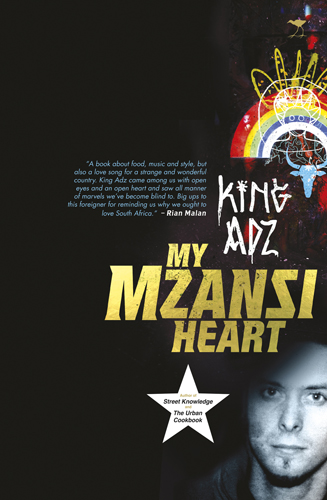
Review: My Mzansi Heart by King Adz

MyMzansiHeartReading King Adz’s My Mzansi Heart is like watching a reality TV show: drama, drugs, rock and roll, and rather longish ad breaks in-between. The book was almost too much for my senses and left me quite confused at times. I doubt, however, that nearing forty, still wearing shoes I bought a decade ago, and attending Metropolitan Opera live transmissions at Cinema Nouveau, I form part of the readership My Mzansi Heart is targeted at. Yet, King Adz and I have something crucial in common. We are both foreigners who have made our homes in South Africa, having fallen head over heels in love with the country and its people. Every love is different though. What matters is that your heart is in the right place, and King Adz’s beats for Mzansi.

King Adz is the pen name of Adam Stone, a Brit who grew up in the outer suburbs of London, arrived here with his family just after the changeover, and decided to stay. He started off at an ad agency and became a filmmaker, a writer (previously of Street Knowledge, The Urban Cookbook, The Stuff You Can’t Bottle: Advertising for the Global Youth Market), and most importantly a promoter of everything connected with street culture. Somewhere along his many travels he took the wrong turn and nearly lost everything to booze and drugs. My Mzansi Heart tells the story of his descent into the hell of addiction and his recovery.

The in-your-face narrative, punctuated by slang and a lot of French, is a rollercoaster ride across South Africa. It includes King Adz’s encounters with some famous locals such as the photographer Roger Ballen, the fashion stylist Bee Diamondhead, or writer Rian Malan. Along the way he also sniffs out potential future stars of different industries, whether it is fashion, media, photography, food, or music. King Adz roams the cities from Soweto to the Cape Flats looking for talent and promoting his heart out for places, institutions, products, and people (himself included), he believes in.

Towards the end of the book he writes: “There was a second there, typing the above words in, that I stopped and thought of the enormity, the stupidity, and the restlessness of the egocentric and Warholian act of self-promotion, and how it consumes a lot of my life. One moment it seems worthwhile, the next pointless and empty.” The statement captures my sentiments about his project. My Mzansi Heart offers many great flashes of insight into present-day South Africa, but one has to wade through a lot of fluff and bling to get to the gritty, good stuff.

Perhaps surprisingly, though, King Adz selling techniques worked on me. I’m looking forward to taking out a friend to lunch at Beijing Opera. As a lover of dim sum, I was intrigued by the mention of the “pop-up” restaurant in My Mzansi Heart (King Adz knows the owner Yang, and they have a copy of his cookbook on the wall). And I am not ashamed to admit that I’ll be looking out for Jack Parow Braai Sauce at my local supermarket.

First published in the Cape Times, 26 September 2014, p. 31.

Our Brass Bed

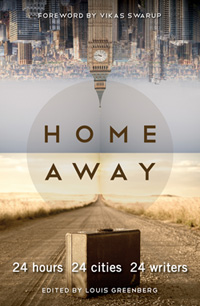
Home AwayBraunau am Inn | Geretsdorf | Salzburg, Austria, 7 p.m.

You are like me. You feel safer on the right side of the road, sitting on the left in the car, changing gears with your right hand, looking over your right shoulder to reverse. The little white Daihatsu was an unexpected gift from your father; he bought it for peanuts and renovated it so that you could have a car of your own. You should actually sell it now. Ever since your move to Cape Town, you drive it only during occasional visits to your parents, at most a few weeks every year. For the rest of the time, the reliable little car loiters in the yard gathering dust. It is much smaller and less comfortable than the respectable Mercedes you and your husband share at home, yet you feel safe in it. The idea of parting with it is painful to you, even though you know this would be the sensible thing to do. It’s what your father urges you to do every time you come to visit. He sees no point in keeping it. But no matter how hard it is to admit, even to yourself, you see it as another loss of part of your life. You have experienced too many losses; you can’t reduce it to an ordinary transaction of exchanging money for an object. This object is too special. The car and you share a history.

You have always been an intrepid traveller, and the Daihatsu has taken you to many remote corners of Europe. It has never let you down. When you were at university, you drove it to Salzburg every day, fifty kilometres each way. You would rather have it stand around and rust in the backyard of your parents’ house than sell it to a stranger. The thought of returning to it is always comforting. There was a moment when you seriously considered having it shipped to South Africa, but you soon realised that the transfer costs would have exceeded the car’s worth. It was a silly idea.

Your plane landed yesterday. You travelled from Cape Town to Munich via Amsterdam, and took the train from the airport to Simbach, Braunau’s twin, where your brother Krystian picked you up from the station. Nowadays, with the borders in the European Union abolished, the two towns are divided only by the Inn River and the usual neighbourly mistrust. For many years you lived in Braunau am Inn, Hitler’s Austrian birthplace, until your parents decided to move to the countryside and bought a house in the nearby village of Geretsdorf. Still at university, you moved with them because you had no other choice. All your life you had little say in the places you learnt to call home. Until now, that is. You moved to Cape Town because you wanted to – a traumatic liberation.

You do not visit your old house in Braunau any more. You went once and it broke your heart to see the building modernised, its small fairy garden replaced by a standard lawn, all the trees reduced to stumps. The old staghorn sumac which leant on the garage wall and in whose branches you used to read was gone. So were the deceptively straggly-looking plum trees which bore baskets of fruit every second year. Worst was the complete disappearance of the tall emerald arborvitae hedge which surrounded the entire property and gave your family privacy in the densely populated area. The place looked stripped and exposed. You felt just as violated.

You remember the time when you moved into the house after living in the States for more than two years. It was small and dilapidated, but with combined effort your family quickly turned it into a home. Here you listened to your brother dream-laugh in the bedroom next to yours; your mother filled the house with the smell of plum jam in autumn; your hard-working father fell asleep on the kitchen bench every evening after supper. This suddenly became the place where all your journeys began and ended. Even today returning to Braunau feels like a homecoming to you; it was the longest pause in your itinerant life. Nine years may not seem long, but it meant nine years of certain stability you had not experienced before.

In the early nineties, Braunau became a place of safety, in spite of its many contradictions. As an Ausländer – a foreigner – you had to stay at home when thousands of neo-Nazis descended on the town each April to celebrate the Führer’s birthday. But on other days you took your friends and visitors to the front of the house where he was born to have a look at the monument placed there. Brought over from the concentration camp in Mauthausen in 1989, the stone commemorates the victims of fascism: Für Frieden, Freiheit und Demokratie. Nie wieder Faschismus. Millionen Tote mahnen. (For peace, freedom and democracy. Never again fascism. Millions of dead warn.)

It is not a warning the generals of the former Yugoslavia took to heart when the wars broke out in 1991. You remember watching the daily media reports from the region just across the Austrian border and translating for your grandma who was staying with you at the time. The images brought back her own memories of war and displacement; it was the only time you heard her speak about that distant past. Every day she wanted to know how many more aid trucks with medicine, blankets, food and clothing had left Austria for the conflict zones. Thousands and thousands, you assured her. Somebody pointed out to you that it was not only a humanitarian gesture, but also a way of keeping the flow of refugees into Austria under some kind of control. Many came anyway. For a few months of high school you ended up sitting next to a tall, dark-haired girl whose face you still see but whose name escapes you. She told you in broken English that she didn’t know where her father and brothers were, whether they were still alive. She’d escaped only with her mother. You did not dare imagine the horrors she must have seen, the courage it must have taken to flee, what and whom they’d had to leave behind. Your own refugee past – escaping communist Poland in the late 1980s, going through refugee camps, and migrating through the world for four years – was insignificant in comparison. Your life had never been in danger. Staying at home on Hitler’s birthday to avoid creepy looks and verbal abuse from neo-Nazis hardly seemed relevant.

Earlier today, with history on your mind, you passed the Mauthausen stone monument on your way into town. The medieval Stadtplatz, the main square, was bustling with activity. The place had first been mentioned as Prounaw in an official document from 1120. As you drove into the centre, it struck you how ancient all these buildings were in comparison to the place where you lived now. Your Victorian house or even the Castle in Cape Town seemed like toddlers when compared to these Methuselahs.

In August, the light is still bright in the evening, but you had to hurry before the last shops closed at seven. Your flat in your parents’ house in Geretsdorf had stood empty for a couple of months. All day long you swept, vacuumed and dusted; then you unpacked your heavy suitcase and rushed to town to buy a few essentials. Suddenly, German was all around you. You feared to open your mouth, afraid that nothing would come out, the language you’d been speaking most of your life somehow forgotten, engulfed by a terrified silence. In the chemist, you carried a tube of your favourite toothpaste and panty liners (you always schlep both to Cape Town because you cannot find satisfying local substitutes for them) to the counter and tried your luck: Ich möchte bitte mit der Bankomatkarte zahlen. (I want to pay with my debit card.) The words flew out of your mouth, automatically. You remembered the pin code for your Austrian debit card. The woman at the counter looked familiar. At Billa you bought some Leberkas, the traditional Austrian sausage meatloaf, and a few bottles of Uttendorfer beer from a local brewery. You would have one in a hot bath later.

Now, driving back from Braunau to Geretsdorf, you think how easy it is to return, to go unnoticed, to pass as one of the locals again. The Daihatsu slides through the Upper Austrian landscape, surreally lit by the setting sun. With your right hand you smoothly shift the gear to accelerate for a takeover manoeuvre. Just as smoothly your mind shifts into a narrative mode and you describe the surroundings to yourself in your head. The kitsch pastoral scene, suddenly outrageously beautiful in the setting sun, demands some concentration: The ink-smeared horizon, the bruised horizon, dotted with eerie clouds, punctuated by clouds, glowing orange, blushing orange, from the touch of setting sunrays … The words swirl in your mind like candy around a child’s tongue. Shocked, you spit them out as you drive on and stare at the sun setting over the barley fields, the grand square, white farmsteads, the small herd of cows, and you force yourself to describe the scene in German: Der Himmel, der Horizont, blau, die Wolken, die Sonne, orange. Individual words and their particles come to you, but they refuse to turn into smooth, peppermint-sweet images. You are startled.

***

Once you’d mastered all three, you divided your languages into favourites. Polish for speaking. German for writing. English for reading. Since your move to Cape Town you have been assimilating Afrikaans into the mix, for socialising. Driving towards Geretsdorf, you recognise that a shift has taken place. The carefully ranked categories no longer apply. English has taken over.

It shouldn’t surprise you. You lived in the States for over two years, continued learning English at school in Austria, and later you studied English literature at university for twelve years. Since 2005, you’ve been living in Cape Town where it is the lingua franca. You and your husband speak English to each other and you are at home with it; it is at home with you. English has inadvertently become the language you work in, as a critic and finally – yes, finally – as a writer. You know that this last shift is the crux (even if at this very moment you have to look up the exact meaning of ‘crux’ in a monolingual dictionary to make sure that it is actually the word you mean).

English has become the language of your creativity; your intimacy with it derives from living in South Africa. But you’ve only just realised it now, on this road from Braunau to Geretsdorf. It unsettles you, this shift of paradigms which has happened so automatically, so unconsciously, and you need time to take it in; you need to think it through. In English. You recall the Chinese-Canadian writer Ying Chen speaking in Lyon about her mother tongue and the tongue of her fiction; she compared one to an arranged marriage and the other to a love affair. You can identify with the idea of English as your lover.

You arrive in Geretsdorf enlightened, in love, park the car in front of the house, and do not lock the door. At home in Cape Town, long before you get to the garage you have to start checking whether you aren’t being followed. In Geretsdorf, there are no security bars on your parterre windows, no alarms, no terrifying daily Neighbourhood Watch reports, no stories of friends’ hijacked cars, no neighbour arriving at your gate with knife wounds in his face, no phone calls from your stepdaughter traumatised after an armed robbery, no funerals of murdered family members, no foreigners burnt alive in the streets. At least not since 1945.

You derive pleasure from the unlocked car door. You enter the house with a smile and open the terrace door wide open to celebrate this sense of freedom, and to let in some fresh air before the sun sets completely. The only reason to lock up later will be to keep the mosquitoes out of your bed tonight.

From upstairs your mother calls that dinner will be ready at eight. You have a while to relax, to settle further in to one of your many former homes where everything is still so familiar. You moved into this flat after your return from a student-exchange year in Wales, and lived here for four years before you decided to make South Africa your home. It was in this very study, on this desk in front of you, where you’d planned your first journey to Africa, on a research grant for your PhD on Nadine Gordimer’s post-apartheid work. Most of your books, travel guides and maps are still here, now filed away with the photographs and study materials you’d brought from South Africa in 2004; the defended and published thesis added to the collection in 2008. There is also the photograph of you with your future husband and other participants from the ‘South Africa in Perspective’ Symposium you helped to organise at the University in Salzburg at the end of 2004. Next to it is a postcard of the picturesque Schloss Leopoldskron, where the last event of the symposium took place and where you fell in love with the man who would become your husband, even though you did not dare admit it at the time. You and your husband have returned time and again to Salzburg, the city you both love so much, the city that brought you together, with its centuries-old architecture, dignified opulence, and mummified socio-historical structures, all glossed over with gold and red for Sound of Music fans descending in their thousands, clicking away pictures in tourist-crowded alleys, stuffing themselves with grilled chestnuts or oven-baked potatoes topped with sour-cream and chives, buying useless gifts at the rustic Christmas Market, gathering next to the cathedral around the handsome Russian balalaika player, drinking hot chocolate or iced coffee at Tomaselli, ascending in cable cars to the medieval fortress that squats on top of the miniature mountain (which sometimes reminds you of another that you can see every day from your stoep in Cape Town), attending endless music concerts, trampling on the roses in the Mirabell Garden where Copernicus sits wondering whether he is German or Polish. And yes, yes, Mozart! Mozart is everywhere, more golden and reddish than anything else in the famous city of Salzburg, reclaimed covetously by a place that never wanted him during his lifetime.

You know there is more to Salzburg; it’s hidden, quiet, small, a little grey – yours. Alone, one January evening before midnight, you walked the fog-veiled streets of the old town and decided to leave Salzburg, Geretsdorf, Austria – for good. The final link in a long chain of events which began in 1999, when Edwin Hees (now a dear friend), arrived in Salzburg to share his passion for the arts of the Beloved Country and brought your whole world to a standstill. After his lecture, you rushed into the departmental library with burning cheeks and a famished mind and tried to absorb everything possible about South Africa’s past and present. You were overwhelmed by the intensity of the historical moment only five years after the first democratic election. You were moved by the promise of a new future, by the vibrancy of the emerging post-apartheid literature. History was happening then and there, at the multilingual tip of the foreign continent; it was not something confined to outdated school books. It was a time of chaos and possibility.

Travelling to South Africa for the first time in 2004 only confirmed all you’d learnt and hoped about the country in the five years since Edwin’s first lecture; strangely, you felt instantly at home in this distant, foreign, multitudinous place. No wonder that a year later, you had come home for good. South Africa was a forge, shaping history as you watched, shaping you as you lived. You abandoned the shadow of a medieval fortress, unchanged for centuries, and exchanged the crystallised reality of Europe for the muddle of a lived present. Its complexity finally tipped you over the edge of impassivity and allowed the creative impulse that you’d been harbouring for years to emerge onto the stark white light of a published page.

Now, on this visit to your parents, you sit in your old study in Geretsdorf and stare at the books that represented South Africa before it became your home. On the desk is a little pile of presents you brought for your family, among them a collection of short stories which includes one of your own. You take up a pen and dedicate the book to your parents and your brother, relieved that the content has nothing to do with them. The story is about rape and domestic violence. As one of the lucky ones, you have never experienced anything like it in your own life, but it is part of the reality of your new home, and you constantly feel the need to confront it in your writing.

South Africa is in constant flux. Positive and negative forces of change are entangled and nothing is clear-cut or easy. You sometimes think that living compartmentalised lives is the only way to survive in this fractured place. But you still want to have coffee with your gardener on the stoep while discussing the rain clouds and the mole invasion. Surely that shouldn’t be so much to ask for? Yet you know the mere suggestion makes the poor man want to sink into the nearest mole hole. (Madam?) And no matter how hard you try to explain this to your European mother, she doesn’t understand. You foolishly thought you could apply your straightforward idealism to a country that was anything but ideal. South Africa is far from unique in this respect, but this doesn’t make anything right, just more desperate. This society’s vibrancy comes at a high price. You aren’t going to change the world. The world is changing you. To try to understand, you write.

You live in a country at war with itself. It’s not paranoia, or some obscure statistics; it’s reality. Daily, thousands of people are dying around you, of preventable diseases, preventable crime, preventable poverty and, most recently, preventable xenophobia. You realise that this time the keyword of hate speech had been makwerekwere. What if the next time it is whites; will you burn to ashes in the streets with bystanders watching you helplessly or, worse, with joy? But you need not even think that far. Every day, other words are pronounced with hatred around you: baby, woman, HIV positive, privilege. There is always somebody too vulnerable for their own good. And the disquiet, the omnipotent force of history – ironically – is gathering to pounce again. But you do not stand up and fight, nor do you leave for safer shores; paralysed, from a vantage point of relative safety on your private island, you watch the ongoing catastrophes around you as if in slow motion, hoping it won’t happen to you, knowing precisely that you might be next.

Waking up from nightmares, you sometimes indulge in daydreams of fleeing, and think about the old Victorian brass bed you share with your husband, with its soft, duck-down pillows (a Christmas present from your parents), fresh linen with cream-and-yellow flower patterns (a wedding gift from your Aunt Zosia), and the luxurious, snow-white duvet cover (a token of gratitude from your Italian friend Michela).

***

Selma. Her name was Selma. You remember. The tall, dark-haired girl from Yugoslavia. What a coincidence; she shares an initial with the heroine of Slavenka Drakulić’s As If I Am Not There, the 1999 novel that has been haunting you for weeks, ever since you saw the photo of the man burning in the street.

It’s a simple, cruel story: “S. is a teacher in a Bosnian village; twenty-nine, gentle, clever and pretty, with a love affair and an apartment of her own. Until one spring day a young Serb soldier walks uninvited into her kitchen and tells her to pack her bag, and her life is interrupted. As the sky turns black with smoke behind her, S. enters a new world, where peace is a fairytale and there are no homes but only camps: transit camps, reception camps, labour camps, death camps.”

Still in her kitchen, at first S. is too shocked to do anything but offer the soldier a cup of coffee. She had known something terrible was about to happen, all the signs were there. There was time to flee, but she’d clung to a hope that it wouldn’t be necessary. She didn’t want to give up her familiar, ordinary, happy life.

S. ends up in a camp where she is repeatedly raped and tortured. She falls pregnant. After liberation, in exile in Sweden, she gives birth to a child whom she decides to keep and nurture. Slavenka Drakulić’s novel is fictitious; it doesn’t tell the story of any particular woman, but it is the story of thousands of women in the Balkans, of women all around the world. In your nightmares, it is your story.

***

Under extreme pressure, you imagine how relatively easy it would be to return to Geretsdorf or Salzburg, to make a new-old life for yourself and your husband there. In these visions you see yourself taking him by the hand, grabbing your passports, putting your cats in their transport cages and taking the quickest route to the Austrian consulate or directly to the airport. In your mind, you are ready to pack and go anytime. You’ve done it in the past, as an Eastern European refugee, moving from one place to another, always in a hurry, hardly ever allowed to take anything with you. You know you can survive.

***

Ultimately, nothing can happen without loss. Two things represent all: a language and a bed. You fear the necessity of having constantly to negotiate between a husband and a lover. You have made your bed, and now you want to sleep in it. The affair is too passionate and precious to end. You do not want the practicalities of living in a German-speaking world to invade this space. You fear your adulterous mind, knowing how flippantly it had switched before, making you dream, think, live in another language. But it had never been as creative as in English, in this turbulent, divided country that you call home.

Yes, you choose to continue waking up from nightmares next to your husband and your cats in your old Victorian brass bed – this silent witness to over a century of marital bliss, estrangement, passion and loneliness. This is the place where your family gathers, where you sleep, make love, eat, watch rugby on TV, read, laugh, talk, pick your way around the cats. Where you listen to the sounds of the house and the constant low hum of the city at night, fearing malevolent footsteps.

Should you ever decide or be forced to leave, the bed – and almost everything else – would have to stay.

***

You aren’t good at dealing with this kind of loss. You grow instantly attached to objects. You surround yourself with charms, dream-catchers; Rudolf, your small, plush guardian angel, never leaves your side; hundreds of books (As If I Am Not There among them), clothes (the black top you found in Aberystwyth), mugs you collect (the tall handmade dark-blue one from the Norwegian island Ona), furniture (mostly bookshelves), a few jewels (the silver peacock brooch with turquoise stones from your grandma), photographs (of you with your husband and Madiba), shoes (the beige slippers from Paris), paintings (a Jan Vermeiren commissioned by your husband for your twenty-ninth birthday), mirrors (the one that waited a year for you at the Naked Truth in Stellenbosch), a laptop (with your creative output saved in it), cameras (both from your father), the camera bag from your mother, the stuffed rag rat your Aunt Iwona made for your namesday when you were fourteen, the circle-of-friends candleholder from your best friend Isabella, the Swatch your father gave you fifteen years ago, the Winnie-the-Pooh eraser from your brother, and the white lace tablecloth from your great aunt. These items are worthless, but priceless. Like your small Daihatsu, standing unlocked in front of your windows, you want to keep it all, to collect it even in writing.

But whereas you don’t have to worry about the little car or anything else you own in Austria, all these precious possessions are in danger in Cape Town, if not of being stolen (who would want you great aunt’s lace tablecloth?), then of being left behind if worst comes to worst. The mere idea of it makes you ache inside. You want to curl up somewhere safe and not think about it. Throughout your migratory childhood and youth you didn’t allow yourself to grow too attached to people; it was safer to grow attached to the few things you could carry.

The Victorian brass bed in Cape Town embodies your new-found creativity. The thought of losing it fills you with a dread greater than the fear of finding a soldier in your kitchen. You understand S., even though nothing about all this is rational. You are a bundle of intuitions and anxieties. Split in half, you know you should be leaving, and yet you insist on staying on your island, hoping against hope, against all facts, against the statistics of the reality around you. Instead you dream, love, laugh and put your creative energies to good uses. Every day, you stand on your stoep and look up at Devil’s Peak and know you will never want to trade it for a medieval fortress. And in the small hours of the night, you lie awake in the brass bed, waiting for your soldier to come, to serve him coffee.

***

Dziecko, kolacja gotowa.’ (Child, dinner’s ready.) Your mother calls from upstairs and you look at your Swatch; it’s eight. You get up from behind your desk and, hugging the dedicated book to your heart, you close the terrace door with your right hand to keep the mosquitoes out at night. It is almost dark, the sky the colour of spilt ink. Your Daihatsu looks grey in the twilight. The emerald arborvitae hedge your parents planted around their new property is almost as tall as the old one in Braunau, but you can still see the lights going on in your neighbour’s house across the street. After dinner you will call your husband at home and wish him goodnight. You will miss him and the cats for the next ten days of your visit. You will have a bubble bath with an Uttendorfer. The practical IKEA double bed you have in Geretsdorf will seem empty and cold, even in the middle of summer. You will read before falling asleep, marvelling at the silence of the countryside around you. You will be preoccupied with the corrections to an essay about the recent xenophobic attacks in the country; there will be no foreign footsteps invading these thoughts. When your light is off and the silence absolute, nobody and nothing will disturb your dreams about your old Victorian bed in Cape Town.

***

I am like you. It’s terrifying.

First published in Home Away, edited by Louis Greenberg (Zebra Press, 2010).

A Miracle Worker from Baghdad

Saad Eskander1It took four flights and twenty-seven hours for Dr Saad Eskander to reach Molde, a coastal town in Norway, home to the annual Bjørnson Festival. Arriving late on Friday, he is to give a lecture the next day and embark on the same, tiring journey back to Baghdad, his home, on Sunday morning. To add to the strain, the two nights he spends in Molde, he hardly sleeps. “I cannot sleep longer than half an hour at a time when staying at a hotel,” he tells me. He has come to Molde as a guest of the festival, asked to speak about his work as director general of the Iraqi National Library and Archive (INLA) in Baghdad. His lecture, entitled “Rising from the Ashes: The Destruction and Reconstruction of INLA (2003-2008)”, is one the highlights of this year’s Bjørnson Festival and is preceded by a moving poetry reading. The poet, Nada Yousif, lives in Norway in exile with her husband Thamer A.K. Al-Shahwani, a musician, and their small baby. Accompanied by her husband’s clarinet, she recites the original verses in a deep voice full of pain. English translations of her work are given to us before the lecture. She begins with the poem “The Last Flower” which ends with these telling lines: “My dwelling is now a tent at the borders / And my homeland… / A cemetery”.

Nada Yousif’s poetry reading sets the mood for Saad Eskander’s lecture. “The story I’m about to tell is a sad story, and it is always difficult to tell a sad story,” he admits and reminds his audience of John Milton’s remark that the destruction of books equals the destruction of reason. Throughout the history of humankind both have been constantly under threat. In this respect the fate of the INLA has not been unusual. During Saddam Hussein’s reign the library, like other cultural institutions in the country, served the dictator, not the nation. The regime was hostile towards any forms of creativity and did not participate in any rational planning to preserve the rich cultural treasures of Iraq. A small budget, shortages in acquisitions, ancient equipment, denial of access for scholars, unbearable working conditions, isolation from the international community, and censorship, contributed to the gradual demise of the library and archive holdings. Undesirable items were either removed from the institution or made inaccessible to the public. Constant surveillance by secret agents placed in the ranks of the library’s staff spread fear and intimidation. With salaries amounting to US$ 3 per month corruption thrived; quick and efficient access to the INLA became impossible without bribery.

The regime’s downfall in April 2003 put the INLA in an even more precarious situation. The institution became a target not only for the arsonists of the defeated regime wanting to destroy any criminal evidence, but also for professional thieves hunting for goods to sell to private collectors, and for ordinary looters who plundered the already minimal furnishings and equipment of the INLA. The cultural losses were enormous. With sixty percent of the archival materials and twenty-five percent of the institution’s publications, including rare books and periodicals, looted and destroyed, some of the remaining holdings scattered, ruined and lost, the events of the time can only be described as a national disaster. The building of the INLA itself was terribly damaged by fires, bombardments and vandalism.

The Coalition Provisional Government (CPA) of the time (2003-2004) did not prioritise cultural matters and failed to implement any goals for the INLA. The institution seemed doomed until the appointment of Saad Eskander as director of the INLA in December 2004. With a PhD in international relations and history from the London School of Economics and coming from a family known for its political integrity, Eskander was well-equipped to do the job. A former Kurdish fighter, after thirteen years of living in the UK he decided to return to his home country with a group of exiled Iraqi artists and intellectuals after the 2003 invasion to help with reconstruction. From the group, he was the only one to remain in Iraq permanently. He became well-known for the diary he wrote about the terrifying time of the civil war in Baghdad. The diary was made available worldwide through the British Library’s homepage where it was published.

Although he was told to wait with any plans and actions for the INLA when he took over the library as director at the end of 2004, he decided to open the institution without any help from the Ministry of Culture. There was literally nothing in the building to work with: no electricity, water, furniture, or security. With the help of some volunteers he organised looting parties and plundered specifically targeted buildings for some equipment and furniture. One of those targets was the club of Saddam Hussein’s son. All these actions were illegal, but they proved highly successful. The INLA opened officially after only a few weeks of preparations. The working conditions were appalling at first. The building was dark, cold and situated in a very dangerous neighbourhood. The people trying to restore the INLA had to overcome many obstacles and placed their life in danger to fulfil their task. Eight people died in the process, dozens of others were injured or displaced.

Those who persisted had to confront the rubble heaps covered by soot and dust that constituted the library. Eskander is full of praise especially for the women who got involved in the project: “Women are good leaders, they immediately took initiative and set to work.” From the beginning, democratisation of the INLA’s inner life and gender equality have been strongly encouraged under his policy. Knowing that corruption was one of the greatest challenges to be dealt with, he immediately curtailed his own power (his own people have the power to fire him anytime) and substituted the former culture of taking orders with a culture of initiatives. Women have formed their own association within the library’s governing structures and publish an independent journal. New people from all sections of the population – Kurds, Sunnis, Shias – are employed and skilled permanently.

The Czech Republic and Italy were the two nations first to offer their assistance to the INLA (funding, equipment, skill-exchange). Some of INLA’s staff members travelled to these countries to be trained in restoration and preservation of materials on the most modern equipment available. Other countries and NGOs followed suit. Eskander’s work has been recognised abroad. He was awarded the Archivist of the Year Award at Columbia University in 2007. The same year he also won the MESA Academic Freedom Award of the Middle East Studies Association of the University of Arizona. But his greatest achievement remains the look of satisfaction on the thousand of people’s faces visiting the INLA, hungry for knowledge. Access to the INLA’s holdings and to online resources is free for all.

Today, the INLA’s staff counts four hundred employees. The average salary is about US$ 300. The building of the INLA has been almost completely renovated and all working conditions tremendously improved. Self-sufficiency and resistance to all forms of censorship are high on the INLA’s agenda. When, in 2007, the INLA refused to be turned into a military base, the Iraqi army invaded the institution as punishment. They soon realised the futility of the action and retreated. However, the headquarters of the US forces remain opposite the INLA building. The coming and going of helicopters can be heard in the background at all times. Sometimes a misguided bullet or shrapnel finds its way into the library, reminding the workers and visitors of the constant threat and instability of the outside world. And even though the worst seems to be over, the INLA continues to face innumerable challenges.

In a recent interview with the Guardian’s Stuart Jeffries, Eskander explained his motivation of taking up the job, “I thought I could help Iraqis understand their past and build their future.” Not a small task, but one he seems to be the perfect person to attempt.

During his lecture at the Bjørnson Festival in Molde, with obvious pride, he tells the audience about a file recently discovered in the INLA’s archives, portraying historical events unknown until now. He knows how crucial these and other findings are for the understanding and interpretation of history. As he ends his presentation on a very uplifting note, sharing with us some recent photographs of the beautifully renovated library, full of busy employees and engrossed visitors, most of us are moved to tears by Saad Eskander’s story. I do not manage more than a simple thank you and a handshake after his lecture.

In this context, it is a disconcerting anticlimax to hear the announcement of the next speaker, Vigdis Moe Skarstein, who will be talking about Norway’s National Library and the challenges of digitalisation the institution is facing. There will be no talk about security threats, blackouts, stray bullets, corruption, people displaced or killed – the everyday hardships of all the people working with Eskander to keep the library and archive going from on a daily basis.

Saad Eskander2Before he has to leave the next day, Eskander joins a few of the festival participants for dinner, even though it is very late and he is not used to eating at this hour. While we others enjoy the local specialities, he sips some wine and patiently replies to our endless questions. We all want to know whether he believes Barack Obama can bring about change in Iraq if he is elected president of the United States. Eskander does not seem optimistic. “No matter who is elected in November, the US foreign policy will continue on its own terms,” he says.

During our conversation we discover a lot of similarities between present-day Iraq and South Africa. The challenges of diversity seem all too familiar; both societies are trying not only to come to terms with their multiethnic, multilingual and religiously diverse makeup, but also to profit from the opportunities it offers.

At the end of the evening, Eskander shares a personal tragedy with us. Three days before his departure for Norway, a dear friend of his who served as the Advisor to the Minister of Culture was assassinated near his home. “Kamel Shayaa’s death shocked everybody in Iraq, as he was an exceptionally nice and gifted person. He spoke four European languages and had an MA in philosophy. Like me, he returned from exile (Belgium) to Baghdad after Saddam’s downfall.” Immediately after the funeral, Eskander boarded the plane to Norway only because he had given his word to the festival organisers that he would attend. “I did my best to conceal my sadness,” he writes to me after his return to Baghdad.

As we say goodbye after the dinner, we wish him a safe journey to that place which he, in spite of all, chooses as his home. A place I knew previously only through the horrific images of war and destruction favoured by the world media. Through the stories Saad Eskander shared with us, Baghdad became a place of hope.

First published in New Era on 3 October 2008 and an edited version in the Sunday Independent on 9 November 2008.

For updates see:
Wikipedia
Interview with Saad Eskander (2013)

In 2012 during Open Book, I spoke about Saad Eskander with the amazing Anne Nivat, who was on her way to Iraq. Watch her documentary in which she meets up with Saad Eskander:

Ona & Husøya: A tiny paradise off the Norwegian fjord coast

OnaHusoya1
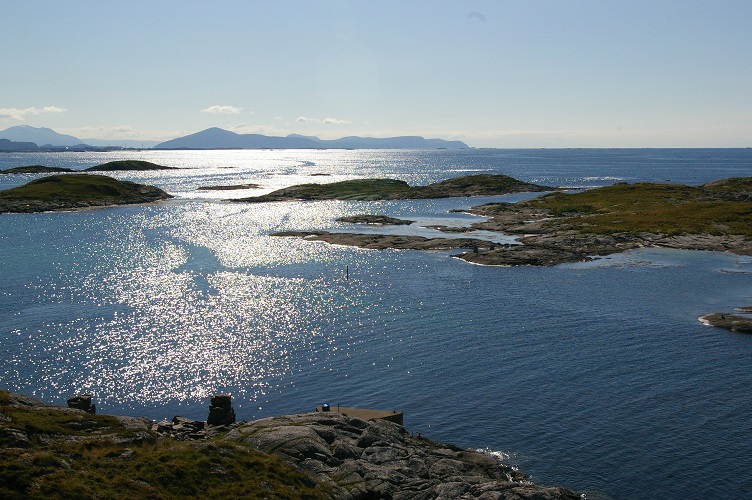
Today, the navigational light up on the hill changes automatically from white to red and green. The last of the keepers who kept vigil up here at the lighthouse every Christmas with his grandson is long buried in the small graveyard facing the fjords on the adjacent island. With him rest a few dozen other souls, former inhabitants of these small Norwegian Sea twin islands called Ona and Husøya. Situated exactly in the middle between the former medieval capital of Norway, Trondheim, and the Hanseatic city of Bergen, Ona is the island located furthest away from the mainland in this region. It shields its twin Husøya from the open sea. The two islands almost form one landmass and are connected by a narrow inconspicuous bridge. A ferry transports supplies, tourists and locals to and fro between the mainland and the islands five times a day. After an one-and-a-half-hour journey from Småge, the ferry docks in a small harbour in Ona. A stone statue of a woman welcomes the people descending on land. With one hand she holds a child to her breast and with the other she shields her eyes from a setting sun or a merciless wind, her whole posture an expression of anticipation.
OnaHusoya2
We arrive on the evening ferry. Even though it is almost eight, the sun is still bright and it will take two more hours to set; quite a change after the short winter days of Cape Town in August. We move into a spacious grey house next to the harbour, rented out before it is to be sold to a new owner. Downstairs is a café selling svele – traditional big fluffy pancakes one can have with butter and sugar or brown goat’s cheese, a Norwegian speciality. We already had them on the ferry where, we have been assured, they always taste best.
OnaHusoya6
With an estimated fifty permanent inhabitants Ona and Husøya do not require much of an infrastructure, yet they provide a small cosy hotel with a restaurant, a well-stocked grocery shop with some banking and postal facilities, and two ceramic workshops – all situated in the vicinity of the harbour. Ona is famous for its ceramics. The two shops are a paradise for a coffee-mug collector like myself. Both showcase original designs. As if on purpose, the one located east of the harbour specialises in light, pastel colours and frivolous patterns. ‘These all look as if they were wearing pyjamas,’ my husband comments with a smile. The other workshop, located on the other side of the harbour, offers dark, elegant products which immediately catch my fancy. I add a tall, distinguished-looking, dark blue mug to my collection. I have been enjoying my afternoon coffee in it ever since.
OnaHusoya7
There is hardly any traffic on the few paved roads of the two islands, and everything is within easy walking distance. The ancient maroon-red lighthouse built on Ona in 1867 remains the main sightseeing attraction. Located on a hilltop near the harbour, fifteen meters tall, it is the perfect vantage point for the entire island. Grey boulders covered with moss and grass dominate the landscape into which the inhabitants have fitted large family homes and small holiday cottages. People have lived here for centuries, but most of the buildings are modern and very well kept. Some of the roofs are covered with thick turf, which creates perfect insulation in winter. In summer, the green roofs look like flower hats. Some people grow herbs near the edge of the roof, ready anytime to be picked for a salad. Others cultivate wild strawberries on top of their houses. Another striking feature of the local architecture is colour. Houses are painted in intensely bold colours, creating the impression of a fairytale setting. And now, in late summer, nature displays all her picturesque glory, adding to the impression. The intoxicatingly fresh smell of the sea penetrates the air and makes one want to go fishing.
OnaHusoya8
Svein Bjørnerem, a local journalist visiting his mother on Ona for the weekend, arranges a trip for us with Tore Viken, one of the island’s young fishermen, when he goes out to sea to bring in the day’s catch. Forgetting my proneness to seasickness, I eagerly join the excursion. I do suffer a bit, but the excitement is too big to spoil the occasion. As Tore pulls in the line with some 300 hooks on it, out of nowhere dozens of seagulls begin to swoop down to our small boat. A truly Hitchcockian scene, but these birds are not interested in us. They are eagerly awaiting their share of the feast. We return home with fresh cod and haddock which Tore fillets for us. An hour later the fish is on the dinner table, the freshest and finest we have had in a long time.
OnaHusoya9
The next day is a Saturday. My husband wakes me up very early to witness a spectacular sunrise. The sky seems on fire; its reflection makes the perfectly still sea in the harbour look like billowing hot lava. I run out in my nightgown to take photographs. Later in the morning the entire island is abuzz with activities. We are told that a couple from a neighbouring island got married and are to celebrate their wedding on Ona. Guests arrive on the ferry and chartered boats, some dressed in beautiful traditional costumes to feast our eyes on. The celebrations continue late into the night, but we are hardly aware of them, deeply asleep after spending the day on an idyllic white-sand beach on Husøya. The beach is situated near the cemetery where some gravestones date back to the early nineteenth century, others have only recently been set up. All people we speak to tell us about the famous Swedish crime author Henning Mankell visiting the island a few years ago. Allegedly, upon seeing this graveyard, Mankell expressed his wish to be buried on Husøya when the time came for his final rest.
OnaHusoya10
The beauty of the twin islands and the sense of inner calm one experiences here make Mankell’s wish perfectly understandable. None the less, my mind is flooded by other visions. A creative project not requiring contact with the outside world to work on and a few months away from everyday life seem like the ideal plan for this magical place. One feels creatively inspired the moment one sets foot on the islands. They could, for example, be the perfect setting for a novel. I wouldn’t be surprised if, before he comes to rest here, Mankell immortalises Ona in one of his books.
OnaHusoya11
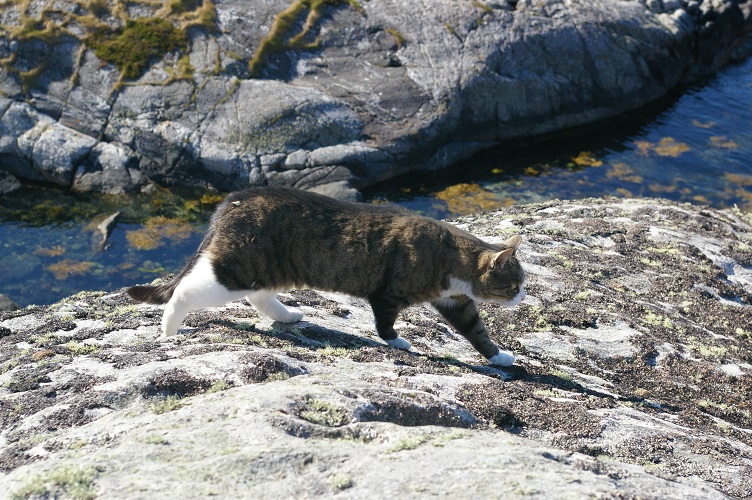
On Sunday, before we have to leave, we make a final trip to the beach for a picnic lunch. The sun is generous again, the water crystal-clear. In stormy seasons the waves along this coast sometimes swell to thirty meters, but during our visit the sea is a calm and deep aquamarine expanse. Some people brave the cold water and go for a refreshing swim. By midday the tide begins to come in. Three ornithologists have set up a tent nearby to observe some birds which we cannot detect. In our ignorance we only recognise the seagulls which are everywhere. The only other bigger animal we encounter on the island is a cat which follows us on one of our excursions, dropping to the ground every now and then to wallow in the earth warmed by the late afternoon sun.
OnaHusoya12
After only a few days, Ona feels like home and it is difficult to say goodbye. From the departing ferry I see another, even smaller, white beach near the one we have visited but which remained hidden from our view on land. One of the twin islands’ treasures which still waits to be discovered. I know I will return one day to find it.

(2008)

Algiers

Algiers“A deceptively lovely city,” a friend tells when I share the news of our impending journey to Algiers with her. It almost sounds like a warning. “Is it safe?” My mother wants to know, remembering the horrors of the 1990s, the Dark Decade of the Algerian Civil War. I assure her that the nation’s troubled past is over. The Bradt guide to Algeria we bought for the trip is adamant: in spite of recent political tensions in the region of Kabylie, terrorist activities in the country are “under control”.

In July, my husband André and I were invited to attend the second Panaf (Pan-African Festival), organised by the Algerian Ministry of Culture to commemorate the 40th anniversary of the first Panaf in 1969. Thousands of artists from all over Africa and the rest of the world descended on the White City, as the vibrant capital of Algeria is known. The origin of the name becomes immediately clear: the dominantly white architecture of Algiers’ colonial past is almost blinding in the shimmering heat of the summer afternoon on which we arrive in the city.
Algiers1
At the airport, we are greeted by a troop of masked officials distributing pamphlets about swine flu, and then the welcoming figure of Madame Tabbech from the Ministry. Together, we make our way through the dense traffic of Algiers (a trademark of the city, soon to be alleviated by an underground railway system) to our hotel.

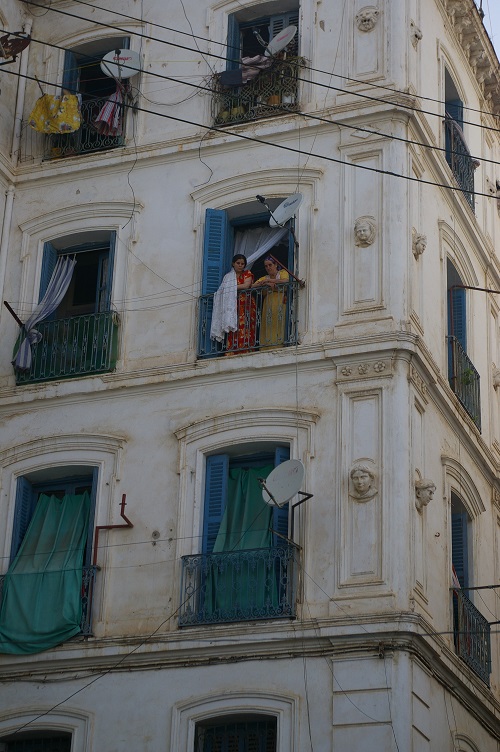
At first glance, Algiers seems like a huge building site, modern residential and commercial edifices sprouting from every possible piece of the parched land. All roads are flanked by Algerian and Cuban flags; Raúl Castro is on a state visit, we are told. Two days later, the flags disappear and one’s eyes are drawn to more permanent features of the capital: characteristic blue window and door shutters; fancy iron balconies, also in blue; and innumerable satellite dishes attached to every building, an army of ears tuned in to the outside world. My favourite though are ceramic mosaics of all sizes, adorning many architectural structures in the city.

Ornamental mosaics define the magnificent interior of Hotel El Djazair, formerly Hotel St George. Entering the hotel and its lush garden is like emerging into the world of One Thousand and One Nights. Founded at the end of the nineteenth century, the renowned hotel has been a home to such distinguished visitors as Rudyard Kipling, Sir Winston Churchill, or André Gide, and a witness to major historic events: General Dwight D. Eisenhower maintained his headquarters here for a year during the Second World War.

Algiers2The hotel’s restaurant delights not only with delicious local cuisine, but also with a few wonderful English translations of some of its dishes. Our top two: “Ring of Leg Painful Garlic Sauce” and “Burn Taste Cream in Vanilla”. The unintended humour goes well with the fabulous food. I can’t get enough of the tasty chorba frik (traditional soup with lamb and bulgur wheat) and the strong, refreshing green mint tea, served with fresh mint leaves in small fancy glasses. I obtain the surprisingly intricate recipes for both from Madam Tabbech. Alcohol is rarely seen on Algeria’s tables (the majority of the people are Muslims), but the few local wines we have an opportunity to taste can be highly recommended, especially the rosés.

Algiers does not boast many restaurants, the ones which exist are mostly traditional. Instead, local fast food places abound, but we haven’t glimpsed a single McDonald’s or KFC. Moreover, other forms of infrastructure geared specifically towards foreign tourists do not become apparent during our stay. This is not to say that tourists are not welcome or that there is nothing to be seen. On the contrary. But one has the impression that the bounty of Algerian cultural heritage is preserved and showed off primarily for the benefit of Algerians. In this respect it seems that the Panaf is meant to open up new possibilities for this intriguing country.

Visitors to Algiers are offered plenty of sightseeing opportunities. One of the most formidable is the enormous Monument (Makham ech chaid) which towers over the entire cityscape, paying tribute to the martyrs who died in the war of independence from France (1954-1962). The view from the Monument over the city is breathtaking; its presence constantly reminds of French colonisation and the brutal conflict by which it ended.

Algiers3In contrast, the traces of one of Algeria’s most famous sons, Albert Camus (the 1957 recipient of the Nobel Prize for Literature), have been nearly obliterated in the city precisely because of his ambivalent stance during the Algerian War of Independence. Today, perceived by many as a traitor to the cause, Camus is nearly invisible in Algiers where he lived for a considerable period. It is by pure chance that we meet somebody who can point out to us the grammar school he attended with Camus and the building where the author lived in a flat in the district of Belcourt. But uncertainty persists, since no plaque indicates that we have been to the right place, and opinions differ among the Algerians we meet – most of whom view Camusians with scepticism.

No matter, it is still an uncanny treat to read Camus’ The Outsider during our visit and to roam in the same streets as its characters. Or to be reminded of the work of Mohammed Moulessehoul, an ex-officer of the Algerian army who broke many silences in his novels written under the protective penname Yasmina Khadra. Or to be told that Jacques Derrida, the founder of deconstruction whom most believe to have been French, was not only born in Algeria but spent his youth near its capital.
Algiers4
The unbearably hot July afternoons in Algiers are perfect for rest and reading. Only once do we attempt to brave the noon heat and the notorious traffic to visit the Catholic basilica of Notre Dame d’Afrique, but both remain impenetrable on the given day and we are forced to turn around halfway, glimpsing the imposing basilica only from the distance. I was eager to see its majestic statue of a Black Madonna and the fascinating inscription above, “Our Lady of Africa, pray for us and for the Muslims”, which, as Madame Tabbech proudly explains, encapsulates the cosmopolitan and tolerant nature of Algeria’s society today.

Strolling through the streets of Algiers one has the feeling of walking through the entire world. Nowhere else have I seen people of so many diverse cultural backgrounds come together to coexist in one society. Reflected in anatomy, fashion, language, cuisine, religious practices, the differences are unmistakable and yet there is something about the ease with which one encounters others that is less obviously marked by tension, despite decades of conflict. Our stay is too short to explore the reality or illusion of this relaxed atmosphere. Because of the Panaf, there is also an unusually high police and military presence in the city and its surroundings, marring the perception, but it is a remarkable experience nevertheless.

For the duration of the Panaf, Algiers is also home to Lucy. The estimated 3.2-million-year-old remains of an Australopithecus afarensis discovered in Ethiopia in 1974 are on display in the Bardo Museum. The permanent ethnographic exhibitions of the museum, housed in an impressive Ottoman building, highlight the riches of Algeria’s regional costumes and jewellery.

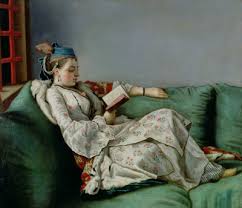
Jean-Etienne Liotard's portrait of Marie Adelaïde of FranceLocated up the hill from the botanical gardens of the Jardin d’Essai du Hamma where supposedly the first Tarzan film was shot in the late 1940s, the Museum of Fine Arts offers a diverse collection of paintings, sculptures and ceramics, including one of my favourite paintings of a woman reading, Jean-Etienne Liotard’s portrait of Marie Adelaïde of France.

Visitors interested in modern art will enjoy the MAMA (Modern Art Museum of Algiers), with its ornamental interior design and vast exhibition spaces displaying, at the time of our visit, some of Africa’s most prominent artists, among them the Algerian painter Choukri Mesli and South African photographers Lien Botha and Peter McKenzie.
Algiers6
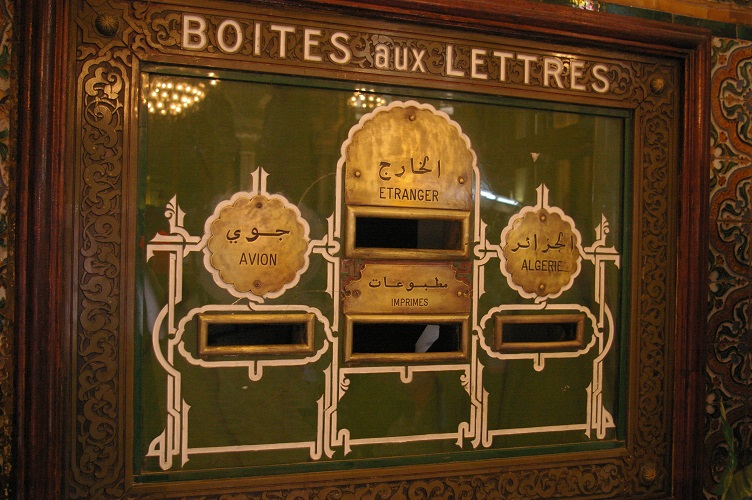
I still have the old-fashioned habit of sending postcards when I travel. In Algiers, the experience is especially gratifying. The interior design of the main post office building is a feat of architectural splendour. We were dazzled by the cathedral-like ornamental columns and vaults of the interior, shining as if coated with gold.
Algiers5
The images on my postcards capture scenes from Algiers’ most mysterious district, the Casbah, the definite highlight of our Algerian trip. Warned by our guidebook not to attempt a visit without an expert guide, we are fortunate to be accompanied by Kamel Righi on our excursion to the area. Righi, a young architect born in the Casbah, returned to his birthplace to work with the UNESCO in restoring the wonders of the ancient district. In spite of its dark narrow alleys, crumbling buildings, endless litter and penetrating odours, the area has an irresistible charm that is difficult to grasp. There is an element of magic in the quickly vanishing shadows of people and cats making their way through the winding passageways, in the colourful intricately decorated doors behind which veiled women disappear with bulky shopping bags, in the little workshops attended to by toothless men drinking from tiny cups of coffee, or in the laughter of children playing with marbles in these crowded spaces.

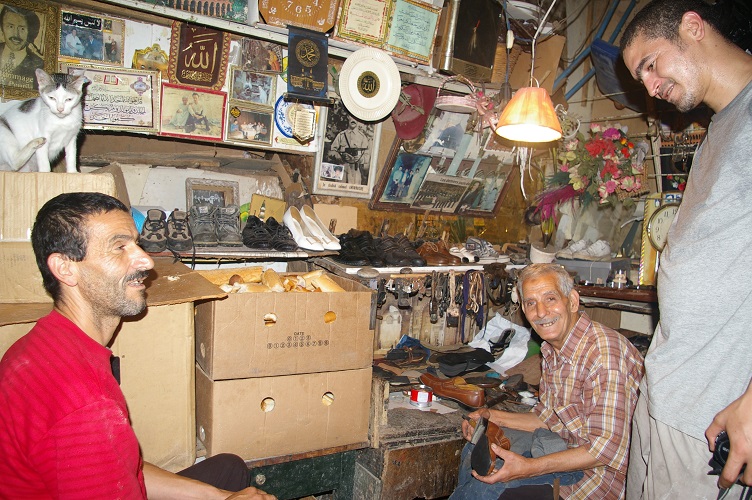
Algiers7The entire district seems to be in a state of decay, but it has many surprises in store for lucky visitors. A cobbler insists we inspect his tiny workshop where there is not enough space for all of us to stand in or even to stand up. We are invited to enter one of the houses at the end of a dilapidated alley. Behind the heavy ornate door is a small two-storey arcade courtyard, the flats around it home to an extended family. The interior surprises with its cleanness and excellent state of repair. Near the central market place, an elderly Italian who settled in Algiers decades ago proudly displays the ceramic mosaic he’s creating for his beloved wife.

The Casbah is the oldest part of the city. Draped over the hill like a densely woven oriental carpet, it is mostly a residential area, dotted with architectural and historical gems of interest: palaces turned museums, synagogues turned mosques. The Citadelle at the very top, currently under renovation, offers spectacular views of the modern city and coastline below, with dozens of ships cruising its busy harbour. Nowhere do the different facets of Algiers become as apparent as here. During the colonial period, the French intersected the Casbah with parallel streets of typical white and blue in an attempt to infiltrate and destroy the local structures. The district, like the rest of Algiers, persists in its own ways, assimilating the historical forces at work within and around it. This endurance might be the most striking element of the “deceptive loveliness” of Algiers my friend cautioned me about.
Algiers8

First published in the Sunday Independent, 4 October 2009.

Honey, We’re Having a Book

Authors of both genders relate the process of writing and publishing books to having children. Karina Magdalena Szczurek spoke to Lauren Beukes, Mary Watson and Emma van der Vliet about writing and motherhood.

maverick-coverLauren Beukes is a literary mother of two and soon to be a biological mother of her first child, a daughter, to whom she has dedicated her debut novel Moxyland: “To bright possibilities”. Lauren is also the author of the non-fiction collection of stories about extraordinary women from South Africa’s past entitled Maverick (2004). Nominated for the Sunday Times Alan Paton award, it seems to have been only the beginning of a highly successful career.

Since she was a toddler, Lauren has been addicted to the written word. Early on she became impatient with her parents’ pace of reading bedtime stories and took the matter into her own little hands. At five she read her first novel, no other than Tolkien’s The Hobbit. “I highlighted all the difficult words in yellow, then my parents had to explain what they meant.” At about the same time, upon hearing that Enid Blyton had earned £1 million with her books, Lauren decided to become a writer herself: “It had never occurred to me before that you could get paid to make up stories.”

Lauren and her younger brother grew up in a house full of books. Their parents encouraged them to read and to make up stories. The family led a culturally inclusive life and Lauren often visited Alexandra as a child. “My parents were involved in the church support group called Friends of Alex. My mother worked with the women of Alexandra to make culturally accurate china dolls from Zulu brides to Xhosa initiates for the tourist market. My brother and I were fortunate to have had such a liberal upbringing.”

This upbringing equipped Lauren to seek out and face the challenges that form the everyday of her life. She jokingly describes herself as “a recovering journalist”, for many years her primary occupation. For the last three she has been working as a scriptwriter at Clockwork Zoo Animation in Cape Town. The acclaimed SABC sci-fi kids’ series URBO: The Adventures of Pax Afrika is one of her babies. “It’s been great to create a coherent world that tackles big issues head-on and I am proud of our inspiring multidimensional heroines.”

Lauren feels strongly about being a woman and is excited about having a daughter. She wants to raise her as more than the stereotyped Bratz princess that seems endemic to 21st century girlhood. At the same time, she does have fears about imminent motherhood. “It’s a scary thing. I don’t begrudge other women their choices, but I would never want to be ‘just’ a mom, the same way I’m not ‘just’ a wife. I don’t want to give up my job, nor my interests. There will certainly be less time for creativity, the necessary ‘headspace’ for writing, and I will have less energy, but undoubtedly I want to continue working. My new novel is already incubating and I have some ideas for smart and slightly dark children’s books.”

Lauren wants to be there for her daughter, to be entirely involved in her life. But the fulfilment her work offers is also very important to her. “Having a wonderful, supportive partner makes things a lot easier.” Lauren’s husband, Matthew, works with her at Clockwork Zoo Animation. “We wanted to have our baby now. Moxyland was accepted for publication at the beginning of the year, and we decided that it was the right time to consider parenthood.”

Moxyland began as an MA thesis in Creative Writing at UCT. After some initial false starts, the manuscript ended up on the desk of one of Jacana’s editors and was accepted for publication literally within hours – “one of the fastest book deals ever,” Lauren recalls proudly. It is a brilliant, generically pioneering (in the South African literary context) novel which can be compared to the best of its kind worldwide. Margaret Atwood’s Oryx and Crake (2003) or Jeanette Winterson’s The Stone Gods (2007) come to mind immediately. It presents a frighteningly believable near-future vision of the city of Cape Town and has all the ingredients of becoming a cult novel.

Lauren wants to continue writing the kind of literature that asks questions and does not necessarily offer simple solutions. “I’m absolutely a feminist, or maybe I should say a humanist, in that I believe women are entitled to choice. But I balk at describing myself as a ‘woman writer’, I’m just a writer. Gender – and genre – are too often used to ghettoise. There seem to be certain expectations of women writers, just as there are of science-fiction writers. I’d like to avoid labels.”

Glinka with Lauren Beukes's Moxyland toy

Glinka with Lauren Beukes’s Moxyland toy

The marketing of Moxyland transcends expectations as well. A mini merchandise empire has sprung up around the novel, including an official soundtrack CD from African Dope which captures the futuristic urban vibe of the book, and the fabulous Moxy toy, a mutant clone of the Moxyland cover monster. It is produced by the Montagu Sew & Sews, a collective of impoverished women in the Klein Karoo set up by Lauren’s friends especially for the project, in keeping with the sense of communal responsibility Lauren inherited from her parents.

Before her daughter is born in September, Lauren would like to finish her part of an experimental novel she and three other authors (Henrietta Rose-Innes, Diane Awerbuck and Mary Watson) from Cape Town are co-writing, Exquisite Corpse, a collection of intertwined but independent stories set in a glossy shopping mall on the day before Christmas. The book promises to be another literary success.

MossMary Watson gave birth to Liam, her first baby, in May. She has been a literary mother since 2004 when Moss, her volume of interlinked short-stories, was published. The first story in the collection, “Jungfrau”, won the prestigious Caine Prize for African Writing in 2006. Mary dedicated Moss to her parents and siblings. “When I was small my sisters read to me more than my parents, but my parents introduced us to books. On Saturdays they would take all of us to a second-hand bookshop where we would explore the shelves for hours.” Mary could read before she went to school and had to wait patiently for the other kids to catch up with her skills. “I read like a demon and loved writing activities at school. My imagination was working overtime, I invented my own stories. I already wrote and illustrated my first book at about the age of 5 or 6. Literature was my first love.”

Liam’s nursery is already full of books, but Mary will only start reading to her son in a few months. Her husband Cathal played the fiddle to their baby when he was still in the womb. Now Mary sings to him in what she calls her “unlovely” voice. “Really, you have to hear it, I can’t sing but Liam doesn’t mind.”

The pregnancy was for her “the most uncreative, unproductive time.” She struggled to write anything during the whole nine months. “Before I became pregnant I imagined that my pregnancy would be a wonderful time for creativity, but I guess all my creative energy went into growing my baby.” Looking at Liam, one cannot help but see that he is more beautiful and precious than any work of art.

After giving birth, Mary is again bursting with creative energies. “For me, the writing process is like André Breton’s ‘phrases knocking at the window.’ There was a lot of silence during my pregnancy, but now the sentences are back and I hear them knocking all the time. Once motherhood becomes more manageable, I’ll go back to writing.”

When the time comes, Mary will be finishing her contribution to Exquisite Corpse and her first novel. “The novel is going to be more ‘realistic’ and it will be more about ‘real’ people than Moss. It is an altogether different book, a lateral take on ghosts and haunting.” By mid-October Mary will also be going back to her work at UCT where she is a lecturer at the Centre for Film and Media Studies.

Mary’s doctoral thesis explored “disruptions in cinematic realism and the construction of alternatives such as magical realism and surrealism through the use of specific editing techniques.” She thinks of film and media studies as “another way of doing English.” When she entered the field it was a growing discipline and offered good opportunities for development.

Mary’s academic and creative interests intertwine. The characters in Moss (2004) slip in and out of reality into fairytale-like places, most notably the moss garden, their stories however being anything but fairytales. It is as if the dark psychological states and the violent reality the characters have to deal with are too much to be faced on the level of realistic descriptions.

Like Moxyland, Moss is set in Cape Town. But in Moss the reality of the urban setting is not subverted by dystopian imaginings, but rather by myths, legends, and fables, no less disturbing. Many of the stories in Moss portray dysfunctional familial relationships. The title story “The Moss Garden” explores the difficult topic of incestuous child abuse. It did not come “knocking on the window”: “The story came to me in a dream. In the same dream I also saw myself writing it.”

Mary is a master of the short story form. Seldom does one see the kind of control over the genre which her work demonstrates. Although she enjoys the challenges of novel writing, she is fascinated by the “completeness” of the shorter form. “A story is this small, perfect thing that you can make. It’s like poetry with more of a narrative. The art of the short story excites me. The novel can also offer you the scope to expand on a single, small moment. Ian McEwan does this so excellently in Enduring Love or Atonement.”

In the coming weeks Mary wants to concentrate on all those special moments she is experiencing with her biological firstborn. “Right now, my life evolves around Liam’s needs. We are still figuring out motherhood together.” But she is firmly set on returning to work and writing as soon as possible. “I need to go back, but for now it’s just one project at the time.”

Past ImperfectThe experiences of giving birth to a baby and a book have been always uncannily connected to one another for Emma van der Vliet. On Valentine’s Day in 2003 she felt like a “barrel on legs” when she finally handed in her MA thesis in Creative Writing at UCT. A few hours later she gave birth to her first son, Oscar. “It felt like a comedy of errors at the time. I was stressed before handing in, hadn’t had a day off before the time and precisely on that day I couldn’t find parking and was frantic because of the deadline running up. Luckily, my mom was there to support me. After I finally submitted the thesis, I couldn’t feel any movement in my womb and was worried, especially since it was one month early before the set date. My mom suggested that we go for a scan, but I ended up staying at the hospital and Oscar was born that day.”

Two years later, the submission of the thesis for publication – a novel entitled Past Imperfect – coincided with the birth of her second son Leo. Today, Emma is pregnant with her first daughter who is due in October. Shortly beforehand, in August, Emma is submitting her doctoral thesis at the Centre for Film and Media Studies at UCT where, like Mary, she is a lecturer.

Emma’s literary firstborn Past Imperfect appeared in 2007 and was dedicated to her mother. “I was read to a lot as a child, especially by her. The first book I remember reading (and rereading) myself was Alice in Wonderland. Ever since, I’ve been fascinated by children’s Gothic stories. I also lived out books and my own imaginary worlds. One of my favourite games was playing ‘lost in the woods.’ I constructed houses, applied make-up, invented costumes and staged plays which all the visitors to the house had to watch. I became obsessed with Victorian literature and society early on. The Brontë sisters remain among my favourite authors.”

Nowadays, reading to her own children is one of Emma’s favourite activities. “I can always calm them down with reading. At the moment they are obsessed with nature books but they also love stories. I think I would feel terribly bereft if they didn’t like reading.”

Emma grew up in a family of teachers and academics. When it was time for her to choose a course of studies she decided on languages, drama, journalism and media. During a two-year break in her studies she worked as a photographer and publicist for the theatre and travelled around Europe. “I also acted on stage in children’s theatre. I always played the baddies, the vampire or the evil witch.” The progression to film came naturally to her. “The medium combines my visual and verbal interests.” She spent a decade in the film industry, doing a great deal of production as well as writing, directing and designing props. “But after a while I felt that my brain was atrophying. I also had to live in constant crisis management mode, with little time for anything and not enough intellectual stimulation. I was already writing bits and pieces at the time and felt that writing offered me the solitary time that I needed for myself.”

When Emma was 7, her teacher at school told her mom that one day Emma would become a writer. In 2000, at the same time as she began her work at UCT, she embarked on her creative writing course. The result, Past Imperfect, embodies chick lit at its very best, and Emma is one of the champions of the genre. This kind of writing style is her “Holy Grail: enjoyable, intelligent, slightly left-leaning woman’s fiction that might make people laugh.” And while Past Imperfect will make you laugh yourself into stitches, it is also one of the best-written novels recently published in South Africa, our own local Bridget Jones, or even better. No wonder the initial print run is almost sold out.

Like many other debut novels, Past Imperfect is slightly autobiographical. However, the relationship between the heroine Clem and her mother is not. “I have a very strong, close bond with my own mother. I really cherish it. The dysfunctional relationship between Clem and her mom is the complete opposite. They only become reconciled in the course of the novel. By portraying them is such a way I have somehow exorcised one of my biggest fears and it felt like another form of homecoming.”

Emma is planning to set her next novel in the film industry. She is also thinking of writing about the way children influence people’s lives. “Children force you to see the world in a different way, your priorities shift, you take small things less seriously. They also fill up everything. Before my children were born, writing took place in the cracks between the responsibilities of my day job. Now, there are no cracks, so something has to give to make room for creativity.”

Emma plans to take some time off work next year and tackle the second book syndrome head-on. “I am quite desperate to write,” she confesses. And anyone who has had the pleasure of reading Past Imperfect will be desperate for the publication of her next baby.

First published in WORDSETC 3 (September 2008).

Since then:
30SecondWorldzoo-city-award-coverfacebook-broken-monsters-sa--267x409CuttingRoomThe-Shining-Girls-Mulholland-cover-267x409