Tag Archives: review

“Your library is your soul”: Reflecting on Kate Atkinson’s A God in Ruins

A God in Ruins_Costa

Despite her substantial literary success, I did not know Kate Atkinson’s work before A God in Ruins was recommended to me by a friend whose taste I value. It won the Costa Novel Award in the beginning of this month, as did Atkinson’s previous novel, Life After Life (2014). The two are related, but can be read independently. I hope to turn to the sibling soon, as A God in Ruins is one of the most exquisite novels I have ever read, and the idea of Atkinson’s backlist reassures me greatly.

A God in Ruins is many things. It is the story of a British family set against the historical background of the past century. It is a novel about war and its aftershocks. It is a fine enquiry into human nature. But above all, it is a declaration of love for literature, its power and its manifold mysteries. And it is highly ambitious. What astounds about A God in Ruins is that it never falls short of these formidable ambitions. Such novels are rare. They take root in your mind and blossom in your soul. Even ferocious readers encounter a novel like this only once in a while.

The way it captures fiction’s ability to heal, to open up spaces in us we never even knew existed is striking. It is poetic in style as well as in its wisdom. For me personally, A God in Ruins was a magical key. It opened two doors in my life. Two doors connecting the past to my fragile present: one appeared while I was still reading, the other after I’d finished the novel. I stepped through the first, an imaginary one, during one of those serene nights when you are at peace with the world and yourself. It was around midnight. I was lost in the arms of a comfy easy chair; a soft caramel light illuminated the room. When I looked up from the book, I saw something so beautiful that I wanted to hold on to it forever. But I was scared to disturb the scene by searching for my camera, so I turned to the last blank page of A God in Ruins and drew a sketch of what was in front of me: a moment of flickering hope. It is also engraved in my heart.

The second door was real. It is the door to my late husband’s library. There are innumerable books in our house. We have roamed among them with the great pleasure that exploring books can bring only to two readers in love. When I finished A God in Ruins, I was crushed by the inability to share it with André. It was published a few weeks after his death. But I knew, had he been alive, I would have passed the novel to him the second I was finished with it that early Sunday morning, and I would have asked him to read it immediately so that we could discuss it in detail. Instead, I was all alone in an empty bed and all I could do was weep. What I have discovered about grief and loneliness is that it is not the lows which are unbearable, but the emptiness of the highs, when all you want to do is experience them with the person you love and there is no-one there to hold you…

Continue reading: LitNet

Book review: The Penguin Lessons – A True Story by Tom Mitchell

The Penguin LessonsLast year, I realised that I have a penchant for penguins with foreign names. Midyear, I was enchanted by Misha, the penguin who stars in Andrey Kurkov’s wonderful novel, Death and the Penguin (originally published in Russian in 2002). Towards the end of 2015, I fell in love with Juan Salvado, the protagonist of Tom Michell’s memoir, The Penguin Lessons.
When he was in his twenties, Tom Michell travelled to Argentina to teach at a boarding school during the politically volatile 1970s. In his free time, he explored South America. On one of his trips, he arrived at a Uruguayan beach to discover a massacre: corpses of oil-coated penguins scattered all around on the sand. There was one survivor among them, a Magellan penguin barely moving, covered in oil and tar like all the other birds, but clearly still alive.

“I needed a penguin like a penguin needs a motorbike,” Michell writes, but on the spur of the moment, he resolved to rescue the penguin and took him back to the flat he was staying in. The ensuing story of their initial encounter and the fascinating relationship which developed between the young man and the sea bird is one of most moving books I have read last year.

After a nearly disastrous but hilarious attempt at cleaning the penguin in the pristine bathroom of his hosts’ home, Michell tries to set the bird free, but his new acquaintance is extremely reluctant to be abandoned again. Not knowing what else to do, he names the penguin and devises a plan to smuggle him into Argentina. And so their adventures and a remarkable friendship begin.

Back at the boarding school, Juan Salvado forms the most extraordinary relationships with the students and staff alike, irrevocably changing all their lives. Michell’s commentary on the socio-political situation of Argentina of the time is subtle but highly intriguing. His descriptions of penguin and human natures and how the two can relate to one another are simply beautiful.

Magallan penguins do not live forever and since all of this had happened four decades ago, I assumed that there would be heartbreak at some stage in the book. I was reading the dreaded scene in a coffee shop where another customer became quite concerned about me when she saw my copious tears falling. I was too choked up to articulate my sorrow, but she understood when I pointed at the open book in front of me. I cried again before the last page, but not because of sadness. There are two revelations towards the end of the book which touched me deeply: one concerns the reason why Juan Salvado refused to go back to the sea when Michell first met him, the other is a description of a recent find among Michell’s memorabilia. If there ever was a feel-good book, The Penguin Lessons is it. It goes to show that, occasionally, we all need a penguin in our lives.

The Penguin Lessons: A True Story
by Tom Mitchell
Penguin Books, 2015

First published in the Cape Times, 15 January 2016.

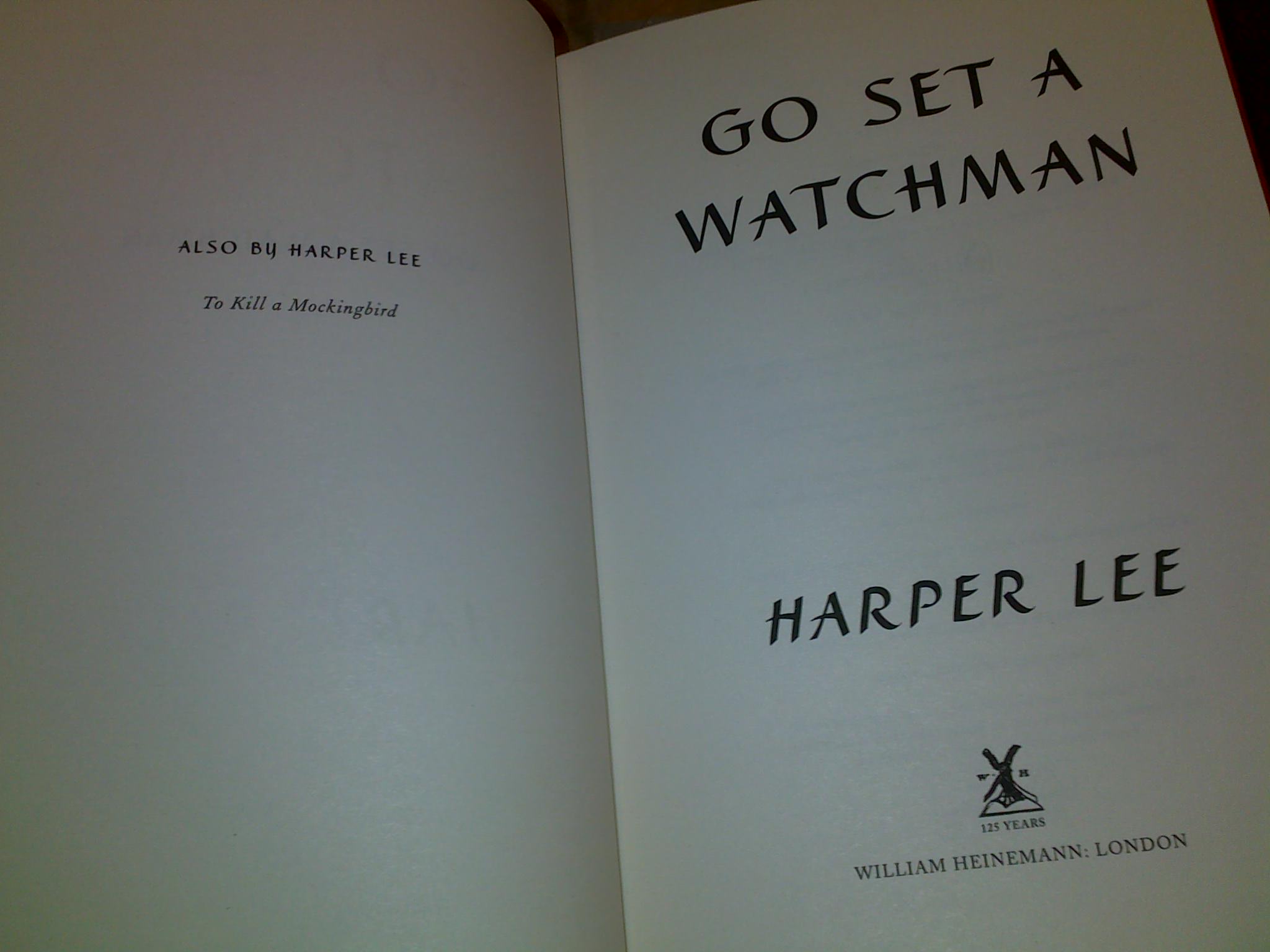
Review: Go Set a Watchman by Harper Lee

To Kill A Mockingbird“It is what it is, says love” is a phrase from a poem by the Austrian poet Erich Fried which echoed in my head while I was reading Harper Lee’s highly anticipated Go Set a Watchman. Published decades after her Pulitzer Prize-winning, internationally bestselling To Kill a Mockingbird (1960), Lee’s only other novel to date, no matter what its merits or lack thereof, Go Set a Watchman is a literary milestone.

How the two books relate to each other reminds one of the ancient question about which came first: the chicken or the egg. It’s complicated. Or not? Although first to be published, To Kill a Mockingbird was written after Go Set a Watchman. Both tell the story of the Finch family, but they are set twenty years apart. In the late 1950s, Harper Lee was told by an editor who saw the manuscript of Go Set a Watchman, where the main characters are all grown up but frequently return in their memories of an earlier time throughout the book, to rework it to focus on those childhood stories. This rewrite became To Kill a Mockingbird. Without any doubt there are good reasons why the initial book hasn’t seen the light of the published page until now. And all kudos to the editor who saw its potential back then and challenged Lee to write another novel which millions of readers across the world have come to love over the last half a century.

My personal love affair with To Kill a Mockingbird began in grade 8. I still have my school copy of the novel with a dust jacket I designed for it myself. It is one of only a handful of books which travelled with me across three continents to settle in Cape Town. I mention this to emphasise the important part that the tale of the siblings, Scout and Jem, and their wonderful father, Atticus Finch, plays in my life. Full of wisdom and tenderness, beautifully written, poignant and funny, the richly layered To Kill a Mockingbird is a true classic. It is set in the imagined county of Maycomb in Alabama of the 1930s. Through Scout’s innocent eyes, it tells the story of her and her brother’s fascination with their reclusive neighbour, Boo Radley, and their father’s fight for fairness for a black man accused of raping a white woman in the Jim Crow South. The children learn that it’s easy to fear what you do not understand and that more often than not law has very little to do with justice. But what they also discover is that there are certain things in life worth fighting for.

When I reread the novel recently, my love of it was reaffirmed. And when you love something so much, it is easy to have your heart broken if somebody tampers with it in ways which are uncomfortably unpredictable…

Continue reading: LitNet

14072015752

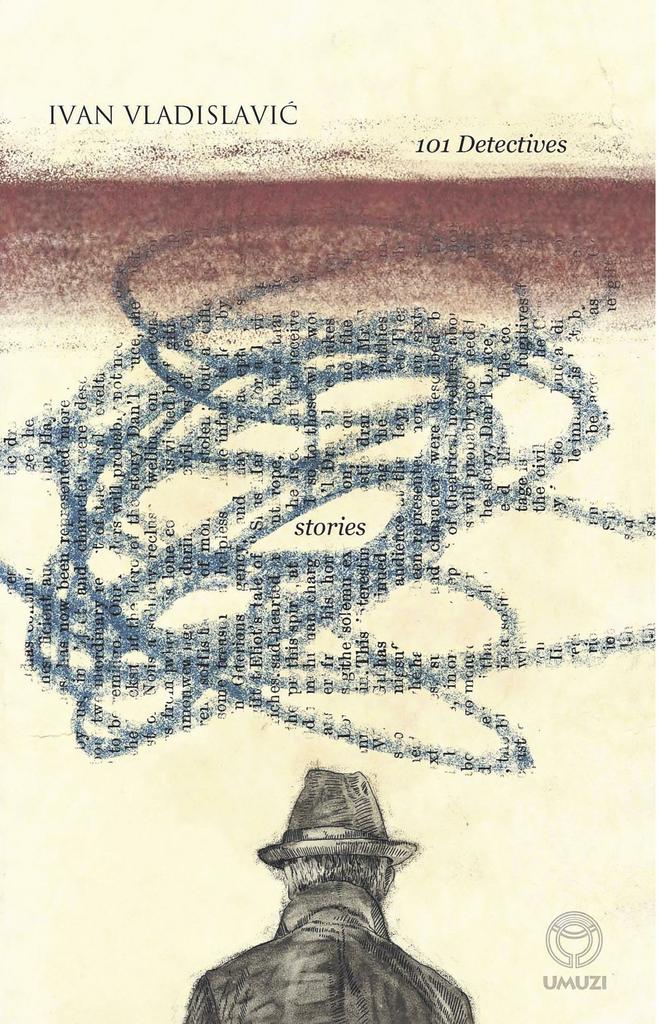
Review: 101 Detectives by Ivan Vladislavić

101 DetectivesOm te sê ek was verward, is om dit sagkens te stel. Die eerste drie verhale in 101 Detectives, Ivan Vladi­slavic se jongste versameling, het my met hul onvoorspelbare vreemdheid van balans af gehad.

In die wete dat die naam op die boekomslag sinoniem is met bobaas van die kortverhaalkuns, het ek ­egter volhard. Ek is ryklik beloon.

Hierdie outeur se boeke het my nog nooit teleurgestel nie. Uitgedaag, gestimuleer, verryk – ja! Maar nie teleurgestel nie.

Sy skryfwerk verg die leser se aktiewe deelname. Toegegee, ek het nie al die woorde in elke paragraaf van die titelverhaal getel nie, maar die truuk wat gebruik word skemer aan die einde van die verhaal deur sonder dat lesers hul somme hoef te maak.

Tel of nie, jy kan nie bloot deur die boek blaai en ontsnappingsvermaak verwag nie. Ek was derhalwe bereid om my ongemak met die ­begin van die versameling opsy te skuif en met sorg te lees om die ­genot te smaak.

Die vierde storie het my reeds oortuig ek is op die regte spoor.

“Exit Strategy” (let op die titel) bevat dalk ’n paragraaf wat die sleutel tot die hele versameling inhou. Nadat sy ’n man die wolkekrabbers waarin sy werk, sien uitklim het, merk ’n vrou op: “It’s a distressing idea: this might be the most interesting thing that’s ever happened to me . . . and yet it feels like a cliché. Everything surprising has already happened before or is about to happen again. No matter what I do or say, or how I remember it or tell it, it will never be interesting enough.”

Die vrou is ’n korporatiewe storieverteller wat, figuurlik en letterlik, bo haar vlak by die werk probeer uitstyg, maar ook na uitkomkans soek…

Continue reading: Media 24

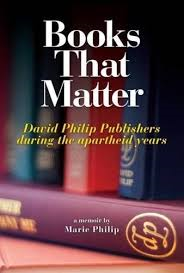
Review: Books That Matter – David Philip Publishers during the apartheid years by Marie Philip

Books That MatterAs I see it, in publishing there is a significant difference between accidental and nurtured bestsellers. Nowadays, the market is dominated by the former. But every now and then you get a publisher who will understand the value of the latter.

Reading Marie Philip’s memoir about the famous publishing house she and her husband established in South Africa during the dark years of apartheid, I was reminded of how precious such an approach is in the book world. It is even more precious and definitely rarer when it is combined with a moral and social conscience which Marie and David Philip and their team exemplified.

It is difficult to imagine the South African literary scene without David Philip Publishers (DPP). Over the years, they have launched or assisted the careers of such writers as Richard Rive, Nadine Gordimer, Mandla Langa, Stephen Watson, Alan Paton, Sindiwe Magona, Ivan Vladislavić and Lyndall Gordon. The list of their titles, which Marie Philip includes at the end of her incisive book, is astounding, to say the least. Just to give you a sample, among their seminal publications are: Don Foster’s Detention and Torture in South Africa, Mamphela Ramphele’s A Bed Called Home, Michael Fraser’s A Fynbos Year, The Essential Evita Bezuidenhout, Ellen Kuzwayo’s Sit Down and Listen, and Being Here: Modern Short Stories from Southern Africa (compiled by Robin Malan). Because of their independence the Philips “had the freedom to take risks and be bold, and even eccentric”, as well as to tune into their “own publishing instincts”. While it was important to survive, money was not their “main concern”. The combination of these factors turned out to be a recipe for great success in all respects.

And it all began with a penguin in the early 1970s…
Continue reading: Not Now Darling, I’m Reading

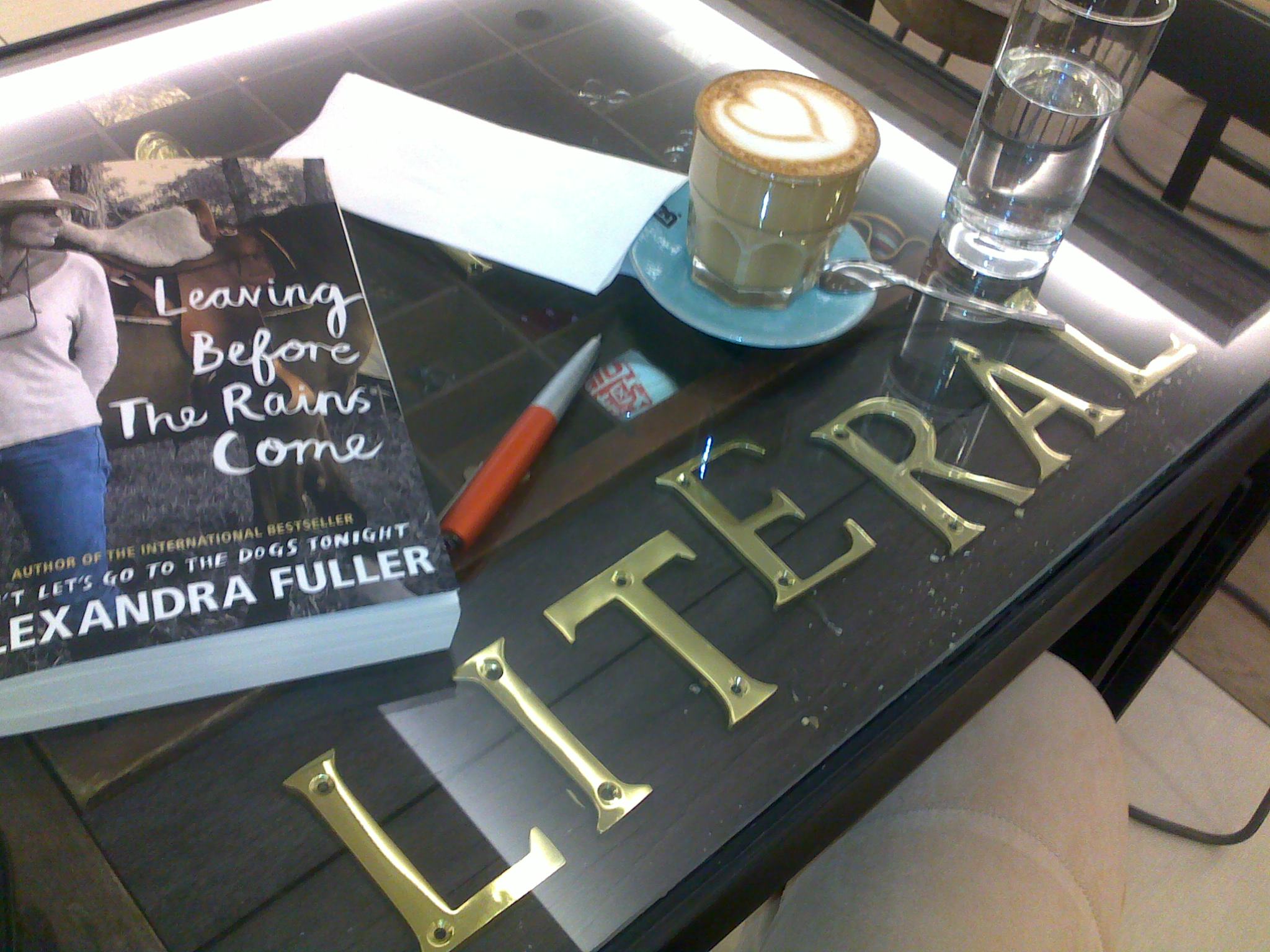
Book review: Leaving Before the Rains Come by Alexandra Fuller

Fuller LeavingI must have been quite a disconcerting sight: weeping my eyes out in the middle of O.R. Tambo International Airport. I couldn’t help myself. That is what a good book can do to you. I was passing the wait for my flight home with the final few chapters of Alexandra Fuller’s latest memoir, Leaving Before the Rains Come, when the tears just started spilling over. It wasn’t the first time one of Fuller’s books had made me cry. But perhaps it was most fitting since this particular story feels as if it had been written through a lot of intimate pain.

Mostly known for her international bestseller, Don’t Let’s Go to the Dogs Tonight, Fuller is the author of four other books. She is one of those writers who will either irritate the hell out of you or steal your heart. She stole mine with The Legend of Colton H. Bryant, the incredibly moving story of a young cowboy who died on the oil rigs in Wyoming, and I have been reading her work ever since. My other favourite is Scribbling the Cat: Travels with an African Soldier in which Fuller captured her haunting encounter with a veteran of the Rhodesian war. In hindsight, the book can be read as a companion to Leaving Before the Rain Comes.

Continue reading: Not Now Darling, I’m Reading

Review: Sam and Me and the Hard Pear Tree by Jami Yeats-Kastner

sam_and_me_hard_pear_tree_covGrief is a curious creature. When you lose a beloved person, everything changes. You even have to learn to breathe anew. None of it is predictable. The process is highly individual. Reading Jami Yeats-Kastner’s heart-wrenching memoir about the death of Sam, her youngest son, was perhaps not the wisest choice for me after having experienced the greatest loss of my life, the death of my husband. Yeats-Kastner’s journey, however, is very different. Yet her story resonated with me in unexpected ways and gave me a measure of comfort.

“The Day It Happened” for Yeats-Kastner and her family was 8 February 2013. Her eighteen-months-old son drowned in their pool. That day she became the “Crazybutterflylady”, guided by signs in the form of butterflies on her path to acceptance and to herself.

As my favourite philosopher Mark Rowlands says: “To be at our best we have to be pushed into a corner, where there is no hope and nothing to be gained from going on. And we go on anyway.” Yeats-Kastner repeats the sentiment in the opening of her book: “Sometimes you need to be completely broken to find the most powerful part of yourself.”

As she notes, losing a child is “universally accepted” to be the greatest of pains. It is the loss of a life not lived, of the immense potential and its beauty. It is unbearable. Those left behind live in a void that is undefined: “If you lose your parents you’re an orphan; if you lose your husband you’re a widow. But what is the name for us, the broken ones? There isn’t one, because people can’t accept that it should happen.”

What Yeats-Kastner shows is how to transform the heartache of such a loss into a force for good. She seeks out messages which lead her on a path of discovery. She realises that in order to continue a meaningful life, to be a good mother to her other two sons (one of whom has severe low muscle tone), to be a loving wife and a fulfilled person, she needs to preserve her space and cultivate her creativity. Not afraid of what others might think of her, she pursues all avenues – whether spiritual, religious, or alternative – to achieve her goals. Together with friends, she starts a charity in her son’s name and learns to appreciate “life’s great truths”.

Nothing is easy. Guilt feelings persist. Reproach from others has to be confronted. There are days where everything seems impossible. Yeats-Kastner confronts it all with searing honesty and does not flinch, simply asking that we do not judge her too easily. She describes her family’s ordeal and their courage to find a new life. They move house, take up new professional challenges, and follow the butterflies which seem to appear out of the blue, but are in fact constantly around you if you are bold enough to look for and acknowledge them.

Sam and Me and the Hard Pear Tree is a moving memoir of survival, healing and hope.

Sam and Me and the Hard Pear Tree
by Jami Yeats-Kastner
Jacana, 2014

Review first published in the Cape Times, 2 April 2015, p. 24.

Review: Synapse by Antjie Krog

SynapseReading Antjie Krog’s latest volume of poetry translated into English, Synapse (Mede-wete in Afrikaans), I was faced with an old personal dilemma: How much hard work is too much in order to reach that moment where meaning and aesthetic pleasure reveal themselves to you as a poetry reader? I don’t have an adequate answer. Perhaps everyone’s threshold is different anyway. In the end all you have is your very individual frame of reference, as a friend recently reminded me.

In any poetry volume you will find poems which will immediately speak to you. Others will require a specific key to unlock a feeling of appreciation. Rereading, research, or exploration of context will eventually reward your effort. Some poems will forever remain inaccessible no matter the amount of goodwill you put in. And then there will be those which will simply leave you cold. The poems in Synapse fit into all these categories.

The volume is divided into two parts: The Yard and Four Efforts in Linguistic Synapse Tracing. The first part opens with a series of epigraphs which are followed by thirteen poems, all focused on the images of the yard and the farm. These I find the strongest and most captivating in the book. In the epigraphs we are introduced to spaces in which the land and its ownership take centre stage and gender roles are clearly defined. The poems speak of the death of a patriarch, familial roots which reach into a troubled past, grief, guilt, race relations, and the ancient questions of owning and belonging.

As the poem 11. fossilised tree trunk makes clear, everything is connected, embedded, echoed throughout history. And yet, everything changes: “after all the years we gurgle (the only outlasting ones) / burdened with the dying light and bloodsick with heritage / : the new ones prepare to enter the yard” (13. old yard). At the heart of one’s relationship with the land are beauty and language: “places that could always snap my skeleton into language / coil me into voices bore into my entrails / expose a certain wholeness of belonging as my deepest tongue / tear chorales and something like discord from my brain” (6. live the myth).

This is the kind of poetry that leaves one gasping for air, which opens up new spaces in one’s understanding and feeling about the past and everyday reality in this country.

The Yard continues with poems which grapple with morality and reconciliation. The idea of interconnectedness is challenged in hold your ear to the tear in the skin of my country where already the format of the poem signals separate spheres of understanding the concept of forgiveness. The words of the speaker of the first section, Cynthia Ngewu, who testified in front of the Truth and Reconciliation Commission about the murder of her son, one of the Guguletu Seven, cascade onto the page like a waterfall. The neat couplets which follow represent an ordered attempt to understand the motives and worldviews of the officer who was involved in the killing. In the end, we are told, “it was futile to try to weave interconnectedness into / the concrete bunker that lives inside Mr Barnard’s whiteness”.

The bleakness of moving beyond such divisions is captured in miracle where South Africa’s relatively peaceful liberation is juxtaposed with present-day, all-consuming greed and violence: “we have become the prey of ourselves caught up / in ethnic avarice and total incapacity for vision”.

More intimate poems about ageing, memory, grand-motherhood, domesticity, or the I-you constellation of lovers reveal the wonders of the world along deeper philosophical questions about our capabilities and responsibilities. The tone ranges from sombre to light-hearted. Krog is one of the few poets out there who can smuggle Skype, wifi, the Internet and memory sticks into poetry and make them look as if they almost belonged. Also, when she swears, she makes it count.

The poem convivium astounds with its breadth: “what use my caress in the breath-earthed night if a centre- / less universe opens space in the nonexistent for dark / matter to overpower a few broken beads of light?” The poem, like the human body at the core of its universe, “tuneforks such abundance”.

Apart from a handful exceptions, especially the Lament on the death of Mandela, the latter part of the volume, specifically the obfuscated Four Efforts in Linguistic Synapse Tracing left me baffled. The tightness and clarity of the preceding poems dissolved in musings where it became more and more difficult to follow the poet on her journey. The academic in me insisted I persevere and come to grips with the pieces, but the Sunday morning reader just wanted to return to the earlier poems in the collection or open another book. The Sunday morning reader won.

Synapse
by Antjie Krog
translated by Karen Press
Human & Rousseau, 2014

A ‘butchered’ version of this review appeared in the Cape Times on 19 December 2014, p. 12.

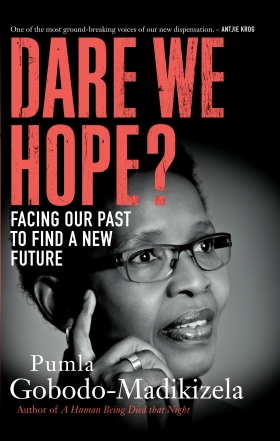
Review: Dare We Hope? Facing Our Past to Find a New Future by by Pumla Gobodo-Madikizela

Dare We HopePumla Gobodo-Madikizela’s collection of articles published between 1995 and 2014 offers a fascinating glimpse into the main issues plaguing contemporary South Africa. A professor in psychology, Gobodo-Madikizela was deeply involved in the proceedings of the TRC and wrote the award-winning A Human Being Died that Night, one of the most relevant and haunting books of recent years. It tells the story of her interaction with Eugene de Kock, the apartheid assassin known as Prime Evil.

Gobodo-Madikizela is a leading authority in research on trauma, memory and forgiveness. Many articles in Dare We Hope? focus on remembrance and reconciliation as relating to race, gender and power. Gobodo-Madikizela puts her finger on the insidious everyday ways we work against a common future by “attacking one another…in private and in public”.

Having recognised the seeds of discontent being sown and germinating in our society, Gobodo-Madikizela warns against the next revolution, “one in which the masses rise against a new breed of beneficiaries of privilege.” The “never-ending cycle of nothingness” that is poverty and lack of aspiration “strips away the humanity of individuals.” Unless we can create opportunities for people to lead meaningful lives, we will have no future as a society.

A large section of the book is devoted to dilemmas of leadership and morality. It is an incisive analysis of the “terrible shame”, the “moral rot” of the Zuma years and the terrifying legacy they are threatening to leave behind: “From the beginning, Zuma’s presidency was destined to corrupt the soul of the country.”

Gobodo-Madikizela identifies what is “missing in our democracy”: “a spirit of human solidarity that transcends the commitment to membership of one’s racial group or political party.” Her plea is for a shared humanity, for the understanding and acceptance of our diverse grievances, traumas and complicities, and, crucially, for the triumph of moral responsibility.

The articles in this book repeatedly call for dialogue: “Listening to one another and acknowledging the experience of loss on both sides would be a start.” It is a call for the employment of that wonderful faculty we all have in common: our imagination. It is also a call for moving beyond denial and revenge into a space where guilt can be articulated and forgiveness becomes a lived reality.

Dare We Hope? is an extremely sobering read. Gobodo-Madikizela is under no illusion that what she is narrating is anything but “a gruesome tale”. However, her voice is one of wisdom and, despite all, deep-seeded hope. To ignore her insights and not to heed her warnings could prove detrimental not only to individuals but to society at large. This collection is a much needed reminder that South Africa is in a dire need of more dissenting voices and, even more importantly, true leaders who can lead by example. Gobodo-Madikizela’s vision is a vital contribution in both respects.

Dare we hope? Perhaps. One thing is for certain; a lot of work needs to be done to rekindle the spark of an earlier promise.

Dare We Hope? Facing Our Past to Find a New Future
by Pumla Gobodo-Madikizela
Tafelberg, 2014

Review: Tales of the Metric System by Imraan Coovadia

Tales“…for me, Tales of the Metric System is by far his most accomplished. It is definitely one of the most profound fictional takes on South Africa’s transition from the horrors of the apartheid era to the uncertainties of the present. Spanning four decades between 1970 and 2010, the novel captures the spirit of all crucial historic moments of the period by focusing on the lives of a few people, real and imagined, whose stories are intricately interlinked.”

Read the entire review on LitNet.

Tales of the Metric System by Imraan Coovadia
Umuzi, 2014

The official book trailer: