Tag Archives: Umuzi

Author-to-Author at the Franschhoek Literary Festival

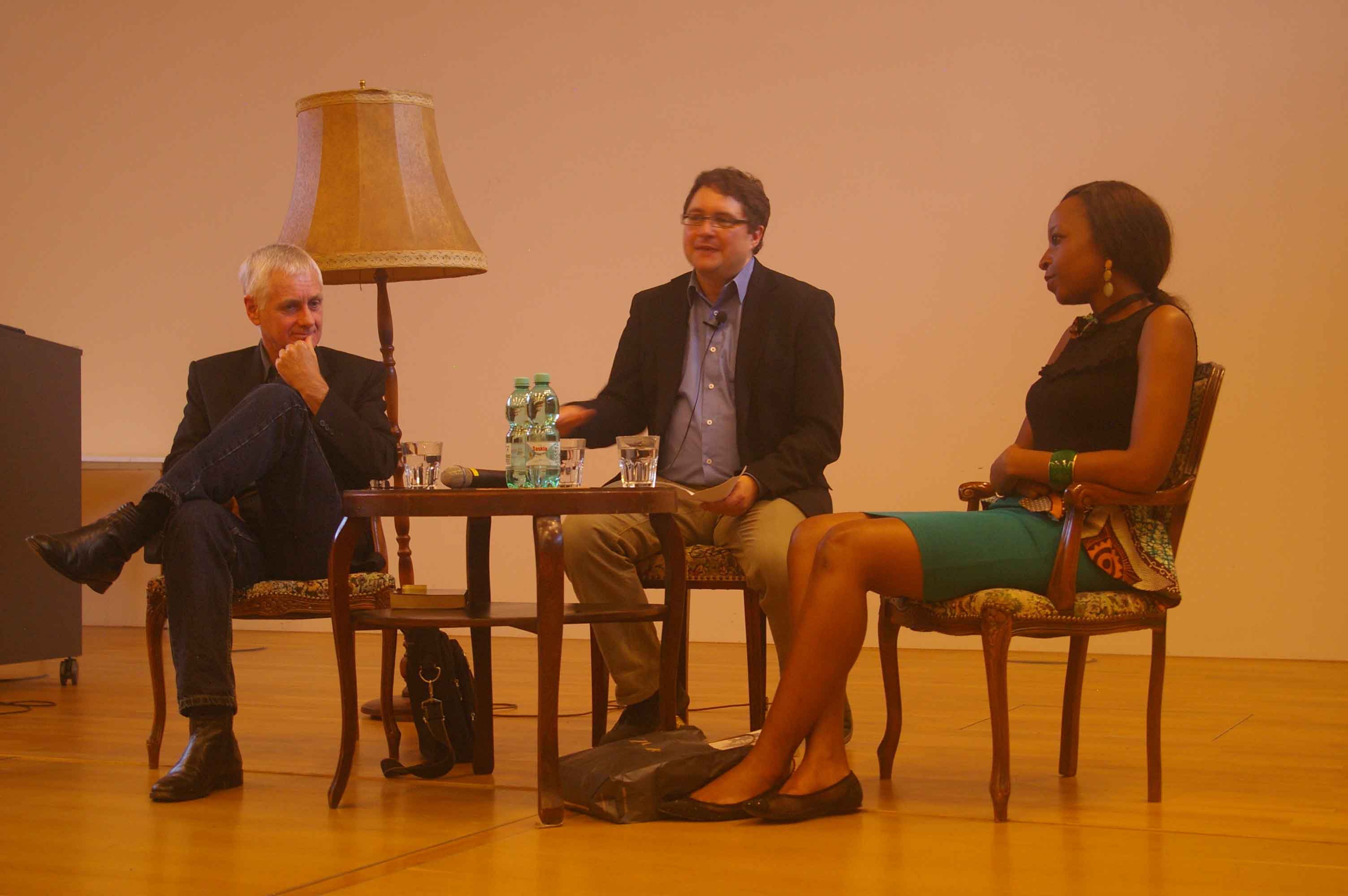
Nadia Davids, photo by John Gutierrez

Nadia Davids, photo by John Gutierrez

During the highly anticipated Franschhoek Literary Festival this year (16-18 May), I will have the pleasure of discussing our debut novels with the award-winning author Nadia Davids. Our event is scheduled for Saturday 2.30pm and will take place in the Hospice Hall. To buy tickets, click here: Author-to-Author [71] (R60).

Nadia Davids’ work has been published, produced and performed in southern Africa, Europe and the United States. She was awarded the Rosalie van der Gucht Prize for new directors for her play At Her Feet and received three Fleur de Cap Award nominations for Cissie. Nadia holds a PhD in Drama from UCT and lives in London, where she lectures in the drama department at Queen Mary University of London. Her debut novel, An Imperfect Blessing, was published in April.

About An Imperfect Blessing:
“It is 1993. South Africa is on the brink of total transformation and in Walmer Estate, a busy suburb on the slopes of Devil’s Peak, fourteen-year-old Alia Dawood is about to undergo a transformation of her own. She watches with fascination and fear as the national drama unfolds, longing to be a part of what she knows to be history in the making. As her revolutionary aspirations strengthen in the months before the elections, her intense, radical Uncle Waleed reappears, forcing her parents and sister Nasreen to confront his subversive and dangerous past.

Nadia David’s first novel moves across generations and communities, through the suburbs to the city centre, from the lush gardens of private schools to the dingy bars of Observatory, from landmark mosques and churches to the manic procession of the Cape Carnival, through evictions, rebellions, political assassinations and first loves. The book places one family’s story at the heart of a country’s rebirth and interrogates issues of faith, race, belonging and freedom.”
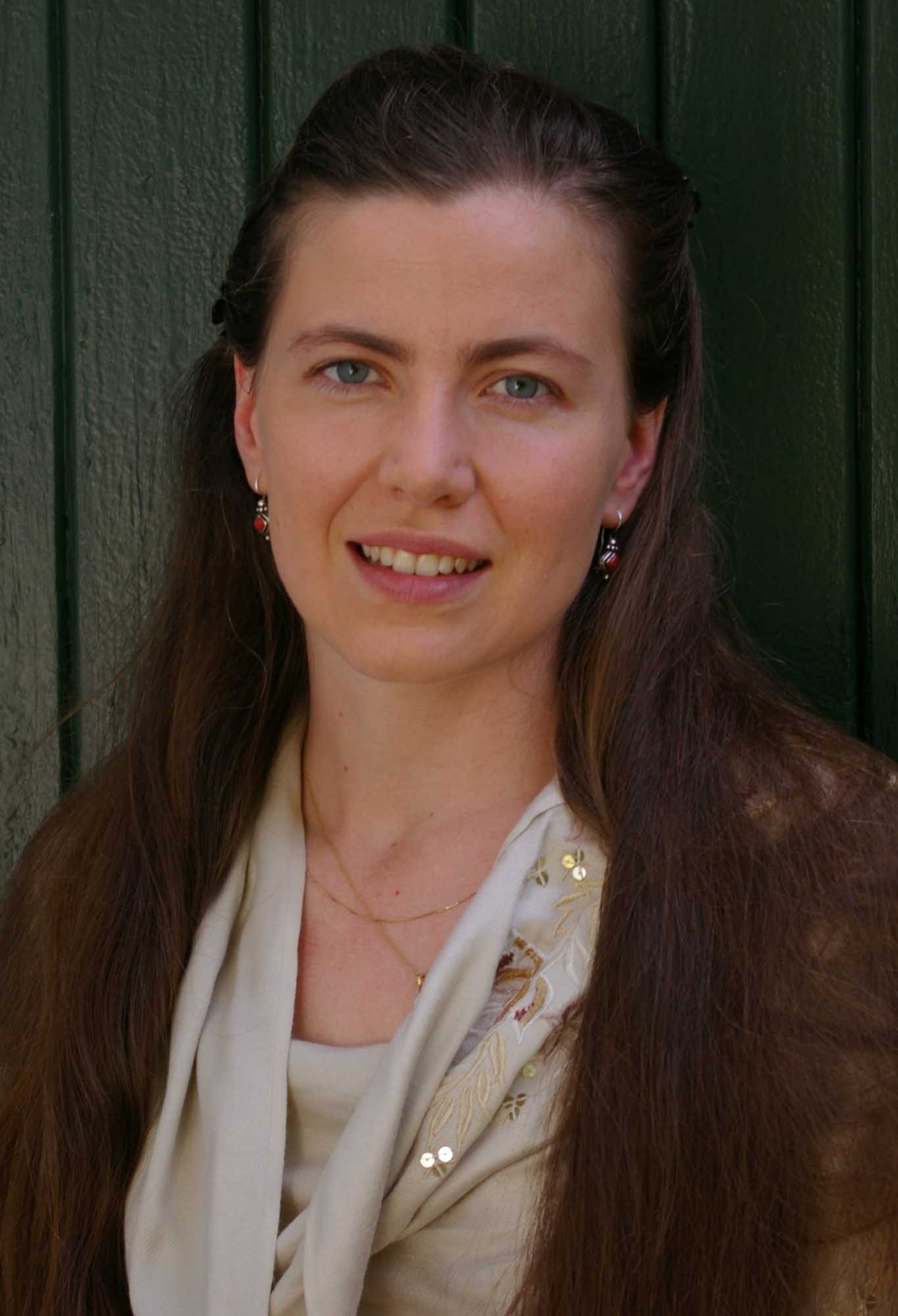
KarinaNadia Davids and I do not know each other in person (yet!), but we have quite a lot in common. We were both born in 1977 and do not live in the countries of our birth. We have academic backgrounds and completed our PhDs in 2008. We are playwrights, short-story writers, and debut novelists this year. I look forward to discussing our novelistic firstborns, An Imprefect Blessing and Invisible Others at the festival.

Nadia Davids’ other scheduled events at the FLF:
Friday 11.30am [9] Playwrights Strut and Fret
Friday 4pm [37] Revelling in South African English
Sunday 11.30am [93] The Considered Canon

A literary ‘rainbow nation’ in Regensburg

University of Regensburg

University of Regensburg

At the beginning of April, I attended a literary conference in Regensburg, Germany. Organised by Prof. Jochen Petzold, the conference intended to shed light on some of the developments in recent South African literature. Two days, various themes, and an intimate crowd of eager participants amounted to a very stimulating experience which reconfirmed for me the decision not to forsaken academia all together just yet. The papers covered a wide range of topics, from youth literature to writing on HIV/AIDS, with the farm novel and Indian Ocean literature thrown into the mix.

UK Quartet Books edition

UK Quartet Books edition

The conference kicked off with a paper by Chris Warnes which put a smile on my face because Warnes spoke about ideas being more productive than theory. Taking popular fiction seriously, Warnes explained how romances, crime novels, and thrillers can tell us more about present-day South Africa than ‘serious’ writing. The next speaker, Michael Cawood Green, read an excerpt from his upcoming novel. Full of scrumptious ideas, it gave one more food for thought than most theoretical writing ever can. A few years ago, I had the pleasure of reviewing Green’s fascinating novel For the Sake of Silence (2008). It remains one of my all-time favourite books, and I am deligthed now to own a signed hardback copy given to me by the author.

We continued with papers on Achmat Dangor‘s Bitter Fruit, trauma and memory, and young adult literature. I shared the slot with Sandra Stadler who has done some ground-breaking work on the YA genre in South Africa. Her thesis is something to look forward to.

Focusing on Nadine Gordimer’s The House Gun, Ivan Vladislavić’s Portrait with Keys, Stephen Watson’s A City Imagined , Antjie Krog’s Body Bereft, and the theoretical backbone done on the city in South African literature by such scholars as Achille Mbembe, Sarah Nuttall and Michael Titlestad, I spoke about how among urban spaces, Johannesburg and Cape Town dominate the literary topography of the country, and how the latter is fast on its way to becoming South Africa’s capital of crime fiction with internationally best-selling authors like Deon Meyer, Margie Orford, Roger Smith, Sarah Lotz or Mike Nicol, making Cape Town the preferred settings of their literary crimes.

Mike Nicol and Angela Makholwa

Mike Nicol and Angela Makholwa


That evening, two crime specialists, Angela Makholwa and Mike Nicol, read to us from their latest work, and together with our host, Jochen Petzold, spoke about their experience of the crime genre in South Africa and abroad.
Mike Nicol, Jochen Petzold, and Angela Makholwa

Mike Nicol, Jochen Petzold, and Angela Makholwa

The next day began with two papers on the HIV pandemic as reflected in literature and culture. The farm novel dominated the next slot on the programme. It seems nowadays that no conference on South African literature can do without a vivid discussion on the elusive ending of J.M. Coetzee’s Disgrace. There are usually as many interpretations as people in the room, and so this time. The novel continues to haunt literary scholars.

Speaking about Aziz Hassim’s Revenge of Kali, Felicity Hand quoted a sentence from the novel which stuck in my head: “Only a corpse knows the loneliness of the grave.” The conference ended with three papers focused on Afrikaans literature. Cilliers van der Berg spoke about Afrikaans literature as a “minor discourse”, Adéle Nel about the “sense of ending” in some contemporary novels, and Willie Burger about the difficulties of categorisation that diversity brings with it.

I left Regensburg full of new ideas, a long list of titles to read, and a feeling of being part of a vibrant, exciting, and bold literary culture in South Africa.

Review: Arctic Summer by Damon Galgut

Arctic Summer coverThe publication of every new book by Damon Galgut is a literary event par excellence. Two of his latest three novels were shortlisted for the prestigious Man Booker Prize. He is the recipient of many other accolades, including the local CNA Prize for The Beautiful Screaming of Pigs (1991) and the Commonwealth Writers Prize for Best Book from the Africa Region for The Good Doctor (2003). Galgut’s beautifully supple prose, his mastery of narrative forms, and his feel for characterisation always offer a rewarding literary experience. Arctic Summer is no different.

Like Galgut’s last novel, In a Strange Room (2010), Arctic Summer is partly set in India. Galgut’s descriptions of the places his astutely drawn characters traverse are as always a feast for all senses. In many other respects, however, it is a great departure from Galgut’s previous work. Evoking the early life of the British novelist E.M. Forster (1879-1970), Arctic Summer is a biographical novel, focused on its protagonist’s travels to India and Egypt as well as the relationships he shared with his mother and the few men who stirred his love and desire.

It is the time after Oscar Wilde’s trial and exercising caution in the display of one’s sexual longings is paramount to one’s survival. For most of the novel, Forster’s yearnings remain unfulfilled. The struggle to articulate what is one of the greatest taboos of his time and to put his desire into practice – whether in life or his work – takes centre stage in the novel.

Arctic Summer opens in 1912 with Forster on board a ship heading for India where he intends to visit Syed Ross Masood, a young Muslim man to whom he had been a tutor in England. The two men developed a deep, yet often unsatisfying, relationship, which is clouded by Forster’s love for Masood and his heterosexual friend’s inability to respond to his unwanted advances. The trip unfolds in unexpected ways. But it is Masood and the stay in his native country that eventually will inspire Forster’s masterpiece, A Passage to India (1924).

It is only in Egypt during the First World War when Forster volunteers to work for the Red Cross that at the age of thirty-seven he is seduced by a recuperating soldier. Then he meets and falls in love with Mohammed el-Adl, a tram conductor, who despite being also heterosexual and later happily married, allows Forster certain sexual liberties and appears to share his affections.

During Forster’s later sojourn in India he becomes embroiled in a relationship with Kanaya, a barber at the court of the Maharajah Bapu Sahib to whom Forster becomes Private Secretary. Devoid of feelings which he so desperately craves and blackmailed by Kanaya, Forster feels lonelier than ever.

Galgut brilliantly describes not only the precarious situation in which gays, or “minorities” in Forster’s terminology, found themselves at the beginning of the twentieth century, but also the pitfalls of power relations across race and class that accompany Forster’s ventures into the land of mostly unreciprocated love. The subtlety with which Galgut imagines the shifts in Forster’s psyche and the way his discoveries impact on his work, especially A Passage to India, the posthumously published Maurice and the unfinished Arctic Summer from which Galgut’s own title derives, is remarkable.

Even though with this novel Galgut enters the well-established field of fictional author biographies (locally, Michiel Heyns’s The Typewriter’s Tale or J.M. Coetzee’s Foe spring to mind), there is a great risk with imagining the lives of real people, especially well-known historical figures. Reading Arctic Summer, I often had the feeling that it is a novel where it should have been a biography and a biography where it should have been an autobiography. It is specifically Galgut’s dedication of his novel which echoes Forster’s original dedication of A Passage to India to Masood that makes one question the real inspiration and background of Arctic Summer. The parallel suggests that at least some of the emotional and psychological texture which Galgut ascribes to Forster’s and Masood’s relationship in Arctic Summer might have an autobiographical source.

Judging from the acknowledgements, Galgut’s research into E.M. Forster’s life must have been extensive. But like most readers, I’m neither a Galgut nor a Forster scholar, so it is impossible for me to judge where and to what extent the lines between Forster’s life and Galgut’s imagination and own experiences blur. Even more difficult is to define why such “untidy borders”, in the words of critic Ellen Rees, trigger occasional twinges of unease when reading the novel.

And yet, there is no doubt that this meticulously crafted book is a tribute to an intriguing man and his work. A deeply felt, melancholic novel which charts the subliminal links between creativity and desire and brings to life a fascinating literary figure, it is another bright feather in Galgut’s literary cap.

Review first published in the Cape Times on 28 March 2014, p. 32.