 Camaraderie. That is the word which comes to mind when I think back to the one day I spent at the fabulous Soweto Theatre, attending the inaugural The Star Soweto Literary Festival. It was quite a whirlwind affair. A day of talks, improvisation, laughter and tears. I invited myself. The moment I heard that the festival was happening – and it was organised in a shockingly short amount of time – I volunteered to speak, chair sessions, whatever, just to be there. I felt it in my bones that it would be special, and I wanted to be part of it.
I was not disappointed.
Darryl Earl David, the founder of the three-day festival which took place last weekend, first announced his intentions at the end of June: “To create a truly non-racial literary festival in a black township, something that has never ever been done before. A start has been made in Khayelitsha. But that was more a book fair, not a literary festival. I have always maintained Soweto looms large in the literary imagination of South Africa … Soweto is the cradle of black literature. It was home to the canon of black literature in South Africa – Mongane Wally Serote, Sipho Sephamla Njabulo Ndebele, Miriam Tlali, Ellen Kuzwayo and Benedict Vilakazi.”
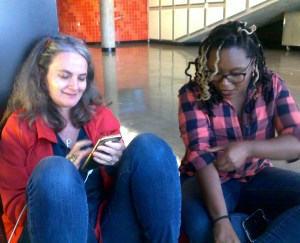 The day I was there, Saturday, the presence of the spirits of these literary giants was palpable. The attempt to establish “a truly non-racial” space for writers, artists and the public to engage with one another’s ideas was a great success. I attended with a dear friend, Pamela Power, the author of Ms Conception and the upcoming psychological thriller, Things Unseen. We came away inspired, glowing, and moved to the core.
Continue reading: LitNet

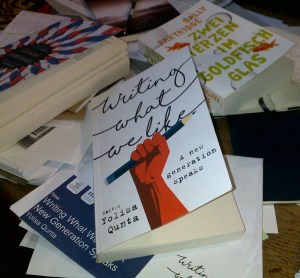 For a white person, reading Writing What We Like: A New Generation Speaks might feel like gatecrashing a party where some ugly truths will be revealed about you. Provocative and penetrating, Writing What We Like is a difficult book to review when you happen to be white, because one feels that one should not be talking at all, but listening only. One is torn between possible accusations of one’s own “intellectual arrogance” and the need for dialogue. And yet, a way to disrupt entrenched ways of thinking and to establish connections across barriers imposed on us by a turbulent and harrowing history is to try to imagine ourselves into the skins of others. That is where creativity and empathy begin – in writing, reading and interpretation – where we cease to view ourselves in any other categories but human. The ultimate goal is understanding, coupled with compassion. Everything else will follow from there.
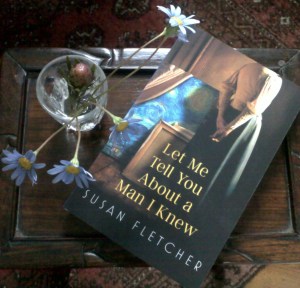 I welcome every Susan Fletcher novel with open arms. Let Me Tell You About a Man I Knew is her sixth. It completely delivers on the promise of its predecessors. Set in the Provencal town of Saint-Rémy where Vincent van Gogh spent a year of his life in an asylum and painted some of his most widely recognised works, the novel tells the story of a local woman whose life is disrupted by the arrival of the Dutch painter. Jeanne Trabuc is the wife of the asylum’s warden. In her fifties, a mother of three, she goes about her daily routines, remembering her adventurous youth and watching out for the mistral, “wind of change, of shallow sleep.”
 Throughout the years, few oeuvres have enriched my intellectual life as much as the works of the Welsh philosopher Mark Rowlands. At some stage, we are all confronted with the question of what makes life worthwhile, how to make the time we have on this planet meaningful. Unfortunately, not enough of us ask how to live in such a way as not only to enjoy the journey, but simultaneously do as little harm as possible to our fellow travellers, whether they be other humans, animals or the environment. We all muddle on. Rowlands does not claim to have the answers, but his attempts at approaching possible conclusions are fascinating to engage with.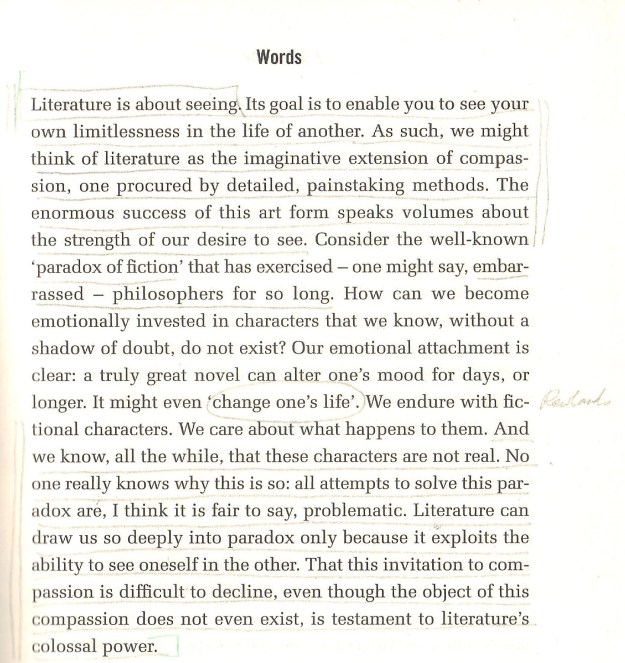

 Karina Magdalena