
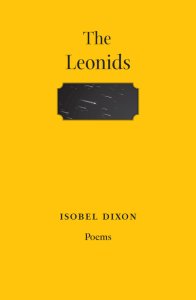
by Isobel Dixon
Mariscat Press, 2016
Isobel Dixon is one of South Africa’s finest poets. This year she published a collection of poetry, Bearings, and The Leonids, a pamphlet containing seventeen poems devoted to her mother who died last year. The exquisite pamphlet is a tribute to a beloved mother and to the family she nurtured around her. It opens with the vivid, sensuous impressions of “Notes Towards Nasturtiums”. The poems contain striking images of everyday life, memories of love and kindness, all infused with the pain of loss. Dixon takes us into the heart of her family home, celebrates the closeness she shares with her sisters, recalls her parents and evokes the intimate moments when they both passed away. Reading Dixon you are constantly reminded of the power and beauty of language, how it can blossom with the generosity of simple, gorgeous kappertjies. How it can preserve that which is most precious, long after it is gone.
 The Bostik Book of Unbelievable Beasties
by Lauren Beukes
Bostik South Africa, 2016
One of the greatest gifts you can give to a child is to nourish their imagination. The Bostik Book of Unbelievable Beasties contains twenty “ridiculous rhymes” about creatures living in the land of Unbelievia. Children from around South Africa were asked to illustrate the rhymes written by award-winning author Lauren Beukes. The best twenty drawings were chosen for this delightful book. Kids will love the funky texts about The Oogle, The Gulpsome Squidge, or The Vampire Bunny who “might give you a fright if you spot this critter stalking your garden at night. It’s got s fluffy tail and fangs and wears a red cap. But don’t be afraid, don’t try to escape! You see, this bunny vamp only sucks carrot juice. Except on its birthday, when it slurps chocolate mousse.” The awesome illustrations by their peers will inspire many more flights of the imagination.
Download here for free: The Bostik Book of Unbelievable Beasties
 Cats
Cats
by Jane Bown
Guardian Books/Faber & Faber, 2016
Sharing a life with felines is fascinating. Jane Bown, the Observer photographer who died in 2014, is best remembered for her iconic portraits. This collection of her cat photographs was compiled by Robin Christian who was her researcher and catalogued her archive. Cats includes seventy-six photographs Bown took over five decades, ranging from Jean Cocteau’s portrait with his cat Madeline to shots of the many cats in Bown’s own life. Who can resist Queenie’s trusting face or the impertinence of the three furry beauties on the kitchen counter of Bown’s Hampshire home? She was clearly in tune with the elusive nature of her feline subjects. Cats is a book to melt any cat person’s heart. The only thing which disturbed me about it is a quote by Bown: “Once you’ve owned a cat you are hooked forever.” You cannot own a cat. But they do hook one for life.
First published in the Cape Times, 11 and 18 November 2016.
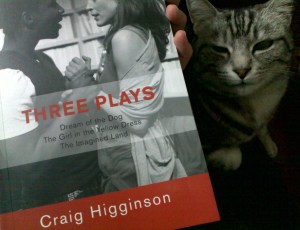 Reading a play is like listening to an opera on CD. Many would argue that both are best experienced on stage. There is nothing like a live performance, I agree. Yet, no matter how much I love going to the theatre or opera house, reading a play or listening to opera in the comfort of my own home can also be special.
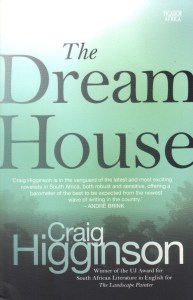 Dream of the Dog was first written and appeared as a local radio play in 2006, and was rewritten and staged the following year in South Africa before transferring overseas. Its action takes place in KwaZulu-Natal. An aging couple sell their farm to developers. The man in charge of the project turns out to be the son of one of their former workers. As he returns to the place, he brings with him long-supressed memories of violence and death on the farm. The play inspired Higginson’s latest novel, The Dream House (2015), which won the prestigious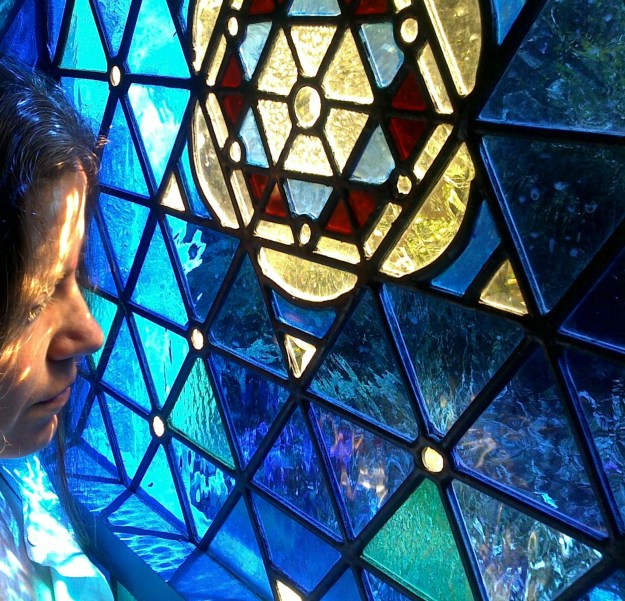
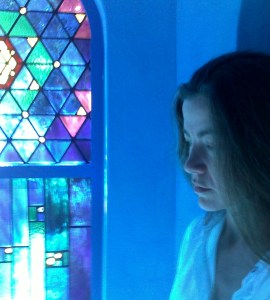
 In a corner, with no way out, when everything seems lost, broken, incomprehensible, a tiny light might save you. Holding on to that light is not an act of bravery. It is an act of compassion. I survive because I have kind people in my life. Perhaps recognising and reaching out for that kindness is courage? I do not know. I know that the sharing, the true care of friendship, have saved me from utter despair. The women in my life. I repeat: The women in my life. I do not know what I would have done without You. I salute and cherish you!
 The first time I travelled to


 During the last McGregor Poetry Festival a poem was inscribed on the walls of Temenos, my favourite one from Stephen Symon’s stunning debut collection
  I arrived at Wordsworth Books rattled, but there were good friends, cheese and wine, and poetry – subtle, soul-restoring poetry. Beauty, like light, can save you. How precious that it can be contained in words. Thank you, Stephen and Nick, for caring about words.

 Questions for the Sea, the debut collection by Cape Town-based poet and graphic designer Stephen Symons is the latest exquisite offering from the independent local publisher, uHlanga. The sea, questions, light and poetry: an irresistible combination.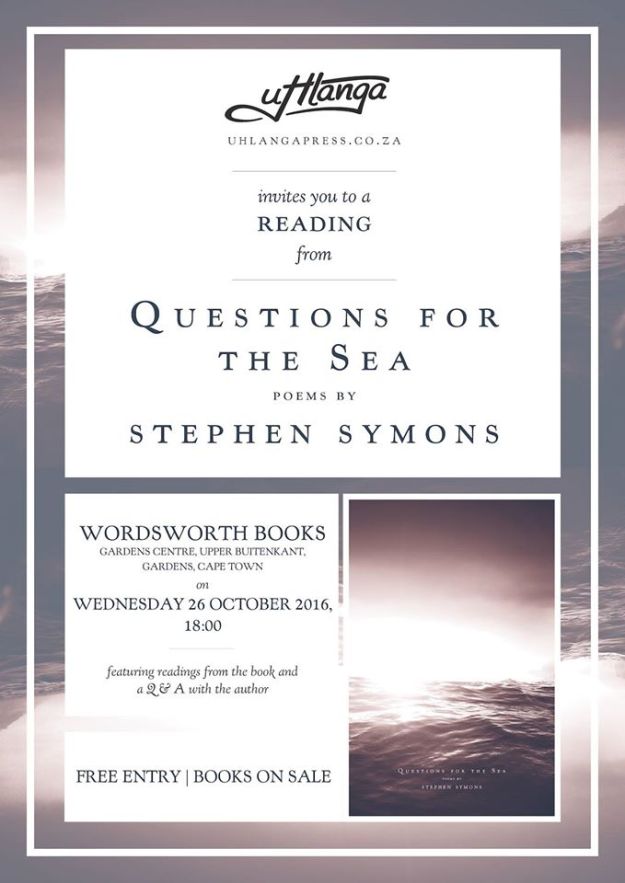


 Camaraderie. That is the word which comes to mind when I think back to the one day I spent at the fabulous Soweto Theatre, attending the inaugural The Star Soweto Literary Festival. It was quite a whirlwind affair. A day of talks, improvisation, laughter and tears. I invited myself. The moment I heard that the festival was happening – and it was organised in a shockingly short amount of time – I volunteered to speak, chair sessions, whatever, just to be there. I felt it in my bones that it would be special, and I wanted to be part of it.
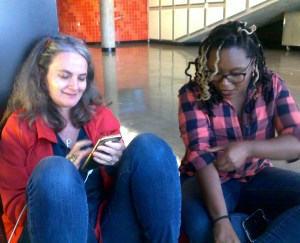 The day I was there, Saturday, the presence of the spirits of these literary giants was palpable. The attempt to establish “a truly non-racial” space for writers, artists and the public to engage with one another’s ideas was a great success. I attended with a dear friend, Pamela Power, the author of Ms Conception and the upcoming psychological thriller, Things Unseen. We came away inspired, glowing, and moved to the core.
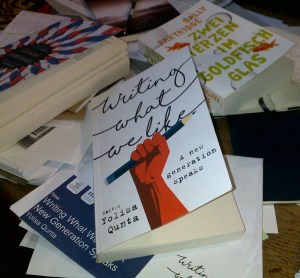 For a white person, reading Writing What We Like: A New Generation Speaks might feel like gatecrashing a party where some ugly truths will be revealed about you. Provocative and penetrating, Writing What We Like is a difficult book to review when you happen to be white, because one feels that one should not be talking at all, but listening only. One is torn between possible accusations of one’s own “intellectual arrogance” and the need for dialogue. And yet, a way to disrupt entrenched ways of thinking and to establish connections across barriers imposed on us by a turbulent and harrowing history is to try to imagine ourselves into the skins of others. That is where creativity and empathy begin – in writing, reading and interpretation – where we cease to view ourselves in any other categories but human. The ultimate goal is understanding, coupled with compassion. Everything else will follow from there.
 Karina Magdalena