Author Archives: Karina

Unknown's avatar

About Karina

Author living in Cape Town.

Book review: I’m Travelling Alone by Samuel Bjørk

TravellingAloneDespite my irredeemable addiction to Lee Child’s Jack Reacher series, I do not often turn to thrillers or crime fiction for entertainment. But Night School, the next Reacher adventure, is coming out only in September, and since the nights are getting longer, it is nice to have a few good stand-ins in the meantime. Locally, I really enjoyed the recently published Sweet Paradise by Joanne Hichens: tight plotting, great writing, a scary villainess, and a heroine with balls. It surprised me, and that is a quality I truly appreciate in genre fiction.

I remember picking up Henning Mankell’s The Man from Beijing and realising how it would end just after a hundred pages. For the rest of the book, I had hoped the author would astonish me, but he didn’t. That kind of disappointment is not easily forgiven. But Scandinavian crime and thriller authors have been making huge waves on the international literary scene in the last decade or so. I devoured Stieg Larsson’s Millennium trilogy and like millions of readers around the world could not get enough of its intriguing main characters, Lisbeth Salander and Mikael Blomkvist.

It seems that there is a new kid on the Scandinavian crime block, Samuel Bjørk (pen name of the Norwegian writer and musician Frode Sander Øien). His I’m Travelling Alone is making international headlines, reaching the prestigious German magazine Der Spiegel’s number one bestselling spot and selling TV series rights to ITV. It comes with a quote on the cover, warning his compatriot Jo Nesbø to “watch out”. Being unfamiliar with Nesbø’s work, I cannot compare, but judged solely on its own terms, I’m Travelling Alone is a spine-chilling, page-turning novel.

In 2006, a baby disappears from the maternity unit of Ringerike Hospital in Hønefoss in the south of Norway. Half a dozen years later, a six-year-old girl is found dead hanging from a tree. Dressed like a doll with an airline tag which reads “I’m travelling alone” around her neck, the girl is soon believed to be the first victim of a serial killer about to strike again. A race against time begins. Holger Munch is put in charge of finding and bringing the killer to justice. Despite, or precisely because of, being the typical middle-aged, overweight, chain-smoking, sadly divorced, veteran police investigator, Holger is instantly endearing. As is his partner, the deeply disturbed but fascinating, thirty-something Mia Krüger.

In the beginning of the book, Mia is living in complete solitude on an island, drugged and drunk, mourning her beloved sister and awaiting her own death. It takes some persuading from Holger to sway her to postpone her suicide in order to help him solve the case. They both have a troubled past to atone for, and have no clue how it is about to surface to haunt them.

The next girl is found murdered and two more go missing. But then the ruthless killer changes his (or her? the police are uncertain) MO and contacts a journalist writing for a daily, placing him and his editorial team in front of an impossible choice: Who dies next? And when Mia and Holger discover that the next intended victim is someone they both know and care about, the urgency to track down the perpetrator intensifies unbearably. The hunt leads them to a mysterious sect and an old-age home where Holger’s mother lives. What at first seems a dead end reveals itself as a deadly possibility. And the murderer is always a step ahead.

The two investigators, the police squad, and family and friends around them are all well-drawn characters one takes immediate interest in and liking to. They propel the story forward. Additionally, to a certain extent, I’m Travelling Alone felt like armchair travel. I have a very soft spot for Norway, having travelled the country, loved its landscape, read some of its brilliant classics, and made a few Norwegian friends for life. I actually visited some of the places mentioned in the novel, have experienced the weather and tasted the food. Reading all the everyday details of the characters’ lives has brought back many great memories. I couldn’t resist and had some herring again while reading.

I was spellbound almost to the end. However, the last twenty pages let me down. To be honest, I am not sure that I understood how all the puzzle pieces of the story fit together or whether the author managed to tie up all the loose ends, yet it somehow did not matter. I found the ride as far as the last four or five chapters exhilarating and the strangely abrupt ending did not spoil the fun. I sincerely hope that Mia and Holger will return and I look forward to the next Samuel Bjørk crime novel with great anticipation.

Review first published in the Cape Times, 4 March 2016.

I’m Travelling Alone

by Samuel Bjørk

Doubleday, 2016


Book review: Letters of Stone – From Nazi Germany to South Africa by Steven Robins

Letters of StoneReading about the Holocaust is never easy. Facing its terrible truths, especially when your own family is involved, is heroic.

Anthropologist Steven Robins had no inkling of what he would unearth when he embarked on a quest to discover more about the three women in an old photograph that had sat in his childhood home for years. He was born in 1959 in Port Elizabeth. He and his brother Michael grew up oblivious to their Polish and German ancestry and to the fates of their father’s relatives during the Third Reich.

The journey Robins takes in Letters of Stone connects “different times and places”. It is a journey that took nearly three decades to complete – between the time Robins interviewed his father in Port Elizabeth in 1989 and the publication of this astounding book. To begin with, Robins had very little to go on. But a series of uncanny coincidences led him further into the labyrinth of the private history of his family, and beyond.

Continue reading: LitNet

The Grandfather Clock

The Grandfather Clock

The clockmaker came out only at night. He arrived at the young widow’s house shortly after half-past eight. Books and remnants of a simple dinner lay across the table in the sitting room where the grandfather clock had been standing silent for a year. The woman pointed at the ancient instrument in the corner and folded her hands in front of her as if in prayer.

‘Sorry for your loss,’ he said.

‘Thank you.’

In the silence that followed, she could feel her heart galloping in her chest.

‘How long has it been now?’

‘A year, today.’

‘Ah. I’m sorry.’

They stood facing each other as time passed in slow motion.

‘So, what would you like me to do?’

She had summoned him earlier in the day, the explanation for the call vague. Something about an anniversary.

‘My husband had always taken care of it. It stopped when he died,’ she said.

‘So there’s nothing wrong with it? You just want me to get it going again?’

‘Yes.’ A prayer. ‘And please teach me how to keep it working.’

He nodded and opened his tool box, trying to concentrate on the task ahead instead of the woman beside him, tense like a coiled spring.

As the clockmaker set to work, she stepped back, watching from a distance. He asked about the key. She did not know what he meant, but eventually remembered the small black handle her husband had used to wind the clock. She was surprised how easy it was to keep the mechanism running.

‘It should be fine for a while,’ the man explained, turning the clock’s hands to the correct time, ‘but I’ll have to take it in for proper servicing soon.’

The clock chimed for the first time in a year. It took all her strength to keep her composure. Time stood still.


Before he left, she asked, ‘Tell me, do you think it’s true what they say, about your whole life flashing before you when you are about to die?’

‘I am not sure, dear,’ he said, reverting to the familiar address, not knowing how else to comfort the young woman.

He refused to take money from her. ‘Next time, when I service it properly,’ he said.

She thanked the clockmaker and gently closed the door after bidding him a good night. Alone, she leaned her head against the passage wall and cried.

The clock chimed nine. She counted the heartbeats and wiped the tears from her face with the back of her hand. She walked over to the grandfather clock. It towered above her in the silence of the night. Tick. Tock. Tick. Tock. The stories of a long-lost friend returning home. She listened to the soothing whispers of its hands telling her about the future. They reminded her of violin music announcing a new dawn.


The Break-up

Break-Up LitNet illustration

It was an awkward situation. I was standing there, in front of my best friend’s door, with a cardboard box and an old suitcase in my arms, feeling foolish. I could hear her drying her hair inside. Taking a deep breath, I pressed the bell.

“Coming!” Marlene shouted, switching off the hairdryer.

When she opened the door, the dark hallway of the flat building was flooded with sunshine. It was the beginning of a hot summer day, the humidity in the air promising rain later in the afternoon. Marlene’s damp red curls looked on fire in the bright morning light.

She hovered in the doorframe, staring at the box and the suitcase, twisting one of her curls between a forefinger and a thumb.

“Hi,” I volunteered.

“Hi, come in.” She disentangled her fingers from her hair and swept her hand aside in a gesture of welcome. The flimsy bathrobe she was wearing came undone as she did so, and I glimpsed a perfect, small breast before she tied the garment tighter around her waist.

“This is weird,” she said, following me into the flat.

I pressed my lips together and agreed. “You can say that again.”

We were facing each other, not really knowing how to proceed. Nothing had prepared us for this odd situation.

“I don’t know.” She paused. “I don’t know whether all the clothes will fit into this suitcase.” She rushed through the second part of the statement. “The box might also be too small for all the other stuff,” she added with a shy smile.

“That’s alright, maybe you’ll have a bag or something for me?” I looked her straight in the eye, without returning the smile. I didn’t know what was really expected of me. Was I supposed to be distant? Angry? Sympathetic? I had no clue. Deep inside, I simply wanted to be neutral, but that didn’t feel right either. But how was I to pick sides?

“Right!” She gracefully turned on her bare heel. “Let me show you the stuff first.”

She led me to her bedroom. As always, the place was in a state of chaos. I never saw her make her bed, or pick up all the magazines and books from the floor. She was the fastest and least discriminating reader I knew; the likes of Dan Brown and Virginia Woolf were strewn all around us. We shared the passion of reading, but I was more careful with my choices, and I liked to be organised. Pedantic, is how Marlene described it. I preferred to think of myself as fastidious.

“That’s all I could find.” She pointed at a pile of clothes on the bed next to one of the crumpled pillows. “Some pieces were still in the laundry basket, so he might want to check.”

She reached for the box I was carrying. “Let me try to get the other stuff in here for you.”

While I was packing the suitcase, she put some DVDs, CDs, computer games and comic books from another pile on the floor into the box.

“I’ll get a plastic bag for the sneakers and the roller blades,” she said and left the room.

With difficulty I zipped up the bulging suitcase and looked at the box. I recognised the top CD cover: Lady Gaga. Kester once played the record for us. I tried to keep up with the latest in music, but some developments were beyond me.

Marlene returned, packed the remaining items, and handed me the bag.

“This won’t change anything between us, will it?” She was facing the window and the lucid sunlight illuminated her features again. I knew her well enough to recognise what was coming. I wasn’t good with tears, especially not hers.

“Of course not,” I reassured her, put the bag aside, and pulled her into a loose embrace. Her hair smelled like summer rain on hot concrete.

Continue reading: LitNet

Book review: The Seed Thief by Jacqui L’Ange

The Seed ThiefThere are writers and then there are writers. Most of us can only dream of becoming the kind of writer Jacqui L’Ange already is, and the stunning The Seed Thief is only her debut novel. Her prose is luminous. It feels as if her words are caressing the pages they are printed on. Enthralled from the beginning, I was reading with bated breath, afraid that the author could not sustain such excellence through an entire novel, that she would take a false step, get lost along the way, and lose me as a reader. But The Seed Thief is one of those rare books which deliver on all fronts and leave you completely satisfied.
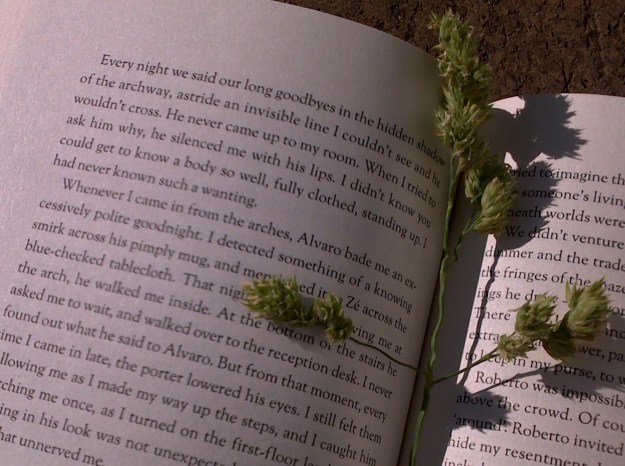
The novel tells the story of Maddy Bellani, a South African botanist with migratory roots. She works for one of the world’s seed banks in Cape Town, specialising in fynbos and dedicated to preserving the floral diversity of our planet for future generations. Brazilian by birth, Maddy is sent on a mission to Salvador, Bahia, to locate and secure the seed of the Newbouldia mundii, an African tree extinct on its continent of origin, but rumoured to have survived in Brazil, where it had been taken to by Africans during the slave trade. The plant is desired not only for preservation, but specifically for its medicinal properties. And some people are prepared to do anything to get their hands on it.

Maddy embarks on the mission after the break-up of her relationship with Nico: “Only now that it was finally ending, could I admit how much I’d wished we could have turned the mutual vulnerabilities that brought us together into something less fragile.” She is haunted by a family tragedy from the past and the relationship with her estranged father who finds out about her visit to their home country and attempts to get in touch: “Just knowing that he knew I was here made my emotional barometer plunge.”

Keen on redefining herself in Brazil, Maddy flies to the other side of the world in pursuit of the elusive Newbouldia mundii. The seed is protected by the practitioners of Candomblé, an Afro-Brazilian religious community worshipping gods and goddesses called orixás. Negotiating their different customs and loyalties is not easy and, as Maddy discovers, sometimes what you get in the end is not exactly what you set out to find.

Seeds are like love, unpredictable in the paths they travel. They take root in the most unlikely places, often against all odds. In order to gain access to the treasure she seeks, Maddy has to gain the trust of the Candomblé terreiro (the house of worship) and Zé, the mysterious man who guards their garden: “The rhythm of our interaction became a gentle ebb and flow. He would open up and play, then retreat and observe. Whenever he retreated, I found myself wanting to follow, to draw him back out and close to me. When he came in too close, I pulled back just enough for him to gather himself like the tide.”

Continue reading: LitNet

wanting_The Seed Thief

Flame in the Snow: The Love Letters of André Brink and Ingrid Jonker

tearsinthefence's avatarTears in the Fence

Translated by Leon De Kock & Karin Schimke (Umizi 2015)

Afrikaans, one of the official languages of South Africa, spoken by some seven million speakers and widely recognised by the leadership of the African National Congress for its contribution to dissident literature has produced a number of writers of global significance. It remains a vibrant literary culture as the writing of J.M Coetzee, Marlene van Niekerk, and others testify. The love letters of novelist, André Brink and poet, Ingrid Jonker, written between April 1963 and April 1965, return to the reader to a time of protest against censorship when no criticism of South Africa’s race policy was tolerated, and is perhaps a timely reminder for South Africans.

Brink, at the beginning of his career as a novelist, teaching at Rhodes University, Grahamstown, and Jonker, writing her second poetry collection, whilst working as a proofreader in Cape Town, fell head over…

View original post 641 more words

One of our greats in the making: Alastair Bruce’s Boy on the Wire

Wall of DaysThe first one arrived in manuscript form for evaluation. I started reading it in bed in the morning and nearly didn’t get up until I was finished. The exhilaration of the encounter is still with me years later. I thought I was reading one of South Africa’s greats. Galgut or Coetzee came to mind – not a debut novelist.
My reader’s report glowed with praise. The novel was eventually published as Wall of Days (2010), locally and abroad, also in translation. The author turned out to be a young man from PE who moved to the UK. Last year, Alastair Bruce published his second novel, Boy on the Wire, and it is just as haunting as his first.

In the Prologue of Boy on the Wire, John Hyde walks cautiously through his childhood home in Port Elizabeth. In one of the rooms, he sees a man, “or he imagines he can see the man … He knows, too, he cannot touch him, cannot touch the lying man. If he even touched the tip of his fingers to the man’s forehead, it would all be over.” Nothing is “clear”. What is real, what is imagined? Everything hinges on the distinction. The confrontation with the “man who lied, who told the story, a wild, fanciful story, about the death of a child, a hard and unyielding story” is what the novel is about.

Boy on the WireThe narrative takes us back to a Sunday in the December of 1983 when John, his brothers Paul and Peter, and their parents travel to the mountains in the Karoo for a family holiday. But only four of them return home. And there are no real survivors. The tragedy literally plunges them all into an abyss.
Trauma disrupts time, memory and narrative. Storytelling can be one of the most efficient mechanisms of attempting to deal with it. In order to cope with the death of one his brothers, John tells a story. But his version of the events leading up to the tragedy has severe consequences for the family: “The death of a child – there’s no coming back from that.”

We encounter John again in his thirties. In his early twenties, he’d left his family and South Africa behind, making a clean break and emigrating. Alienated from his past, and from himself, he marries Rachel and makes a successful living in London. But one day he sees a figure outside his window which draws the illusions of his past into the fragile reality he has built around him, and he is forced to return to South Africa to confront the mystery of that fatal December day in the Karoo. But as Rachel will realise: “If you examine a mystery closely enough, for long enough, certainty will follow. Certainty, but not necessarily truth.”

Boy, Bruce can write! It is austere writing, but not without a certain lyricism. No words go amiss, all hit the target. At times, the narrative tension becomes relentless, even to a point of frustration. Bruce is a master of creating smokescreens for his readers. In both, Wall of Days and Boy on the Wire, you are never sure what the real story is, or who in the story is real or imagined. The beauty of his novels lies in the intriguing mind games – it is impossible not to want to know what happened. But Boy on the Wire is not a light, entertaining read. The novel is emotionally exhausting. It creeps under your skin.

Boy on WireWhereas Wall of Days was as close to perfection as a novel can get, I had some difficulties with the characterisations in Boy on the Wire. The portrayal of John and Rachel’s relationship after his return to South Africa wasn’t convincing enough for me. I could not relate to Rachel’s responses to the unfolding of the events and found the explanations of her behaviour implausible in a few moments. Furthermore, I am not sure that readers who are unaware of the effects of trauma on the mind will find enough narrative guidance in the story to read John’s mental states as plausible. I also found my suspension of disbelief tested when it came to the simple day to day logistics of inhabiting an inherited house.

Despite these reservations, which took very little away from the impressive impact Boy on the Wire had made on me, I can’t wait to see what Alastair Bruce will do next. Without any doubt, he is on his way to becoming one of our greats.

Boy on the Wire

by Alastair Bruce

Umuzi, 2015

Book review: Roberto Calasso’s The Art of the Publisher

The Art of the PublisherEvery now and then, a book comes along which changes your life. For me, Roberto Calasso’s The Art of the Publisher is one of them. But you don’t have to be – or, like me, want to become – a book publisher to find this gem an inspiration.

For quite a while now, publishing has been steeped in a pervasive atmosphere of gloom and doom, especially in South Africa. The threat of the internet, the e-book, the retail giant Amazon, and the financial crisis have made life for the printed book difficult. Locally, a seemingly general disinterest in South African fiction and foolish political decisions have made survival tougher for our publishers, and consequently, of course, for us writers. Book sales are not encouraging. Publishers scaling down even less so. Yet, watching developments like the self-publication of Paige Nick’s latest novel, Death by Carbs, or new publishing ventures like uHlanga and Tattoo Press, I have a feeling that some creative and daring people in the country are on to something which gives me many reasons for optimism.

Roberto Calasso’s essays collected in The Art of Publishing attest to the fact that it all comes down to basics. And the basics are vision and quality. It is these two aspects of publishing that readers throughout centuries have best responded to with enthusiasm. These are no trade secrets, just simple rules which those who have been successful in publishing have always followed.

Critic, writer, and a publisher himself, Calasso has been at the forefront of Italian publishing for decades. His love for literature and the book shines through every single paragraph of The Art of Publishing. His passion is one of beauty. His insights are heartening to read.

When it matters, publishing is not about money, although, as with all art forms, moderate financial rewards cannot and should not be excluded. There are enough examples out there to prove the case. All aspects of the form play an integral part in its success: “choice and sequence of titles published…texts that accompany the books, as well as the way in which the books are presented as objects.” Calasso does not deny that this is “the most hazardous and ambitious goal for a publisher, and so it has remained for five hundred years”, but he also reminds that “literature loses all of its magic unless there’s an element of impossibility concealed deep within it.”

He goes into the fascinating history of publishing, asks what constitutes culture, celebrates the great publishers of our times, explores the relationship between the publisher and the writer, demonstrates how crucial the nourishment of writers and the care for the book as an object are to a thriving publishing environment, and most importantly, to our intellectual and emotional lives.

Calasso also shows that even if often unbeknownst to us why a particular publisher attracts our enthusiasm, as readers we understand the value of our “repeated experiences of not being disappointed.” And that is what only a publisher of vision and quality can offer.

The Art of the Publisher by Roberto Calasso

Translated from the Italian by Richard Dixon

Penguin Books, 2015

Review first published in the Cape Times, 22 January 2016.

Two comments:

When I truly enjoy a book I have the need to share it with others. I have already bought several copies of The Art of the Publisher for friends, two more today…

I was attracted to the book in the first place because it appealed to me as an object. I saw it displayed at the Book Lounge in Cape Town and could not walk away from it…

“Your library is your soul”: Reflecting on Kate Atkinson’s A God in Ruins

A God in Ruins_Costa

Despite her substantial literary success, I did not know Kate Atkinson’s work before A God in Ruins was recommended to me by a friend whose taste I value. It won the Costa Novel Award in the beginning of this month, as did Atkinson’s previous novel, Life After Life (2014). The two are related, but can be read independently. I hope to turn to the sibling soon, as A God in Ruins is one of the most exquisite novels I have ever read, and the idea of Atkinson’s backlist reassures me greatly.

A God in Ruins is many things. It is the story of a British family set against the historical background of the past century. It is a novel about war and its aftershocks. It is a fine enquiry into human nature. But above all, it is a declaration of love for literature, its power and its manifold mysteries. And it is highly ambitious. What astounds about A God in Ruins is that it never falls short of these formidable ambitions. Such novels are rare. They take root in your mind and blossom in your soul. Even ferocious readers encounter a novel like this only once in a while.

The way it captures fiction’s ability to heal, to open up spaces in us we never even knew existed is striking. It is poetic in style as well as in its wisdom. For me personally, A God in Ruins was a magical key. It opened two doors in my life. Two doors connecting the past to my fragile present: one appeared while I was still reading, the other after I’d finished the novel. I stepped through the first, an imaginary one, during one of those serene nights when you are at peace with the world and yourself. It was around midnight. I was lost in the arms of a comfy easy chair; a soft caramel light illuminated the room. When I looked up from the book, I saw something so beautiful that I wanted to hold on to it forever. But I was scared to disturb the scene by searching for my camera, so I turned to the last blank page of A God in Ruins and drew a sketch of what was in front of me: a moment of flickering hope. It is also engraved in my heart.

The second door was real. It is the door to my late husband’s library. There are innumerable books in our house. We have roamed among them with the great pleasure that exploring books can bring only to two readers in love. When I finished A God in Ruins, I was crushed by the inability to share it with André. It was published a few weeks after his death. But I knew, had he been alive, I would have passed the novel to him the second I was finished with it that early Sunday morning, and I would have asked him to read it immediately so that we could discuss it in detail. Instead, I was all alone in an empty bed and all I could do was weep. What I have discovered about grief and loneliness is that it is not the lows which are unbearable, but the emptiness of the highs, when all you want to do is experience them with the person you love and there is no-one there to hold you…

Continue reading: LitNet

Book review: The Penguin Lessons – A True Story by Tom Mitchell

The Penguin LessonsLast year, I realised that I have a penchant for penguins with foreign names. Midyear, I was enchanted by Misha, the penguin who stars in Andrey Kurkov’s wonderful novel, Death and the Penguin (originally published in Russian in 2002). Towards the end of 2015, I fell in love with Juan Salvado, the protagonist of Tom Michell’s memoir, The Penguin Lessons.

When he was in his twenties, Tom Michell travelled to Argentina to teach at a boarding school during the politically volatile 1970s. In his free time, he explored South America. On one of his trips, he arrived at a Uruguayan beach to discover a massacre: corpses of oil-coated penguins scattered all around on the sand. There was one survivor among them, a Magellan penguin barely moving, covered in oil and tar like all the other birds, but clearly still alive.

“I needed a penguin like a penguin needs a motorbike,” Michell writes, but on the spur of the moment, he resolved to rescue the penguin and took him back to the flat he was staying in. The ensuing story of their initial encounter and the fascinating relationship which developed between the young man and the sea bird is one of most moving books I have read last year.

After a nearly disastrous but hilarious attempt at cleaning the penguin in the pristine bathroom of his hosts’ home, Michell tries to set the bird free, but his new acquaintance is extremely reluctant to be abandoned again. Not knowing what else to do, he names the penguin and devises a plan to smuggle him into Argentina. And so their adventures and a remarkable friendship begin.

Back at the boarding school, Juan Salvado forms the most extraordinary relationships with the students and staff alike, irrevocably changing all their lives. Michell’s commentary on the socio-political situation of Argentina of the time is subtle but highly intriguing. His descriptions of penguin and human natures and how the two can relate to one another are simply beautiful.

Magallan penguins do not live forever and since all of this had happened four decades ago, I assumed that there would be heartbreak at some stage in the book. I was reading the dreaded scene in a coffee shop where another customer became quite concerned about me when she saw my copious tears falling. I was too choked up to articulate my sorrow, but she understood when I pointed at the open book in front of me. I cried again before the last page, but not because of sadness. There are two revelations towards the end of the book which touched me deeply: one concerns the reason why Juan Salvado refused to go back to the sea when Michell first met him, the other is a description of a recent find among Michell’s memorabilia. If there ever was a feel-good book, The Penguin Lessons is it. It goes to show that, occasionally, we all need a penguin in our lives.

The Penguin Lessons: A True Story
by Tom Mitchell
Penguin Books, 2015

First published in the Cape Times, 15 January 2016.