 It is December 1907 in Tsau, Bechuanaland, after the Herero and Namaqua genocide perpetrated by the Germans occupying German South-West Africa, today’s Namibia. The Herero couple Tjipuka and Ruhapo have survived “the scattering”, but lost nearly everything in the process. When we first encounter them, they are together, but terrifyingly estranged. Tjipuka traces her husband’s body, trying to remember all that she’d loved about it, but the memories are overshadowed by his distance and the blood and cruelty of lies which haunt them: “Being dead made a lot of things uncertain.”
The narrative takes us back to the moment of their first encounter in Okahandja in 1894. We witness their falling in love, the certainty with which they decide to face the future together, their courage and strength. The juxtaposition of the image of these young lovers with the ruins of the people they’ve become is shattering. One anticipates that whatever had happened to them in the intervening years must have been horrendous and will not be easy to read about, but it is impossible to resist the urge to know. The Scattering recounts their journey.
Interwoven with theirs is the story of Riette. After her brother dies, her parents have little use for her on their farm in the Transvaal and even though she had trained to be a nurse and wishes nothing else but to pursue the profession in Kimberley, she is married off against her will to a widowed neighbour: “Riette wondered how two people could be so unknown to each other, and yet so intimate.” At the beginning of the Second Anglo-Boer War, her husband goes off on commando and leaves her alone on the farm to fend for herself and his two daughters. As a result of Kitchener’s scorched earth policy, the three women end up in a British concentration camp where Riette forms an unlikely alliance. Hardship, sickness and death prevail in the camp, but Riette finds protection in a forbidden love relationship. “They would survive this war, this horrible, bloody war, and find their lives on the other side”, she hopes. Betrayal and loss will accompany her on her path: “She didn’t want to live with the shadow of who she was and what she’d done forever darkening her life.”
In 1904, across the border, the tension between the Germans and the Hereros rise. The infamous German commander Lothar van Trotha issues his gruesome orders: “Any Herero found inside the German frontier, with or without a gun or cattle, will be executed. I shall spare neither women nor children. I shall give the order to drive them away and fire on them. Such are my words to the Herero people.”
Believing in the beginning that they can take on the German army, Ruhapo and other Herero leaders decide to attack and reclaim their land around Okahandja, now occupied by the enemy. “Have they not taken enough? I would rather die, my blood watering this land, this land of the Herero, our land, than let them take anything else”, Ruhapo tells his wife. Full of foreboding, Tjipuka is afraid. In the next three years, she and her people will have to face evil in all its incarnations, and attempt to survive against all odds.
But what does it mean to survive if everything you believe in, everything you love is gone? Repeatedly, she will ask herself whether the price to be paid is not too high: “They were no longer complete humans. They were something else. Something less than that.” In the desert, she will look at the familiar stars at night-time and wonder how they could remain “unchanged by all the evil they have witnessed?” Separated from his family, Ruhapo will ask himself what is the worth of pride, land or cattle when loved ones have to be sacrificed for them? Nothing could have prepared any of them for what awaits ahead.
The Scattering impresses on several fronts. Through the life stories of two seemingly insignificant women Kubuitsile links two seminal events of the early twentieth century history in Southern Africa. Two fates out of millions, but they personify the remarkable resilience of women throughout history: “War is for men. It’s always for men. They have a dark place where war grows.” Without consciously pointing to it, the novel exposes the cradle of the worst evils to emerge in the twentieth century: eugenics, concentration camps and the mass extinction of peoples believed to be inferior by those in power.
Kubuitsile’s depictions of war, violence and oppression are vivid but never gratuitous. Her writing is lyrical, affecting. It allows the reader to develop a deep sympathy for the characters, especially when they are confronted with impossible choices which leave no one unscathed. Her portrayals of people on all sides of the diverse conflicts are strikingly balanced. She shows the ambivalence of our passions and the decisions we make in order to survive. The Scattering is one of those superb historical novels which live on in the reader, simultaneously sounding a warning and shining the light of hope.
The Scattering
by Lauri Kubuitsile
Penguin Books South Africa, 2016
Review first published in the Cape Times on 24 June 2016.
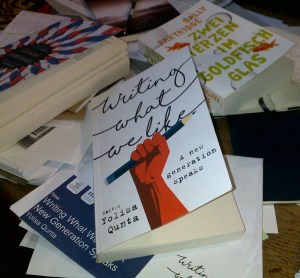 For a white person, reading Writing What We Like: A New Generation Speaks might feel like gatecrashing a party where some ugly truths will be revealed about you. Provocative and penetrating, Writing What We Like is a difficult book to review when you happen to be white, because one feels that one should not be talking at all, but listening only. One is torn between possible accusations of one’s own “intellectual arrogance” and the need for dialogue. And yet, a way to disrupt entrenched ways of thinking and to establish connections across barriers imposed on us by a turbulent and harrowing history is to try to imagine ourselves into the skins of others. That is where creativity and empathy begin – in writing, reading and interpretation – where we cease to view ourselves in any other categories but human. The ultimate goal is understanding, coupled with compassion. Everything else will follow from there.
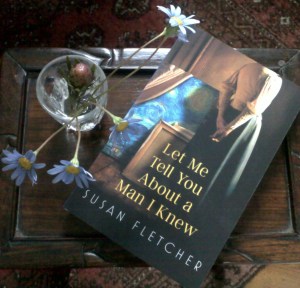 I welcome every Susan Fletcher novel with open arms. Let Me Tell You About a Man I Knew is her sixth. It completely delivers on the promise of its predecessors. Set in the Provencal town of Saint-Rémy where Vincent van Gogh spent a year of his life in an asylum and painted some of his most widely recognised works, the novel tells the story of a local woman whose life is disrupted by the arrival of the Dutch painter. Jeanne Trabuc is the wife of the asylum’s warden. In her fifties, a mother of three, she goes about her daily routines, remembering her adventurous youth and watching out for the mistral, “wind of change, of shallow sleep.”
 Throughout the years, few oeuvres have enriched my intellectual life as much as the works of the Welsh philosopher Mark Rowlands. At some stage, we are all confronted with the question of what makes life worthwhile, how to make the time we have on this planet meaningful. Unfortunately, not enough of us ask how to live in such a way as not only to enjoy the journey, but simultaneously do as little harm as possible to our fellow travellers, whether they be other humans, animals or the environment. We all muddle on. Rowlands does not claim to have the answers, but his attempts at approaching possible conclusions are fascinating to engage with.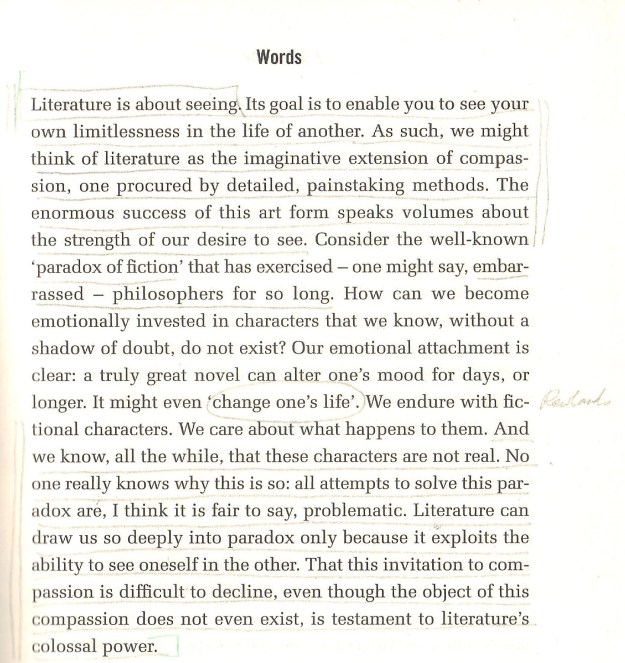
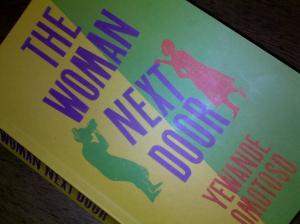 Neighbours: a word loaded with connotations. The biblical instruction of “love thy neighbour”, Verwoerd’s “policy of good neighbourliness”, Robert Frost’s “good fences make good neighbours”, and the usual neighbourly mistrust, animosity, even prejudice come to mind. Yewande Omotoso quotes Simone Weil for her epigraph: “The wall is the thing which separates them, but it is also their means of communication.”
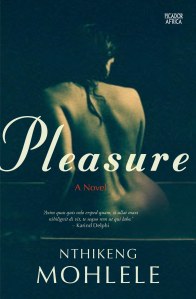 The title of Nthikeng Mohlele’s fourth novel delivers on its promise. Pleasure is a mesmerising, unusual book. At times I was hesitant to call it a novel. The story of Milton Mohlele, his dreams and musings, which he attempts to distil into writing, reads like a meditation. As literary history echoes in his name, Milton could be an alter ego for most writers seeking to find not only meaning but pleasure in the written word – to capture that elusive something which makes us sigh deeply with content when, if ever, we truly encounter it.
 Reading dead authors is not unusual, but opening the late Paul Kalanithi’s When Breath Becomes Air feels different. He wrote it knowing he was dying and it was published by his widow a year after his death. The immediacy of the knowledge is uncannily palpable. For me, the experience was even more intimate on two different levels. Firstly, I also had a cancer scare recently and Kalanithi was my age when he died. In retrospect, his memoir made me count my blessings, again, as I am healthy and have escaped with just a fright. Secondly, like me, as a young person he struggled to choose between two vocations: medicine and literature. Unlike me though, he chose medicine. But literary longings had never left him and when life became unbearable, like many of us he found some amount of solace in the written word.
 Every new book by Niq Mhlongo is literature to my ears. His three novels, Dog Eat Dog (2004), After Tears (2007) and
 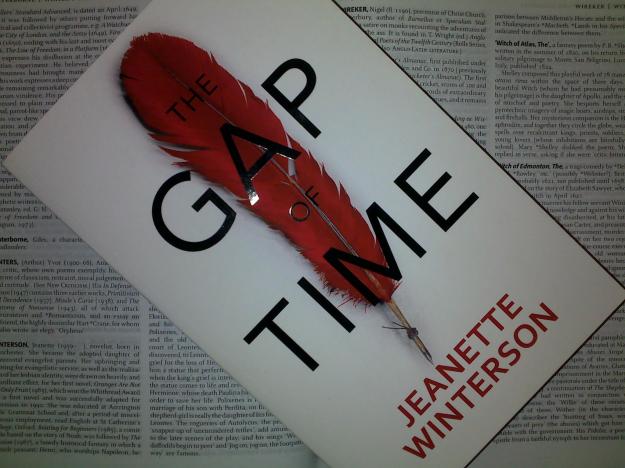 Jeanette Winterson is one of my favourite writers of fiction and non-fiction. Her recent memoir Why Be Happy When You Could Be Normal (2011) was a revelation. I was introduced to her work at university with the by now classic novel Oranges Are Not the Only Fruit (1985). Her Lighthousekeeping (2004) is one of the most moving love stories I have ever read. Among many texts, it echoes Virginia Woolf’s To the Lighthouse. The main character Silver reappears in other Winterson novels. As does the line: “Tell me a story.” Winterson is known for her retellings of myths and legends, her writing is rich in intertextuality. I loved her modern rendering of the Atlas myth, Weight (2005).
 Melissa de Villiers was born in Grahamstown and educated at Rhodes, but she is a citizen of the world. She lives in Singapore, travels widely, and often returns to South Africa. The nine stories in her debut The Chameleon House are informed by migrations. The concept of home is interrogated, as is contemporary South Africa and its difficult past, “old ways unextinguished and forever edging forward, smudging boundaries”. A woman inherits her grandfather’s weekend house and with it the question of ownership. Another is the victim of sly abuse. An illicit couple is caught up in a blackout. Lust and power mingle with loneliness, an “emptiness – desolate and cold – that would claim her should her hold on him flicker and fail.” Loyalties are tested when four friends sharing a house in London unwittingly harbour a traitor among them. This is powerful storytelling from a writer to watch.
 Karina Magdalena