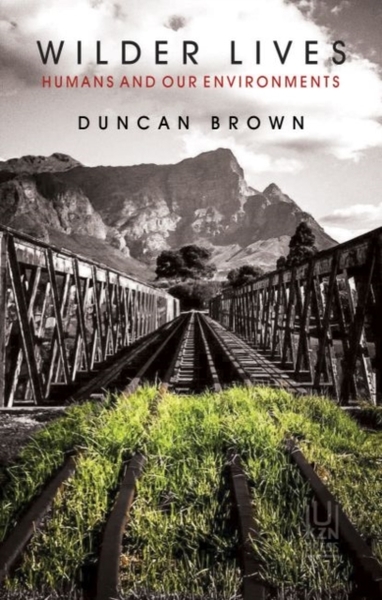
 Not all is well with the world. In moments of dark disillusionment, it is easy to give in to despair and just do nothing. But it is worthwhile to remember that if all of us, or at least most of us, institute even the tiniest of changes in our lives, we can make these lives better and we can make the world a better place, for ourselves and others.
Duncan Brown will be known to readers as the author of Are Trout South African?, which partly informs his latest book Wilder Lives: Humans and Our Environments. It is difficult for me to pinpoint why this book made me feel happy, but it did. Perhaps it was because Brown does not preach. He is a generous writer who shares his observations and research in a way that is empowering. The fact that his book made me feel better about my completely wild (or “neglected”, as many visitors seem to think) garden might be another reason.
Divided into ten highly accessible chapters, Wilder Lives focuses on ways we can “re-wild” our lives, whether through conservation, language, or in re-examining ethics. The concept of “rewilding” looks for definitions of “wild” that have “positive value (self-propagating, growing sustainably, self-reliant, independent, and so on)”. In this sense, rewilding champions a nourishing of the self-sustaining ecological process.
Brown also examines our misconceptions about “wildness” and what we often think are its opposites: culture, civilisation, or simply us, humans. The belief that wildness can only exist “where humans are absent” is still prevalent but, as Brown explains, it is rendered “questionable as a concept in which human influence is omnipresent”. What is definitely of essence is that we realise we are not as important as we want to believe. Humility might be the trait that could perhaps save us from ourselves. Brown makes it clear that rewilding is, in the words of George Monbiot, “not about abandoning civilization but enhancing it.”
Deeply aware of the “contradiction, ambiguity and paradox, especially in their entanglement in South Africa with colonial and apartheid histories”, Brown presents us with ideas about wildness and our role in it that are balanced and not intimidating. In the chapter on wildness and language, he shows what a difference just paying attention and being able to name and describe the environments we engage with – “a place literacy”, in Robert Macfarlane’s words – can help us live more rewarding lives. It reminded me of the joy I experience when watching and naming the birds visiting my ecologically uncontrolled garden.
We can all profit in the end, and in ways that we don’t necessarily immediately recognise as profitable. What is it that makes our modern lives so rough to process? Maybe a more conscious, re-evaluated way of existing within our environments can lead to simpler and much more fulfilling journeys. Wilder Lives assuredly offers one of “possibility, affirmation and excitement.”
Wilder Lives: Humans and Our Environments
by Duncan Brown
UKZN Press, 2019
Review first published in the Cape Times on 30 August 2019.
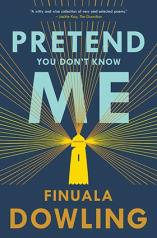 If you are a reader of poetry, the last thing you should do is heed the instructions of the title of Finuala Dowling’s latest collection. Pretend You Don’t Know Me: New and Selected Poems brings together a selection of some of her best poetry from four previous volumes (three of them out of print now) and twenty-two new poems, each of which will make you want to know her work – not only the poetry, but the prose as well. Dowling is also the author of four novels, with a fifth to be published later this year. She is the recipient of the Ingrid Jonker, Sanlam and Olive Schreiner Prizes and is rated as one of the most significant South African poets writing in English today.


 It was by chance that I read Musawenkosi Khanyile’s debut poetry collection on a rainy morning, still tucked up in my bed. But it was no coincidence that the juxtaposition of the comfort of my bedroom and the realities described in the volume repeatedly moved me to tears. Unapologetically autobiographical, the poems included in the book trace the author’s journey from childhood to adulthood, from his rural family home, through the township, to the city. A journey undertaken by many, but not often evoked in poetry with such distinct tenderness that it takes your breath away.
 The Wickerlight is the second book in Mary Watson’s The Wren Hunt series for young adults. In the first book, the protagonist Wren is chased and taunted by a few boys in the woods around Kilshamble, the village where they all live. Set in modern day Ireland, but one in which magic is as real to the novel’s characters as social media, the next instalment in the series picks up the story of one of these boys, David. He is a member of the judges, one of the ancient draoithe clans. Their sworn enemy for centuries are the augurs.
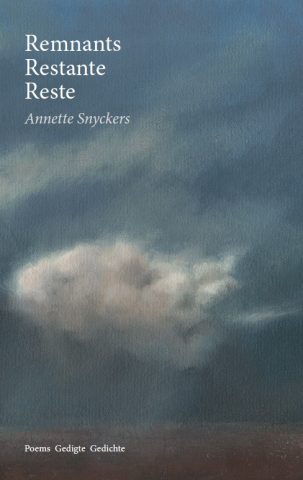 It isn’t often that you can delight in a poetry collection in three languages, but Annette Snyckers’s debut Remnants Restante Reste invites you to do precisely that. Writing in English, Afrikaans and German, Snyckers explores the possibilities of translation and creative expansion. Not all the poems included are presented in all three languages, but the ones that are add a magical layer to the poetry as the individual manifestations enhance and augment one another. The author notes: “Where a poem appears in more than one language, the first version is not necessarily the original version. Poems were written in different languages as I felt the need to write them, and all subsequent translations were done by me.” I feel fortunate to be able to enjoy all three versions in meaningful ways, but even if one of them eludes you, the remaining offerings in the collection are rich enough to suffice for a satisfying read…


 The other sessions were Finuala Dowling reading from her latest poetry volume, Pretend You Do Not Know Me, a ‘best of’ collection which also includes stunning new work; followed by John Maytham performing “Being Human”, a poetry script compiled by Finuala; Wilhelm Verwoerd talking about “that last name”; and Duncan Brown encouraging us to “rewild” our lives. While John was still in the audience, listening to Finuala, I was reaching for a tissue to deal with the emotions her poetry was evoking in me and glanced at him wiping away his own tears. We were both incredibly moved. And then, John made us laugh and cry with his exquisite reading of the poetry Finuala prepared for him. There was one particular poem that made us all crave chocolate cake so much that some delicious sinning was happily indulged in at lunchtime.


 There aren’t really many among the cast of characters in Mick Herron’s Jackson Lamb spy thriller series that you would want as a friend. On the whole, they are a bunch of losers. It’s almost always certain that they’ll either let themselves or their colleagues down. Yet, you can’t help but follow their (mis)fortunes with feverish anticipation.
 Opening an Ingrid Winterbach novel fills me with excitement every single time. She is one of my favourite contemporary Afrikaans writers and I am immensely grateful that her work is available in English.
 Karina Magdalena