Tag Archives: Karina Magdalena Szczurek

Review: Bloody Lies – Citizens Reopen the Inge Lotz Murder Case by Thomas Mollett and Calvin Mollett

Bloody LiesInge Lotz, a Stellenbosch student, was found brutally murdered in her flat in March 2005. Her boyfriend at the time, Fred van der Vyver, was put on trial for the deed. Anybody who has ever held an opinion about what had happened to Lotz the day of her death should read Thomas and Calvin Mollett’s shockingly revealing Bloody Lies: Citizens Reopen the Inge Lotz Murder Case.
h its suggestive cover and brilliant title, the book not only profoundly questions the justice of Fred van der Vyver’s acquittal but the entire judicial system involved in arriving at the verdict. In times when high-profile court cases are becoming staple media spectacles in which many of us feel the need and right to participate, it might be of utmost importance for all concerned to consider what is at stake. The authors of Bloody Lies present compelling evidence that a serious miscarriage of justice took place in Lotz’s case. However, it is commendable that they do not try to sell their findings as gospel truth. All they ask is that readers think for themselves.

As the title of their book suggests, during their research the Mollett brothers uncovered some mindboggling discrepancies between the manifold interpretations of the evidence collected at the crime scene. One by one, they examined the available pieces of evidence – fingerprints, potential murder weapons, blood marks, autopsy report etc. – and in the process developed methods for analysis which have the potential of revolutionising such procedures in the future. Throughout they kept an open mind. They emphasise that their investigation sprung from their own fascination with the case, nobody hired them. Their meticulous scientifically-grounded experiments and revaluations are carefully presented and illustrated within the book (some of the visual footage is not for the faint-hearted).

In all the vital points the authors reached radically different conclusions to the ones presented to the court by so-called expert witnesses. Tasked with assisting a just ruling, instead expert witnesses are often called upon to intentionally mislead the court to affect a favourable outcome for one of the parties. Bloody Lies exposes a flawed system where the court more often than not is faced with negligence, indifference, or worse, ruthlessness and malice. During the Lotz trial careers of hard-working and well-meaning people were thus ruined.

It is impossible to cover all the relevant bases of this case in a single book, thus some niggling questions remain unanswered. But the authors have set up a website (Truth4Inge) to which they refer throughout the book and where interested readers are encouraged to address them.

Bloody Lies shines a penetrating light into the murky procedures of how evidence is collected and examined. People in the respective fields would be wise to re-examine both processes and to implement regulations which will make them less prone to error and misinterpretation.

Inge Lotz’s senseless death had tremendous impact on the lives of those who knew her and all who were involved with the investigation. Nobody walked away unscathed. Apart from the murderer perhaps.

Bloody Lies: Citizens Reopen the Inge Lotz Murder Case
by Thomas Mollett and Calvin Mollett
Penguin, 2014

An edited version of this review was published in the Cape Times on 11 July 2014, p. 10.

Interested in receiving a free copy of Bloody Lies? Please take part in my BOOK GIVEAWAY this month and stand a chance of having it (among others) sent to you. Good luck!

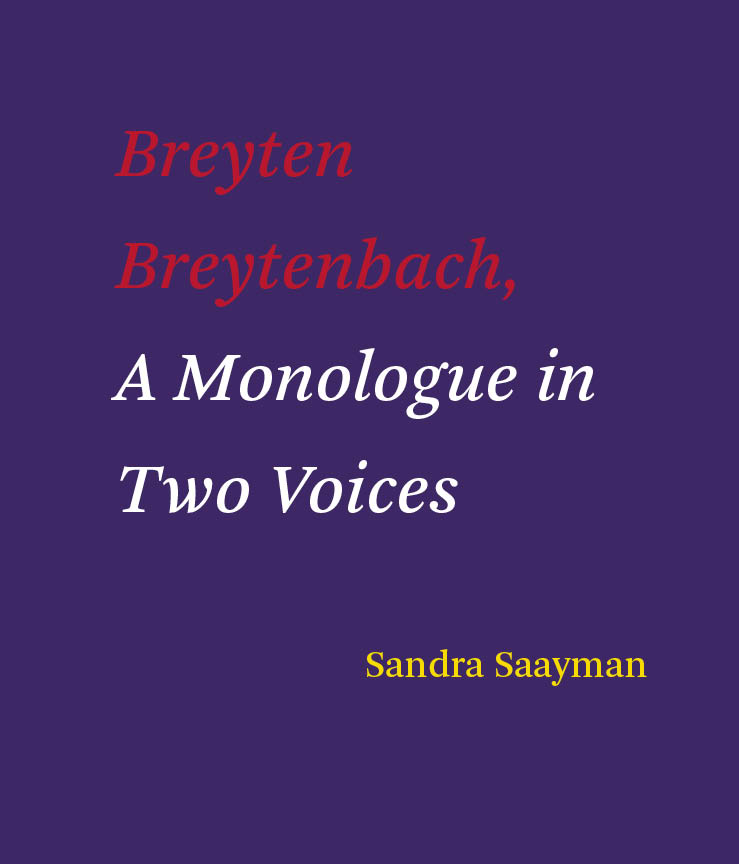
Book mark: Breyten Breytenbach, A Monologue in Two Voices by Sandra Saayman

BB_coverThe poet and painter Breyten Breytenbach was imprisoned in the 70s for high treason. In this exquisitely produced book, Saayman explores a new approach to this multifaceted artist’s work which was defined by his prison experience. Illustrated by quotes as well as the disquieting drawings and paintings from this period, Saayman’s analysis focuses on the key iconographic signs of Breytenbach’s oeuvre: bird, angel, strings and ropes. She remedies its fragmented reception by attempting to “find a way to look and read at the same time”, and invites us to study the web of meanings the visual and the textual mediations on execution, captivity, and fear of death create in context. They take the “reader and spectator beyond the threshold of easy contemplation” as they confront the horrors of imprisonment and the survival strategies of the artist.

"Steve Biko" and "Autoportrait devant le miroir" (both 1990) in Breyten Breytenbach, A Monologue in Two Voices (Fourthwall Books)

“Steve Biko” and “Autoportrait devant le miroir” (both 1990) in Breyten Breytenbach, A Monologue in Two Voices (Fourthwall Books)


An edited version of this book mark was published in the Cape Times on 4 July 2014, p. 12.

Breyten Breytenbach, A Monologue in Two Voices
by Sandra Saayman
Fourthwall Books, 2014

Interested in acquiring a copy of this book? Please take part in my BOOK GIVEAWAY this month and stand a chance of having a copy of Breyten Breytenbach, A Monologue in Two Voices (among others) sent to you. Good luck!

Four stories from Touch longlisted for TWENTY IN 20

TouchI am delighted to announce that the following four short stories from Touch: Stories of Contact by South African Writers have been included on the 50-titles strong longlist for the TWENTY IN 20 project which aims to publish an anthology of the best twenty South African short stories written in English during the past two decades of democracy:

“File Under: Touch (Avoidance of, Writers); Love (Avoidance of, Writers). (1000 words)” by Imraan Coovadia
“Threesome” by Emma van der Vliet
“Salt” by Susan Mann
“The Crossing” by Damon Galgut

Other Touch authors are also on the list, but with different stories:

Byron Loker with “New Swell” from his debut collection by the same title (2006)
Ivan Vladislavić with “The WHITES ONLY Bench” from Propaganda by Monuments and Other Stories (1996) and “The Loss Library” from The Loss Library and Other Unfinished Stories (2011)
Zoë Wicomb with “Disgrace” from The One That Got Away (2008)
Mary Watson with “Jungfrau” from Moss (2004)
Henrietta Rose-Innes with “Homing” from the collection by the same title (2010) and “Poison” from African Pens: New Writing from Southern Africa (2007)
Alistair Morgan with “Icebergs” from The Paris Review (2007)
Liesl Jobson with “You Pay for the View – Twenty Tips for Super Pics” from Ride the Tortoise (2013)
Nadine Gordimer with “Loot” from the collection Loot and Other Stories (2003)

About Touch: Stories of Contact (2009):

For this unique and impressive anthology, some of South Africa’s top storytellers were invited to interpret the theme of touch. The result is a scintillating collection of twenty-two stories about all kinds of human interaction. There are tales of love lost, and of discovering intimacy. Some describe encounters with strangers, others examine family relationships. Most deal touch in a physical sense; one or two explore the idea of ‘keeping in touch’.
Touch: Stories of Contact brings us work from such established luminaries as André Brink, Nadine Gordimer, Damon Galgut and Ivan Vladislavić, and exciting new voices such as Alistair Morgan and Julia Smuts Louw. Whether poignant or humorous, fictional or autobiographical, these innovative tales remind us of the preciousness of touch and are a testimony to the creative talents of South Africa’s writers.
All the authors have agreed to donate their royalties to the Treatment Action Campaign. Every copy sold therefore contributes to the fight against HIV and AIDS.

Touch Contributors: Emma van der Vliet, Michiel Heyns, Elleke Boehmer, Susan Mann, Willemien Brümmer, Julia Louw, Anne Landsman, Byron Loker, Maureen Isaacson, Ivan Vladislavić, Zoë Wicomb, Imraan Coovadia, Jonny Steinberg, Mary Watson, Henrietta Rose-Innes, Alex Smith, André Brink, Damon Galgut, Alistair Morgan, Liesl Jobson, Nadine Gordimer, Lauren Beukes.

(From the short stories I know, I am also thrilled to see “Where Will He Leave His Shoes” by Karen Jayes, “The Pigeon Fancier” by Sarah Lotz, “Porcupine” by Jane Bennett, “A Visit to Dr Mamba” by Andrew Salomon, among others, on the list – these are the kind of stories you will never forgot after reading.)

Review: The Blazing World by Siri Hustvedt

the-blazing-worldThe Blazing World_HustvedtReading Siri Hustvedt’s work is always a stimulating treat. She is the author of six internationally acclaimed novels and the recipient of the International Gabarron Award for Thought and Humanities.

I first fell in love with her essays on art and psychology of which the most recent collection, Living, Thinking, Looking (2012), is a wonderful example. The clarity and beauty of her novelistic and essayistic vision is matched by her stylistic virtuosity. The result is a deceptively effortless execution that leaves the reader completely fulfilled.

The Blazing World, Hustvedt’s latest novel, is perhaps her best to date. Similarly to her other masterpiece, What I Loved (2003), it ventures into the treacherous world of art, greed and fame. The novel’s unusual format imitates an anthology composed of various pieces – interviews, letters, statements, notes, reviews, editorial comments, and diary entries – all of which centre on the life and art of Harriet Burden. Tellingly referred to as Harry by her family and friends, Burden feels that her artistic talents have been eclipsed by three unavoidable facts of her circumstances: her gender, age, and marital status. Hardly anybody wants to take her or her art seriously because she is a woman, she is middle-aged, and she is the rich widow of the famous art dealer, Felix Lord. A lethal combination for any artist trying to make her way in today’s world.

Her whole life Burden searches for a way to dodge misogyny. She grows up with a father who wishes she were a boy. Tall and curvaceous, she feels unattractive. Her intelligence and intellectual pursuits don’t help and turn her into an outsider. Feelings of inadequacy follow her into her marriage to Lord, a philanderer with many secrets. As a mother she finds how hard it is not to repeat the mistakes of our parents.

The art she creates is highly sophisticated, but largely ignored. She wants “to blaze and rumble and roar”, but something that is nearly impossible to articulate, “something horrible”, weighs her down and then rises like bile to her lips.

She wants revenge. She wants to have the last word. After Lord’s death, Burden employs three male artists to exhibit her artwork as their own: “There will be three, just as in the fairy tales… And the story will have bloody teeth.” One after the other, the exhibitions garner the recognition and success Burden had been craving for, but instead of proving a point, they cause a great deal of turmoil in the lives of people directly or indirectly involved in the project Burden aptly calls Maskings.

The novel cuts close to the bone. As a woman artist, I also found myself reading with this huge indigestible lump of “something horrible”, “fat, leaden, hideous”, stuck at the bottom of my intellectual and emotional stomach, and I knew exactly what Burden was experiencing when attempting to break down the prejudices she encounters in her life. However, Hustvedt’s rumbling and roaring is reassuring.

Her The Blazing World shines as brightly as Sirius.

Review first published in the Cape Times on 20 June 2014, p. 31.

Blog hopping with Alex and Sally

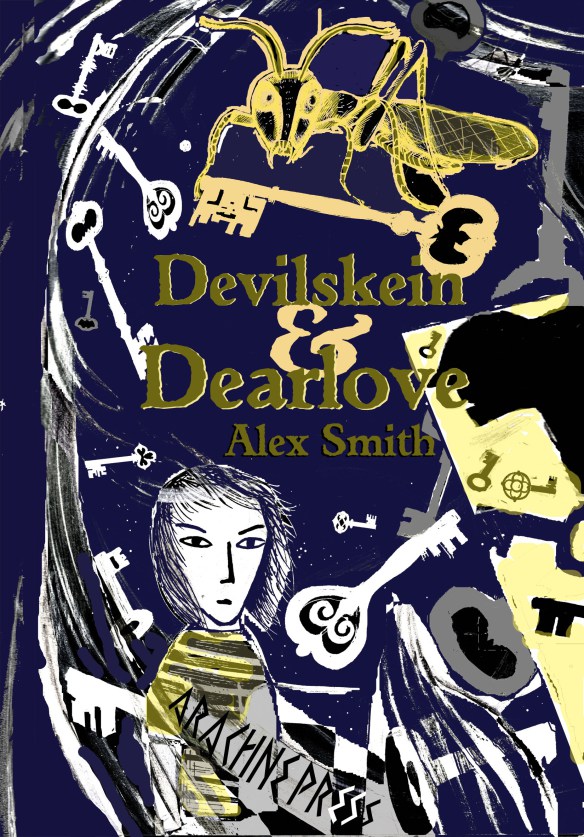
Devilskein and DearloveAlex and EliasMy dear friend and colleague writer, Alex Smith, invited me and and another friend, S.A. Partridge, to take over the blog hopping baton from her. She asked me to answer the following questions and to nominate two other women bloggers to continue with the chain. Before I respond, the nominations:

Page PluckerSophia from Bournemouth, UK, of the wonderful book reviewing blog: Page Plucker. Even though Sophia does not seem to be active right now, I hope she will resume her reviewing soon. It was her review of Philida which first attracted my attention to her blog.

Girl-wallpaperHelen MoffettHelen Moffett, a woman of many talents: editor, writer, cricket expert, poet, activist, cat-mother, and dear friend. She is the Helen in Helena S. Paige, one of the authors of the Girl series (I am currently reading Girl Walks into a Bar and Girl Walks into a Wedding which also has something to do with ‘hopping’ – between scenes of various erotic encounters…). Helen has also published one of my favourite volumes of poetry, Strange Fruit. Ever since I met her, I have also known that one day I am going to hold a novel in my hand that has only Helen’s name on the cover. I am looking forward to that moment very much.

THE BLOG HOPPING Q&A:

What am I working on?
I’m in the process of completing my next novel. My working title is Ordinary. It is a boy-meets-girl story for a young adult audience. I live near Bishops and I love going for walks on the school’s campus. The idea for the novel came to me during one of these walks. At first, I did not want to engage with it because I was in the middle of another novel. But Ordinary refused to go away, hijacking my creativity and keeping me awake at night, so I decided to give it a go. The other novel is on the backburner, but I hope to have both finished by the end of this year.

How does my work differ from others in its genre?
In my work I skip between genres all the time, so I am going to concentrate only on Ordinary for this answer: I hope to be able to portray teenage sexuality in a way that many teenagers will be able to relate to. Something between the extremes of over-the-top promiscuity and total innocence. I’m frustrated by both ends of the spectrum when I read YA literature. I recently saw a film that made me think of what I am trying to achieve in my novel: The First Time with Britt Robertson and Dylan O’Brien. The film is like a teenage version of Before Sunrise. Great stuff! But there is a much darker dimension to my novel than to the film.

Britt Robertson and Dylan O'Brien in The First Time

Britt Robertson and Dylan O’Brien in The First Time


Why do I write what I do?
I cannot imagine a life without reading and writing. Sharing stories gives meaning to my existence.

How does my writing process work?
Stories come to me. Often the trigger is an image, a phrase, a mood. Sometimes it is everything at once and within seconds the whole story is fully fledged in my mind. But usually it takes a few days or even weeks to develop an idea. I cannot begin writing before I know roughly where I am heading. At the bottom of every story is something that I need to understand for myself, and the need or wish of sharing the journey to that understanding with others. Then it is all about finding the voice: who is telling the story and how. For Invisible Others I had to re-write the first 10 000 words of the novel because the first-person narrator I chose for it in the beginning wasn’t working. If necessary, I do research. It is an organic process. The writing takes me a long time, but I don’t mind. I’m extremely patient. I prefer to work in the afternoons, that is when I find myself to be most creative. It took me a long time to understand this, but I know that I can’t force anything when it comes to writing. Every story has its own rhythms. I have learned to respect that. All my creative work happens on the computer, but I do take notes on paper. My desk is drowning in them. I always share the first draft of anything I write with my husband first, then I pass it on to others for comments. The editor gets the third or fourth draft, and the process of revision starts all over. That is when the real writing begins for me.

* * *

For André J. Kershaw’s, my step-grandson’s, review of one of Sally’s novels, Dark Poppy’s Demise, click here.
For my review of Alex’s latest novel, Four Drunk Beauties, click here.

Invisible Others at Clarke’s Bookshop

IO at Clarkes2Not surprisingly, since Protea Book House is my publisher, I sighted the first copies of Invisible Others on a bookshop shelve at the Rondebosch branch of Protea Bookshop where the novel was also launched a few days ago. The Book Lounge also launched it, so no surprise to see it there either. But when I saw Invisible Others prominently displayed at Clarke’s Bookshop in Long Street where I had no launch and where I do not know a single soul, that gave me a real thrill. It felt like the novel had truly made it into the world and from then on embarked on a life as an independent creature. May that journey be full of wonder and joy!

To order Invisible Others from Clarke’s Bookshop click here: How to order.

Invisible Others at Clarke's Bookshop, photos by Roma Szczurek

Invisible Others at Clarke’s Bookshop, photos by Roma Szczurek

Author-to-Author at the Franschhoek Literary Festival

Nadia Davids, photo by John Gutierrez

Nadia Davids, photo by John Gutierrez

During the highly anticipated Franschhoek Literary Festival this year (16-18 May), I will have the pleasure of discussing our debut novels with the award-winning author Nadia Davids. Our event is scheduled for Saturday 2.30pm and will take place in the Hospice Hall. To buy tickets, click here: Author-to-Author [71] (R60).

Nadia Davids’ work has been published, produced and performed in southern Africa, Europe and the United States. She was awarded the Rosalie van der Gucht Prize for new directors for her play At Her Feet and received three Fleur de Cap Award nominations for Cissie. Nadia holds a PhD in Drama from UCT and lives in London, where she lectures in the drama department at Queen Mary University of London. Her debut novel, An Imperfect Blessing, was published in April.

About An Imperfect Blessing:
“It is 1993. South Africa is on the brink of total transformation and in Walmer Estate, a busy suburb on the slopes of Devil’s Peak, fourteen-year-old Alia Dawood is about to undergo a transformation of her own. She watches with fascination and fear as the national drama unfolds, longing to be a part of what she knows to be history in the making. As her revolutionary aspirations strengthen in the months before the elections, her intense, radical Uncle Waleed reappears, forcing her parents and sister Nasreen to confront his subversive and dangerous past.

Nadia David’s first novel moves across generations and communities, through the suburbs to the city centre, from the lush gardens of private schools to the dingy bars of Observatory, from landmark mosques and churches to the manic procession of the Cape Carnival, through evictions, rebellions, political assassinations and first loves. The book places one family’s story at the heart of a country’s rebirth and interrogates issues of faith, race, belonging and freedom.”

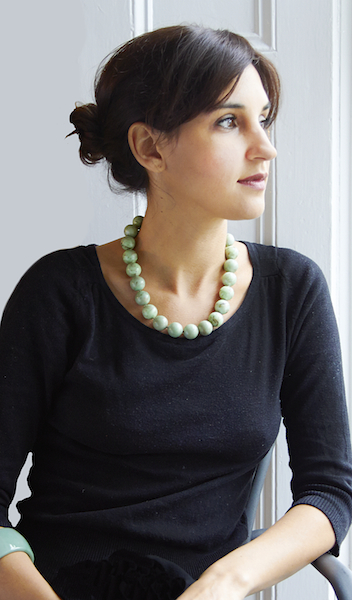
KarinaNadia Davids and I do not know each other in person (yet!), but we have quite a lot in common. We were both born in 1977 and do not live in the countries of our birth. We have academic backgrounds and completed our PhDs in 2008. We are playwrights, short-story writers, and debut novelists this year. I look forward to discussing our novelistic firstborns, An Imprefect Blessing and Invisible Others at the festival.

Nadia Davids’ other scheduled events at the FLF:
Friday 11.30am [9] Playwrights Strut and Fret
Friday 4pm [37] Revelling in South African English
Sunday 11.30am [93] The Considered Canon

Book mark: The Last Man in Russia and the Struggle to Save a Dying Nation by Oliver Bullough

Book mark_Last Man in RussiaIn this enthralling but heart-breaking book the historian and journalist Oliver Bullough tries to find answers to a fundamental question about Russia: Why does a people turn to vodka for solace and what consequences does mass alcoholism have for a country? Bullough travels through Russia in the footsteps of Father Dmitry Dudko to trace how a fearless priest, who had brought hope and unity to his people, succumbed to the KGB. He exposes the ruthless finesse of the KGB’s enterprise in the former Soviet Union, the greed which has replaced ideology after the transition, and the continuing drinking problem of an entire nation. Despite inklings of optimism, it’s difficult to take heart for the future of Russia from his insightful report.

Book mark first published in the Cape Times, 25 April 2014, p. 12.

The Last Man in Russia and the Struggle to Save a Dying Nation
by Oliver Bullough
Allen Lane, 2013
Penguin, 2014