Tag Archives: Karina Szczurek

Homecoming launch of Invisible Others

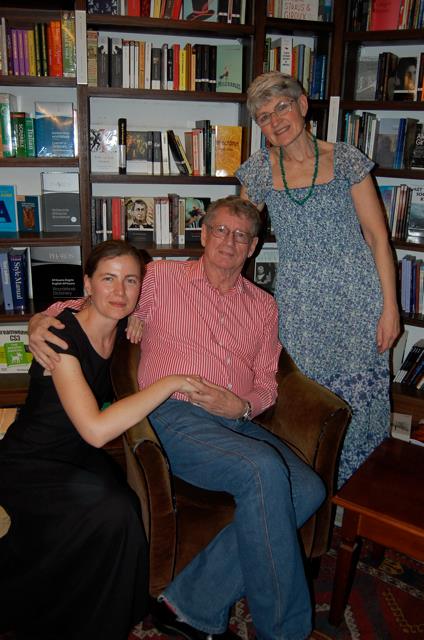
Photo by Roma Szczurek

Photo by Roma Szczurek

A small but very enthusiastic crowd gathered earlier today at the Protea Bookshop in Rondebosch for my “homecoming launch” of Invisible Others. Thank you to everyone who made this one so special!
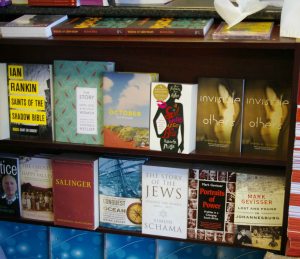
The first copies of Invisible Others at Protea Bookshop in Rondebosch, photo by Roma Szczurek

The first copies of Invisible Others at Protea Bookshop in Rondebosch, photo by Roma Szczurek

The shop is beginning to feel like an extension of our lounge. As Johan from the shop remarked, it is located almost in our backyard. I will never forget the first time I browsed there. I think it was Del who asked me whether I needed help. I was looking for a collection of stories by Etgar Keret. The bookshop did not have a copy. I bought another book and then forgot about the Keret. About two weeks later, I was done shopping at the centre and was putting some groceries into my car, parked in the vicinity of the shop, when Del recognised me and came out to say that they now had the Keret book I had been looking for the other day. Did I want to have a look at it?
Of course I did, and I was very impressed by such kindness and service. It is always a pleasure to go back to a bookshop where people care and know about books (which is not a given nowadays – I once had to spell Nadine Gordimer’s name at a bookshop…).
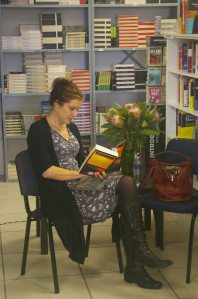
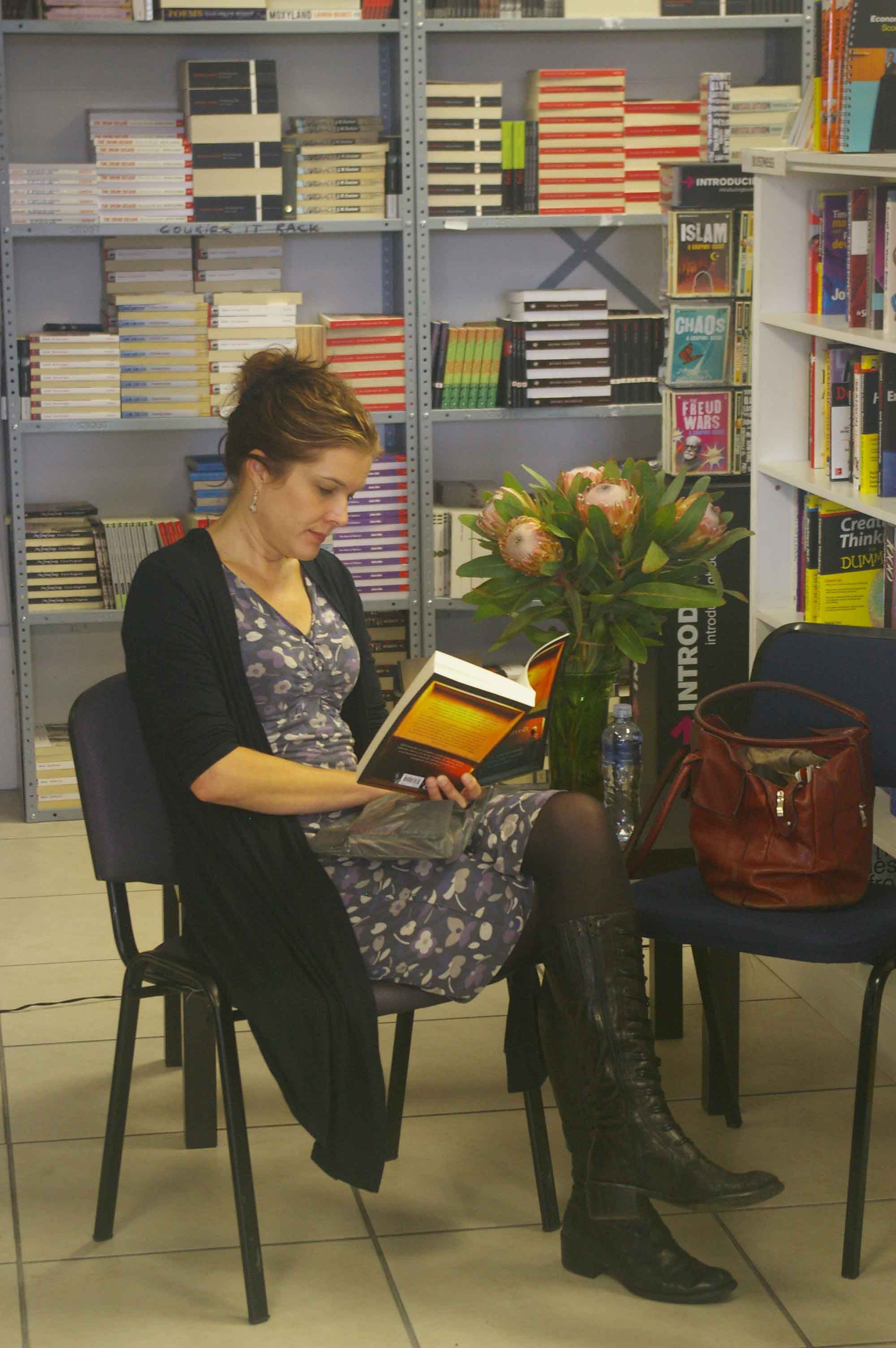
Emma after the launch, reading Siri Hustvedt's The Blazing World

Emma after the launch, reading Siri Hustvedt’s The Blazing World

Today at the launch, I had the honour of being interviewed by the wonderful author Emma van der Vliet. We spoke about the influence of film on Invisible Others, particularly the 1992 film Damage, staring Juliette Binoche and Jeremy Irons. Often when I write, individual scenes come to me in the form of film-like images and the medium is an inspiration for my work. There is one line in Damage which I found haunting: “Damaged people are dangerous; they know they can survive.” Konrad reflects on it in the novel. We also discussed how the novel began, how the main characters formed in my head, and how Cara refused to be written the way I’d first imagined her. The first images of Konrad I had in my mind were connected to a jersey a hitchhiker my Mom and I picked up in Poland many, many years ago wore. The young man told us he’d knitted the jersey himself. Konrad, also an avid hitchhiker in his youth, owns a jersey like that in the novel. Emma also asked about my writing process. When I was still working on my thesis about Nadine Gordimer’s post-apartheid writing, I found many references to her strict schedule of devoting the mornings to her stories. Inspired, I tried to do the same, only to discover that I could not write one decent sentence in the mornings. (Recently, a friend gave me a sign I love for my kitchen: “I don’t do mornings”.) I am an afternoon person. My best time for writing is after lunch and coffee, that is when I am at my most prolific and inventive.

By Renée le Roux

By Renée le Roux

It was great to see Renée le Roux at the launch whose amazing artwork has been an inspiration for Dagmar’s art in the novel. Before encountering Renée’s work, I couldn’t find a way of responding to abstract art, but the first time I stood in a room full of her paintings I understood and felt what abstract art was about. It was such a thrill and discovery. Her images spoke to me like no other. Her “Mommy’s Boys” are in my study and despite their sadness, make me smile every day.

Thank you to everyone else who was there!

Launch cakeThis is the launch cake which Emma and I enjoyed for our breakfast after the talk. The woman who baked it is going to hear from me soon. It is always good to know where to get a divine chocolate cake, definitely one of my all-time favourites.

Thank you for this delicious literary treat: launch, cake and all!
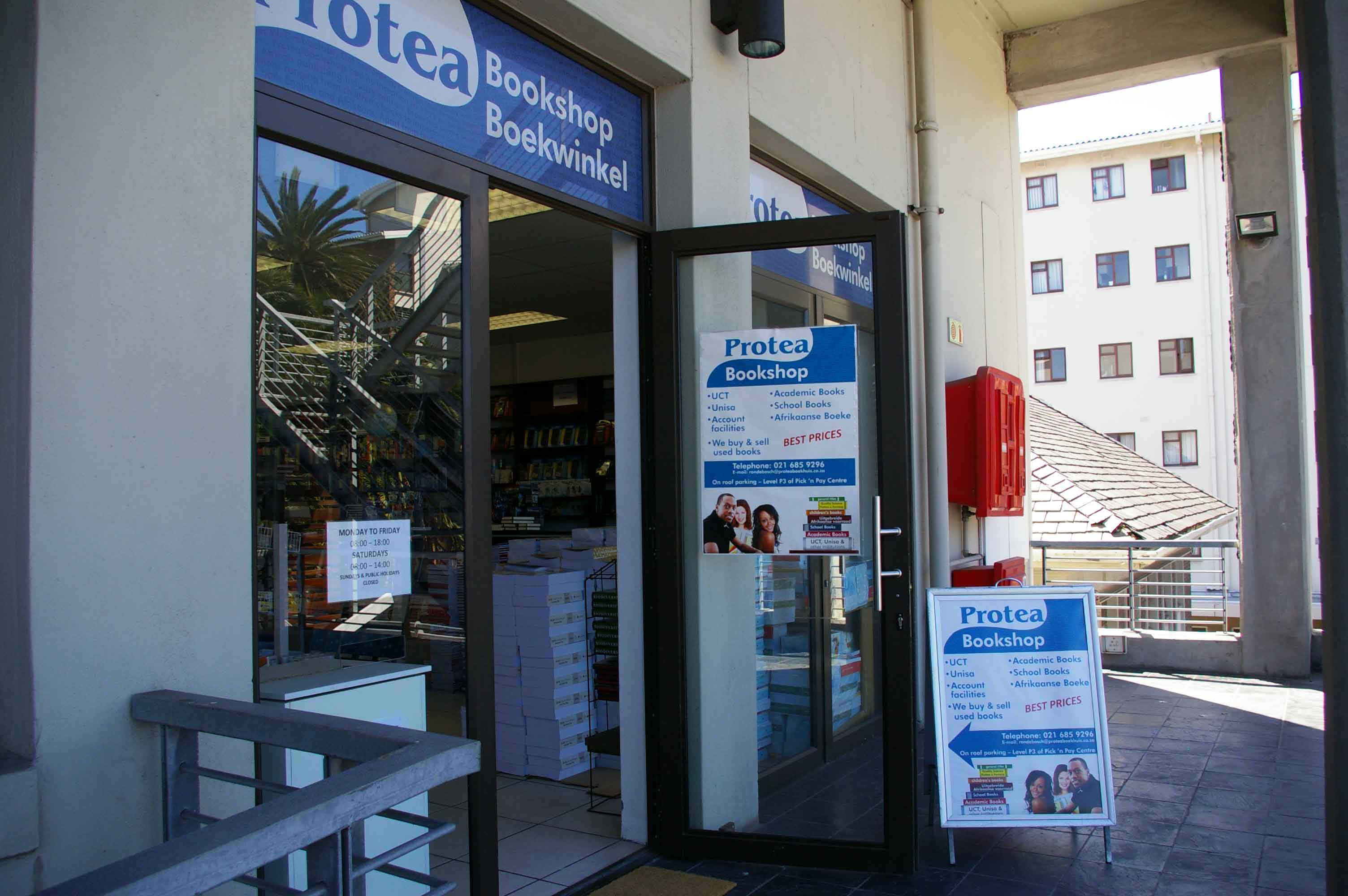
Launch of Invisible Others at Protea Bookshop Rondebosch

Invisible others 26 April 2014.indd The following is an invitation to my “homecoming launch” at the Rondebosch branch of the Protea Bookshop:

“Dear Reader / Geagte Leser,
It is with great pleasure that Protea Bookshop in Rondebosch extend an invitation to what we would like to call the homecoming launch of Karina Szczurek’s Invisible Others, on Saturday morning, 26 April. Karina will be here to discuss her debut novel with Emma van der Vliet.

Dit is met groot genoegdoening dat Protea Boekwinkel in Rondebosch u uitnooi na wat ons graag beskou as die tuiskomsbekendstelling van Karina Szczurek se Invisible Others op Saterdagoggend, 26 April. Emma van der Vliet sal met Karina in gesprek wees oor haar debuutroman.”

Date: 26 April 2014
Time: 11am
Place: Protea Bookshop Rondebosch
Shop 29
Rondebosch on Main
51 – 81 Main Rd
Rondebosch CT, 7700
Tel.: 021 685 9296

Emma, photo by Robert van der Vliet

Emma, photo by Robert van der Vliet

Emma van der Vliet is the author of Past Imperfect and Thirty Second World. I had the pleasure of working with Emma on both, Touch: Stories of Contact and Encounters with André Brink. I love her work and look forward to our discussion next Saturday. Protea Bookshop is located almost around the corner from my home and it is one of my favourite places in Cape Town – excellent staff and a wonderful collection of books. It is indeed a true “homecoming”.

Woordfees prize for debut writers

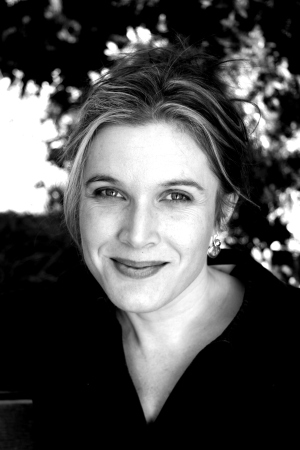
Karina with Invisible OthersInvisible Others is one of three books nominated for the Woordfees prize for debut writers (Ontmoetingsprys vir debuutskrywers by Woordfees 2014).
I am delighted with the news and very sorry that I will be on a plane during the awards ceremony. Holding fingers and toes crossed (also for a safe journey!).

10 Questions

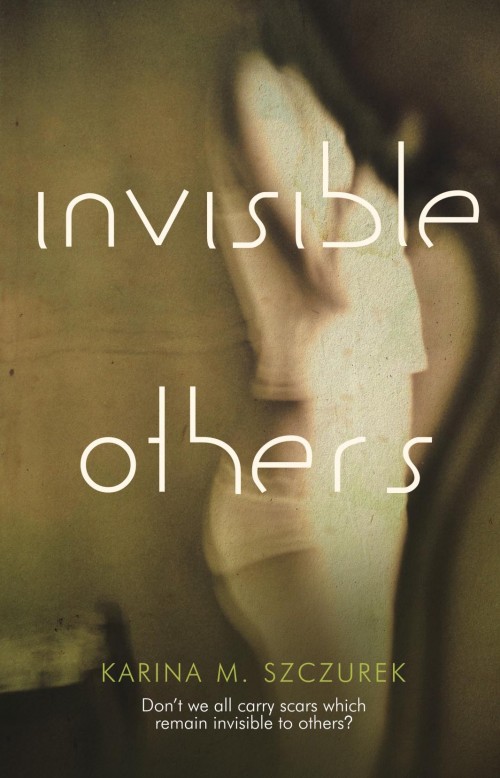
Invisible Others1. What question are you asked the most frequently?
How does one pronounce ‘Szczurek’? People usually remember me as the one with that weird name and hardly ever get it right. But I don’t mind. I know they mean me.

2. What is the question you dread being asked about Invisible Others?
It wouldn’t be very wise to give it away here… Officially, I don’t dread any questions about the novel.

3. Invisible Others is your first novel and at first you wanted to publish it under a pseudonym. Why?
People engaged in criticism often misinterpret their own role in the literary community. I wanted to avoid having to deal with those kinds of frauds, but I realised that a pseudonym wasn’t the answer.

4. Do you think being André Brink’s wife can count against you as a novelist?
Perhaps, but it will count against me with people who base their judgements on matters which have nothing to do with the real me or the real André, and definitely not with my work, so I can’t really take that attitude seriously.

5. You write about sex without the shackles of Calvinism. Are Polish women more open to talk about sex than South African women?
Not at all. My open approach to sexuality has nothing to do with my being Polish. Sexuality is such an essential part of who we all are; it is important to me to write about it as a lived, not only an imagined (and thus often distorted), experience.

6. In Invisible Others you describe Paris in a sensual and cinematically evocative way. Why are you so drawn to this city?
The story demanded being set in Paris. My role was to try to do justice to the city which has been written about so widely. I focused on the spaces which have personal meaning for me, like the Polish Bookshop.

7. You and your family fled Poland when you were still young. In what way has this shaped the Karina you are today?
In every way. A migratory background marks people the way gender, class and race do – it influences everything you do in life. We fled the then-communist Poland in 1987 when I was ten years old and settled in Austria where my parents still live. They wanted a life of freedom and opportunities for us. They certainly succeeded!

8. What is your favourite thing about South Africa?
Multiculturalism – it is what made me feel at home here the moment I stepped off my first flight to Cape Town a decade ago.

9. And your least favourite thing?
Fear.

10. You and your husband André are both masterful tellers of love stories. Will you ever write about your own romance in fictional form?
If we ever did, our love story would not need the veil of fiction to be told. In a way we are telling it already, in bits and pieces of our non-fiction writing.

First published in Afrikaans in Beeld.

Liesl Jobson on the Book Lounge launch of Invisible Others

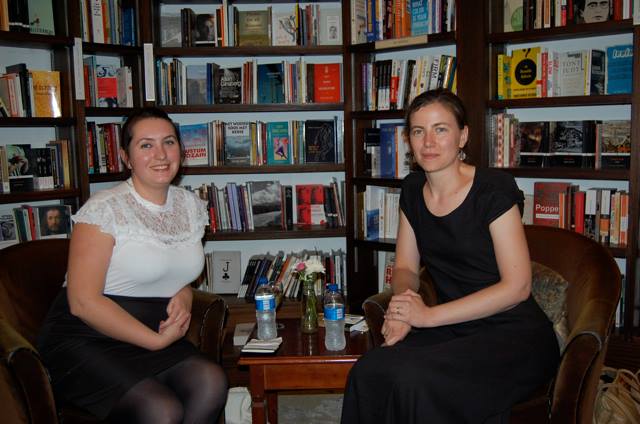
With Sally, photo by Liesl Jobson

With Sally, photo by Liesl Jobson

With my Mom and André, photo by Liesl Jobson

With my Mom and André, photo by Liesl Jobson

“At the launch of Karina Szczurek’s debut novel, Invisible Others, at The Book Lounge last week, this most welcome addition to the South African literary canon received high praise from those in the know. ‘It is a beautifully written novel,’ said an Mervyn Sloman, ‘in a spare style that is simultaneously lavish – it must be the French connection!’ Sloman said the characters are fully drawn with the author sustaining a ‘wonderful novelistic tease’ that keeps one turning the page. ‘This book is an absolute gift to us!’ he said.

Szczurek was joined in conversation by the talented YA novelist, Sally Partridge, who confirmed Sloman’s assessment of Invisible Others as ‘beautiful’. She introduced Szczurek as an author who wore many hats – an academic, editor, essayist, poet and an award-winning playwright. She said the book is an intense study on the nature of damaging relationships and asked Szczurek why she chose to write about this topic….’

Continue reading…
Report by Liesl Jobson

For more photographs click here.

Conference: Writing the ‘Rainbow Nation’?

poster_klein Early next month, I’ll be attending an international conference “examining 20 years of post-apartheid literature” in Regensburg, Germany, where I’ll be giving a paper on cityscapes in recent South African writing. Other participants include Crystal Warren of the amazing National English Literary Museum in Grahamstown and Willie Burger of the University of Pretoria with whom I edited Contrary: Critical Responses to the Novels of André Brink.

Conference brief:
“In his controversial essay “Preparing Ourselves for Freedom” (1989), Albie Sachs warned against seeing literature (and culture more generally) as merely a form of propaganda for ‘the struggle,’ arguing instead for texts that display “ambiguity and contradiction”. What road did South African literature take after this critique of ‘struggle literature’?” Continue reading…

As part of the conference there will be a panel conversation and a reading featuring Mike Nicol and Angela Makholwa.

Click here for the Provisional Programme.