 In July last year, I listed here my best reads of the first half of 2014 and gave one of the titles away to a randomly chosen person who commented on the post. The lucky winner was Solomon Meyer and I sincerely hope he has enjoyed his copy of The Maze Runner.
I would like to do the same for the second half of 2014 which turned out to be an even greater reading success than the first. Old friends & new discoveries made the list. I decided, however, to concentrate on fiction & non-fiction only. In no particular order:
 I love historical fiction and it hardly ever comes better than Claire Robertson’s The Spiral House (Umuzi, 2013). I heard Robertson speak at the FLF last year and was immediately intrigued. During the festival, the novel was shortlisted for the Sunday Times Fiction Prize and won subsequently to my, and many other readers’, delight. Written in a mesmerising prose which takes you into the heart of local history, the novel is a rare gem which should not be missed. Apart from anything else it is such a beautifully produced book. Well done, Umuzi!
 Another historical title, Katherine Stansfield’s The Visitor (Parthian, 2014), will feature on all my favourites lists for a long time to come. I had the pleasure of reviewing it for the Cape Times. A gift from Robert, a dear friend with whom I studied and practised fencing at the University of Wales in Aberystwyth, this beautiful debut novel came to me when it was most needed. Set in a fictional fishing village in Cornwall towards the end of the nineteenth and the beginning of the twentieth century, it tells the story of three friends and their community. The sea is their constant companion and witness to the love, loss and longing unfolding at its shore. Last year, I wrote an essay about the sea and its influence on my own life as a woman and a writer. The Visitor has triggered many memories and helped me focus on the task at hand. Stansfield is also a remarkable poet. Her debut collection Playing House is a delight.
 I love engaging with the internet even though I am deeply aware of its pitfalls. I still remember AltaVista, the first chat rooms, or waiting for a page to open for twenty minutes (if you were lucky!) while doing my homework on the side. I have been fascinated by the medium for nearly as long as it exists on a global scale. The People’s Platform – Taking Back Power and Culture in the Digital Age by Astra Taylor (Fourth Estate, 2014) is one of those must reads if you want to consciously participate in the digital age and not be simply reduced to a consumer, abused by power and greed. Culture is one of our most precious resources and treasures. To allow it to waste away in this precarious environment is criminal.
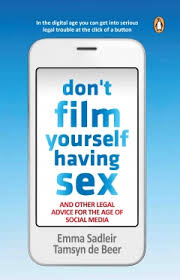 Another must for the internet age: Don’t Film Yourself Having Sex and Other Legal Advice for the Age of Social Media (Penguin, 2014) by Emma Sadleir and Tamsyn de Beer looks at the legal implications of our interaction with social media. The authors spell out the dos and don’ts of the diverse platforms: Twitter, Facebook, etc. The book is informative and strangely enough very funny despite telling some very grim internet stories of people losing their reputations, jobs, friends and serious money over online blunders. Also essential reading for anyone wanting to marry Kate Winslet.
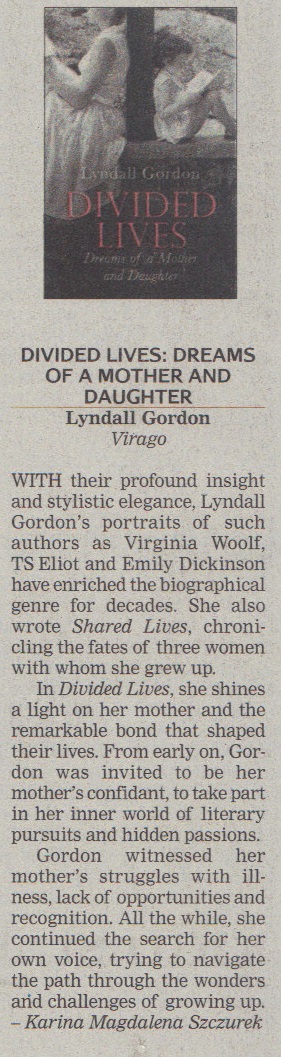
 Anybody who reads me will know how much I admire Lyndall Gordon‘s work. Her latest, Divided Lives (Virago, 2014), raises my admiration to another level. Just looking at the shelf where I keep all her wise, powerful biographies and memoirs reassures me. She has brought so much sustenance and joy into my life as a reader, writer and woman that I am certain I would be a very different, and much poorer, Karina today without having encountered her books. May there be many more to come.
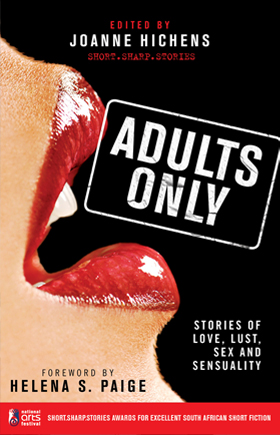 A rather racy read, and not all the stories in this anthology were my cup of tea, but there were some which I found very exciting, on the literary not literal level, of course ;) Showcasing some of the talent we have here in South Africa, these erotic short stories cater for nearly all tastes. Funny, thrilling, and exquisite at times, it is a rewarding read (see my review: Adults Only – Stories of Love, Lust, Sex and Sensuality edited by Joanne Hichens, Mercury, 2014).
 A Man of Good Hope (Jonathan Ball, 2014) is Jonny Steinberg at his best. I have a friend who says that when she grows up she wants to be Jonny Steinberg, and I can’t blame her. In his latest, Steinberg tells the story of a man on the most remarkable journey which takes him from Mogadishu via South Africa to even more distant shores. Asad Abdullahi goes through hell and back and on his trip teaches us what it means to hope and dream when it seems that all is in vein. I listened to and interviewed Steinberg during the Open Book Festival last year. For my reflections on the festival see “The Image of a Pie”.
 Another of my favourite authors, Michiel Heyns, launched A Sportful Malice at the FLF last year and the novel featured in my July giveaway, but later in the year I turned to his previous title, Invisible Furies (Jonathan Ball, 2012) and enjoyed it just as much, not only because it is set in my beloved Paris. After a long absence, Christopher travels to Paris where he encounters a world of beauty and intrigue. He is there to help Eric, the son of a friend, come to his senses and return to South Africa. But Eric has some surprises in store for him. Nothing is what it seems in the City of Love.
 The Snowden Files – The Inside Story of the World’s Most Wanted Man by Luke Harding (Guardian Books/Faber and Faber, 2014) is another eye-opener when it comes to the workings of the internet and governments all over the world. Harding reveals the background to the Snowden story and all its scary implications. A tense read of history unfolding in front of our eyes. I hope there will be a follow-up book and some kind of decent resolution to this saga on all fronts.
 A discovery from last year’s Open Book Festival, Jaco van Schalkwyk’s The Alibi Club (Umuzi, 2014) is one of the most refreshing South African fiction debuts of the last few years. Set in New York in the decade around 9/11, it tells the story of a South African working at a club and interacting with its regulars in the heart of Brooklyn. Tight, impact prose, distinct characters, well-paced storytelling – the stuff of a great promise. I am very curious what Van Schalkwyk will do next.
 Not only a delightful book, but a reminder of what good booksellers are for: Travels with Epicurus – Meditations from a Greek Island on the Pleasures of Old Age (Oneworld, 2013) by Daniel Klein was recommended to me by Johan Hugo from the Protea Bookshop in Rondebosch. Johan and I have been talking books for years now, so he knows what André or I might enjoy. With this enlightening read he was spot on for both of us. We literally devoured the little book. It is one of those that makes you feel good about the world and your place in it. And it was only written because of Klein’s initial fear of acquiring dentures… Inspiration is a curious thing indeed.
 This is also a book Johan introduced me to, knowing that I would be interested in another Polish-speaking author writing in English: Anna’s family emigrates in the 1980s before the changeover in Poland and settles in New York. Missing her roots and extended family, every summer Anna returns to Poland on her own and spends the holidays in her old neighbourhood where she befriends Justyna and Kamila. Together, they survive the ups and downs of puberty: jealousies, hang-ups about their developing bodies, the turbulences of first loves, budding sexualities and substance abuse. Some things go horribly wrong and one day Anna refuses to come back for another visit. Years later, another tragedy brings the three friends together again. Poland is undergoing its own transition while the young women face the new reality and try to pick up the pieces of their broken dreams. The Lullaby of Polish Girls (Quercus, 2013) by Dagmara Dominczyk is a fast-paced story of growing up in a migratory world.
 I have a friend whom I see roughly once a year for coffee or lunch. Every our encounter inspires me and gives me food for thought for the next year. The last time we spoke, Penelope Lively came up and he recommended that I read Moon Tiger (André Deutsch, 1987). I have read some of Lively’s other novels and there was even a time when I contemplated writing a thesis on her work, but it was not meant to be. Moon Tiger, however, made me want to go back to her writing again. It is an intense, beautiful study of the nature of history with a grand love story at its centre.
 Another local novel that made a huge impact on me this year: Imraan Coovadia’s Tales of the Metric System (Umuzi, 2014). I was asked to review it for LitNet and decided to do some catch-up Coovadia reading in the process, which proved most entertaining. But this latest is, for me, Coovadia’s best up to date. We speak about ‘post-apartheid’ fiction all the time, but I sometimes wonder how many novels deserve the title in the sense that they have been truly written from that perspective. Tales of the Metric System is definitely one of them.
 An absolute highlight of last year’s and this year’s reading is the discovery of the Welsh author, Cynan Jones. I subscribe to the New Welsh Review. I was reading an old issue of the magazine which included a review of Jones’s rewriting of a Welsh myth, Bird, Blood, Snow (Seren, 2012) and I was intrigued. I googled, as one does, and found that he’d written a novel with a central Polish character, Everything I Found on the Beach (Parthian, 2011). A Welsh author writing a Polish character was too much to resist, so I ordered the novel and Jones’s latest, The Dig (Granta, 2014). Last night, I started The Long Dry (Parthian, 2007) and am enthralled by it like by the other two titles. In the meantime, I have discovered that Jones has also published two other novels which might be tricky to get since they seem to be out of print, but I am patient and persistent, and eventually, I intend to write a longer piece about his work. Literary discoveries get seldom better than this. I am a fan for life.
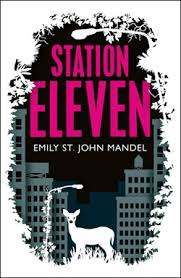 Emily St. John Mandel’s Station Eleven (Picador, 2014) was sent to me for reviewing. Also a writer to watch out for. The novel is speculative fiction at its finest and belongs with the Atwoods & Le Guins of the literary world. It is a genre which has always appealed to me and I hope to write in it myself one day. Station Eleven tells the story of a handful of survivors of a lethal flu which wipes out most of the human race. Disturbing and touching at the same time, it contemplates the big questions in life while telling a gripping story.
 Richard Zimler has been a friend since we first corresponded about The Children’s Hours: Stories of Childhood. His work is an inspiration. I have been a fan for years. His latest novel, The Night Watchman (Corsair, 2014), is set in Portugal, but it tells a very familiar story of abuse, power, corruption and the sense of hopelessness we all face in this world when confronted with any of these evils. Zimler never goes for easy answers. His stories are nuanced, beautifully written (he is a master of dialogue) and always full of life’s wisdoms. It is an honour to know and to read him.
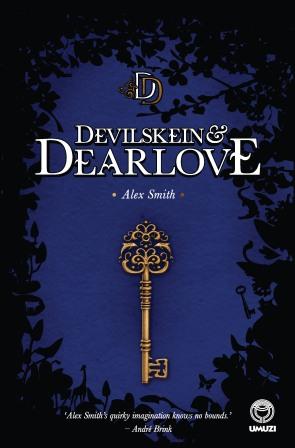
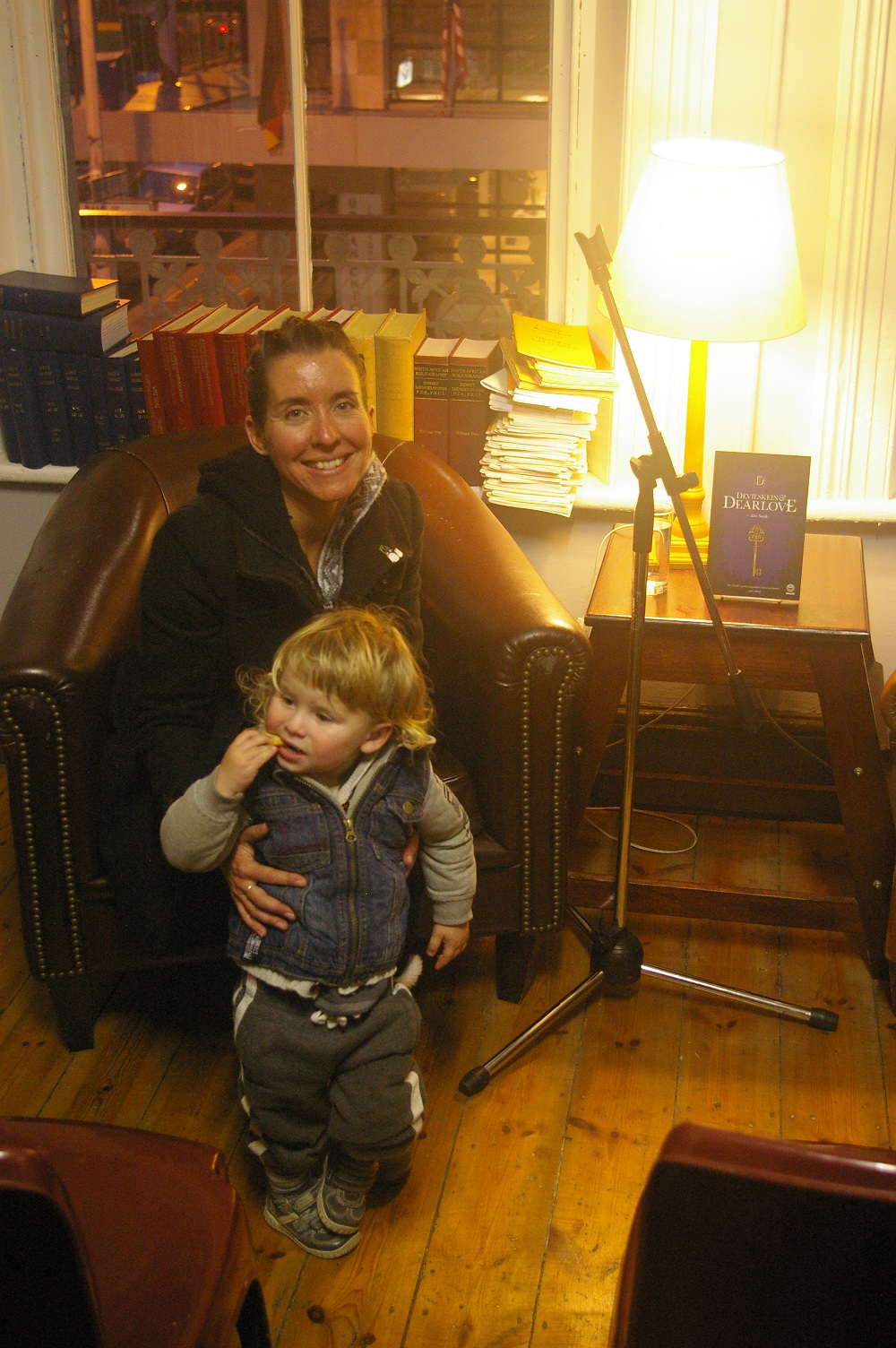
 Two local friends, Alex Smith and her partner, Andrew Salomon, have published novels last year with Umuzi (again, gorgeous covers): Devilskein and Dearlove, Tokoloshe Song. Both are fantasy novels, very different though, but equally entertaining. Most days I am not a fantasy fan, but when it is done well, like these two heart-warming and enchanting books, even a non-believer’s heart melts. I loved the characters, their unusual universes filled with magic and wonder, and their stories which kept me spell-bound. I might convert after all!
 And speaking of the devil, Andrew Brown’s Devil’s Harvest (Zebra Press, 2014) is not an easy read. Heart-wrenching and honest, it tells the story of a British botanist and a Sudanese woman who is a survivor of a genocide. The story of their journey through South Sudan is one of those that had to be written and has to be read. Brown did an excellent job at making sure that it is not forgotten. This was my first of his novels, and certainly not the last. Something to look forward to in 2015!
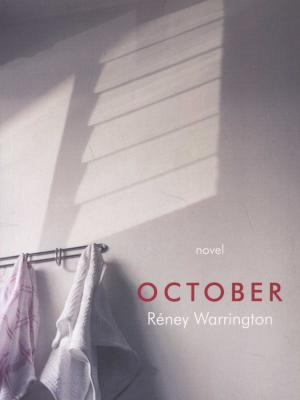 An accidental encounter on twitter, of all places, revealed that I share a publisher with Réney Warrington. October (Protea Book House, 2013) is a subtle love story of how two damaged women struggle through emotional numbness to find a way back to life. The photographer Jo is shell-shocked by the divorce of her parents and her sister’s homophobia. When she meets the famous pop singer Leigh who has to overcome a serious illness and a troubled past, Jo does not expect to ever heal again. Despite serious doubts, they decide to give their relationship at least a fleeting chance…
Warrington is also a photographer and October includes a few startling images that poignantly illustrate the narrative.
 Another twitter encounter resulted in my reading this meticulously crafted novel about a day in the life of a grieving woman. Having lived through the worst imaginable ordeal for a parent, Ella now has to take care of her husband who is suffering from severe depression. As each heart-breaking day dawns, she leaves massages in the sand for the sea to wash away. It is in the water that she also confronts her deepest hopes and worst fears. Poetic, full of insights, and simply beautiful, Tiah Beautement’s This Day (Modjaji Books, 2014) is an remarkable achievement.
Please let me know:
1) which books have made such an impact on you in the second half of 2014 that you wanted to share them with others?
2) which of the titles I’ve mentioned above you would be interested in reading yourself?
From your comments, I’ll draw one name at the beginning of February 2015 and send you the book you have chosen from the list of my favourite titles.
(Just to clarify, it seems this wasn’t clear: The winner will get a brand-new copy of the book they chose from my list.)


 Karina Magdalena