Tag Archives: review

Book review: The Scattering by Lauri Kubuitsile

The ScatteringIt is December 1907 in Tsau, Bechuanaland, after the Herero and Namaqua genocide perpetrated by the Germans occupying German South-West Africa, today’s Namibia. The Herero couple Tjipuka and Ruhapo have survived “the scattering”, but lost nearly everything in the process. When we first encounter them, they are together, but terrifyingly estranged. Tjipuka traces her husband’s body, trying to remember all that she’d loved about it, but the memories are overshadowed by his distance and the blood and cruelty of lies which haunt them: “Being dead made a lot of things uncertain.”

The narrative takes us back to the moment of their first encounter in Okahandja in 1894. We witness their falling in love, the certainty with which they decide to face the future together, their courage and strength. The juxtaposition of the image of these young lovers with the ruins of the people they’ve become is shattering. One anticipates that whatever had happened to them in the intervening years must have been horrendous and will not be easy to read about, but it is impossible to resist the urge to know. The Scattering recounts their journey.

Interwoven with theirs is the story of Riette. After her brother dies, her parents have little use for her on their farm in the Transvaal and even though she had trained to be a nurse and wishes nothing else but to pursue the profession in Kimberley, she is married off against her will to a widowed neighbour: “Riette wondered how two people could be so unknown to each other, and yet so intimate.” At the beginning of the Second Anglo-Boer War, her husband goes off on commando and leaves her alone on the farm to fend for herself and his two daughters. As a result of Kitchener’s scorched earth policy, the three women end up in a British concentration camp where Riette forms an unlikely alliance. Hardship, sickness and death prevail in the camp, but Riette finds protection in a forbidden love relationship. “They would survive this war, this horrible, bloody war, and find their lives on the other side”, she hopes. Betrayal and loss will accompany her on her path: “She didn’t want to live with the shadow of who she was and what she’d done forever darkening her life.”

In 1904, across the border, the tension between the Germans and the Hereros rise. The infamous German commander Lothar van Trotha issues his gruesome orders: “Any Herero found inside the German frontier, with or without a gun or cattle, will be executed. I shall spare neither women nor children. I shall give the order to drive them away and fire on them. Such are my words to the Herero people.”

Believing in the beginning that they can take on the German army, Ruhapo and other Herero leaders decide to attack and reclaim their land around Okahandja, now occupied by the enemy. “Have they not taken enough? I would rather die, my blood watering this land, this land of the Herero, our land, than let them take anything else”, Ruhapo tells his wife. Full of foreboding, Tjipuka is afraid. In the next three years, she and her people will have to face evil in all its incarnations, and attempt to survive against all odds.

But what does it mean to survive if everything you believe in, everything you love is gone? Repeatedly, she will ask herself whether the price to be paid is not too high: “They were no longer complete humans. They were something else. Something less than that.” In the desert, she will look at the familiar stars at night-time and wonder how they could remain “unchanged by all the evil they have witnessed?” Separated from his family, Ruhapo will ask himself what is the worth of pride, land or cattle when loved ones have to be sacrificed for them? Nothing could have prepared any of them for what awaits ahead.

The Scattering impresses on several fronts. Through the life stories of two seemingly insignificant women Kubuitsile links two seminal events of the early twentieth century history in Southern Africa. Two fates out of millions, but they personify the remarkable resilience of women throughout history: “War is for men. It’s always for men. They have a dark place where war grows.” Without consciously pointing to it, the novel exposes the cradle of the worst evils to emerge in the twentieth century: eugenics, concentration camps and the mass extinction of peoples believed to be inferior by those in power.

Kubuitsile’s depictions of war, violence and oppression are vivid but never gratuitous. Her writing is lyrical, affecting. It allows the reader to develop a deep sympathy for the characters, especially when they are confronted with impossible choices which leave no one unscathed. Her portrayals of people on all sides of the diverse conflicts are strikingly balanced. She shows the ambivalence of our passions and the decisions we make in order to survive. The Scattering is one of those superb historical novels which live on in the reader, simultaneously sounding a warning and shining the light of hope.

The Scattering

by Lauri Kubuitsile

Penguin Books South Africa, 2016

Review first published in the Cape Times on 24 June 2016.
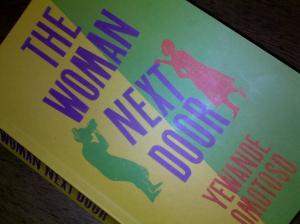
Book review: The Woman Next Door by Yewanda Omotoso

The Woman Next DoorNeighbours: a word loaded with connotations. The biblical instruction of “love thy neighbour”, Verwoerd’s “policy of good neighbourliness”, Robert Frost’s “good fences make good neighbours”, and the usual neighbourly mistrust, animosity, even prejudice come to mind. Yewande Omotoso quotes Simone Weil for her epigraph: “The wall is the thing which separates them, but it is also their means of communication.”

The Woman Next Door tells the story of two cantankerous old ladies – one white, one black – who are neighbours in a fictitious wealthy estate in Constantia, Cape Town: “It was known that the two women shared hedge and hatred and they pruned both with a vim that belied their ages.”

Seemingly, however, Hortensia James and Marion Agostino have a lot in common. Both are in their eighties, widowed, with highly successful careers behind them. Yet their lives have left them bitter and lonely. Interestingly, what separates them most clearly, skin colour and money, transpires to be quite superficial, as both of them are masters of pretence. What really divides them is something which stands between all of us when we encounter another human being of whatever background: the fear of reaching out and making oneself vulnerable enough to connect intimately…

Continue reading: LitNet

Review: When Breath Becomes Air by Paul Kalanithi

When Breath Becomes AirReading dead authors is not unusual, but opening the late Paul Kalanithi’s When Breath Becomes Air feels different. He wrote it knowing he was dying and it was published by his widow a year after his death. The immediacy of the knowledge is uncannily palpable. For me, the experience was even more intimate on two different levels. Firstly, I also had a cancer scare recently and Kalanithi was my age when he died. In retrospect, his memoir made me count my blessings, again, as I am healthy and have escaped with just a fright. Secondly, like me, as a young person he struggled to choose between two vocations: medicine and literature. Unlike me though, he chose medicine. But literary longings had never left him and when life became unbearable, like many of us he found some amount of solace in the written word.

The striking title of the book derives from lines of an Elizabethan sonnet: “You that seek what life is in death, / Now find it air that once was breath.” To contemplate it alone is already an experience in itself. In the forward, we are told: “Be ready. Be seated. See what courage sounds like.” Can one ever be ready for death? I doubt it, especially not when at the age of thirty-six, with the most promising medical career ahead, you look at a CT scan of your lungs and become aware that they are riddled with tumours.

At this stage of his life, Paul is about to complete the decade-long training necessary for becoming a professor of neurosurgery. He is married to Lucy, also a doctor. Because their relationship is strained, he does not know at first how to break the dreadful news to her.

When Breath Becomes Air tells Paul’s story before and after the lethal verdict. We see his aspirations taking him to the heights of what is possible in his field. Every day he is confronted with illness, decay, and death – of others. He is constantly challenged to question what makes life meaningful. Some of the descriptions of his daily routines as a medical student and doctor are not for the faint-hearted. Even less so is the narrative of him becoming a patient. It is gut-wrenching to realise how the potential Paul had worked so hard to build will “go unrealised”. With searing honesty, he describes his attempts at making the most of the time left at his disposal and the ambition that drives him in the face of ultimate defeat. He writes how, paradoxically, the illness heals his marriage, and how he makes the courageous decision to become a father to a child who will most likely not remember him. Knowing that his words will outlive him, he writes the book.

When Breath Becomes Air is published with a beautiful epilogue by Lucy, “his wife and a witness”, who carries on with “love and gratitude alongside the terrible sorrow, the grief so heavy that at times I shiver and moan under the weight of it.”

When Breath Becomes Air

by Paul Kalanithi

The Bodley Head, 2016

Review first published in the Cape Times, 22 April 2016.

Review: Affluenza by Niq Mhlongo

AffluenzaEvery new book by Niq Mhlongo is literature to my ears. His three novels, Dog Eat Dog (2004), After Tears (2007) and Way Back Home (2013), were fresh, gritty and not to be ignored. Reading them in sequence you witness a writer coming into his own, developing an unmistakably individual voice that captures a historical moment like no other. That moment for Mhlongo is now. If you want to take the pulse of present-day South Africa, you can turn to his work for insight.
Dog Eat Dog encapsulates the lives of a group of Wits students at the time of the first democratic elections. After Tears describes the challenges and disillusionments of their generation after graduation. In Way Back Home the characters have seemingly made it, but their lives are haunted by greed, corruption and ghosts from their past. Never afraid to tell it like it is, Mhlongo offers a brutally honest glance into contemporary South Africa.

In his first short-story collection, Affluenza, he continues in this vein, but at the same time the writing is even grittier. Four of the eleven stories were published before. The topics range from farm murder, suicide, and paternity to animal attacks in a game park. Mhlongo does not shy away from difficult discussions surrounding the issues of race, gender, sexuality or class, pointing to the horrendous levels of miscommunication arising when people approach one another with bigotry…

Continue reading: LitNet

Silver linings: Stranger by Sihle Ntuli

StrangerThe thing with poetry is that it either works for you or it doesn’t. I do not know many people who read it for pleasure. Nowadays, poetry certainly seems to be an acquired taste. I often abstain myself, prose being my staple food. But every now and then a poem or, if I am lucky, an entire volume comes along that makes my heart swell with gladness. Sihle Ntuli’s Stranger is one of those gems. The author asked me to review his debut poetry collection. I do not know why, but I am delighted, and honoured, that he did.
Divided into six parts, Stranger offers a glimpse into contemporary South Africa from the perspective of a keen observer with a distinct, edgy voice. Ntuli might be only in his mid-twenties, but his sense of perception is sharp beyond his years. From the first poem to the last, the reader is drawn into the kaleidoscope of his world and its vivid patterns. In “kwa mashu f section bus stop”, commuters’ souls are whisked away to places where they attempt to make a living, “as billboards block the sun”, feeding their impossible dreams. The distinction between the crushing greyness of daily existence and the possibility of a golden life of opportunity features in other poems, such as “friday”. Here the moving opening lines:


in between creases on foreheads

living has folded thoughts

into blankets and sheets

unfolded in dreams


to lie down to pillow talk

to walk behind grey matters

to watch brain revolving around desires unfulfilled


my grey life upon eyes

the all-seeing eye


the sun losing colour when it dies

the aggressive night

black blood protrudes

moon blows cold wind on wounds

the heart weighing tons upon tons


living life like it’s golden is expensive

it costs a lot to be virtuous and true


Ntuli writes about the reality of the South African township and being a young man in contemporary South Africa, but his vision goes beyond. He captures universal moments of hardship, the kind of poverty which does not only manifest in material lack, but also in the soul, which longs for beauty and is confronted with despair instead. “monday” chronicles the exhaustion and hopelessness of the everyday which is hard to overcome: “the phrase ‘things change’ / speaks only to those who expect to get returns” and the “spoon through your chest” brings out both “blood and beauty / as you love and feel pain in the same colour”.

Violence and loss are linked, the brutality and pulse of street life exposed. Occasionally, to cope you hope for escape, take some pill or other substance: “mind coming to age / life and bland taste / less trouble”. That substance can be love; no matter, as long as it alters your consciousness and your ability to feel. The mind wants to flee the desolate, hostile world. The wish to tell it like it is, though, is clearly there – the need to separate illusion from truth. Ntuli reads the world, its delusions and dreams, and tries to navigate the difference.

At the same time, he offers moments of unbearable tenderness, as in a phrase like “silence in your eyelids”, or my favourite poem of the collection, “the walls”:


the everyday

should not seep

through           the walls


it is behind these walls

that truth undresses

then lies


Grief is palpable in many poems, captured most poignantly in a few lines in the last stanza of “late”: “early morning / dressed in black / the sun rose / our flowers on top of caskets / the late as candles”. His images are striking, definitely not easily forgotten, thus his words do not die on the page but continue a life of their own through the associations they awaken in the mind of each and every reader who immerses herself in them.

The title of the collection resonates throughout, but is most strongly captured in “the stranger”: “towards him / they throw adjectives / the suffocating symphony / the injustice / words slant to one side / lying”. Race, skin colour, otherness, and contrasts between ordinary lives lived in obscurity and silver linings shining on the horizons whether in words or sunsets bring with them a palette of visual impressions which Ntuli makes us reconsider. Nothing is just a colour: “i sit on the side silently / living life like it’s silver / as the lining is blocked by the roof”.

Recurring in the collection are references to music. It is in the rhythm of every poem, “between jazzy notes without words”. Like music, the lines are meditative, haunting, thought-provoking. They help us negotiate the world, “moved by thoughts that have no rhythm”. But unlike one of his narrator’s contemporaries who seem to be more interested in being DJs rather than poets, as many in the struggle were (“gospel gold”), Ntuli carves out his creative space in words. His is a new struggle: for his own voice, for the recognition of his reality and vision.


Stranger by Sihle Ntuli

Aerial Publishing, 2015


Review by Karina Magdalena Szczurek

Review: The Gap of Time by Jeanette Winterson

WintersonJeanette Winterson is one of my favourite writers of fiction and non-fiction. Her recent memoir Why Be Happy When You Could Be Normal (2011) was a revelation. I was introduced to her work at university with the by now classic novel Oranges Are Not the Only Fruit (1985). Her Lighthousekeeping (2004) is one of the most moving love stories I have ever read. Among many texts, it echoes Virginia Woolf’s To the Lighthouse. The main character Silver reappears in other Winterson novels. As does the line: “Tell me a story.” Winterson is known for her retellings of myths and legends, her writing is rich in intertextuality. I loved her modern rendering of the Atlas myth, Weight (2005).
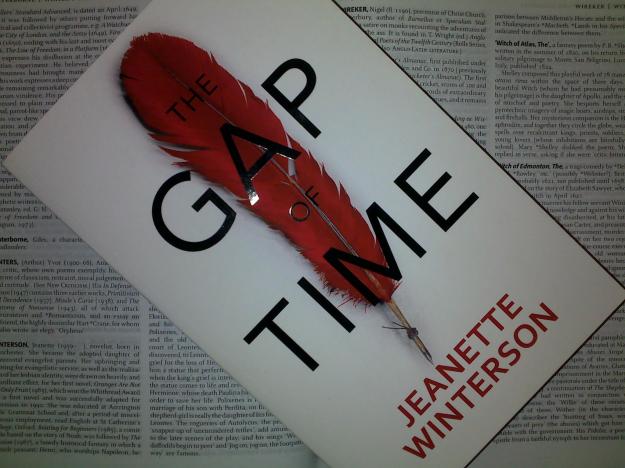
The Gap of Time, Winterson’s latest novel, is also a cover version of a famous classic, no other than Shakespeare’s The Winter’s Tale. It is the first book in a series launched in October last year which aims to reimagine Shakespearean works for our generation. Howard Jacobson’s Shylock Is My Name was published last month. Upcoming titles include such promising treats as Hag-Seed, Margaret Atwood’s take on The Tempest, or Gillian Flynn’s version of Hamlet.

One does not have to be a Shakespeare buff to enjoy The Gap of Time. For those unfamiliar with The Winter’s Tale, the original is summarised in the beginning of the book. But Winterson’s brilliant interpretation is self-reliant and can be read independently.

“The story has to start somewhere”, but not necessarily at the beginning. The Gap of Time begins in the middle: Shep, a jazz bar owner, and his son Clo witness a murder. At the same time, they discover a little girl “as light as a star” in a baby hatch of a hospital nearby. Because the child reawakens Shep’s belief in love, which he lost when his beloved wife died of cancer, he decides to adopt her.

The story moves back in time to when the ruthless businessman Leo accuses his wife pregnant wife MiMi of having an affair with their best friend Xeno, and of carrying his child. Although both deny the accusation vehemently, Leo attempts to kill Xeno and refuses to acknowledge his daughter when she is born. His rampant jealousy results in a tragedy which leaves no one unscathed.

Years later, fate leads two young people to fall into love, but their respective family histories might ruin their chance at happiness. With great emotional and psychological depth, Winterson’s tale examines the notions of family and what it means to love, “to know something worth knowing, wild and unlikely and against every rote.” She exposes the foolishness of taking love for granted and allowing chances at redemption to slip us by.

As Winterson writes in the end, the reason Shakespeare endures is because stories of revenge, tragedy and forgiveness are universal. This superb twenty-first century retelling speaks straight to our contemporary, post-Freudian consciousness and touches our ancient hearts which continue longing for the recognition of the magic they are capable of.

The Gap of Time

by Jeanette Winterson

Hogarth Shakespeare, 2015

Review first published in the Cape Times, 1 April 2016.


Review: Stations – Stories by Nick Mulgrew

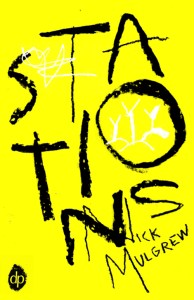
StationsIt’s difficult to believe that this is only Nick Mulgrew’s debut collection of stories. Stations reads like the work of a seasoned writer. Here is someone with acuity and a perfectly pitched voice. Not surprisingly, his writing is already highly acclaimed.

As the title suggest, the individual pieces in the book take their cue from the Stations of the Cross, in which Jesus’s last steps before crucifixion are commemorated. The dialogue between the structural skeleton of the book and each tale is striking. “Athlone Towers”, the volume’s first story, or “stop on a slow road to purgatory” as the spine of the book professes, uses the powerful image of the demolition of the famous Capetonian landmark to portray the demise of a relationship. At the same time it echoes Jesus’s condemnation to death. In the fourth “stop” of the book, “Ponta do Ouro”, a young man accompanies his mother on a fraught Christmas holiday to Mozambique. His parents are in the middle of a divorce. The corresponding station reflects Jesus’s encounter with his own mother shortly before his death. In “Restaurant”, a hopeful entrepreneur has to close down her restaurant. Her suffering mirrors Jesus’s death on the cross. In all of the stories, the devotional references are very subtle but enrich the reading substantially.

The way the stories engage with their religious context reminded me of Krzysztof Kieślowski’s Decalogue, the Polish director’s ten films based on the Ten Commandments. What captures the reader’s imagination is the way the teachings are translated into a modern, often secular, narrative that we can all relate to.

Mulgrew’s characters are in transit, on the verge of a discovery or transformation. His stories are set around South Africa and beyond, even in the afterlife. The titular story takes us on a trip through the purgatory, which is reimagined as an alternative version of the Cape Peninsula: “Everything was familiar, but not familiar enough to be comforting… My heart dropped. This place had a geography that had to be relearned.” It is one of the most profound readings of the tensions and dilemmas of present-day Mother City. “Mr Dias”, “Posman”, or “Die Biblioteek vir Blindes”, also grapple with contemporary issues such as racism, affirmative action, or intolerance, but are more preachy and a slightly less successful.

The stories which spoke to me best were of intimate nature, focusing on topics close to the heart: rites of passage, grief, revenge, sexuality, or relationships between siblings, lovers and strangers. It is in these spaces that Mulgrew connects with the reader most poignantly, describing what might otherwise go unnoticed: “You lean to kiss me between the back of my ear and the top of my neck; in that place that doesn’t have a name.”

Mulgrew and I co-edited a book of African short stories. Watching him as an editor was a fascinating experience. His fine-tuned sensitivity and attention to detail are exceptional. He is also a fine poet, a true language practitioner. These talents reverberate in the arresting prose of Stations.

Stations: Stories

by Nick Mulgrew

David Philip, 2016

Review first published in the Cape Times on 18 March 2016.

Book review: I’m Travelling Alone by Samuel Bjørk

TravellingAloneDespite my irredeemable addiction to Lee Child’s Jack Reacher series, I do not often turn to thrillers or crime fiction for entertainment. But Night School, the next Reacher adventure, is coming out only in September, and since the nights are getting longer, it is nice to have a few good stand-ins in the meantime. Locally, I really enjoyed the recently published Sweet Paradise by Joanne Hichens: tight plotting, great writing, a scary villainess, and a heroine with balls. It surprised me, and that is a quality I truly appreciate in genre fiction.

I remember picking up Henning Mankell’s The Man from Beijing and realising how it would end just after a hundred pages. For the rest of the book, I had hoped the author would astonish me, but he didn’t. That kind of disappointment is not easily forgiven. But Scandinavian crime and thriller authors have been making huge waves on the international literary scene in the last decade or so. I devoured Stieg Larsson’s Millennium trilogy and like millions of readers around the world could not get enough of its intriguing main characters, Lisbeth Salander and Mikael Blomkvist.

It seems that there is a new kid on the Scandinavian crime block, Samuel Bjørk (pen name of the Norwegian writer and musician Frode Sander Øien). His I’m Travelling Alone is making international headlines, reaching the prestigious German magazine Der Spiegel’s number one bestselling spot and selling TV series rights to ITV. It comes with a quote on the cover, warning his compatriot Jo Nesbø to “watch out”. Being unfamiliar with Nesbø’s work, I cannot compare, but judged solely on its own terms, I’m Travelling Alone is a spine-chilling, page-turning novel.

In 2006, a baby disappears from the maternity unit of Ringerike Hospital in Hønefoss in the south of Norway. Half a dozen years later, a six-year-old girl is found dead hanging from a tree. Dressed like a doll with an airline tag which reads “I’m travelling alone” around her neck, the girl is soon believed to be the first victim of a serial killer about to strike again. A race against time begins. Holger Munch is put in charge of finding and bringing the killer to justice. Despite, or precisely because of, being the typical middle-aged, overweight, chain-smoking, sadly divorced, veteran police investigator, Holger is instantly endearing. As is his partner, the deeply disturbed but fascinating, thirty-something Mia Krüger.

In the beginning of the book, Mia is living in complete solitude on an island, drugged and drunk, mourning her beloved sister and awaiting her own death. It takes some persuading from Holger to sway her to postpone her suicide in order to help him solve the case. They both have a troubled past to atone for, and have no clue how it is about to surface to haunt them.

The next girl is found murdered and two more go missing. But then the ruthless killer changes his (or her? the police are uncertain) MO and contacts a journalist writing for a daily, placing him and his editorial team in front of an impossible choice: Who dies next? And when Mia and Holger discover that the next intended victim is someone they both know and care about, the urgency to track down the perpetrator intensifies unbearably. The hunt leads them to a mysterious sect and an old-age home where Holger’s mother lives. What at first seems a dead end reveals itself as a deadly possibility. And the murderer is always a step ahead.

The two investigators, the police squad, and family and friends around them are all well-drawn characters one takes immediate interest in and liking to. They propel the story forward. Additionally, to a certain extent, I’m Travelling Alone felt like armchair travel. I have a very soft spot for Norway, having travelled the country, loved its landscape, read some of its brilliant classics, and made a few Norwegian friends for life. I actually visited some of the places mentioned in the novel, have experienced the weather and tasted the food. Reading all the everyday details of the characters’ lives has brought back many great memories. I couldn’t resist and had some herring again while reading.

I was spellbound almost to the end. However, the last twenty pages let me down. To be honest, I am not sure that I understood how all the puzzle pieces of the story fit together or whether the author managed to tie up all the loose ends, yet it somehow did not matter. I found the ride as far as the last four or five chapters exhilarating and the strangely abrupt ending did not spoil the fun. I sincerely hope that Mia and Holger will return and I look forward to the next Samuel Bjørk crime novel with great anticipation.

Review first published in the Cape Times, 4 March 2016.

I’m Travelling Alone

by Samuel Bjørk

Doubleday, 2016


Book review: The Seed Thief by Jacqui L’Ange

The Seed ThiefThere are writers and then there are writers. Most of us can only dream of becoming the kind of writer Jacqui L’Ange already is, and the stunning The Seed Thief is only her debut novel. Her prose is luminous. It feels as if her words are caressing the pages they are printed on. Enthralled from the beginning, I was reading with bated breath, afraid that the author could not sustain such excellence through an entire novel, that she would take a false step, get lost along the way, and lose me as a reader. But The Seed Thief is one of those rare books which deliver on all fronts and leave you completely satisfied.
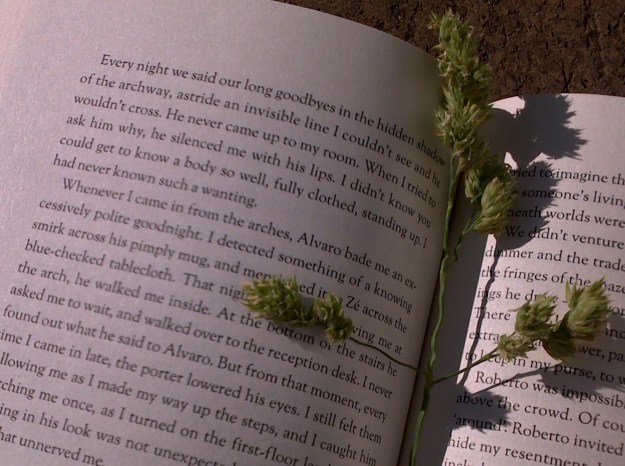
The novel tells the story of Maddy Bellani, a South African botanist with migratory roots. She works for one of the world’s seed banks in Cape Town, specialising in fynbos and dedicated to preserving the floral diversity of our planet for future generations. Brazilian by birth, Maddy is sent on a mission to Salvador, Bahia, to locate and secure the seed of the Newbouldia mundii, an African tree extinct on its continent of origin, but rumoured to have survived in Brazil, where it had been taken to by Africans during the slave trade. The plant is desired not only for preservation, but specifically for its medicinal properties. And some people are prepared to do anything to get their hands on it.

Maddy embarks on the mission after the break-up of her relationship with Nico: “Only now that it was finally ending, could I admit how much I’d wished we could have turned the mutual vulnerabilities that brought us together into something less fragile.” She is haunted by a family tragedy from the past and the relationship with her estranged father who finds out about her visit to their home country and attempts to get in touch: “Just knowing that he knew I was here made my emotional barometer plunge.”

Keen on redefining herself in Brazil, Maddy flies to the other side of the world in pursuit of the elusive Newbouldia mundii. The seed is protected by the practitioners of Candomblé, an Afro-Brazilian religious community worshipping gods and goddesses called orixás. Negotiating their different customs and loyalties is not easy and, as Maddy discovers, sometimes what you get in the end is not exactly what you set out to find.

Seeds are like love, unpredictable in the paths they travel. They take root in the most unlikely places, often against all odds. In order to gain access to the treasure she seeks, Maddy has to gain the trust of the Candomblé terreiro (the house of worship) and Zé, the mysterious man who guards their garden: “The rhythm of our interaction became a gentle ebb and flow. He would open up and play, then retreat and observe. Whenever he retreated, I found myself wanting to follow, to draw him back out and close to me. When he came in too close, I pulled back just enough for him to gather himself like the tide.”

Continue reading: LitNet

wanting_The Seed Thief

Book review: Roberto Calasso’s The Art of the Publisher

The Art of the PublisherEvery now and then, a book comes along which changes your life. For me, Roberto Calasso’s The Art of the Publisher is one of them. But you don’t have to be – or, like me, want to become – a book publisher to find this gem an inspiration.

For quite a while now, publishing has been steeped in a pervasive atmosphere of gloom and doom, especially in South Africa. The threat of the internet, the e-book, the retail giant Amazon, and the financial crisis have made life for the printed book difficult. Locally, a seemingly general disinterest in South African fiction and foolish political decisions have made survival tougher for our publishers, and consequently, of course, for us writers. Book sales are not encouraging. Publishers scaling down even less so. Yet, watching developments like the self-publication of Paige Nick’s latest novel, Death by Carbs, or new publishing ventures like uHlanga and Tattoo Press, I have a feeling that some creative and daring people in the country are on to something which gives me many reasons for optimism.

Roberto Calasso’s essays collected in The Art of Publishing attest to the fact that it all comes down to basics. And the basics are vision and quality. It is these two aspects of publishing that readers throughout centuries have best responded to with enthusiasm. These are no trade secrets, just simple rules which those who have been successful in publishing have always followed.

Critic, writer, and a publisher himself, Calasso has been at the forefront of Italian publishing for decades. His love for literature and the book shines through every single paragraph of The Art of Publishing. His passion is one of beauty. His insights are heartening to read.

When it matters, publishing is not about money, although, as with all art forms, moderate financial rewards cannot and should not be excluded. There are enough examples out there to prove the case. All aspects of the form play an integral part in its success: “choice and sequence of titles published…texts that accompany the books, as well as the way in which the books are presented as objects.” Calasso does not deny that this is “the most hazardous and ambitious goal for a publisher, and so it has remained for five hundred years”, but he also reminds that “literature loses all of its magic unless there’s an element of impossibility concealed deep within it.”

He goes into the fascinating history of publishing, asks what constitutes culture, celebrates the great publishers of our times, explores the relationship between the publisher and the writer, demonstrates how crucial the nourishment of writers and the care for the book as an object are to a thriving publishing environment, and most importantly, to our intellectual and emotional lives.

Calasso also shows that even if often unbeknownst to us why a particular publisher attracts our enthusiasm, as readers we understand the value of our “repeated experiences of not being disappointed.” And that is what only a publisher of vision and quality can offer.

The Art of the Publisher by Roberto Calasso

Translated from the Italian by Richard Dixon

Penguin Books, 2015

Review first published in the Cape Times, 22 January 2016.

Two comments:

When I truly enjoy a book I have the need to share it with others. I have already bought several copies of The Art of the Publisher for friends, two more today…

I was attracted to the book in the first place because it appealed to me as an object. I saw it displayed at the Book Lounge in Cape Town and could not walk away from it…