


‘…a slick of red lipstick.’
“Love and loss” by Sue Barkly, Noseweek, August 2016

“Thank you for the nostalgic drop of red wine. For me, red wine will always, always be you. From the very first night, remember?”
Flame in the Snow, André to Ingrid, 12 August 1963
 It is December 1907 in Tsau, Bechuanaland, after the Herero and Namaqua genocide perpetrated by the Germans occupying German South-West Africa, today’s Namibia. The Herero couple Tjipuka and Ruhapo have survived “the scattering”, but lost nearly everything in the process. When we first encounter them, they are together, but terrifyingly estranged. Tjipuka traces her husband’s body, trying to remember all that she’d loved about it, but the memories are overshadowed by his distance and the blood and cruelty of lies which haunt them: “Being dead made a lot of things uncertain.”
The narrative takes us back to the moment of their first encounter in Okahandja in 1894. We witness their falling in love, the certainty with which they decide to face the future together, their courage and strength. The juxtaposition of the image of these young lovers with the ruins of the people they’ve become is shattering. One anticipates that whatever had happened to them in the intervening years must have been horrendous and will not be easy to read about, but it is impossible to resist the urge to know. The Scattering recounts their journey.
Interwoven with theirs is the story of Riette. After her brother dies, her parents have little use for her on their farm in the Transvaal and even though she had trained to be a nurse and wishes nothing else but to pursue the profession in Kimberley, she is married off against her will to a widowed neighbour: “Riette wondered how two people could be so unknown to each other, and yet so intimate.” At the beginning of the Second Anglo-Boer War, her husband goes off on commando and leaves her alone on the farm to fend for herself and his two daughters. As a result of Kitchener’s scorched earth policy, the three women end up in a British concentration camp where Riette forms an unlikely alliance. Hardship, sickness and death prevail in the camp, but Riette finds protection in a forbidden love relationship. “They would survive this war, this horrible, bloody war, and find their lives on the other side”, she hopes. Betrayal and loss will accompany her on her path: “She didn’t want to live with the shadow of who she was and what she’d done forever darkening her life.”
In 1904, across the border, the tension between the Germans and the Hereros rise. The infamous German commander Lothar van Trotha issues his gruesome orders: “Any Herero found inside the German frontier, with or without a gun or cattle, will be executed. I shall spare neither women nor children. I shall give the order to drive them away and fire on them. Such are my words to the Herero people.”
Believing in the beginning that they can take on the German army, Ruhapo and other Herero leaders decide to attack and reclaim their land around Okahandja, now occupied by the enemy. “Have they not taken enough? I would rather die, my blood watering this land, this land of the Herero, our land, than let them take anything else”, Ruhapo tells his wife. Full of foreboding, Tjipuka is afraid. In the next three years, she and her people will have to face evil in all its incarnations, and attempt to survive against all odds.
But what does it mean to survive if everything you believe in, everything you love is gone? Repeatedly, she will ask herself whether the price to be paid is not too high: “They were no longer complete humans. They were something else. Something less than that.” In the desert, she will look at the familiar stars at night-time and wonder how they could remain “unchanged by all the evil they have witnessed?” Separated from his family, Ruhapo will ask himself what is the worth of pride, land or cattle when loved ones have to be sacrificed for them? Nothing could have prepared any of them for what awaits ahead.
The Scattering impresses on several fronts. Through the life stories of two seemingly insignificant women Kubuitsile links two seminal events of the early twentieth century history in Southern Africa. Two fates out of millions, but they personify the remarkable resilience of women throughout history: “War is for men. It’s always for men. They have a dark place where war grows.” Without consciously pointing to it, the novel exposes the cradle of the worst evils to emerge in the twentieth century: eugenics, concentration camps and the mass extinction of peoples believed to be inferior by those in power.
Kubuitsile’s depictions of war, violence and oppression are vivid but never gratuitous. Her writing is lyrical, affecting. It allows the reader to develop a deep sympathy for the characters, especially when they are confronted with impossible choices which leave no one unscathed. Her portrayals of people on all sides of the diverse conflicts are strikingly balanced. She shows the ambivalence of our passions and the decisions we make in order to survive. The Scattering is one of those superb historical novels which live on in the reader, simultaneously sounding a warning and shining the light of hope.
The Scattering
by Lauri Kubuitsile
Penguin Books South Africa, 2016
Review first published in the Cape Times on 24 June 2016.
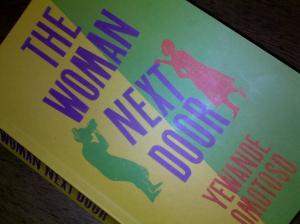 Neighbours: a word loaded with connotations. The biblical instruction of “love thy neighbour”, Verwoerd’s “policy of good neighbourliness”, Robert Frost’s “good fences make good neighbours”, and the usual neighbourly mistrust, animosity, even prejudice come to mind. Yewande Omotoso quotes Simone Weil for her epigraph: “The wall is the thing which separates them, but it is also their means of communication.”
The Woman Next Door tells the story of two cantankerous old ladies – one white, one black – who are neighbours in a fictitious wealthy estate in Constantia, Cape Town: “It was known that the two women shared hedge and hatred and they pruned both with a vim that belied their ages.”
Seemingly, however, Hortensia James and Marion Agostino have a lot in common. Both are in their eighties, widowed, with highly successful careers behind them. Yet their lives have left them bitter and lonely. Interestingly, what separates them most clearly, skin colour and money, transpires to be quite superficial, as both of them are masters of pretence. What really divides them is something which stands between all of us when we encounter another human being of whatever background: the fear of reaching out and making oneself vulnerable enough to connect intimately…
Continue reading: LitNet
 Sunday, 22 May, one of those glorious winter days in Cape Town: all light and revelation. It wasn’t even 9 am, but the queue in front of the Gardens Community Centre in Hatfield Street looked overwhelming.
“Do you by any chance have a spare ticket for sale?” a woman near the entrance asked as we approached. I shook my head in confusion, and her pleading eyes moved on to the next person. My companions, the writers Helen Moffett and Diane Awerbuck, looked just as surprised as I felt. This was no rock concert, nor a sports event. We were here for the inaugural Jewish Literary Festival. We’d heard that the tickets had sold out about a week in advance, but people desperate to get into a literary festival seemed quite unusual.
We were spotted by one of the friendly volunteers assisting festival participants and visitors (the lucky ones with tickets) and ushered through the security and registering desks. The crowds inside buzzed with excitement. “Are they giving away something for free?” I wondered aloud.
The idea for the festival was born in July last year. In February the organisers – Joanne Jowell, Cindy Moritz, Viv Anstey and Gary Anstey – asked Beryl Eichenberger and Caryn Gootkin to help with the marketing. Together they reached out to a team of volunteers, secured the venue and the sponsors, and began composing a programme which would “appeal to all ages and cover a range of genres” with the aim “to promote constructive dialogue and discussion in the true spirit of Jewish life without promoting any single political or religious agenda”. From food, sports, politics, academia and journalism to fiction, poetry or memoir, the topics on offer were geared to satisfying nearly all tastes. Seven venues, 49 different events, and a palpable atmosphere of being part of something special made for a wonderful mix. There was a programme for children, but I attended only events for adults. However, I often spotted young people in the audiences, which is always heartening.
The festival opened for me with “Faribels and foibles in fiction”. Next to me in the Nelson Mandela Auditorium sat a woman crocheting, while Rachel Zadok, Rahla Xenopoulos, Marilyn Cohen de Villiers and Liesl Jobson spoke to Helen Moffett about the faribels and foibles which drive their writing. What could easily have turned out to be a light-hearted conversation quickly became a serious discussion, as an appreciative audience member commented afterwards.
In A Beautiful Family, the first novel in her Alan Silverman saga, Cohen de Villiers wrote about abuse and domestic violence to counter the myth that “it doesn’t happen to us”. She was initially scared that she would be accused of fanning the flames of antisemitism, but her work had been received with gratitude. Similarly, Zadok, Xenopoulos and Jobson are not afraid to explore mental illness in their fictional and autobiographical writings, often giving voice to experiences which would otherwise remain unnamed. Asked about how to cope with the exposure, Xenopoulos, who has written a memoir about being bipolar, said, “You owe your reader the truth. In a room, the person telling the truth, the one most vulnerable, is the one with the most power.” To which Zadok added that “there is something about owning your story”, as well as about not fearing to communicate how difficult being a writer actually is…
Continue reading: LitNet

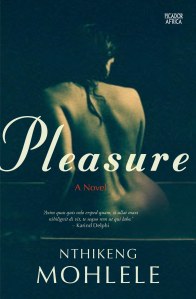 The title of Nthikeng Mohlele’s fourth novel delivers on its promise. Pleasure is a mesmerising, unusual book. At times I was hesitant to call it a novel. The story of Milton Mohlele, his dreams and musings, which he attempts to distil into writing, reads like a meditation. As literary history echoes in his name, Milton could be an alter ego for most writers seeking to find not only meaning but pleasure in the written word – to capture that elusive something which makes us sigh deeply with content when, if ever, we truly encounter it.
Pleasure opens in a bathtub, with Milton reminiscing about the women in his life and his late father, who was a writer of note. One of Milton’s preoccupations is to figure out how to avoid having to tread in his footsteps: “What more is there to say other than that the man was brilliant and is deceased?”
Often, I found my mind drifting, with the book’s images and insights as my guide. Exquisitely written, Pleasure allows you to abandon yourself to language: “This made me happy; a feeling that fell like snowflakes, like confetti showered on couples at weddings, like raindrops illuminated by car headlights, fireworks exploding sky high in magnificent, temporary fiery arrangements, falling back to earth in languid, crystal, dazzling, smoky slow motion.” Milton assures us that he “notices things”, “even the smallest, most insignificant of them”.
The observations are precise, beautiful, also in the face of evil (“a word stripped of all pretensions”). A dream sequence in the book adds a profound dimension to Milton’s considerations. In the dream, an American soldier’s life is spared and he is taken prisoner by a SS commandant. He meets an alluring woman at Wolfschanze, Hitler’s headquarters, where he finds himself among men “who could will anything into being”, including a reality in which the ash of their victims rains into coffee cups across Europe.
Once awake and contemplating the meaning of his vision, Milton is not oblivious to the fact that similar horrors happen right next to him, in present day Cape Town. He insists that Africans “should dream, or imagine themselves outside of only being black and colonised and enslaved”, that we are all part of a wider world. Towards the end, he also realises that depending on context, killing can be an act of kindness.
Pleasure never lulls us into easy answers, not everything can be “scrutinised, fully known, owned.” But it is a book full of wisdom which invites the reader to ponder the intricacies of existence. Its proclamations on love and the preciousness of the opportunities life offers are stunning: “Pleasure, I have learned, is a solitary phenomenon; it does not mix well with remorse and regrets and mistakes…at its most elementary pleasure survives on selfishness, on discreet contracts, undemocratic arrangements.” After all, most of us “want to die being able to say, I have loved in my life – truly loved, been molten and cooled and hammered by love, cast and polished.” Some of us, transformed, write.
Pleasure
Picador Africa, 2016
Review first published in the Cape Times on 20 May 2016, p. 10.

Pamela Power arriving at her first FLF
The feeling of impending doom had declared itself about a week in advance. André and I had been coming to the Franschhoek Literary Festival since its inception, sometimes as participating writers, always as readers. I can recall missing out on only one of the festivals because of travelling abroad. Since last year, I have been coming alone. Franschhoek in May is full of memories, literary and personal; before 2015, only positive. The FLF is a place where literature shines; where readers can mix and mingle with their idols or discover new books and writers to look forward to; where writers come out of their solitude to talk about their craft and passions, (re)connect, share stories, drink wine (occasionally wishing afterwards that it hadn’t been so freely available). Every year at the FLF, I have encountered fascinating readers and writers, met, or sometimes even only glanced, people who became very important to me, now dear friends.
Last year had been tough, but amazing in every respect. In one unexpected moment, I broke down, completely and utterly, but was held (thank you Alison Lowry), comforted (thank you Patricia Schonstein, who not knowing how to help otherwise, ran out into the night and brought me a volume of poetry where I found Karin Schimke’s poems, and reading them through the tears which insisted on spilling, I found inner calm again – enough to help another friend in distress later that night). I was alone, yet never alone.
This year, the loneliness beforehand was different, but just as overwhelming. And the closer the festival approached, the more desperate I became, reaching out for and grasping at anything which could save me from drowning. I felt so vulnerable, I nearly forgot how to breathe again. And once again, the beautiful people in my life – and the magic of their stories – provided a lifeboat, held me, comforted me.
Thursday morning found me soul-naked, on the edge of an abyss. Frightened, but brave, holding on. Loved. I knew what I had to do. At noon, I visited Parliament to pay my respects to a woman who crossed my path only briefly, but was a pathbreaker for numerous others all her life: Dene Smuts. Her family, friends and colleagues gathered in the old assembly building to celebrate this remarkable woman. I sat next to a friend who asked whether I had visited the place before. No, I said. She pointed out the spot just opposite us where Verwoerd was shot. And then pointed up at the gallery, and said she’d been present that day. This was also the room where the interim and current Constitutions were drafted, a process which Dene Smuts was closely involved in… Julia, her daughter (a fine writer who contributed to Touch), spoke beautifully about her mother. She moved me deeply with her tribute. Joanne Hichens was there, a friend of the family; now, my friend who – when she was still a stranger – came to me when I most needed her, bringing wisdom and care. I felt grand and intimate histories seeping in. Reeling, I drove home to meet another friend, freshly arrived from Joburg to spend the afternoon before the FLF with me: Pamela Power, the wonderful author of the equally wonderful Ms Conception. We had a late lunch at the Vineyard Hotel, basking in the sun in the Garden Lounge. She spoke about her idea for her next novel which sounds absolutely brilliant. In her hands, the theme and characters will thrive. I just know it!

In the evening, we drove out to Solms Delta where Richard Astor, Shaun Johnson, Mark Solms, Letebele Masemola and Vivian Bickford-Smith presented Jeremy Lewis’s recently published biography of Richard’s late father, David Astor: A Life in Print. To say that the event was inspiring would be the understatement of the year. Letebele Masemola reminded us that if it hadn’t been for The Observer’s coverage of the Rivonia Trial which brought it to the world’s attention, the accused would have been most likely condemned to death. David Astor was editor of the newspaper at the time. The stories and reports he ran saved those people’s lives. Just imagine if… Unimaginable! The power of the word, spreading, making it impossible for people to say, I didn’t know. History continuing to seep in…
 Richard told me that our celebration of André’s life on Solms Delta the previous year the evening before the FLF sparked the idea for the celebration of his extraordinary father’s life this year. The link touched me.
Before the event, Pamela and I walked around Solms Delta at dusk and I showed her Philida’s bamboo copse. We drank divine Solms Delta wine and Astor pear cider, met up with book friends, made new ones, laughed, bonded. The celebrations continued at a Penguin dinner in Franschhoek later that evening. It was beautiful to see Pamela falling in love with Claire Robertson – sensitivities and wicked senses of humour connecting.
But I was on the verge of breaking again, despite everything. I drove home that night to seek refuge in my own bed, with my Furry Family, the place where I feel safest. Restored sufficiently to face the next day, I went back to Franschhoek to have breakfast with Austrian friends who were in town for the festival before attending my first session: Elinor Sisulu paying tribute to Sindiwe Magona, a woman of true greatness, our national literary treasure. Then, a brilliant panel on “breathing life into history” with Nigel Penn, Claire Robertson and Alex Eliseev, chaired to perfection by Mike Wills.
Then, sheer despair.
Everything seemed out of control. What could have been was slipping through my fingers, and there was nothing I could do. Helpless, small, I went into shock. It wasn’t the impossible that I longed for, but that which remained possible and was drifting away.
I was still in tears five minutes before the first session I was meant to chair, with three of my favourite authors: Niq Mhlongo, Mark Winkler and Nick Mulgrew. Friends witnessed my distress, but felt as helpless as I was. I was hugged, there were reassuring hands on my arms. I took a deep breath, dried my tears, and went into the Hospice Hall, knowing that no matter what, I would not fail these authors I admired and respected.
Fortunately, my voice doesn’t shake when my body goes into shock spasms. I doubt anyone in the audience guessed that I was on auto-pilot, trying to control my trembling legs. I have sometimes hated myself for being able to graduate at the top of my class while my family home was breaking apart, but that’s how it was. Perhaps it is time for me to accept that this is who I am, always have been?
Niq spoke about witches being ordinary beings in his culture. I said I was a witch, but a rather modern one. I have given up on brooms and travel by vacuum cleaner only.
And I’d felt all along that safety nets would be required to survive the weekend, that I would have to rely on the love of my friends and safe places to do what was required of me. Days in advance, I had already arranged to have dinner with close friends that evening. After the event, with people telling me how much they had enjoyed our panel, all glowing and smiling with literary pleasure, all I could think of was: Get on that vacuum cleaner, Karina, fly away… I fled, forgot to have my books signed.
Something stirred in me that evening, watching the breath-taking sunset on the old Elephant Path which Philida, all courage and pride, walked before me to lay her complaint centuries ago. Against all odds. And just look how far she has come! In the car, I listened to a Mozart CD I got for my last birthday. Surrounded by all this beauty, seeping in.
At dinner, I was told that it was all right to feel misery at times. I was told of that one time when my friend was also in a tough spot, confessed to his buddy, only to be told, “I am sorry for all your shit.” I was told other stories that made me – made all of us – weep with laughter. A little boy I love dearly slept in my arms after dinner. The food was delicious. I might have had too much wine. But in bed that night I felt blessed. I slept, a realisation dawning which should have been obvious, but never occurred to me as clearly as that night. Unbreakable. I am fucking unbreakable, I said to my mirror image the next morning.
And that is when all else fell into place.
During the first session I chaired on Saturday morning with David Cornwell, Chinelo Okparanta and Nthikeng Mohlele, we spoke about “writing relationships” and I was no longer afraid to quote from one of the books under discussion, Nthikeng’s Pleasure:

It has not escaped me that reading this novel in preparation for the FLF, finding this quote in the book the previous weekend, was at the heart of my distress that entire week. Because I know that not being even forty, I can die now. Transformed. I understand the chances of me being allowed to live this kind of love twice lie in the realm of magic. But I am patient, fearless. I can cast spells.
Meeting Nthikeng was a different kind of magic. He is the real deal, a writer of wisdom and beauty. What he wrote into my copy of his book assures me that there is a lot we can learn from one another. And I am eager. What an inspiration. What pleasure!

Photo: Fiona Snyckers
I arrived at the André Brink Memorial Lecture, given this year by our dear friend Sindiwe Magona, ready to celebrate love. Sindiwe made us reflect, laugh, cry – her words so deeply personal and universal at the same time. The way she spoke about André made me think about her: they both dare to speak truth to power. They do what writers do when at their best, and this insight was confirmed to me only minutes after the lecture for which Sindiwe received standing ovations: a woman walked up to the stage, asking Sindiwe to sign her copy of Chasing the Tails of My Father’s Cattle. “By reading this book, I have understood so much. Thank you. Your words are an inspiration,” she said.
So simple, so obvious, so magnificent.
I sat next to Sindiwe and thought: This is what it’s all about, those precious moments of truth, recognition, connection. This is why we are all here. This is what gives meaning to what we do. It was a powerful and timely reminder.
For a moment I was angry with myself, that I hadn’t realised any of this earlier, allowing pain and anxiety to nearly spoil it all for me.
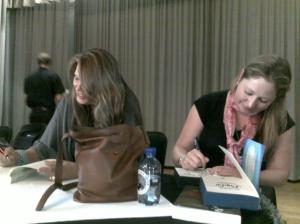 I attended other sessions. Wonderful to get to know Scarlett Thomas a bit. As always a pleasure to hear Jacqui L’Ange talk about one of the best novels of last year, The Seed Thief. Victor Dlamini spoke brilliantly about Flame in the Snow. Listening to Victor, I could only hope that he would be the next person to give the Memorial Lecture.
At the tiny gathering for the official announcement of the Ingrid Jonker Prize for poetry that afternoon, we heard beauty captured in words.
At the Sunday Times Literary Awards shortlists announcement just after, we were joined by evil. The juxtaposition beyond bizarre. I still feel discomfort about the entire event, something inside does not want to come to peace, although who am I to feel disturbed when there were others present who had suffered the unspeakable at the hands of this man. Who invited him? Why did he accept? Why did he cry? Do psychopaths cry? Who had the right to ask him to leave? How much faith in justice do we have? Did we have the right to tell his story, discuss it, him, and not allow him to listen? I thought of other men whom regimes turned into murderers, who were responsible for the deaths of thousands, but who were welcome among us. The word ‘complicity’ was flashing red in my mind.
Dazed, I rushed off to a dinner which could have been a complete disaster, but was saved by wonderful readers. When invited, I hadn’t been briefed properly what was expected of me at the event. I went thinking I would just be a guest. It turned out I was there to entertain other guests as a writer at their table. The horror of the situation struck me for a second. As an introvert, I need to prepare, brace myself for such occasions. But I was lucky. I think a lot of luck was on my side that entire weekend. I ended up at two tables full of fascinating people, who were passionate about books, life. I asked for their stories. They shared willingly.
 I slept peacefully that night, far away from my home and my Furry Ones, in a king size bed covered in books. On Sunday, I woke up to a picturesque view of the Franschhoek vineyards. The glorious autumn weather was screaming, Isn’t it just wonderful to be alive!? I had my own last session about literary letters in which Finuala Dowling (one of my favourite poets, writers; also perfect at chairing such panels – I sometimes attend events she moderates, just because of her) spoke to Margaret Daymond about Everyday Matters: Selected Letters of Dora Taylor, Bessie Head and Lilian Ngoyi and Karin Schimke and me about Flame in the Snow. Friends were there in the audience again, glowing from what they had witnessed. Full of praise and encouragement. I attended my last session of the festival with a huge smile on my face, which only widened listening to Jenny Crwys-Williams interview Kathryn White, Paige Nick and Scarlett Thomas about “sex on the page”.
On the way home, I visited a friend in the Devon Valley near Stellenbosch, was awed by the ridiculous views. We spoke about books and love and the nature of evil, had Nespresso and Mexican chocolate-covered nuts and coffee beans. She returned one of my Reachers to me, all satisfied with her latest adventure with Jack.
In the evening, the Furry Ones were eager to welcome me back home. I entered the house just in time to see Murray beat Djokovic in the Rome final. Miracles do happen. I went to the Waterfront to do some shopping: the bliss of driving through Cape Town on evenings like these… (Madonna dance tracks on full volume)! Before going to bed I looked up another dreaded piece of news, but both Poland and Austria seem to have scrapped through the Eurovision contest without embarrassing themselves too much this time (I watch every year if I can… yeah, I am South African by heart, but an Eurovision enthusiast still lives in there somewhere…).
On Thursday, Pamela told me about the energy one sends out into the world. That you must take care what you allow to go out as it will be returned to you. I thought of all the possibilities of experiencing beauty and meaning I, clouded by the pain, had nearly missed. Luckily – luck, that word again – only nearly. Luck is what we make of our opportunities.
I slept back home, covered in cats. In the morning I flew over to Noordhoek Beach where I always go to in times of pain and joy. I had the place to myself. Calm and beautiful. I sometimes think that my soul actually never leaves the beach. Perhaps that is why I have to visit often, to be fully restored to myself.
I walked, proud that I will continue gathering strength from walking along the sea, that there is no danger of me ever walking into the freezing waves. My footsteps all alone in the sand, I remembered that famous parable about Jesus… But I am not religious.

During the most trying periods of my life, it seems I know how to carry myself.
The power of love, literature is the sea that sustains me. Because all stories are love stories.
And I can do fucking magic.
FRIDAY 13 May:


[45] 16h00 Writers of few(er) words
Karina Szczurek chats to Mark Winkler (Ink), Nick Mulgrew (Stations) and Niq Mhlongo (Affluenza) about the art of keeping it short while ensuring impact.
SATURDAY 14 May:
[67] 11h30 Writing relationships


Chinelo Okparanta (Under the Udala Trees), David Cornwell (Like It Matters) and Nthikeng Mohlele (Pleasure) get to the heart of how writers depict love, sex and friendship through their characters. Chaired by Karina Szczurek (Invisible Others).
[74] 13h00 André Brink Memorial Lecture


(Photographs: Victor Dlamini)
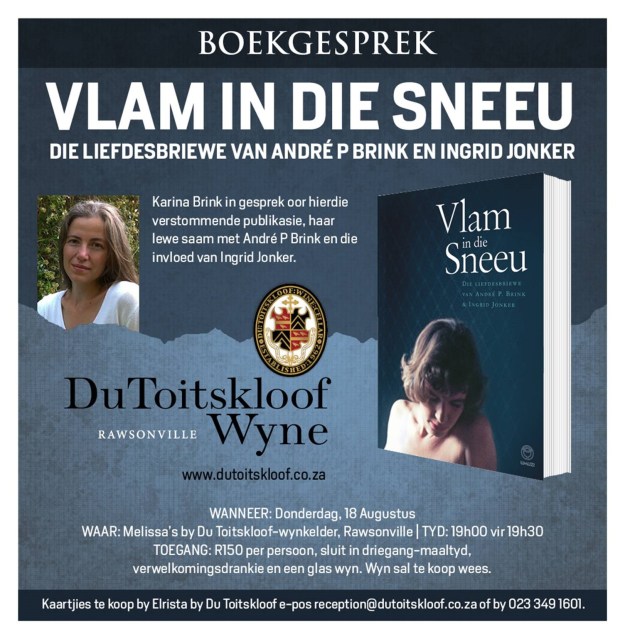
Karina Szczurek welcomes you to the second annual lecture in honour of her late husband André Brink, and will introduce Sindiwe Magona (prolific author and writer-in-residence, University of the Western Cape). She will offer an outsider’s take on this giant of South African letters in a talk titled “André Brink: enigma, betrayer, villain or hero?”
SUNDAY 15 May:
[116] 11h30 Literary letters


Finuala Dowling chairs a discussion with Margaret Daymond (Everyday Matters: Selected letters of Dora Taylor, Bessie Head and Lilian Ngoyi), Karin Schimke (Flame in the Snow) and Karina Szczurek (Flame in the Snow), about what the personal correspondence of significant figures reveals about their writing, themes and lives.
Book tickets here: FLF 2016

KARINA M. SZCZUREK is the author of Truer than Fiction: Nadine Gordimer Writing Post-Apartheid South Africa. She is also the editor of Touch: Stories of Contact, Encounters with André Brink; Contrary: Critical Responses to the Novels of André Brink (with Willie Burger), and the 2015 SSDA anthology, Water: New Short Fiction from Africa (with Nick Mulgrew). She also writes short stories, essays and literary criticism. Her debut novel Invisible Others was published in 2014.
 Reading dead authors is not unusual, but opening the late Paul Kalanithi’s When Breath Becomes Air feels different. He wrote it knowing he was dying and it was published by his widow a year after his death. The immediacy of the knowledge is uncannily palpable. For me, the experience was even more intimate on two different levels. Firstly, I also had a cancer scare recently and Kalanithi was my age when he died. In retrospect, his memoir made me count my blessings, again, as I am healthy and have escaped with just a fright. Secondly, like me, as a young person he struggled to choose between two vocations: medicine and literature. Unlike me though, he chose medicine. But literary longings had never left him and when life became unbearable, like many of us he found some amount of solace in the written word.
The striking title of the book derives from lines of an Elizabethan sonnet: “You that seek what life is in death, / Now find it air that once was breath.” To contemplate it alone is already an experience in itself. In the forward, we are told: “Be ready. Be seated. See what courage sounds like.” Can one ever be ready for death? I doubt it, especially not when at the age of thirty-six, with the most promising medical career ahead, you look at a CT scan of your lungs and become aware that they are riddled with tumours.
At this stage of his life, Paul is about to complete the decade-long training necessary for becoming a professor of neurosurgery. He is married to Lucy, also a doctor. Because their relationship is strained, he does not know at first how to break the dreadful news to her.
When Breath Becomes Air tells Paul’s story before and after the lethal verdict. We see his aspirations taking him to the heights of what is possible in his field. Every day he is confronted with illness, decay, and death – of others. He is constantly challenged to question what makes life meaningful. Some of the descriptions of his daily routines as a medical student and doctor are not for the faint-hearted. Even less so is the narrative of him becoming a patient. It is gut-wrenching to realise how the potential Paul had worked so hard to build will “go unrealised”. With searing honesty, he describes his attempts at making the most of the time left at his disposal and the ambition that drives him in the face of ultimate defeat. He writes how, paradoxically, the illness heals his marriage, and how he makes the courageous decision to become a father to a child who will most likely not remember him. Knowing that his words will outlive him, he writes the book.
When Breath Becomes Air is published with a beautiful epilogue by Lucy, “his wife and a witness”, who carries on with “love and gratitude alongside the terrible sorrow, the grief so heavy that at times I shiver and moan under the weight of it.”
by Paul Kalanithi
The Bodley Head, 2016
Review first published in the Cape Times, 22 April 2016.
 Every new book by Niq Mhlongo is literature to my ears. His three novels, Dog Eat Dog (2004), After Tears (2007) and Way Back Home (2013), were fresh, gritty and not to be ignored. Reading them in sequence you witness a writer coming into his own, developing an unmistakably individual voice that captures a historical moment like no other. That moment for Mhlongo is now. If you want to take the pulse of present-day South Africa, you can turn to his work for insight.
Dog Eat Dog encapsulates the lives of a group of Wits students at the time of the first democratic elections. After Tears describes the challenges and disillusionments of their generation after graduation. In Way Back Home the characters have seemingly made it, but their lives are haunted by greed, corruption and ghosts from their past. Never afraid to tell it like it is, Mhlongo offers a brutally honest glance into contemporary South Africa.
In his first short-story collection, Affluenza, he continues in this vein, but at the same time the writing is even grittier. Four of the eleven stories were published before. The topics range from farm murder, suicide, and paternity to animal attacks in a game park. Mhlongo does not shy away from difficult discussions surrounding the issues of race, gender, sexuality or class, pointing to the horrendous levels of miscommunication arising when people approach one another with bigotry…
Continue reading: LitNet
 Karina Magdalena