
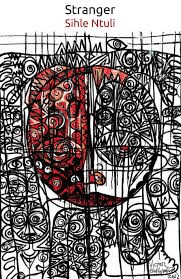
 The thing with poetry is that it either works for you or it doesn’t. I do not know many people who read it for pleasure. Nowadays, poetry certainly seems to be an acquired taste. I often abstain myself, prose being my staple food. But every now and then a poem or, if I am lucky, an entire volume comes along that makes my heart swell with gladness. Sihle Ntuli’s Stranger is one of those gems. The author asked me to review his debut poetry collection. I do not know why, but I am delighted, and honoured, that he did.
Divided into six parts, Stranger offers a glimpse into contemporary South Africa from the perspective of a keen observer with a distinct, edgy voice. Ntuli might be only in his mid-twenties, but his sense of perception is sharp beyond his years. From the first poem to the last, the reader is drawn into the kaleidoscope of his world and its vivid patterns. In “kwa mashu f section bus stop”, commuters’ souls are whisked away to places where they attempt to make a living, “as billboards block the sun”, feeding their impossible dreams. The distinction between the crushing greyness of daily existence and the possibility of a golden life of opportunity features in other poems, such as “friday”. Here the moving opening lines:
in between creases on foreheads
living has folded thoughts
into blankets and sheets
unfolded in dreams
to lie down to pillow talk
to walk behind grey matters
to watch brain revolving around desires unfulfilled
my grey life upon eyes
the all-seeing eye
the sun losing colour when it dies
the aggressive night
black blood protrudes
moon blows cold wind on wounds
the heart weighing tons upon tons
living life like it’s golden is expensive
it costs a lot to be virtuous and true
Ntuli writes about the reality of the South African township and being a young man in contemporary South Africa, but his vision goes beyond. He captures universal moments of hardship, the kind of poverty which does not only manifest in material lack, but also in the soul, which longs for beauty and is confronted with despair instead. “monday” chronicles the exhaustion and hopelessness of the everyday which is hard to overcome: “the phrase ‘things change’ / speaks only to those who expect to get returns” and the “spoon through your chest” brings out both “blood and beauty / as you love and feel pain in the same colour”.
Violence and loss are linked, the brutality and pulse of street life exposed. Occasionally, to cope you hope for escape, take some pill or other substance: “mind coming to age / life and bland taste / less trouble”. That substance can be love; no matter, as long as it alters your consciousness and your ability to feel. The mind wants to flee the desolate, hostile world. The wish to tell it like it is, though, is clearly there – the need to separate illusion from truth. Ntuli reads the world, its delusions and dreams, and tries to navigate the difference.
At the same time, he offers moments of unbearable tenderness, as in a phrase like “silence in your eyelids”, or my favourite poem of the collection, “the walls”:
the everyday
should not seep
through the walls
it is behind these walls
that truth undresses
then lies
Grief is palpable in many poems, captured most poignantly in a few lines in the last stanza of “late”: “early morning / dressed in black / the sun rose / our flowers on top of caskets / the late as candles”. His images are striking, definitely not easily forgotten, thus his words do not die on the page but continue a life of their own through the associations they awaken in the mind of each and every reader who immerses herself in them.
The title of the collection resonates throughout, but is most strongly captured in “the stranger”: “towards him / they throw adjectives / the suffocating symphony / the injustice / words slant to one side / lying”. Race, skin colour, otherness, and contrasts between ordinary lives lived in obscurity and silver linings shining on the horizons whether in words or sunsets bring with them a palette of visual impressions which Ntuli makes us reconsider. Nothing is just a colour: “i sit on the side silently / living life like it’s silver / as the lining is blocked by the roof”.
Recurring in the collection are references to music. It is in the rhythm of every poem, “between jazzy notes without words”. Like music, the lines are meditative, haunting, thought-provoking. They help us negotiate the world, “moved by thoughts that have no rhythm”. But unlike one of his narrator’s contemporaries who seem to be more interested in being DJs rather than poets, as many in the struggle were (“gospel gold”), Ntuli carves out his creative space in words. His is a new struggle: for his own voice, for the recognition of his reality and vision.
Stranger by Sihle Ntuli
Aerial Publishing, 2015
Review by Karina Magdalena Szczurek
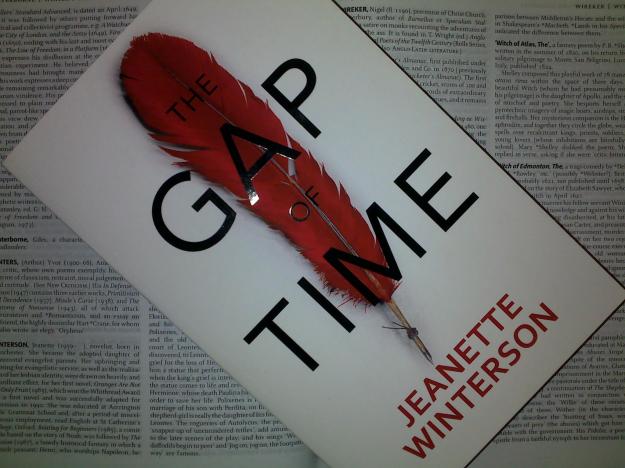 Jeanette Winterson is one of my favourite writers of fiction and non-fiction. Her recent memoir Why Be Happy When You Could Be Normal (2011) was a revelation. I was introduced to her work at university with the by now classic novel Oranges Are Not the Only Fruit (1985). Her Lighthousekeeping (2004) is one of the most moving love stories I have ever read. Among many texts, it echoes Virginia Woolf’s To the Lighthouse. The main character Silver reappears in other Winterson novels. As does the line: “Tell me a story.” Winterson is known for her retellings of myths and legends, her writing is rich in intertextuality. I loved her modern rendering of the Atlas myth, Weight (2005).
 Melissa de Villiers was born in Grahamstown and educated at Rhodes, but she is a citizen of the world. She lives in Singapore, travels widely, and often returns to South Africa. The nine stories in her debut The Chameleon House are informed by migrations. The concept of home is interrogated, as is contemporary South Africa and its difficult past, “old ways unextinguished and forever edging forward, smudging boundaries”. A woman inherits her grandfather’s weekend house and with it the question of ownership. Another is the victim of sly abuse. An illicit couple is caught up in a blackout. Lust and power mingle with loneliness, an “emptiness – desolate and cold – that would claim her should her hold on him flicker and fail.” Loyalties are tested when four friends sharing a house in London unwittingly harbour a traitor among them. This is powerful storytelling from a writer to watch.
 The feeling one is left with after reading Sandra Hill’s debut story collection Unsettled is reflected in the title of the book. Hill paints vivid portraits of what it means to be a woman in different places and times. It is a finely layered picture of the everyday and the unusual. The mother of one of the characters insists that one should read poetry “slowly, expectantly, the way you eat oysters”, as the “magic…comes after you swallow.” Although every story is a fully contained piece, read together, they acquire that magic of swallowing oysters. Saturated with local flavours, settings, history, Unsettled offers evocative, intimate glimpses of women’s lives – their dreams, desires, worries and regrets – many readers will find uncannily familiar, sometimes perhaps difficult to acknowledge: “Life can take us away from where we belong, but we don’t lose the longing for it… If we are lucky we get to make our way back.”
 It’s difficult to believe that this is only
  There is nothing quite as satisfying as an excellent personal essay, and William Dicey’s Mongrel contains six gems of the genre. Dicey has been on my literary radar for a while now. In the past decade, whenever I found myself admiring a beautifully designed local book, Dicey’s name would often feature on the copyright page. His first book, Borderline (2004), a travel memoir about canoeing on the Orange River, is one of those titles readers remember fondly whenever mentioned, but apparently, it is out of print. Fortunately, I found a copy in our library. I have been meaning to read it for years, and Mongrel has finally made me realise that I need to succumb to the longing.
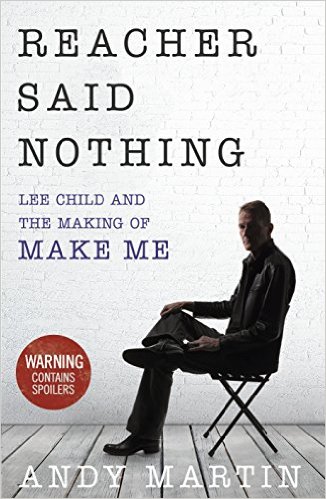 Many of my friends will know
  Despite my irredeemable addiction to Lee Child’s Jack Reacher series, I do not often turn to thrillers or crime fiction for entertainment. But Night School, the next Reacher adventure, is coming out only in September, and since the nights are getting longer, it is nice to have a few good stand-ins in the meantime. Locally, I really enjoyed the recently published Sweet Paradise by Joanne Hichens: tight plotting, great writing, a scary villainess, and a heroine with balls. It surprised me, and that is a quality I truly appreciate in genre fiction.
 Reading about the Holocaust is never easy. Facing its terrible truths, especially when your own family is involved, is heroic.
 Karina Magdalena