Author Archives: Karina

Unknown's avatar

About Karina

Author living in Cape Town.

DAY ONE, SATURDAY 15 APRIL 2006

In 2006, for a week André kept a diary for Libération. This is the first entry of the week:

A good way to start my writer’s week: at a height of 11000 metres, flying over Africa. After ten days with my fiancée in Austria, I am returning to Cape Town. After the intense green of a Europe emerging from the snow, there is the familiar patchwork of browns and ochres. Back to roots: my own, and those of humanity. I have never felt a split between Africa and Europe inside me: what for some people is an experience of cultural and moral schizophrenia, has always been for me a source of richness and discovery. Both are part of me, both feed into me, both shape me and define me. If my physical birth is linked to the arid landscape of the Orange Free State, where everything was determined by the sense of space, by the endless distance between here (wherever ‘here’ was) and the horizon, by thorn trees, and fierce sunsets, and the hard omnipresence of stone, by ‘Bushman’ engravings on rocks and the traces of ancient fossils encrusted in hard places, my emotional birth (as I have often testified) happened at the time of the Sharpeville massacre, on a bench in the Luxembourg Garden.

And here Africa is below me again, its contours softened by distance, its suffering made dream-like, its cruelties and deprivations obscured by haze. Which seems like a metaphor for the distance and the haze that all too often, for all too many people, hide or distort the stark facts of the continent from the European gaze. How easy it is to see Africa as a scene of hopeless misery, a history of loss and failure, a disgrace to humanity. And yet this is where we all have our origin. This seemingly barren, useless tract of earth is our common mother; her vastness and relentlessness have nourished us, and taught us to survive. And for those of us who are prepared to remove the blinkers and dark glasses that protect our spoilt eyes, she is, still, a source of generosity and understanding, forgiveness and courage and strength. And, yes, of hope. Because she guards the source of what we have in mind when we speak of ‘humanity’: the wisdom of suffering that has endured through millennia, of humour that can smile at human folly and shortsightedness, of timeless faith in a future as long and as sure as the past. After exploitation and colonisation and oppression and contempt, she is indomitable rather than hard-headed, redeemed by agony rather than immersed in self-pity, prepared to share rather than to cherish herself, not vengeful but forgiving, filled not with despair but with hope, not with passivity but with the passion of faith.

It is home, and I am heading back to it.

– André Brink

A possibility

I was about to leave the house to go to the airport when my mom’s warning caught me in the doorway: ‘You can’t meet the man wearing that,’ she said, pointing at the Norwegian wool cap covering my ears.

‘Why not?’ I replied defiantly, but she only glanced at me over the rims of her glasses.

My compassion for an elderly man was taking me to Vienna International Airport. I was helping to organise a symposium on South African literature at my home university in Salzburg, and there’d been a terrible mix-up with the ticket we’d booked for one of our distinguished guests, André Brink. I felt so sorry for him that I suggested somebody should at least go to Vienna and accompany him on the train journey to Salzburg. I was delegated to do the job because of being most familiar with his work. I’d read several of André’s novels by then and loved all of them: the outrage of fantasy in The First Life of Adamastor; the exploration of responsibility and belonging in Imaginings of Sand; the aching eroticism in The Rights of Desire (which I read in a single sitting); the shocking reality of apartheid portrayed in A Dry White Season; the glimpse of possibility in An Instant in the Wind; or the brutality and humanity of Looking on Darkness. Naturally, I was honoured to be of service to the author of these magnificent novels, however intimidating the task felt all of a sudden.

I travelled to Vienna a day before André was due to arrive and used the opportunity to visit a friend, Charlotte Khan, with whose help I’d once survived three weeks in an Ukrainian student hostel but who now turned against me and backed Mom on the issue of the cap. Standing – bareheaded – in the airport’s arrivals hall that fateful Saturday morning in December 2004, my palms sweating, I told myself that it was silly to be nervous; even famous authors were ordinary human beings. Right?

Then the door to the baggage hall slid open and very casually André walked through. He was nothing like I’d imagined. I was expecting, at sixty-nine, an elderly, stooped gentleman in an outdated suit, exhausted and foul tempered after the horror flight. With his wavy brown hair, lively pale blue eyes behind elegant, light-framed glasses and a cautious smile on his lips, André walked, tall and straight, towards my extended hand. He shook it briefly while I recovered from my confusion. He was wearing a pair of well-worn jeans, an old leather jacket over a cotton shirt, and big black shoes. I couldn’t help being surprised, and impressed.

Our train trip from Vienna to Salzburg was full of conversation and laughter, at least until André fell asleep in his seat opposite me; the long trip taking its toll after all. I took out my copy of Looking on Darkness and continued reading, every now and then glancing up from the book to check whether he was real.

A few days on, we were slowly walking from the Max Gandolph Library in Salzburg, where the last symposium session of the day had just come to an end, to the taxi rank around the corner on the Residenzplatz next to the Cathedral. The other participants were still tying up loose ends of heated debates over a glass of red wine, but André had asked me to get him out of there. He was tired, he’d said, and wanted to get to his room.

When we reached the row of taxis, the traditional Christmas Market was in full swing around us, scents of gingerbread and hot mulled wine accenting the icy air. For a few moments the buzz of the market faded into the background as André turned to face me before getting into the car. We each removed one glove and shook hands again, but this time holding on much longer than necessary.

Our fate was sealed.

The night before he was to leave Salzburg, André gave a reading at Schloss Leopoldskron where he was staying for the duration of the symposium. I introduced him to the public and conducted the Q&A session during the event. Preparing for the evening, I’d washed and dried my long hair, letting it fall loose around my shoulders. As I sat next to André, I observed his hands for the first time.

When the applause died down, books had been signed, the last goodbyes exchanged and the lights dimmed, the atmosphere in the Schloss was full of magic. As one of the organisers I was the last person to leave. And there I stood with my hand on the front door knob, looking at the Christmas tree in the reception hall, listening to the engulfing silence and desperately trying to find a reason to go upstairs and knock on his door.

I didn’t that night, although, as we discovered later, he was leaning against the door in his room, just as desperately trying to find a reason to come down again. For a few seconds before our courage failed us, the night stood still in anticipation. Reason prevailed, but not in any conventional sense. There was no articulate decision taken or any logic involved. The subliminal stirrings of mutual attraction simply remained suppressed, not allowed to manifest themselves as real thoughts, or actions. I was married at the time. Unhappily, but that was and is beside the point. It was only much later that all of this became clear, was put into words and was recognised for what it was – an awakened possibility of something new, of being aware of somebody in that way again.

A vivid correspondence followed. Feeling understood, I shared freely. By then, my personal life lay in ruins around me, completely shattered. On crisp, stark-white pages with an old-fashioned fountain pen and no lines to guide me, André allowed me to write it into being all over again. Day after day, as I was trying to piece my life together, he read and wrote in support. He also spoiled me with moving gifts: a box of sea urchins from a snorkelling expedition with friends from Still Bay, Umberto Eco’s On Beauty and a delicate golden chain for my twenty-eight birthday, ten crimson velvety roses for Valentine’s Day. Yet, there was no room for real promises in this pristine universe built of words, although everything seemed possible. André’s epistolary presence gave me a new lease on life during and after a painful divorce.

It was during this period that I wrote a paper on An Instant in the Wind for a seminar I attended. Inevitably, it is my only extended piece of criticism on one of André’s books. I treasure it and the novel it analyses for the intellectual and emotional journey it allowed me to travel. The story of Elisabeth and Aob resonated deeply within me and if I had to choose (which fortunately I don’t), I would pick An Instant as my favourite among all André’s novels. In portraying the fundamental recognition between two people and juxtaposing it with the ultimate betrayal, he captured the essence of what it means to be human. Referring to a quote from the book – ‘all the impossible possibilities, everything which can be confirmed and petrified by a single gesture, created or destroyed by it’ – I wrote in my essay: ‘Whether something really happens or not is not the issue, what is most important is the possibility and the faith in the chance of its potential happening.’ Through his work and his letters, André restored this faith in me.

By the time we met in the physical world again – in the European spring of 2005 – we were both free to listen to our hearts, and it was André’s turn to meet me at an airport. He says he kissed me then and there when I arrived, but I don’t remember. What is vivid in my memory is the taxi ride from Charles de Gaulle Airport into the city. This time nobody was left behind in the cold. In the back of the car our hands touched, knowingly and purposefully, and I remember thinking that I had never seen more beautiful hands in my life.

It was spring, we were in Paris, there was also a conference about South African literature taking place at the Sorbonne, and we walked hand in hand around the city, discovering that what we’d brought into being through words was taking real physical shape in the world between us. I did not have to steal sneaking glances at André’s hands anymore or imagine their touch. I could caress, feel, rub lotion into them, place kisses on each individual finger tip. One day, when he was taking his usual afternoon nap, I took a series of photographs of them resting next to his face on the ornate duvet in the hotel we were staying at. I asked whether I could do a manicure for him and he readily agreed. Taking care of his hands has become one of the most pleasurable routines in my life.

On our last evening in Paris, I invited André to La table du Perigord, one of his favourite restaurants (sadly closed down afterwards), to a feast of pan-friend duck liver, a dish he had introduced me to there a few days before. Nothing can beat the taste of a baguette morsel dipped in the mixture of fried liver and pear juices, accompanied by a sip of a good Bordeaux and the promise a twinkle holds in the eyes of your lover.

A month later we met again in England at yet another conference and, once our literary duties were over, we travelled together to my beloved Wales where I’d spent a year studying and taming dragons. We stopped for tea at Tintern Abbey and read Wordsworth aloud to each other in the middle of the ruins. I took André to my favourite place on earth, the Elan Valley, where on a wind-still day the water surfaces of the reservoirs reflect the pastoral landscape around them, in photographs the mirror image impossible to distinguish from the real thing. In Aberystwyth, I showed André the house I’d lived in and we walked along the long promenade, watching the tide come in, and breathing in the heavy sea kelp smell. We spent a few days in Hay-on-Wye, rummaging through the second-hand bookshops and staying at an early seventeenth-century guesthouse in which the entrance to our room was barely a metre high, but the shower cubicle was big enough to accommodate us both. Knowing that we would be visiting this area, André’s friend and publisher, Geoff Mulligan, had booked us a table at the The Stagg Inn, in 2001 the first ever pub to be awarded a Michelin star.

I came to Cape Town for André’s seventieth birthday, then for the South African winter the same year. Late 2005 we travelled together on the magnificent Trollfjord of the Norwegian Hurtigruten fleet which sails along the fjord coast all the way between Oslo and Kirkenes. I wore the woollen cap I’d been forbidden to wear the previous year to the airport; André thought it lovely. The trip was organised by Wiggo Andersen and his then partner, now wife, Kristin Johansen. Over the past four years we have become close friends with this wonderful, enterprising Norwegian couple and their lovely Cape Town-born daughter Selma. Soon all of us will be embarking on another journey, fulfilling André’s life-long dream of experiencing the ancient splendour of the Machu Picchu ruins in Peru.

It was directly after the Trollfjord trip that I arrived on André’s doorstep with two large suitcases and an invitation to stay forever. I walked around his soulful Victorian house in the middle of Rosebank with its walls covered in paintings from around the world and the rooms beautifully furnished with antiques, and I immediately felt at home. We turned one of the guest bedrooms into a study for me and the adjoining little room into the biggest Brink library in the world. I became the proud custodian of this impressive collection of André’s author copies, translated into over thirty languages, Polish (my mother tongue) among them. When I sit at my desk and glance over at the rows of books, I’m awed and inspired. Since coming to live with André, I have witnessed the genesis of several recent Brinks, from the moment inspiration strikes, through the endless baths in which he mulls over plot and characters before returning to type and rewrite, to the sound of the doorbell announcing the arrival of the final product. In the beginning I’d feared the isolation which accompanies creativity, but in the meantime have discovered the generosity of sharing with which André approaches the task, and the respect and appreciation he shows for my own work. Somehow we have managed to synchronise our working schedules so that they do not encroach on our relationship time, so precious to us both.

On a warm summer evening in 2006, André returned home irritated and frustrated by the day’s many unexpected little vexing challenges. I was not to be deterred from my plans for this particular evening. There was only one solution to the tension: I ran him a bath. While he was floating, I set a small ancient cedarwood table for us in the lounge, let Mozart play in the background, lighted candles, prepared a light meal, and opened a bottle of champagne. As always, he emerged from the bathtub newborn, and I served the food. During dessert I let André read a letter I’d written for him.
Then I got on my knee and asked him to marry me.

‘Jou poephol,’ he exclaimed.

I swear.

But then he said a definite Yes with tears gathering in his eyes, and we both cried and laughed and hugged and kissed and, yes, were married a few months later, on 20.06.2006. The little cedarwood table served as our altar in the lounge. A close friend performed the official ceremony. Soon after, with a few months in between every arrival, three cats – Mozart (from Austria), Salieri (from a Capetonian sewage pipe) and Glinka (from the multi-pet household of André’s daughter) – moved in with us.

We are a family now. I became a stepmother to André’s four children, all older than me, and a step-grandmother to their six children, one of whom even teasingly calls me babcia, Polish for grandma. The entire Brink family and André’s many friends welcomed me with warmth and kindness. My own family was just as pleased about our relationship. When I told Dad about us for the first time, we were in his workshop and he was in the process of assembling a bicycle. I clumsily began explaining that the man I was in love with was twenty-two years older than him. There was a short silence, not because my father didn’t know how to respond, but because he was concentrating on setting the bike’s rear derailleur right. Once he was satisfied, he looked over his shoulder.

‘But he makes you happy, doesn’t he?’ he asked.

I nodded.

‘So, what’s the problem?’

He won’t admit it openly, but I think Dad misses me a lot now that I live so far away, but he and Mom are happy for us, and we do visit often, phoning each other regularly in between.

Dad calls André ‘my black son-in-law’. ‘He’s African, isn’t he?’ That settles it for him.
Mom, unable to communicate properly in a language André understands, has discovered his love for her pan-fried potatoes with garlic and a few other of her specialities, and she expresses her affection by cooking for him.

In spite of all the travelling we do, André and I love being at home. We spend almost every hour of every day in each other’s company. Even if we work in our separate studies, each is aware of the other’s presence across the passage, a few metres which we traverse back and forth many times a day to seek advice, exchange news, or offer one another a cup of tea. Often I find André in the bath, or run him one myself, when he writes himself into a corner. I don’t know whether he realises how much confidence he has given me by discussing his projects with me, by making my opinions count, by trusting my judgement, and most importantly, by believing in my own creativity. More than anyone else, he has inspired me to say, proudly and out loud: I am a writer.

When not at work, we enjoy life’s simple pleasures together. André will get out of bed, put on his clothes, grab the car keys and drive with me to the nearest open sushi place if I get a craving, even late in the evening. If we feel like it, we will run a bath at three a.m., or watch Fawlty Towers for the hundredth time. When André turned seventy-one and I twenty-nine, we threw a huge party to celebrate our hundredth birthday. For other birthdays, we always explore different means of transport – anything from donkey cart to helicopter. André awakened my passion for rugby and opera. I’m still trying to get him to read science-fiction. I love that he asks me to listen to the morning songs of birds outside our bedroom window, that he can’t say no to chocolate even though it often gives him stomach cramps, that he cries while listening to Rolando Villazón and Anna Netrebko, rereads Miguel de Cervantes Saavedra’s The History and Adventures of the Renowned Don Quixote de la Mancha at every opportunity, adores female toes beyond reason, and breathes art through his skin, unable to resist a new Georges Mazilu or a Jan Vermeiren or a statuette of a weeping woman in a Parisian gallery window. I love the fearlessness with which he encounters every windmill in his path and the eagerness with which he approaches every new adventure. To experience life with André is to enter a space where the boundaries between the everyday and the extraordinary blur, where duty merges with passion, and a mere possibility becomes intoxicating reality.

Sometimes I watch André peacefully asleep next to me and still marvel at how in spite of coming from two entirely different cultural backgrounds and of having forty-two years of age between us, we fit like a pair of long-lost shoes, totally out of fashion, but a perfect match. Usually the first one to wake up in the morning, I always turn to face him and know that I will be greeted by a smile the moment André opens his eyes, sometimes even beforehand. We often only murmur our good mornings and continue to hold entire conversations in this manner – about how we’d slept and whose turn it was to serve tea and rusks in bed. The moment she hears our voices, our youngest cat Glinka comes charging into the bedroom, chirping her own greetings and demanding her share of a rusk.

It hasn’t always been easy; nothing worthwhile ever is. From our individual pasts we’d brought a lot of baggage into our relationship that had to be examined, repacked and re-shelved, so as not to weigh us down on our continuing journey. We have always been able to talk to one another, to sit down at a table and explain where our feelings came from and what we expected from one another. It might sound simple, but I consider this space of honesty and trust between us as our greatest achievement. Through his love and patience, André has given me the most precious gift any person can give to another: the courage to be wholly and completely myself, to unabashedly stand naked in his presence.

Like Don Quixote his Dulcinea, André makes me possible.

First published in Encounters with André Brink (2010).

Literary Couples: Alex Smith and Andrew Salomon

This is the first in a series of posts I would like to devote to Literary Couples. Think Mary Wollstonecraft and William Godwin, Mary Shelley and Percy Bysshe Shelley, Virginia Woolf and Leonard Woolf, or Siri Hustvedt and Paul Auster.

I would like to begin, however, locally and very much in the present with two dear friends: Alex Smith and Andrew Salomon.

Alex, Andrew and their son Elias

Alex, Andrew and their son Elias


Photo: RHS

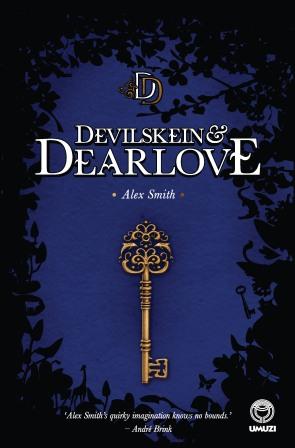
Alex Smith is the author of Algeria’s Way, Four Drunk Beauties, Agency Blue and Drinking from the Dragon’s Well. Her writing has been short-listed for the SA Pen Literary Award and the Cain Prize for African writing, and has won a Sanlam Prize for Youth Literature and a Nielsen Booksellers’ Choice Award. She lives in Cape Town with her partner, their book-loving baby boy and their dogs. Her latest novel is Devilskein & Dearlove.

Andrew Salomon is the author of a young adult novel, The Chrysalis, and his short stories have appeared in several journals and collections. He received a PEN/ Studzinski Literary Award for African Fiction in 2009 and was shortlisted for the 2011 Terry Pratchett First Novel Award. He lives in Cape Town, but his work as an archaeologist has taken him all over southern Africa and a few places beyond. Tokoloshe Song is his first novel for adults.

Alex and Andrew allowed me to ask them some questions:

Please describe your partner’s creative process.
Andrew: Alex gets an idea – whether it be a character or a situation, or something else – and she writes away. She has an amazing ability to get the words down, to just write thousands of words at a time. Just a few months after our son was born she had to write three novellas within one month, and she did.

Alex: I think we are both a bit secretive about new ideas – or maybe I just am! I often see Andrew typing up notes – fragments of things he has seen or words that have intrigued him – and I’ll come across files on our shared desktop (laptop that is) with extraordinary file names; I don’t open them, but when I inquire, it always turns out that the file is a page of these notes, which could for example be graffiti he has spotted on his way home in the train. So he hoards ideas, that’s probably the beginning of his ‘creative process’. Then he takes the plunge and starts writing a new novel or story. To be honest we have never discussed anything like our ‘creative processes’ so I have no idea what happens after that. I do know that he likes to get a first draft done in a focused period of time – so during that time he becomes quite single-minded about the task of writing; he’ll set himself a daily word target, that sort of thing. I also know that when it comes to editing, he is meticulous, far more so than I am – I always feel like a bit of a lazy slut in comparison to him when it comes to editing.

Are you each other’s first readers?
Andrew: Definitely, I know I can count on Alex to be truthful in her assessment, but also kind in the way she delivers it.

What is your favourite piece written by your partner?
Andrew: Alex’s latest novel, Devilskein and Dearlove is a wonderful read, and I am also a big fan of the book that came from her experiences living and working in China, Drinking from The Dragon’s Well – it’s a book that depicts her experiences very truthfully and that also paints an intriguing picture of a place caught in extremely rapid change, so rapid that now it could probably serve as an historical snapshot.

What is the best and worst aspect of sharing a life with another writer?
Alex: Well, I’m not really one to dwell on negatives, but if I must then probably the worst thing is that you have to be really thick-skinned as a writer because it entails all manner of disappointments – from awards you are shortlisted for but do not win to flat out rejections on various projects. So when you share a life with another writer, you experience those slings and arrows in duplicate – those aimed at yourself and those experienced by your partner. For me the best thing is just having somebody very close who loves books, loves stories, gets excited by possible plots and characters and even possible names, and who also really understands what this strange business of writing is like, both its wonders and its realities – small things like knowing what editing actually is (it’s interesting how many non-writers imagine that novels fall out of the heads of their authors in pristine condition and all ready for the typesetter).

Andrew: The best aspect is that you share your life with someone who understands the deep desire to write, to tell a story. So there’s never any explaining necessary about the need for time and space to do this, and we support each other in creating that time and place.
I’m not sure there really is a ‘worst’ aspect but Alex has an uncanny ability to misplace bookmarks, so she keeps borrowing mine, and I have a tendency to use bookmarks that usually have some kind of sentimental meaning to me, which I get to keep for only a short time until they get sent to the secret place of bookmark-no-return. Also, both of us being book-lovers, when we moved in together, our already-substantial book collections got combined into a giant collection and now we seriously need a room just for books, but there’s no chance of that in our postage stamp of a house!

D&DTokoloshe SongYou can win a copy of Alex’s and Andrew’s latest titles in my BOOK GIVEAWAY.

Even better: Best of second half of 2014 book giveaway

GiveawayIn July last year, I listed here my best reads of the first half of 2014 and gave one of the titles away to a randomly chosen person who commented on the post. The lucky winner was Solomon Meyer and I sincerely hope he has enjoyed his copy of The Maze Runner.

I would like to do the same for the second half of 2014 which turned out to be an even greater reading success than the first. Old friends & new discoveries made the list. I decided, however, to concentrate on fiction & non-fiction only. In no particular order:

?????????????????????????I love historical fiction and it hardly ever comes better than Claire Robertson’s The Spiral House (Umuzi, 2013). I heard Robertson speak at the FLF last year and was immediately intrigued. During the festival, the novel was shortlisted for the Sunday Times Fiction Prize and won subsequently to my, and many other readers’, delight. Written in a mesmerising prose which takes you into the heart of local history, the novel is a rare gem which should not be missed. Apart from anything else it is such a beautifully produced book. Well done, Umuzi!

The VisitorAnother historical title, Katherine Stansfield’s The Visitor (Parthian, 2014), will feature on all my favourites lists for a long time to come. I had the pleasure of reviewing it for the Cape Times. A gift from Robert, a dear friend with whom I studied and practised fencing at the University of Wales in Aberystwyth, this beautiful debut novel came to me when it was most needed. Set in a fictional fishing village in Cornwall towards the end of the nineteenth and the beginning of the twentieth century, it tells the story of three friends and their community. The sea is their constant companion and witness to the love, loss and longing unfolding at its shore. Last year, I wrote an essay about the sea and its influence on my own life as a woman and a writer. The Visitor has triggered many memories and helped me focus on the task at hand. Stansfield is also a remarkable poet. Her debut collection Playing House is a delight.

People's PlatformI love engaging with the internet even though I am deeply aware of its pitfalls. I still remember AltaVista, the first chat rooms, or waiting for a page to open for twenty minutes (if you were lucky!) while doing my homework on the side. I have been fascinated by the medium for nearly as long as it exists on a global scale. The People’s Platform – Taking Back Power and Culture in the Digital Age by Astra Taylor (Fourth Estate, 2014) is one of those must reads if you want to consciously participate in the digital age and not be simply reduced to a consumer, abused by power and greed. Culture is one of our most precious resources and treasures. To allow it to waste away in this precarious environment is criminal.

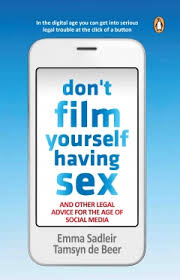
Dont Film YourselfAnother must for the internet age: Don’t Film Yourself Having Sex and Other Legal Advice for the Age of Social Media (Penguin, 2014) by Emma Sadleir and Tamsyn de Beer looks at the legal implications of our interaction with social media. The authors spell out the dos and don’ts of the diverse platforms: Twitter, Facebook, etc. The book is informative and strangely enough very funny despite telling some very grim internet stories of people losing their reputations, jobs, friends and serious money over online blunders. Also essential reading for anyone wanting to marry Kate Winslet.

Divided LivesAnybody who reads me will know how much I admire Lyndall Gordon‘s work. Her latest, Divided Lives (Virago, 2014), raises my admiration to another level. Just looking at the shelf where I keep all her wise, powerful biographies and memoirs reassures me. She has brought so much sustenance and joy into my life as a reader, writer and woman that I am certain I would be a very different, and much poorer, Karina today without having encountered her books. May there be many more to come.

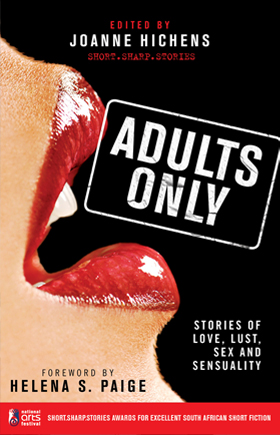
adultsonlycoverA rather racy read, and not all the stories in this anthology were my cup of tea, but there were some which I found very exciting, on the literary not literal level, of course ;) Showcasing some of the talent we have here in South Africa, these erotic short stories cater for nearly all tastes. Funny, thrilling, and exquisite at times, it is a rewarding read (see my review: Adults Only – Stories of Love, Lust, Sex and Sensuality edited by Joanne Hichens, Mercury, 2014).

A_Man_of_Good_Hope_frontA Man of Good Hope (Jonathan Ball, 2014) is Jonny Steinberg at his best. I have a friend who says that when she grows up she wants to be Jonny Steinberg, and I can’t blame her. In his latest, Steinberg tells the story of a man on the most remarkable journey which takes him from Mogadishu via South Africa to even more distant shores. Asad Abdullahi goes through hell and back and on his trip teaches us what it means to hope and dream when it seems that all is in vein. I listened to and interviewed Steinberg during the Open Book Festival last year. For my reflections on the festival see “The Image of a Pie”.

invisible_furies_coverAnother of my favourite authors, Michiel Heyns, launched A Sportful Malice at the FLF last year and the novel featured in my July giveaway, but later in the year I turned to his previous title, Invisible Furies (Jonathan Ball, 2012) and enjoyed it just as much, not only because it is set in my beloved Paris. After a long absence, Christopher travels to Paris where he encounters a world of beauty and intrigue. He is there to help Eric, the son of a friend, come to his senses and return to South Africa. But Eric has some surprises in store for him. Nothing is what it seems in the City of Love.

The Snowden FilesThe Snowden Files – The Inside Story of the World’s Most Wanted Man by Luke Harding (Guardian Books/Faber and Faber, 2014) is another eye-opener when it comes to the workings of the internet and governments all over the world. Harding reveals the background to the Snowden story and all its scary implications. A tense read of history unfolding in front of our eyes. I hope there will be a follow-up book and some kind of decent resolution to this saga on all fronts.

The Alibi ClubA discovery from last year’s Open Book Festival, Jaco van Schalkwyk’s The Alibi Club (Umuzi, 2014) is one of the most refreshing South African fiction debuts of the last few years. Set in New York in the decade around 9/11, it tells the story of a South African working at a club and interacting with its regulars in the heart of Brooklyn. Tight, impact prose, distinct characters, well-paced storytelling – the stuff of a great promise. I am very curious what Van Schalkwyk will do next.

Travels with EpicurusNot only a delightful book, but a reminder of what good booksellers are for: Travels with Epicurus – Meditations from a Greek Island on the Pleasures of Old Age (Oneworld, 2013) by Daniel Klein was recommended to me by Johan Hugo from the Protea Bookshop in Rondebosch. Johan and I have been talking books for years now, so he knows what André or I might enjoy. With this enlightening read he was spot on for both of us. We literally devoured the little book. It is one of those that makes you feel good about the world and your place in it. And it was only written because of Klein’s initial fear of acquiring dentures… Inspiration is a curious thing indeed.

LullabyThis is also a book Johan introduced me to, knowing that I would be interested in another Polish-speaking author writing in English: Anna’s family emigrates in the 1980s before the changeover in Poland and settles in New York. Missing her roots and extended family, every summer Anna returns to Poland on her own and spends the holidays in her old neighbourhood where she befriends Justyna and Kamila. Together, they survive the ups and downs of puberty: jealousies, hang-ups about their developing bodies, the turbulences of first loves, budding sexualities and substance abuse. Some things go horribly wrong and one day Anna refuses to come back for another visit. Years later, another tragedy brings the three friends together again. Poland is undergoing its own transition while the young women face the new reality and try to pick up the pieces of their broken dreams. The Lullaby of Polish Girls (Quercus, 2013) by Dagmara Dominczyk is a fast-paced story of growing up in a migratory world.

MoonTigerI have a friend whom I see roughly once a year for coffee or lunch. Every our encounter inspires me and gives me food for thought for the next year. The last time we spoke, Penelope Lively came up and he recommended that I read Moon Tiger (André Deutsch, 1987). I have read some of Lively’s other novels and there was even a time when I contemplated writing a thesis on her work, but it was not meant to be. Moon Tiger, however, made me want to go back to her writing again. It is an intense, beautiful study of the nature of history with a grand love story at its centre.

TalesAnother local novel that made a huge impact on me this year: Imraan Coovadia’s Tales of the Metric System (Umuzi, 2014). I was asked to review it for LitNet and decided to do some catch-up Coovadia reading in the process, which proved most entertaining. But this latest is, for me, Coovadia’s best up to date. We speak about ‘post-apartheid’ fiction all the time, but I sometimes wonder how many novels deserve the title in the sense that they have been truly written from that perspective. Tales of the Metric System is definitely one of them.

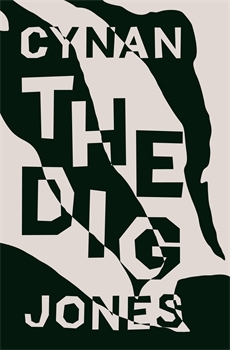
The DigAn absolute highlight of last year’s and this year’s reading is the discovery of the Welsh author, Cynan Jones. I subscribe to the New Welsh Review. I was reading an old issue of the magazine which included a review of Jones’s rewriting of a Welsh myth, Bird, Blood, Snow (Seren, 2012) and I was intrigued. I googled, as one does, and found that he’d written a novel with a central Polish character, Everything I Found on the Beach (Parthian, 2011). A Welsh author writing a Polish character was too much to resist, so I ordered the novel and Jones’s latest, The Dig (Granta, 2014). Last night, I started The Long Dry (Parthian, 2007) and am enthralled by it like by the other two titles. In the meantime, I have discovered that Jones has also published two other novels which might be tricky to get since they seem to be out of print, but I am patient and persistent, and eventually, I intend to write a longer piece about his work. Literary discoveries get seldom better than this. I am a fan for life.

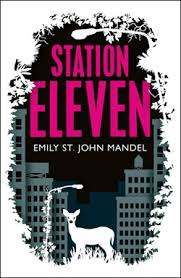
Station ElevenEmily St. John Mandel’s Station Eleven (Picador, 2014) was sent to me for reviewing. Also a writer to watch out for. The novel is speculative fiction at its finest and belongs with the Atwoods & Le Guins of the literary world. It is a genre which has always appealed to me and I hope to write in it myself one day. Station Eleven tells the story of a handful of survivors of a lethal flu which wipes out most of the human race. Disturbing and touching at the same time, it contemplates the big questions in life while telling a gripping story.

The Night WatchmanRichard Zimler has been a friend since we first corresponded about The Children’s Hours: Stories of Childhood. His work is an inspiration. I have been a fan for years. His latest novel, The Night Watchman (Corsair, 2014), is set in Portugal, but it tells a very familiar story of abuse, power, corruption and the sense of hopelessness we all face in this world when confronted with any of these evils. Zimler never goes for easy answers. His stories are nuanced, beautifully written (he is a master of dialogue) and always full of life’s wisdoms. It is an honour to know and to read him.

D&DTokoloshe SongTwo local friends, Alex Smith and her partner, Andrew Salomon, have published novels last year with Umuzi (again, gorgeous covers): Devilskein and Dearlove, Tokoloshe Song. Both are fantasy novels, very different though, but equally entertaining. Most days I am not a fantasy fan, but when it is done well, like these two heart-warming and enchanting books, even a non-believer’s heart melts. I loved the characters, their unusual universes filled with magic and wonder, and their stories which kept me spell-bound. I might convert after all!

Devil's HarvestAnd speaking of the devil, Andrew Brown’s Devil’s Harvest (Zebra Press, 2014) is not an easy read. Heart-wrenching and honest, it tells the story of a British botanist and a Sudanese woman who is a survivor of a genocide. The story of their journey through South Sudan is one of those that had to be written and has to be read. Brown did an excellent job at making sure that it is not forgotten. This was my first of his novels, and certainly not the last. Something to look forward to in 2015!

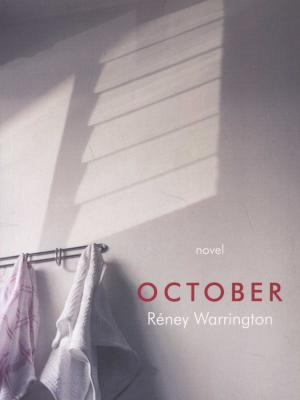
OctoberAn accidental encounter on twitter, of all places, revealed that I share a publisher with Réney Warrington. October (Protea Book House, 2013) is a subtle love story of how two damaged women struggle through emotional numbness to find a way back to life. The photographer Jo is shell-shocked by the divorce of her parents and her sister’s homophobia. When she meets the famous pop singer Leigh who has to overcome a serious illness and a troubled past, Jo does not expect to ever heal again. Despite serious doubts, they decide to give their relationship at least a fleeting chance…
Warrington is also a photographer and October includes a few startling images that poignantly illustrate the narrative.

This DayAnother twitter encounter resulted in my reading this meticulously crafted novel about a day in the life of a grieving woman. Having lived through the worst imaginable ordeal for a parent, Ella now has to take care of her husband who is suffering from severe depression. As each heart-breaking day dawns, she leaves massages in the sand for the sea to wash away. It is in the water that she also confronts her deepest hopes and worst fears. Poetic, full of insights, and simply beautiful, Tiah Beautement’s This Day (Modjaji Books, 2014) is an remarkable achievement.

Please let me know:
1) which books have made such an impact on you in the second half of 2014 that you wanted to share them with others?
2) which of the titles I’ve mentioned above you would be interested in reading yourself?
From your comments, I’ll draw one name at the beginning of February 2015 and send you the book you have chosen from the list of my favourite titles.
(Just to clarify, it seems this wasn’t clear: The winner will get a brand-new copy of the book they chose from my list.)

2014 in review

The WordPress.com stats helper monkeys prepared a 2014 annual report for this blog.

Here's an excerpt:

The concert hall at the Sydney Opera House holds 2,700 people. This blog was viewed about 11,000 times in 2014. If it were a concert at Sydney Opera House, it would take about 4 sold-out performances for that many people to see it.

Click here to see the complete report.

Happy Birthday, Rachel Carrera!

I have been following Rachel Carrera’s Blog for nearly as long as I have been writing my own here at WordPress. Rachel is always witty and informative, whether sharing stories about her family (human & feline) and living with autism, interviewing authors, congratulating authors on their birthdays or inventing games her readers can participate in. I love hopping over to her blog to see what she is up to and it is always a pleasure to find one of her posts in my Reader. One day I hope to read one of her novels.

In one of her posts she mentioned that her birthday was on the 22nd of December.

Dear Rachel,

Many Happy Returns! For your birthday I wish you health, happiness & the publication of one of your novels. May you have a wonderful day & a great year ahead.

Thank you for sharing & all the fun,
Karina

Rachel birthday flowers

Christmas Story: Mrs Obama’s Garden

‘Rubbish!’ Nkosi spat out. Drunk, he stood before Zuki with crumpled Christmas gift paper piling around his naked feet. He tossed the last of the presents, still partly wrapped, across the room. ‘Rich people’s rubbish,’ he hissed and fell back on his bed. A few seconds later he began to snore.

Zuki surveyed the scene before her. Nkosi had just come back from one of his ‘trips to town’, as he and his buddies called their looting excursions to the affluent suburbs of the city. They never went for anything big, specialising in petty crime only. But the last trip had been a total disappointment. They’d cruised for hours without an opportunity presenting itself until, at last, they saw a woman put a heavy box into the boot of her 4×4 and return to her house without locking the car. Nkosi grabbed the box and they made their escape. At least that is what Zuki had gathered from her brother’s earlier rant.

Now, the contents of the box lay strewn in front of her and Zuki felt a pang of guilt when she imagined how it would feel to discover the box gone. She picked up a piece of the Christmas paper which had landed near the door. Half a gift card was still attached to it. Zuki fingered it and straightened out the wrapping around it. One by one, Zuki traced the letters with her forefinger, deciphering them with some effort and pronouncing them softly under her breath: ‘TO KRISTIN AND WIGGO FROM…’ The giver’s name was missing.

Zuki crouched and retrieved the object which had so infuriated her brother. She hugged the stolen present to her chest. On tiptoe she made her way back to the sofa in the front of the house where she slept. The air was stagnant with the summer heat. Her father was asleep in the only other room.

The full moon illuminated the sofa through the window. Once settled, Zuki finished unwrapping the present and found herself staring into the lovely face of the American First Lady whom she’d recently seen on TV during the coverage of the her husband’s re-election campaign. She suddenly realised that she hadn’t properly held a book since dropping out of school three years ago when her mother died and Zuki took over her work as a char at Ms Murray’s. Ms Murray had shelves and shelves of books in her house, but Zuki only ever approached them with a feather duster.

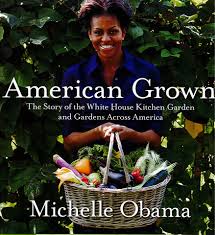
Michelle ObamaPointing out the letters with her finger, Zuki gradually made out the title of the book and smiled. On the cover, Mrs Obama held a basket full of vegetables in all the colours of the rainbow. Even though Zuki did not recognise most of the vegetables, the picture made her mouth water. Especially the cucumber. In summer, Ms Murray often made cucumber sandwiches for her tea and always shared them with Zuki.

Inside the book, Zuki found many more photographs of Mrs Obama, surrounded by children, working in a garden, all busy with wheelbarrows and spades and rakes, then proudly showing off their vegetables in front of the camera. The people in the book appeared so relaxed and happy.

Zuki hadn’t known happiness since her mother’s death. Although it was difficult to admit, deep down inside she knew that her father was a drunk, her brother a chancer, and that her mother died because her father ordered her to visit a witchdoctor when she discovered lumps in her breast, instead of taking her to a clinic. But Zuki preferred not to dwell on things beyond her control. She was grateful for a roof over her head and didn’t mind giving most of her earnings to her father, just as long as he left her enough to feed them all. Even if what they could afford was mostly umngqusho or rice.

In one of the photographs, Mrs Obama was crouching next to a patch of plants Zuki did not recognise. The small-print text next to the picture looked daunting. At the top of the page, spelling the words carefully to herself, Zuki could make out a caption: “How Times Have Changed”.

In her dreams that night Zuki was in a garden and suddenly found herself face to face with the First Lady who held out to her a funny-shaped, purple vegetable. ‘Do you know what this is?’ Mrs Obama asked her. Zuki had to shake her head.

Waking up she felt her stomach grumble. Her dream made her feel ashamed. She hid Mrs Obama’s book under her sofa.

At work that day, Ms Murray was surprised to find Zuki paging through the commemorative U.S. election special issue of Time magazine. Ms Murray had not liked the idea of Zuki being torn out of school to work for her, but understood the situation and was glad that there had been at least something she could do for the family when her mother passed away. Zuki had never complained or indicated that she missed school, so it somehow surprised Ms Murray to see her looking so intently at the magazine in front of her, pointing, and mouthing the letters which stood to attention before her nail. She was so absorbed that in answer to Ms Murray’s hello she jumped up from her chair, spilling the remains of her tea over the magazine.

‘I didn’t mean to scare you,’ Ms Murray said and turned on the kettle.

Apologising, Zuki started wiping off her tea from the full-spread picture of the American First Family.

‘Don’t worry,’ her employer assured her. ‘I’m finished with it. You are welcome to have it when it’s dry.’

Zuki hesitated.

‘Are you happy that Obama was re-elected?’ Ms Murray asked unexpectedly. They had never talked politics before.

‘I know very little about –’ Zuki paused.

‘But you are interested to find out, I see.’

‘I’m not good at – ’

‘Reading?’ Ms Murray probed and Zuki nodded tentatively.

‘But you seem eager to?’

Zuki remembered the book at home and nodded again.

‘You know, I could help you,’ Ms Murray said. ‘Would you like that?’ she added carefully.

Zuki raised her eyes. In them Ms Murray found her answer.

In the afternoon, still glowing from the offer, Zuki went outside with a cool drink for Ms Murray’s gardener.

‘Do you mind if I take some of these home?’ she asked, pointing at some plants which resembled the ones she remembered from Mrs Obama’s book.

Alone on her sofa late that night, Zuki opened Mrs Obama’s garden book and held the thyme and rosemary twigs close to her nose. She smelled change in the palm of her hand.

***

Originally published as “Mevrou Obama se tuin” in By on 21 December 2013.

Review: Synapse by Antjie Krog

SynapseReading Antjie Krog’s latest volume of poetry translated into English, Synapse (Mede-wete in Afrikaans), I was faced with an old personal dilemma: How much hard work is too much in order to reach that moment where meaning and aesthetic pleasure reveal themselves to you as a poetry reader? I don’t have an adequate answer. Perhaps everyone’s threshold is different anyway. In the end all you have is your very individual frame of reference, as a friend recently reminded me.

In any poetry volume you will find poems which will immediately speak to you. Others will require a specific key to unlock a feeling of appreciation. Rereading, research, or exploration of context will eventually reward your effort. Some poems will forever remain inaccessible no matter the amount of goodwill you put in. And then there will be those which will simply leave you cold. The poems in Synapse fit into all these categories.

The volume is divided into two parts: The Yard and Four Efforts in Linguistic Synapse Tracing. The first part opens with a series of epigraphs which are followed by thirteen poems, all focused on the images of the yard and the farm. These I find the strongest and most captivating in the book. In the epigraphs we are introduced to spaces in which the land and its ownership take centre stage and gender roles are clearly defined. The poems speak of the death of a patriarch, familial roots which reach into a troubled past, grief, guilt, race relations, and the ancient questions of owning and belonging.

As the poem 11. fossilised tree trunk makes clear, everything is connected, embedded, echoed throughout history. And yet, everything changes: “after all the years we gurgle (the only outlasting ones) / burdened with the dying light and bloodsick with heritage / : the new ones prepare to enter the yard” (13. old yard). At the heart of one’s relationship with the land are beauty and language: “places that could always snap my skeleton into language / coil me into voices bore into my entrails / expose a certain wholeness of belonging as my deepest tongue / tear chorales and something like discord from my brain” (6. live the myth).

This is the kind of poetry that leaves one gasping for air, which opens up new spaces in one’s understanding and feeling about the past and everyday reality in this country.

The Yard continues with poems which grapple with morality and reconciliation. The idea of interconnectedness is challenged in hold your ear to the tear in the skin of my country where already the format of the poem signals separate spheres of understanding the concept of forgiveness. The words of the speaker of the first section, Cynthia Ngewu, who testified in front of the Truth and Reconciliation Commission about the murder of her son, one of the Guguletu Seven, cascade onto the page like a waterfall. The neat couplets which follow represent an ordered attempt to understand the motives and worldviews of the officer who was involved in the killing. In the end, we are told, “it was futile to try to weave interconnectedness into / the concrete bunker that lives inside Mr Barnard’s whiteness”.

The bleakness of moving beyond such divisions is captured in miracle where South Africa’s relatively peaceful liberation is juxtaposed with present-day, all-consuming greed and violence: “we have become the prey of ourselves caught up / in ethnic avarice and total incapacity for vision”.

More intimate poems about ageing, memory, grand-motherhood, domesticity, or the I-you constellation of lovers reveal the wonders of the world along deeper philosophical questions about our capabilities and responsibilities. The tone ranges from sombre to light-hearted. Krog is one of the few poets out there who can smuggle Skype, wifi, the Internet and memory sticks into poetry and make them look as if they almost belonged. Also, when she swears, she makes it count.

The poem convivium astounds with its breadth: “what use my caress in the breath-earthed night if a centre- / less universe opens space in the nonexistent for dark / matter to overpower a few broken beads of light?” The poem, like the human body at the core of its universe, “tuneforks such abundance”.

Apart from a handful exceptions, especially the Lament on the death of Mandela, the latter part of the volume, specifically the obfuscated Four Efforts in Linguistic Synapse Tracing left me baffled. The tightness and clarity of the preceding poems dissolved in musings where it became more and more difficult to follow the poet on her journey. The academic in me insisted I persevere and come to grips with the pieces, but the Sunday morning reader just wanted to return to the earlier poems in the collection or open another book. The Sunday morning reader won.

Synapse
by Antjie Krog
translated by Karen Press
Human & Rousseau, 2014

A ‘butchered’ version of this review appeared in the Cape Times on 19 December 2014, p. 12.