Category Archives: What I’ve Read

Review: There’s Always Tomorrow by Abner Nyamende

theres-always-tomorrowThe overwhelming impression I had while reading Abner Nyamende’s There’s always tomorrow was that the novel had not been edited properly, if at all. It began with the first page, where the word “darkness” features six times without apparent reason. And the unnecessary repetitions are only the tip of the iceberg. After finishing, out of curiosity I looked up Partridge, the publishing house, and was informed that, although backed by a giant international trade publisher, the company provides only self-publishing services to their authors. Editing seems to be part of the professional packages on offer, but I cannot imagine that it was employed in this particular case. In this regard I was appalled at the quality of the final product, and it is a pity, because the book has an important story to tell. If the author did pay for editing of any kind, he was cheated…

Continue reading: LitNet

Review: Travels with My Father – An Autobiographical Novel by Karen Jennings

travelsTravelling in India, Karen Jennings visits an art gallery where “holograms of rare gold artefacts line the wall. A notice declares that precious items might be stolen and so holograms are the next best thing. They are fuzzy, unclear. It is like looking at an object at the bottom of a dirty pond.” It is a striking image that made me think of writing an autobiographical novel or a memoir. In the hands of a mediocre writer, recollections and artefacts can become like these blurred holograms. But Karen Jennings is not a mediocre writer.

Travels with My Father is a deeply engaging book in which Jennings attempts to come to grips with the death of her father and the memories and records she has of his life and their relationship. Anyone who has experienced the loss of a loved one knows what a merciless and curious creature grief can be. Jennings’s father died of cancer, leaving behind a wife and two daughters. Soon after the father’s death, the mother decides to sell the “big house” they lived in and Jennings falls in love with Juliano. The book describes the processes involved in these endings and beginnings the family tries to navigate in the wake of the tragedy.

There is anger and silence, depression and incredulity. These are not uncommon reactions, but every story of grief is intimate and individual, too. Jennings delves into her family history and explores the many journeys that define her own life and the lives of her relatives, some of whom are larger than life characters.

During a visit in Tasmania where her uncle and aunt live, she feels like “a prisoner serving my time.” She plans her own death. Her family surprises her with a weekend away. Together they visit Port Arthur, a former convict settlement, a place which had been her father’s favourite when he’d explored the Tasman Peninsula years earlier. Jennings embeds her own struggles with depression and isolation into the story of the settlement and the mental illnesses convicts suffered during imprisonment. At the same time she weaves family tales of addiction, abuse, and ghost haunting into the narrative.

Trying to understand her experiences, she makes fascinating, often unexpected, links between the various stories. And while she enquires into the private with a fine brush, she paints a much larger picture. In 1982, her father, who used to be teacher, played the role of Captain von Trapp in an adaptation of The Sound of Music and received a certificate for the performance on the day Jennings was born. Years later, sitting in the school hall where the musical had been staged, she remembers a man “in a polyester green suit, smelling of soap and armpits. A church-going man who touched girls, who stole, who was a bigot. A man who hated my father.” Her father dared to stand up to this man who was his superior, but was professionally crushed as a result. He later wrote a poem about his retirement: “After 35 years / What I need is / The screaming ecstasy of silence.” Jennings travels to Mondsee in Austria to follow in the footsteps of the musical family and she meditates on the disappointment we feel “in our parents … That they had to live a life of smallness.”

Her father did not wish for a funeral or a memorial: “He wanted to be cremated, scattered, and then forgotten.” He made these instructions in writing, but they were found long after his death and a service at which hundreds of people paid their respects. One of them was a pupil her father had taught in the 1970s. He sends her a letter chronicling how her father had changed his life for the better. The memories of others and their gestures of gratitude make her realise that her “pity is meaningless” and her “bitterness misplaced”.

She visits the hospital where her father died and speaks to a nurse who tells her that “tidying of the body is her favourite part of the job.” She sees it as “a gift” that she can “give to the people who are left behind.” Seeing her deceased husband, Jennings’s mother is reminded of Lenin and their visit to his mausoleum in Moscow. Jennings relates the story of Lenin’s embalming and how viewing the body had been a “highlight of the trip” for her father. Travels with My Father becomes an embalming of sorts.

Jennings remembers how she taught a class at her father’s school after his retirement. A student of his asks her to tell them stories like her father used to. She refuses and gets nowhere with the teaching. When she comes home frustrated, her father reprimands her: “You should have told them a story. I always told them about my travels through other countries. At least that way they learnt something about life outside of their own. Most of them have very small lives, you know, and no promise of them getting bigger.”

Storytelling has that potential. “We are all guilty of … dismantling the past, trying to create something new, something we consider to be an improvement”, she writes. “Even in this book there are memories I have created from the rubble of others.” Jennings’s stories in Travels with My Father are not fuzzy holograms, but vivid art objects she conjures up in the reader’s mind.

Travels with My Father: An Autobiographical Novel

by Karen Jennings

Holland Park Press, 2016

Review first published in the Cape Times, 11 November 2016.

Book marks: The Leonids, The Bostik Book of Unbelievable Beasties, Cats

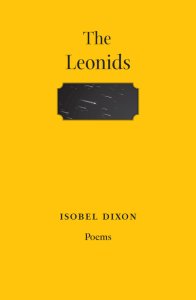
the-leonidsThe Leonids

by Isobel Dixon

Mariscat Press, 2016


Isobel Dixon is one of South Africa’s finest poets. This year she published a collection of poetry, Bearings, and The Leonids, a pamphlet containing seventeen poems devoted to her mother who died last year. The exquisite pamphlet is a tribute to a beloved mother and to the family she nurtured around her. It opens with the vivid, sensuous impressions of “Notes Towards Nasturtiums”. The poems contain striking images of everyday life, memories of love and kindness, all infused with the pain of loss. Dixon takes us into the heart of her family home, celebrates the closeness she shares with her sisters, recalls her parents and evokes the intimate moments when they both passed away. Reading Dixon you are constantly reminded of the power and beauty of language, how it can blossom with the generosity of simple, gorgeous kappertjies. How it can preserve that which is most precious, long after it is gone.

lauren-beukes-read-her-latest-book-bostik-book-unb-57The Bostik Book of Unbelievable Beasties

by Lauren Beukes

Bostik South Africa, 2016


One of the greatest gifts you can give to a child is to nourish their imagination. The Bostik Book of Unbelievable Beasties contains twenty “ridiculous rhymes” about creatures living in the land of Unbelievia. Children from around South Africa were asked to illustrate the rhymes written by award-winning author Lauren Beukes. The best twenty drawings were chosen for this delightful book. Kids will love the funky texts about The Oogle, The Gulpsome Squidge, or The Vampire Bunny who “might give you a fright if you spot this critter stalking your garden at night. It’s got s fluffy tail and fangs and wears a red cap. But don’t be afraid, don’t try to escape! You see, this bunny vamp only sucks carrot juice. Except on its birthday, when it slurps chocolate mousse.” The awesome illustrations by their peers will inspire many more flights of the imagination.

Download here for free: The Bostik Book of Unbelievable Beasties

jane-bown-catsCats

by Jane Bown

Guardian Books/Faber & Faber, 2016


Sharing a life with felines is fascinating. Jane Bown, the Observer photographer who died in 2014, is best remembered for her iconic portraits. This collection of her cat photographs was compiled by Robin Christian who was her researcher and catalogued her archive. Cats includes seventy-six photographs Bown took over five decades, ranging from Jean Cocteau’s portrait with his cat Madeline to shots of the many cats in Bown’s own life. Who can resist Queenie’s trusting face or the impertinence of the three furry beauties on the kitchen counter of Bown’s Hampshire home? She was clearly in tune with the elusive nature of her feline subjects. Cats is a book to melt any cat person’s heart. The only thing which disturbed me about it is a quote by Bown: “Once you’ve owned a cat you are hooked forever.” You cannot own a cat. But they do hook one for life.

First published in the Cape Times, 11 and 18 November 2016.

Stories with strawberry jam and clotted cream

In the night of 9 February 2016, on the twelfth anniversary of my first arrival in Cape Town, I dreamt that I was in a hospital. In my dream, André died there. A few days later I came to pick up his belongings, but no one was willing to assist me. They shoved me around the place, ignoring my distress. I felt desperate, lost. I wanted to take care of his possessions but nobody was keen to help me. And then out of the blue someone offered support. I woke up, relieved.

I signed the contract for my memoir about the relationship I had with André, The Fifth Mrs Brink, that morning. Afterwards, I returned home to find that our grandfather clock had stopped working without any apparent reason. I got it going again, but both the dream and the silent clock disturbed me.

In the late afternoon, on my way to a book launch, I had a terrible car accident in which I killed our beloved Brink Mobil, the ancient green Mercedes André and I used to drive. My friends told me later that I did not kill the Old Lady, that she died protecting me. I couldn’t get rid of the feeling that having the accident on the same day I signed the contract was a sign, signalling some kind of closure or an impending massacre. I hoped for the former, but had no way of knowing which it would be.

Three weeks later, I walked across the city to pick up a rental car provided by my insurance company. Passing the accident spot on an overhead bridge, I could still see the rust-red stains where the Brink Mobil had bled to death.

I walked past the funeral parlour where they took André after his death – he did not die in a hospital but on board of an aeroplane flying over Brazzaville.

I also passed a big red building in Woodstock which caught my eye because it looked quite new and impressive. I considered getting a coffee from a place on its ground floor.

Woodstock is where long ago I once appeared on a friend’s doorstep in one of her dreams. She told me the next day that I’d looked lost and just stood there, clutching a book to my chest. The same friend works in the big red building now.

I finished the first draft of The Fifth Mrs Brink in July. In September, I asked for the rights to my book back. I had to leave; I had no way of staying. If I wanted to truly take care of my and André’s stories, I had to find a home for them elsewhere. I submitted my memoir to another publishing house. They made me an offer. My new publisher gave me a book she thought might interest me: Second-Hand Time by Svetlana Alexievich, an account of how people survive, and make sense of, tyranny and massacres – by weaving tapestries of stories to keep us safe at night. The words of Second-Hand Time live in my bones.

In the evening of the 1st of November, someone asked me online which great writer I would like to have tea with. There is only one: The One. He liked his tea white with two sugars. And when he wanted to spoil me, he baked scones for us for breakfast.
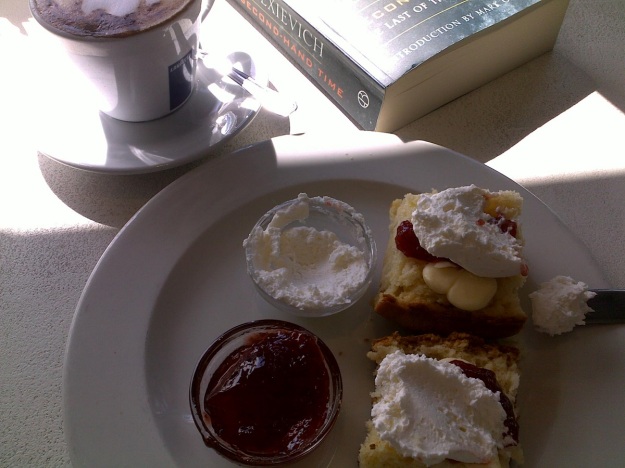
scone

I don’t know what I dreamt in the night of the 1st of November, but I know I slept through it. That in itself is a gift, a good omen. Uninterrupted sleep had become rare in the past few months, although I am mastering it again. In the morning of the 2nd, I had a scone at my favourite coffee shop. I drove to Woodstock in the little car that a friend lent me after my accident. I parked underneath the big red building, found my way upstairs to the 4th floor where kind people were waiting.

It is perhaps fitting that the publication of The Fifth Mrs Brink will be delayed by a few months next year to coincide with the 30th anniversary of the first time I became a refugee when my family escaped the tyranny of Communist Poland and sought asylum in Austria.

Arriving on the doorstep of Jonathan Ball Publishers, I felt like a refugee who had sailed through treacherous waters in a derelict dinghy and found her way to the shores of a safe haven. With only my ancient fountain pen in the bag I carried, I was seeking asylum again.

Massacres and tyranny can be intimate, private, go nearly unnoticed.

I am not the only one who survives by telling stories.

My stories are safe now.*

*Sadly, they actually weren’t. Almost two years later, I know beyond a shadow of a doubt that as long as greed, and not integrity, governs people’s decisions, your stories will never be safe with them. But my stories will always be mine to tell and I intend to continue telling them, with integrity… (18 September 2018).

“This is what matters: to say ‘no’ in the face of the certitudes of power.” (André Brink)

“Perhaps all one can really hope for, all I am entitled to, is no more than this: to write it down. To report what I know. So that it will not be possible for any man ever to say again: I knew nothing about it.” (André Brink)

Book review: Three Plays – Dream of the Dog, The Girl in the Yellow Dress, The Imagined Land by Craig Higginson

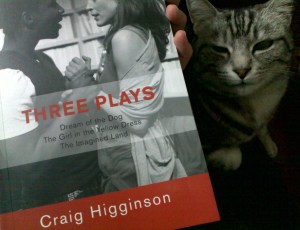
three-plays-and-glinkaReading a play is like listening to an opera on CD. Many would argue that both are best experienced on stage. There is nothing like a live performance, I agree. Yet, no matter how much I love going to the theatre or opera house, reading a play or listening to opera in the comfort of my own home can also be special.
I have never seen any of Craig Higginson’s plays performed live, but I have read most of them, a few several times. As texts, they are deeply satisfying and engage the reader on intellectual and aesthetic levels while giving voice to intimate, troubled spaces of the soul as well as addressing profound socio-political issues. Earlier this year, Wits University Press published three of Higginson’s most acclaimed plays – Dream of the Dog, The Girl in the Yellow Dress, The Imagined Land – in one volume, with a foreword by Jeremy Herrin and an incisive introduction by Michael Titlestad. Herrin speaks of Higginson’s “delicate psychology” in the “theatrical landscape, a place where the contradictions and messiness of contemporary life hold themselves up for inspection.” Titlestad points out “the plays’ common concern with the possibilities and limits of representation… Collectively they refract what has been at stake in this country’s transition, and they do so with a subtlety and insight that will ensure their longevity.” Despite their complexity, the plays are readily accessible.

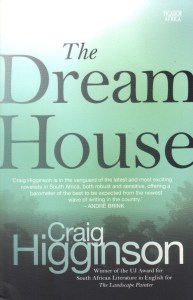
dream-houseDream of the Dog was first written and appeared as a local radio play in 2006, and was rewritten and staged the following year in South Africa before transferring overseas. Its action takes place in KwaZulu-Natal. An aging couple sell their farm to developers. The man in charge of the project turns out to be the son of one of their former workers. As he returns to the place, he brings with him long-supressed memories of violence and death on the farm. The play inspired Higginson’s latest novel, The Dream House (2015), which won the prestigious University of Johannesburg Prize for South African Writing in English this year.
In The Girl in the Yellow Dress, a British woman living in Paris gives English lessons to a Frenchman of African origin. As the young people discuss gramma constructions, their carefully constructed personal stories surface and collide. The play was first performed in Grahamstown in 2010 before conquering stages around the world.

The most recent play in the collection, The Imagined Land, premiered locally last year. It is a stunning work in which a young black scholar decides to write the biography of an elderly white literary icon and simultaneously begins a relationship with the woman’s daughter. The unreliability of memory and the archive, guilt and desire complicate the highly charged action, set in present-day Johannesburg: “Not that I believe a narrative can represent a life. Imagined lands – that is all we are, all we have access to.”

There are no easy resolutions, but grace and redemption seem possible. In Herrin’s words: Higginson’s “characters invariably turn towards the light. They have an inclination for the truth, even if reconciliation might still be beyond them.”


Three Plays: Dream of the Dog, The Girl in the Yellow Dress, The Imagined Land

by Craig Higginson

Wits University Press, 2016

Review first published in the Cape Times, 28 October 2016.

Blue light at Temenos

light

How often can you shatter and remain whole?

Death. Loss. Grief.

House break-in.

Cancer scare.

Institutions breaking you down by sheer incompetence and lack of understanding.

Death, again. And again.

Car accident.

And then…         . A void, a negation of time and space, of reality. How do you describe something or someone whom you tell, repeatedly: ‘I can’t breathe. I am in unbearable pain. I feel small. I am fragile. Vulnerable. Skinless. Please do not hurt me…’ And they violate your body and soul regardless? I do not know. Perhaps some things cannot be described. Sometimes words are too good to contain this, this…          ? blue-light-too

I care about words.

Another shattering.

Another loss.

What remains are the pieces. And a life-long illness. Deal with it, Karina.

turn-withinIn a corner, with no way out, when everything seems lost, broken, incomprehensible, a tiny light might save you. Holding on to that light is not an act of bravery. It is an act of compassion. I survive because I have kind people in my life. Perhaps recognising and reaching out for that kindness is courage? I do not know. I know that the sharing, the true care of friendship, have saved me from utter despair. The women in my life. I repeat: The women in my life. I do not know what I would have done without You. I salute and cherish you!

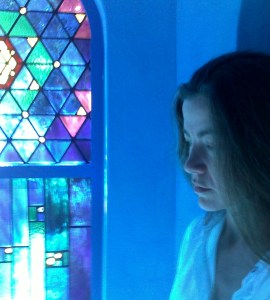
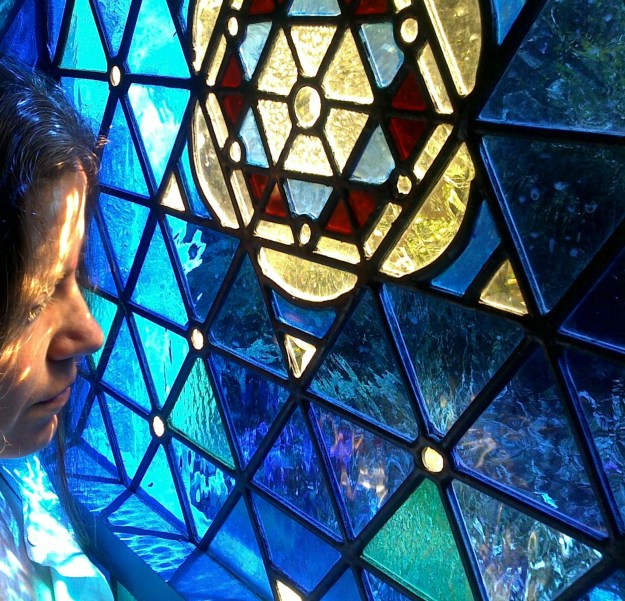
blue-lightThe first time I travelled to Temenos in McGregor, the retreat was recommended to me by my friend Margie. She knew what I was going through and said that the beauty and silence would be good for me. I fell in love with the place. One-and-a-half years later I went back, for the beauty and the silence. It is a silence punctuated by the outrageous screams of peacocks and the reluctant striking of the church tower clock. People smile, from the distance.

breakfast-at-temenos  sirloin  bemind

You can do things, or just be. Read. Sleep. Eat well. There is a bric-a-brac shop in the middle of McGregor which sells the best olives in the country. Tebaldi’s, the restaurant at Temenos, serves delicious meals. There are donkeys. Wine estates. Dusty heat. Tarot card readers and aroma therapists. Kindness, in the place and its people. The veld. And lazy sunsets which make you believe in tomorrow. It is all right to go to bed before 8pm. To read next to the pool for hours. To start brewing coffee at 5am and drink it on the stoep of your cottage while watching the light yawn and rise in the magical garden around you. Meditate, or just sit doing nothing at Temore, The Inner Temple of the Heart, with its soothing blue light.

reading-next-to-the-pool  falling

Wherever I go, I find coins. I call them my lucky coins. In South Africa, usually, 5c or 20c; 50c if I am really lucky. When I arrived in the gardens of Temenos, I found a R2-coin next to my car. Then, a few hours later, another R2-coin next to the pool. And the next day, while I was telling this story to my friend Helen (our stays at Temenos overlapped for one day and one night) during our sunset walk in the veld – in that very moment – I found another one next to our path. I want to believe that good things are coming. That despite the insanity of reality surrounding us in these troubled times, the kindness of people will prevail.

helen-in-the-veld-at-sunset

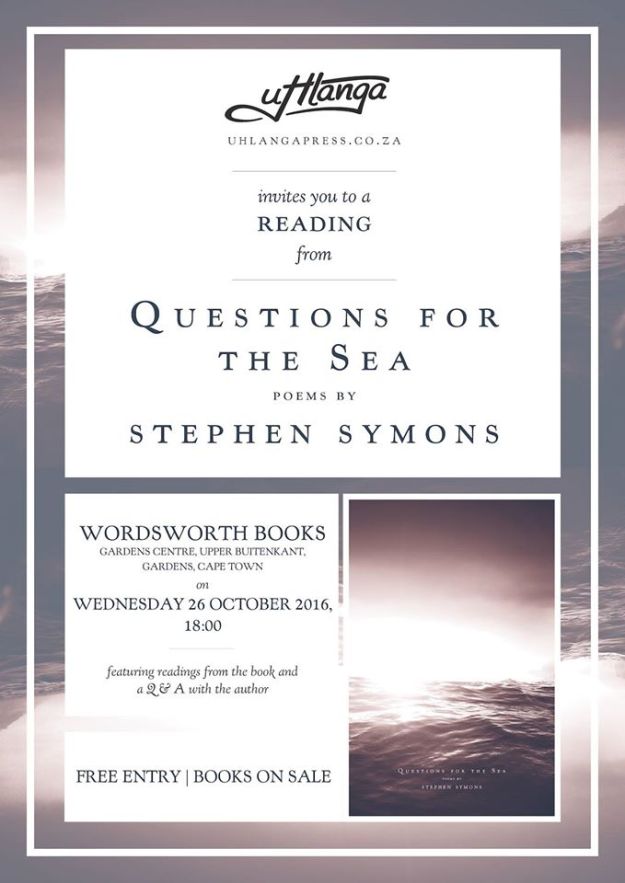
questions-from-the-seaDuring the last McGregor Poetry Festival a poem was inscribed on the walls of Temenos, my favourite one from Stephen Symon’s stunning debut collection Questions for the Sea. What synchronicity to find it there when I was returning home last night for the Q&A at Stephen’s reading/launch at Wordsworth Books in Gardens. On the way to the Gardens Centre, I stopped at The Book Lounge to pick up a book I’d ordered earlier, only to find out about the violence in the streets outside the bookshop just hours before. Louanne and Werner spoke about lost children and fear. They cancelled the event scheduled at the bookshop for that evening. The book I was buying was a gift for my friend Louisa who recently shared the remarkable Falling by Elizabeth Jane Howard with me. I started reading it at Temenos. Uncanny is not the word… There is a collective wisdom of women out there, to tap into it, to allow it to nourish and heal you, that is what I am reaching out to.
with-resident-catI arrived at Wordsworth Books rattled, but there were good friends, cheese and wine, and poetry – subtle, soul-restoring poetry. Beauty, like light, can save you. How precious that it can be contained in words. Thank you, Stephen and Nick, for caring about words.

My words are safe. I find strength in the beauty of peahens. I love my Friends. I can’t wait to share my McGregor olives with them.

peahens

And I am very curious what R6 of luck will gift me.

coffee-in-bed

Book review: Questions for the Sea by Stephen Symons

questions-for-the-seaQuestions for the Sea, the debut collection by Cape Town-based poet and graphic designer Stephen Symons is the latest exquisite offering from the independent local publisher, uHlanga. The sea, questions, light and poetry: an irresistible combination.
Divided in six parts, Questions for the Sea opens with poems about death and memory: “the ashes of dreams, / too fine for remembering // settle over a moonlit bay / and shimmer / into forgetting.” A surfer drowns and death comes to him “in a whorl / of cobalt and white.” A lover recalls the map of a beloved body: “And here I lie, / closer to fifty, / still lost within its darkest territories.” A couple visits a dusty dry dorp: “All this place comprehends is a vertical sun and a deficiency of clouds. Every house burns at the stake and every surface has long forgotten the taste of dew.”

Symons captures life’s instances in words which evoke all senses. The poetry is subtle, seductive, soothing – even when it tackles pain and loss. Or war, a tough theme to handle in any art form. The second part of the collection comprises of poems about conscription. “Call Up, February 1990” speaks about the biblical Abraham and Isaac, ending with these quietly shattering lines: “There, just the firm grip of sons’ hands / and the impatience of engines.” In “Wordless (Township, 1990)”, a man is “shot through in the dark, just twenty kays from my childhood”. In “Letter Home”, young men are “cleaning rifles, / or licking lies into envelopes.” A visit to the famous battlefield of Spioenkop in the poem by the same title ends with “light splintered / and still twisted, deep into the flesh / of this country’s history.”

The third and fourth parts of Questions for the Sea return to the intimacy of loss and love. Adultery is a theme: “the circumference of his lie / weighing down his finger” or “Over a stove / untruths are being told by a wife / of an afternoon spent / with a friend.” As is parenthood in poems like “Emma”, “Sleeping Son”, or “Fathers Are Mostly Absent”.

The penultimate section of the volume focuses on place. In meticulously crafted stanzas Symons travels across the Cape Peninsula and beyond, illuminating our longings for beauty and meaning.

The stunning titular “Questions for the Sea” forms the last part of the collection and includes snippets of seaside images and human existence as traced through the hours of a day and a night. In “16h30”, we witness the beach “stunned / by a day’s worth of heat – ”. Just before midnight, the poet asks: “Do you feel the ceaseless rubbing / of bone and timber / that lies wrecked / beneath your skin, // held under by a black tonnage / beyond maps / and human claim?” And finally at midday, we are left with the question: “How are these words / more or less / than prayer?” I do not know, but they are.

Questions for the Sea

by Stephen Symons

uHlanga, 2016

Review first published in the Cape Times, 21 October 2016.

invite-questions-for-the-sea

One day at The Star Soweto Literary Festival

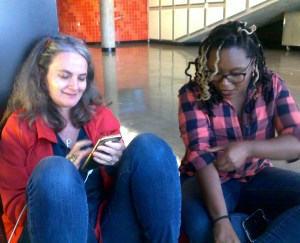
Pam and BontleCamaraderie. That is the word which comes to mind when I think back to the one day I spent at the fabulous Soweto Theatre, attending the inaugural The Star Soweto Literary Festival. It was quite a whirlwind affair. A day of talks, improvisation, laughter and tears. I invited myself. The moment I heard that the festival was happening – and it was organised in a shockingly short amount of time – I volunteered to speak, chair sessions, whatever, just to be there. I felt it in my bones that it would be special, and I wanted to be part of it.
I was not disappointed.

Darryl Earl David, the founder of the three-day festival which took place last weekend, first announced his intentions at the end of June: “To create a truly non-racial literary festival in a black township, something that has never ever been done before. A start has been made in Khayelitsha. But that was more a book fair, not a literary festival. I have always maintained Soweto looms large in the literary imagination of South Africa … Soweto is the cradle of black literature. It was home to the canon of black literature in South Africa – Mongane Wally Serote, Sipho Sephamla Njabulo Ndebele, Miriam Tlali, Ellen Kuzwayo and Benedict Vilakazi.”

Pam and MohaleThe day I was there, Saturday, the presence of the spirits of these literary giants was palpable. The attempt to establish “a truly non-racial” space for writers, artists and the public to engage with one another’s ideas was a great success. I attended with a dear friend, Pamela Power, the author of Ms Conception and the upcoming psychological thriller, Things Unseen. We came away inspired, glowing, and moved to the core.
Continue reading: LitNet

with Pam and Kalim

Book review: Writing What We Like: A New Generation Speaks, edited by Yolisa Qunta

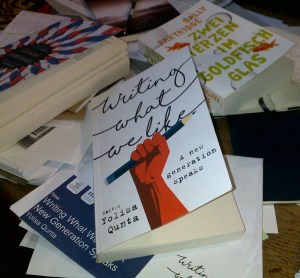
Writing What We LikeFor a white person, reading Writing What We Like: A New Generation Speaks might feel like gatecrashing a party where some ugly truths will be revealed about you. Provocative and penetrating, Writing What We Like is a difficult book to review when you happen to be white, because one feels that one should not be talking at all, but listening only. One is torn between possible accusations of one’s own “intellectual arrogance” and the need for dialogue. And yet, a way to disrupt entrenched ways of thinking and to establish connections across barriers imposed on us by a turbulent and harrowing history is to try to imagine ourselves into the skins of others. That is where creativity and empathy begin – in writing, reading and interpretation – where we cease to view ourselves in any other categories but human. The ultimate goal is understanding, coupled with compassion. Everything else will follow from there.
If there ever was a timely book, Writing What We Like is definitely it. It is the brain child of Yolisa Qunta, who over the period of the past two years interviewed and collected essays written by her fellow young black South Africans for this remarkable publication. Only a few of the pieces first appeared elsewhere.

Qunta was concerned about the “dearth of books” published by her black peers and felt “duty-bound to record” their lived experience of transformation. She hopes the book will “help to shape the debates currently taking place in the workplaces and the bars, and over dinner tables ekasi and in suburbs across the country”.

Twenty-four contributors deliver twenty-eight pieces ranging in topics from hip hop and Rhodes Must Fall to Nkandla and BDSM. Unfortunately no biographical notes about the authors were included in the collection.

Continue reading: LitNet

Reader Confessions

BOOK BLOKE (@bloke_book) started this ‘Reader Confessions’ and I was tagged by Andy Martin:

1. Have you ever damaged a book?

Never on purpose. Some people consider this a crime, but I enjoy breaking the spines of books; I believe it’s the only way to make them feel read. I am highly suspicious of people who don’t.

2. Have you ever damaged a borrowed book?

Not that I recall. And I never break the spines of other people’s books, even if I suffer while reading them gently without ever properly opening and consuming them as they should be. God, I sound awful, don’t I?

3. How long does it take you to read a book?

Depends on the book. I have been taking my time with Don Quixote for about two years now. I do not want it to end, so it is a few pages at a time every few days or even weeks. I have been savouring Dracula for a few weeks now. Brilliant. I also took my time with Virginia Woolf’s diaries. A Jack Reacher doesn’t last long despite its lengths. Most other books two to four days.

4. Books you haven’t finished?

Recipes for Love and Murder. No comment. (I might lose a Twitter follower, or two, with this answer.)

5. Hyped/Popular books you didn’t like?

I usually stay away from them, and if I do pick one up, it has to come highly recommended by someone I trust as a reader.

6. Is there a book you wouldn’t tell anyone you were reading?

No. I am never ashamed of reading books.

7. How many books do you own?

Close to 20 000, still counting. I am the custodian of André’s magnificent collection.

8. Are you a fast/slow reader?

Fast, unless slow is required.

9. Do you like to buddy read?

I am not sure I want to know what this means…

10. Do you read better in your head/out loud?

Only in my head. I love being read to, something I miss terribly from the time I had with André.

11. If you were only allowed to own one book, what would it be and why?

An Instant in the Wind by my late husband, André Brink. I have re-read it several times and every time it only gets better. It would always remind me of the love of my life.

Well, that’s it and now I have to tag some people so here goes.
I tag: Sally Partridge, Melissa Volker, Pamela Power.

Books