 Reading dead authors is not unusual, but opening the late Paul Kalanithi’s When Breath Becomes Air feels different. He wrote it knowing he was dying and it was published by his widow a year after his death. The immediacy of the knowledge is uncannily palpable. For me, the experience was even more intimate on two different levels. Firstly, I also had a cancer scare recently and Kalanithi was my age when he died. In retrospect, his memoir made me count my blessings, again, as I am healthy and have escaped with just a fright. Secondly, like me, as a young person he struggled to choose between two vocations: medicine and literature. Unlike me though, he chose medicine. But literary longings had never left him and when life became unbearable, like many of us he found some amount of solace in the written word.
The striking title of the book derives from lines of an Elizabethan sonnet: “You that seek what life is in death, / Now find it air that once was breath.” To contemplate it alone is already an experience in itself. In the forward, we are told: “Be ready. Be seated. See what courage sounds like.” Can one ever be ready for death? I doubt it, especially not when at the age of thirty-six, with the most promising medical career ahead, you look at a CT scan of your lungs and become aware that they are riddled with tumours.
At this stage of his life, Paul is about to complete the decade-long training necessary for becoming a professor of neurosurgery. He is married to Lucy, also a doctor. Because their relationship is strained, he does not know at first how to break the dreadful news to her.
When Breath Becomes Air tells Paul’s story before and after the lethal verdict. We see his aspirations taking him to the heights of what is possible in his field. Every day he is confronted with illness, decay, and death – of others. He is constantly challenged to question what makes life meaningful. Some of the descriptions of his daily routines as a medical student and doctor are not for the faint-hearted. Even less so is the narrative of him becoming a patient. It is gut-wrenching to realise how the potential Paul had worked so hard to build will “go unrealised”. With searing honesty, he describes his attempts at making the most of the time left at his disposal and the ambition that drives him in the face of ultimate defeat. He writes how, paradoxically, the illness heals his marriage, and how he makes the courageous decision to become a father to a child who will most likely not remember him. Knowing that his words will outlive him, he writes the book.
When Breath Becomes Air is published with a beautiful epilogue by Lucy, “his wife and a witness”, who carries on with “love and gratitude alongside the terrible sorrow, the grief so heavy that at times I shiver and moan under the weight of it.”
by Paul Kalanithi
The Bodley Head, 2016
Review first published in the Cape Times, 22 April 2016.
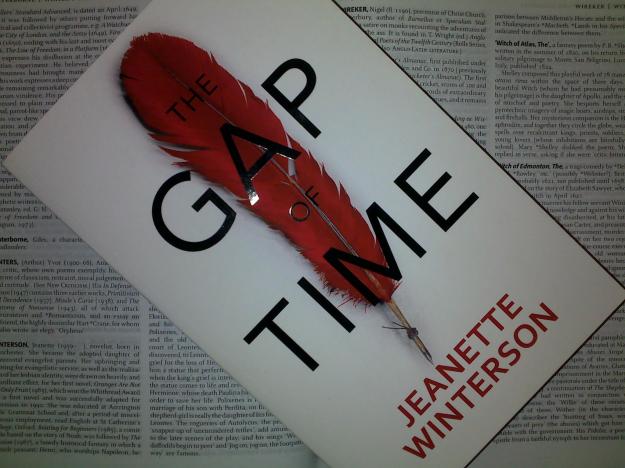 Jeanette Winterson is one of my favourite writers of fiction and non-fiction. Her recent memoir Why Be Happy When You Could Be Normal (2011) was a revelation. I was introduced to her work at university with the by now classic novel Oranges Are Not the Only Fruit (1985). Her Lighthousekeeping (2004) is one of the most moving love stories I have ever read. Among many texts, it echoes Virginia Woolf’s To the Lighthouse. The main character Silver reappears in other Winterson novels. As does the line: “Tell me a story.” Winterson is known for her retellings of myths and legends, her writing is rich in intertextuality. I loved her modern rendering of the Atlas myth, Weight (2005).
 Melissa de Villiers was born in Grahamstown and educated at Rhodes, but she is a citizen of the world. She lives in Singapore, travels widely, and often returns to South Africa. The nine stories in her debut The Chameleon House are informed by migrations. The concept of home is interrogated, as is contemporary South Africa and its difficult past, “old ways unextinguished and forever edging forward, smudging boundaries”. A woman inherits her grandfather’s weekend house and with it the question of ownership. Another is the victim of sly abuse. An illicit couple is caught up in a blackout. Lust and power mingle with loneliness, an “emptiness – desolate and cold – that would claim her should her hold on him flicker and fail.” Loyalties are tested when four friends sharing a house in London unwittingly harbour a traitor among them. This is powerful storytelling from a writer to watch.
 The feeling one is left with after reading Sandra Hill’s debut story collection Unsettled is reflected in the title of the book. Hill paints vivid portraits of what it means to be a woman in different places and times. It is a finely layered picture of the everyday and the unusual. The mother of one of the characters insists that one should read poetry “slowly, expectantly, the way you eat oysters”, as the “magic…comes after you swallow.” Although every story is a fully contained piece, read together, they acquire that magic of swallowing oysters. Saturated with local flavours, settings, history, Unsettled offers evocative, intimate glimpses of women’s lives – their dreams, desires, worries and regrets – many readers will find uncannily familiar, sometimes perhaps difficult to acknowledge: “Life can take us away from where we belong, but we don’t lose the longing for it… If we are lucky we get to make our way back.”
 It’s difficult to believe that this is only
 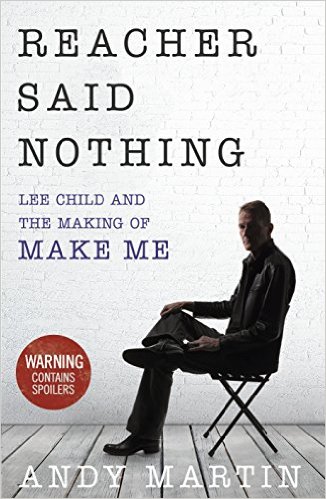 Many of my friends will know
  Despite my irredeemable addiction to Lee Child’s Jack Reacher series, I do not often turn to thrillers or crime fiction for entertainment. But Night School, the next Reacher adventure, is coming out only in September, and since the nights are getting longer, it is nice to have a few good stand-ins in the meantime. Locally, I really enjoyed the recently published Sweet Paradise by Joanne Hichens: tight plotting, great writing, a scary villainess, and a heroine with balls. It surprised me, and that is a quality I truly appreciate in genre fiction.
 Every now and then, a book comes along which changes your life. For me, Roberto Calasso’s The Art of the Publisher is one of them. But you don’t have to be – or, like me, want to become – a book publisher to find this gem an inspiration.
 Last year, I realised that I have a penchant for penguins with foreign names. Midyear, I was enchanted by Misha, the penguin who stars in Andrey Kurkov’s wonderful novel, Death and the Penguin (originally published in Russian in 2002). Towards the end of 2015, I fell in love with Juan Salvado, the protagonist of Tom Michell’s memoir, The Penguin Lessons.
 Karina Magdalena