 Lara Feigel is a cultural historian and a literary critic, combining her interests to write about the meeting point between life, literature and history. In her last two books, she looks at how people whose quintessential purpose in life is the search for beauty and meaning survived their antithesis: war. In her The Love-charms of Bombs: Restless Lives in the Second World War (2013), Feigel wrote about five authors who were based in wartime London, driving ambulances, fighting fires, being creative, and loving passionately while desperately trying to remain alive.
In her latest offering, The Bitter Taste of Victory: Life, Love and Art in the Ruins of the Reich, Feigel picks up where she left off in her previous book, at the end of the war, and introduces a new, larger cast of characters – writers, intellectuals and artists – who were sent by the Allies to defeated and occupied Germany to assist in denazification and rebuilding the nation they had been trying systematically to annihilate over the past few years.
Their idealistic mission is an opportunity like no other, placing cultural activities at the centre of the plans to reconstruct the country. For a brief moment in history “a new united Europe, underpinned by shared heritage that would allow nationalism to be replaced by a common consciousness of collective humanity” seems like a viable option for the continent’s future.
Germany is a wasteland. Poverty, hunger and despair rule. Survivors grapple with guilt. Exiled German writer Peter de Mendelssohn arrives to establish newspapers in the British zone. He notes that “new eyes” and “totally new words” are needed to describe the devastation.
The horrors perpetrated in the concentration camps come to the surface of the world’s consciousness, and with them questions of complicity, responsibility and justice. In the light of the revelations and the Germans’ lack of immediate repentance, the Allied artists and reporters sent to the country find it nearly impossible to “make sense of the postwar world” or to emphasise with the people they encounter.
Among them is the photographer and war correspondent Lee Miller. After a visit to Dachau, she photographs herself in Hitler’s bathtub. Like others, she is “troubled by the ordinariness of Nazi leaders.” German-born Hollywood star Marlene Dietrich, “in army uniform, low-voiced, funny and adoring” has to face the fact that her family members collaborated with the Nazis.
Eerily echoing our own, this is the time of the Nurnberg trials, the nuclear bomb, migration, displacement and rising tensions between the other ideologies taking hold of post-war Europe, resulting in the division which will most strikingly manifest in the Berlin Wall. A sense of failure and helplessness sets in. But Feigel ends her brilliant portrayal of this turbulent period with Austrian-born Jewish American filmmaker Billy Wilder who “was able to laugh off the bureaucratic absurdity of communism, the megalomaniac blindness of American imperialism, and the fascist conformity of the Germans by satirising them all in equal measure” and standing “defiantly on the side of life.”
The Bitter Taste of Victory: Life, Love and Art in the Ruins of the Reich
by Lara Feigel
Bloomsbury, 2016
Review first published in the Cape Times, 24 February 2017.
 Dene Smuts once said that “there are two approaches to opposition lawmaking work: making a noise and making a difference.” Throughout her courageous life she chose to make a difference. Smuts completed the manuscript of Patriots and Parasites: South Africa and the Struggle to Evade History shortly before her unexpected death in April last year. Her daughter Julia midwifed the project to completion.
 Camaraderie. That is the word which comes to mind when I think back to the one day I spent at the fabulous Soweto Theatre, attending the inaugural The Star Soweto Literary Festival. It was quite a whirlwind affair. A day of talks, improvisation, laughter and tears. I invited myself. The moment I heard that the festival was happening – and it was organised in a shockingly short amount of time – I volunteered to speak, chair sessions, whatever, just to be there. I felt it in my bones that it would be special, and I wanted to be part of it.
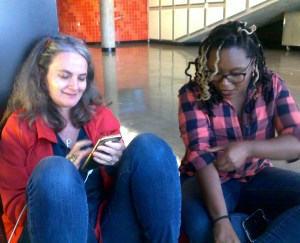 The day I was there, Saturday, the presence of the spirits of these literary giants was palpable. The attempt to establish “a truly non-racial” space for writers, artists and the public to engage with one another’s ideas was a great success. I attended with a dear friend, Pamela Power, the author of Ms Conception and the upcoming psychological thriller, Things Unseen. We came away inspired, glowing, and moved to the core.
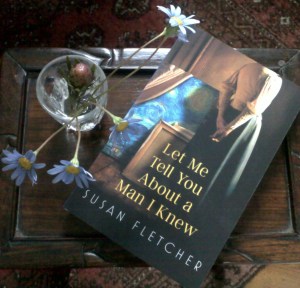 I welcome every Susan Fletcher novel with open arms. Let Me Tell You About a Man I Knew is her sixth. It completely delivers on the promise of its predecessors. Set in the Provencal town of Saint-Rémy where Vincent van Gogh spent a year of his life in an asylum and painted some of his most widely recognised works, the novel tells the story of a local woman whose life is disrupted by the arrival of the Dutch painter. Jeanne Trabuc is the wife of the asylum’s warden. In her fifties, a mother of three, she goes about her daily routines, remembering her adventurous youth and watching out for the mistral, “wind of change, of shallow sleep.”
 Throughout the years, few oeuvres have enriched my intellectual life as much as the works of the Welsh philosopher Mark Rowlands. At some stage, we are all confronted with the question of what makes life worthwhile, how to make the time we have on this planet meaningful. Unfortunately, not enough of us ask how to live in such a way as not only to enjoy the journey, but simultaneously do as little harm as possible to our fellow travellers, whether they be other humans, animals or the environment. We all muddle on. Rowlands does not claim to have the answers, but his attempts at approaching possible conclusions are fascinating to engage with.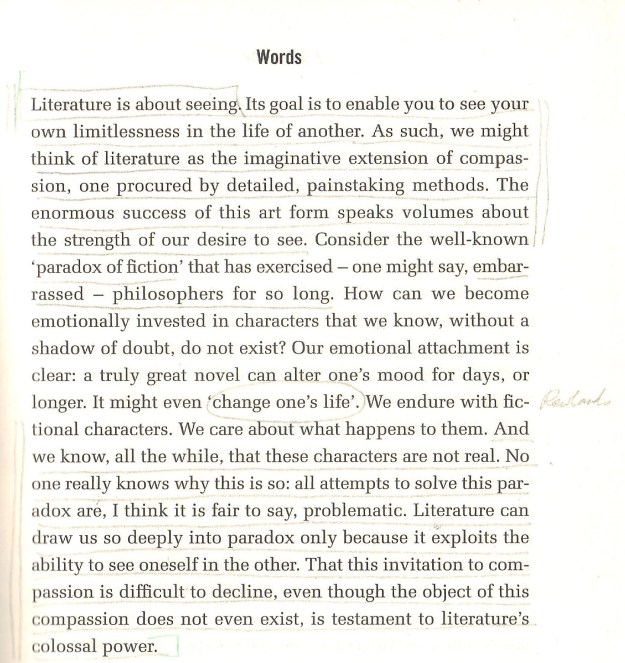
 It is December 1907 in Tsau, Bechuanaland, after the Herero and Namaqua genocide perpetrated by the Germans occupying German South-West Africa, today’s Namibia. The Herero couple Tjipuka and Ruhapo have survived “the scattering”, but lost nearly everything in the process. When we first encounter them, they are together, but terrifyingly estranged. Tjipuka traces her husband’s body, trying to remember all that she’d loved about it, but the memories are overshadowed by his distance and the blood and cruelty of lies which haunt them: “Being dead made a lot of things uncertain.”
 Sunday, 22 May, one of those glorious winter days in Cape Town: all light and revelation. It wasn’t even 9 am, but the queue in front of the Gardens Community Centre in Hatfield Street looked overwhelming.
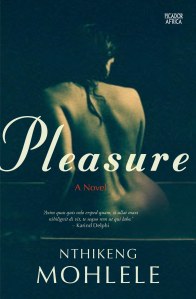 The title of Nthikeng Mohlele’s fourth novel delivers on its promise. Pleasure is a mesmerising, unusual book. At times I was hesitant to call it a novel. The story of Milton Mohlele, his dreams and musings, which he attempts to distil into writing, reads like a meditation. As literary history echoes in his name, Milton could be an alter ego for most writers seeking to find not only meaning but pleasure in the written word – to capture that elusive something which makes us sigh deeply with content when, if ever, we truly encounter it.


 Reading dead authors is not unusual, but opening the late Paul Kalanithi’s When Breath Becomes Air feels different. He wrote it knowing he was dying and it was published by his widow a year after his death. The immediacy of the knowledge is uncannily palpable. For me, the experience was even more intimate on two different levels. Firstly, I also had a cancer scare recently and Kalanithi was my age when he died. In retrospect, his memoir made me count my blessings, again, as I am healthy and have escaped with just a fright. Secondly, like me, as a young person he struggled to choose between two vocations: medicine and literature. Unlike me though, he chose medicine. But literary longings had never left him and when life became unbearable, like many of us he found some amount of solace in the written word.
